The biggest risk to a traveling diver isn’t a shark, a deep wreck or a strong current. According to Divers Alert Network data cited by PADI, around half of scuba deaths are associated with an acute cardiac event, and a third of the recreational fatalities among US and Canadian divers in 2020 were aged 50 to 80. Scuba diving safety, for most Americans on a dive vacation, comes down to a handful of decisions made before the trip: your fitness to dive, how you’ll handle an emergency far from home, who you dive with, and when you fly back.
Short answer: Recreational diving is low-risk when you’re fit, trained and conservative: DAN data put it at roughly two deaths per 100,000 US and Canadian divers a year. The main risks are heart problems, running low on air, rapid ascents and flying too soon. Answer the medical questionnaire honestly, buy dive accident insurance, and know the nearest chamber.
Facts, rules and figures on this page were checked between September 23 and October 1, 2026 against Divers Alert Network, the Undersea and Hyperbaric Medical Society, the CDC, the NTSB and the operators’ own websites. This page is general information, not medical advice; talk to a physician about your own fitness to dive.
On this page: Safest destinations · Common problems · How dangerous is diving? · Fitness to dive · Decompression sickness · Safety stops and ascents · Flying and altitude · Dive insurance · Chambers by destination · Choosing a safe operator · Marine life · Pre-trip checklist · Emergency plan · FAQ · Sources
| Safety question | What the sources say (checked Sept-Oct 2026) |
|---|---|
| How risky is recreational diving? | About 2 deaths per 100,000 US and Canadian divers (DAN data for 2020) |
| Leading factor in deaths | About half associated with an acute cardiac event |
| Medical screening | UHMS 10-question form; some “yes” answers require a physician’s sign-off |
| Ascent rate | 30 ft (9 m) per minute (US Navy, NOAA); agencies 30-60 ft per minute |
| Flying after diving | At least 12 hours after one no-decompression dive; 18 after multiple dives or days |
| Emergency advice | DAN 24/7 emergency line +1-919-684-9111 |
| First aid for DCS | High-flow 100% oxygen, then recompression in a chamber |
| Insurance | DAN membership ($40 a year) doesn’t cover dive accident costs; insurance is separate |
| Pregnancy | The medical questionnaire says not to dive |
How dangerous is scuba diving, really?
Less dangerous than its reputation, and more dangerous than a beach day. PADI, citing DAN’s annual diving report, says 24 recreational diver fatalities among US and Canadian citizens were reported in 2020; with about 2.85 million participants, that works out to roughly two deaths per 100,000 divers. For context, DAN’s figures are for all recreational divers, from first-timers to technical divers, so your own risk depends heavily on your health, training and choices.
The causes are less dramatic than films suggest. About half of deaths are associated with an acute cardiac event, which is why age and heart health matter more than any marine animal. The other recurring patterns are well known to instructors: running low on gas, rapid ascents, diving beyond training or comfort, diving while unwell, and problems that start on the surface, such as exhaustion in current or a panicked diver who can’t inflate a BCD. Boats matter too: the dive boat Conception burned at anchor off Santa Cruz Island, California, on September 2, 2019, killing 33 passengers and one crew member.
So is scuba diving dangerous? For a fit, trained diver who dives conservatively with a reputable operator, the risk is low. For someone with an undiagnosed heart condition, an ear problem they’re ignoring, or a plan to dive deeper than their training, it isn’t. The rest of this page is about moving yourself firmly into the first group.
Our take: The single most useful safety step for an American over 45 is a check-up before the trip. A heart problem found in a doctor’s office is a change of plans; one found at 60 feet is an emergency.
Fitness to dive: the medical questionnaire
Every course, and many dive trips, start with the Diver Medical Participant Questionnaire, developed by the Diver Medical Screen Committee with the Undersea and Hyperbaric Medical Society (UHMS). The current English form is dated January 1, 2026. It has ten questions. If you answer “no” to all of them, no medical evaluation is needed. A “yes” to the fitness question, recent surgery or prescription medication, or to any of the detailed questions on page two, means you take the form to a physician, who signs the Diver Medical Physician’s Evaluation Form before you dive.
What the form asks is a useful checklist even if you’re already certified:
| Area | What triggers a physician’s evaluation |
|---|---|
| Fitness | Struggling to walk 1 mile (1.6 km) in 14 minutes or swim 200 yards/meters without resting, or being unable to do normal physical activity for health reasons in the last 12 months |
| Heart and lungs | Heart disease or surgery, implanted devices, lung disease, asthma or wheezing that limits exercise in the last 12 months |
| Over 45 | Smoking or other nicotine use, high cholesterol, high blood pressure, or a close relative who died suddenly or of heart disease before 50 |
| Ears, sinuses, eyes | Ear disease or surgery, hearing loss or balance problems, recent sinus surgery or recurrent sinusitis, eye surgery in the last 3 months |
| Neurological | Seizures, blackouts, recent head injury with loss of consciousness, recurring migraines |
| Metabolic and digestive | Diabetes (drug- or diet-controlled, or gestational in the last 12 months), ulcers, reflux, recent bariatric surgery |
| Mental health | Panic attacks, major depression, treatment for addiction in the last 5 years |
| Medications | Any current prescription medication, except birth control, menopausal hormone replacement and antimalarials other than mefloquine |
| Pregnancy | The form states: if you are pregnant, or attempting to become pregnant, do not dive |
A “yes” isn’t a “no.” It means a doctor needs to look at your situation, ideally one familiar with dive medicine. Several conditions people assume rule them out may not:
- Asthma: the form flags asthma or wheezing that has limited exercise in the past 12 months. Whether you can dive depends on how well controlled it is, and that’s a physician’s call.
- Diabetes: flagged whether it’s controlled by medication or diet. Some people with diabetes dive with medical clearance and careful blood-sugar protocols; your doctor decides.
- Age: there’s no upper age limit in the training standards (PADI’s Discover Scuba Diving, for instance, has none), but over 45 the form adds heart-risk questions, and DAN’s data show why.
- Pregnancy: the form is explicit: don’t dive while pregnant or trying to become pregnant.
- Ears and sinuses: ear squeeze from failing to equalize is a common minor dive injury. If your ears hurt after diving, stop diving and get them checked before your next dive day.
If you’re new to diving, the questionnaire is part of every Open Water course; our scuba certification guide explains the course itself. Seasickness tablets are worth raising with your doctor too, since some cause drowsiness and you’ll want to test them before a boat day.
Decompression sickness: what it is, the signs and what to do
Breathing compressed air at depth loads your tissues with nitrogen. If you ascend too fast, stay too long or dive too often, that nitrogen can come out of solution as bubbles, causing decompression sickness (DCS). Arterial gas embolism, a related injury, happens when air expands in the lungs during a rapid ascent, usually with breath-holding, and forces bubbles into the bloodstream. Divers call the two together decompression illness.
Symptoms range from joint pain, unusual fatigue, itching and skin mottling to numbness, weakness, dizziness, breathing difficulty and confusion. According to the MSD Manual, symptoms appear within an hour of surfacing in about half of cases and within six hours in 90%, though they can show up 24 to 48 hours later, especially after flying or driving to altitude. Don’t dismiss tingling or a strange ache after a dive day as tiredness.
What to do: the initial treatment is high-flow 100% oxygen, which is why dive boats should carry an oxygen kit. Recompression in a hyperbaric chamber is indicated for nearly all cases. Call the DAN emergency line, +1-919-684-9111, which is staffed around the clock by doctors, nurses and paramedics and accepts collect calls; they’ll help coordinate evaluation and the nearest chamber. Don’t fly with symptoms: airliner cabins are pressurized to the equivalent of up to 8,000 feet, which can make DCS worse.
Safety stops, ascent rates and no-decompression limits
The single most effective habit against DCS is a slow ascent. DAN’s Alert Diver notes that the US Navy and NOAA use an ascent rate of 30 feet (9 m) per minute, and that recreational training agencies recommend 30 to 60 feet per minute. Your dive computer will warn you when you exceed its limit; treat the warning as an error, not a suggestion.
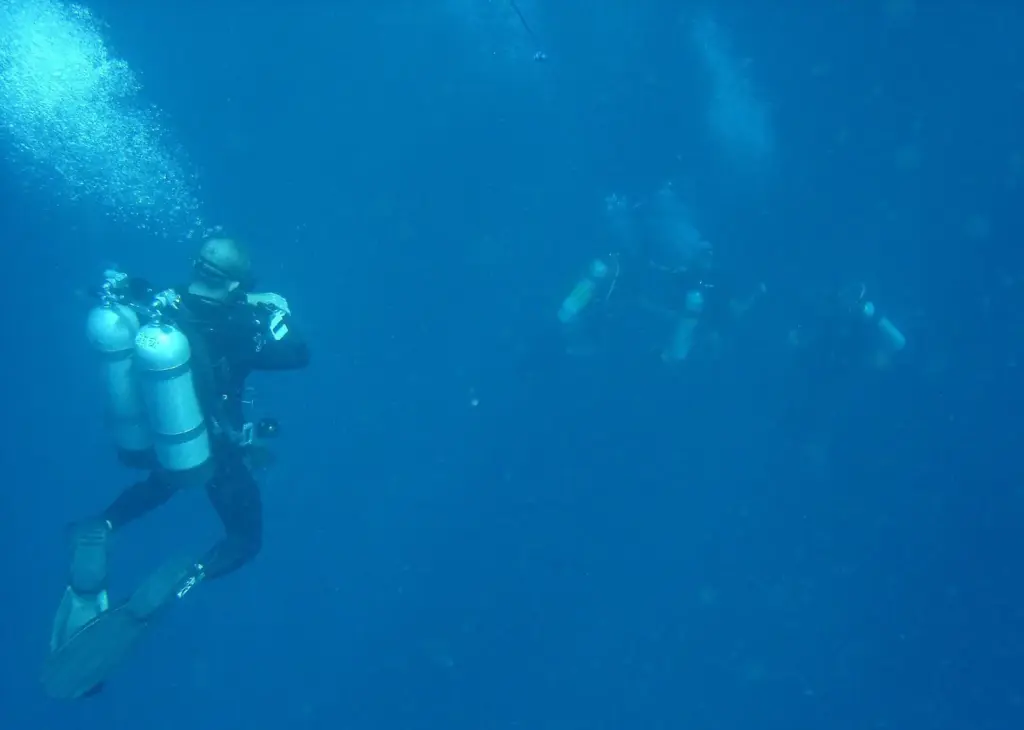
A safety stop is a pause near the surface at the end of a dive, typically about three minutes at around 15 feet (5 m) as most courses teach. DAN describes safety stops as a way to slow and pause your ascent in the shallow depths where pressure changes fastest. It’s not a decompression stop, which is mandatory once you’ve exceeded no-decompression limits; it’s an extra margin on every dive, and it costs you nothing but three minutes of looking at fish.
No-decompression limits are the maximum time you can stay at a given depth and still ascend directly with only a safety stop. Your computer calculates them continuously from your depth and time on this dive and your previous dives. Three habits keep you well inside them on a dive trip: dive deepest first and shallower afterward, take long surface intervals between dives, and set your computer to a more conservative setting if you’re older, less fit, cold or diving several days in a row. Depth also brings nitrogen narcosis, an impairment that grows with depth and feels like being slightly drunk; it’s another reason to respect the depth limits of your training.
Nitrox: more bottom time, new rules
Enriched air nitrox, with more oxygen and less nitrogen than air, lengthens no-decompression limits, which is why so many traveling divers use it on 60 to 110-foot dives; Rainbow Reef Dive Center in Key Largo, for example, charges $12 for one tank or $20 for two (checked September 2026). It isn’t a free lunch. Higher oxygen levels become toxic below a mix’s maximum operating depth, so nitrox divers need certification, must analyze their own tank before every dive and must set their computer to the mix. Treat the analyzer step as non-negotiable, even on a boat where the crew hands you a labeled tank.
Currents, drift dives and night dives
Many of the most popular dives for Americans are drifts: Cozumel’s walls, Palau’s channels, where divers clip reef hooks to the reef at 50 to 60 feet, and the passes of French Polynesia. Drift diving is safe with the right habits: stay with the guide and group, descend promptly, keep a surface marker buoy and a whistle or other signaling device, and never fight a strong current; swim across it and surface early if you need to. Night dives add darkness, so carry a primary and backup light and agree on light signals before you descend. Blackwater dives, in which divers clip to a weighted line over deep water at night, are safe only with that tether and a thorough briefing.
Flying after diving and altitude
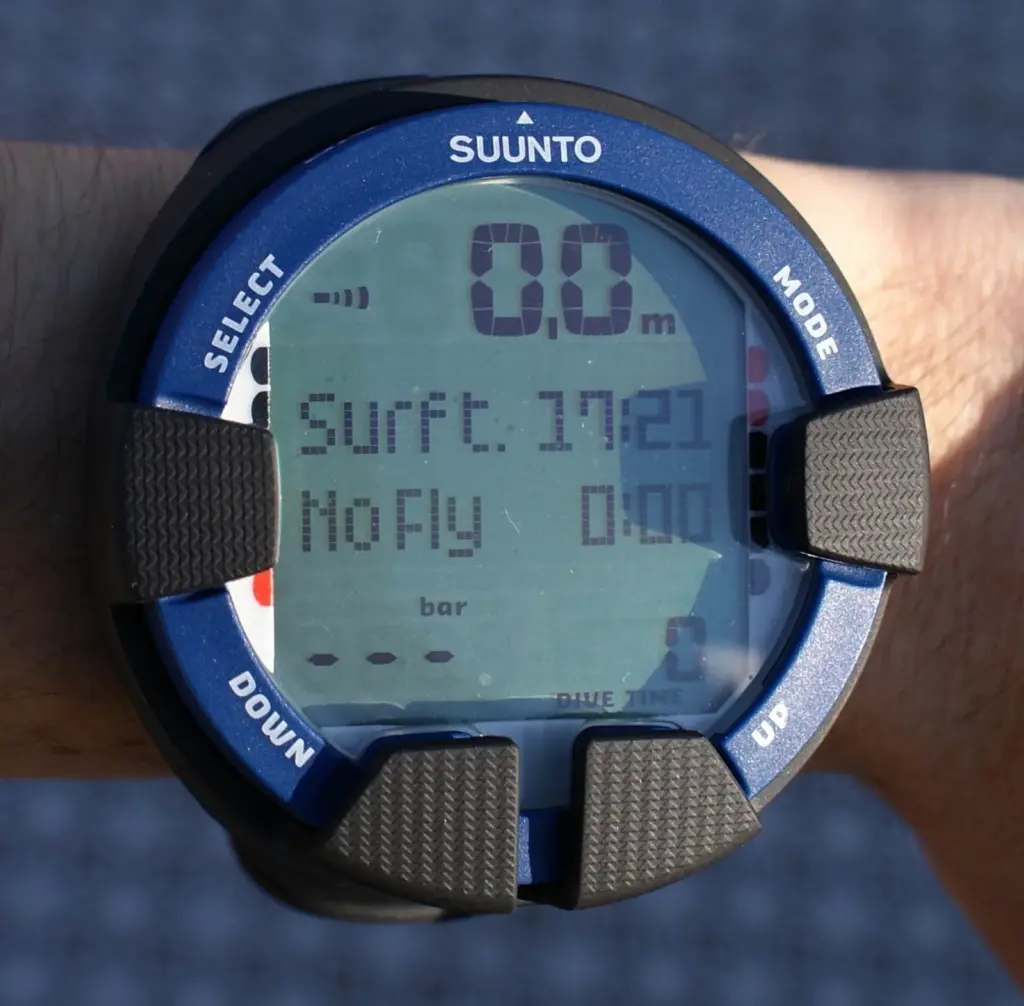
Every dive vacation ends with a flight, and getting the timing wrong is one of the most common ways travelers get bent. DAN’s guidelines, based on its 2004 Flying After Diving workshop, call for a minimum surface interval of 12 hours before flying after a single no-decompression dive and 18 hours after repetitive dives or multiple days of diving, and “substantially longer” after decompression dives. The CDC’s Yellow Book says the same for any altitude exposure above 2,000 feet (610 m), and 24 to 48 hours after dives that required decompression stops.
Altitude applies on land too. On Hawaii’s Big Island, Big Island Divers warns that staying farther north than Waikoloa or farther south than Captain Cook means driving over elevations that aren’t safe right after diving. The same logic applies to mountain roads in Mexico, Costa Rica or Bali after a dive day. And diving at altitude, in mountain lakes or springs well above sea level, needs adjusted procedures and computer settings; ask a local shop before you dive one.
In practice: plan your last dive day for at least 24 hours before your flight home, which gives you a margin over DAN’s 18 hours, and use the spare day for snorkeling, sightseeing or drying gear. If you’re on a liveaboard, check when the last dive is scheduled before you book the flight.
Dive insurance: DAN, travel insurance and what you actually need
US health insurance may pay little or nothing abroad, travel policies vary on diving, and chamber treatment is long: Miami’s Mercy Hospital says treatments for diving injuries may last up to five hours, sometimes over several sessions, before any air evacuation is counted. That’s what dive accident insurance is for. Divers Alert Network is the best-known provider for Americans, and it’s worth understanding what its products do and don’t include.
| DAN product (checked September 2026) | What it covers | What it doesn’t |
|---|---|---|
| Membership, $40 a year individual or $60 family | Up to $150,000 of emergency medical transportation and travel assistance more than 50 miles from home | Dive accident medical costs; insurance is a separate purchase per member |
| Master plan | Dive accidents up to $125,000, lifetime limit | Non-diving accidents |
| Preferred plan | Up to $250,000 per claim, plus $10,000 for non-diving accidents abroad ($250 deductible) | Higher medical costs |
| Guardian plan | Up to $500,000 per claim, plus $30,000 for non-diving accidents abroad, no deductible, and other water sports | Check current exclusions |
Premiums change, so check them on DAN’s insurance page or by calling DAN’s membership line at +1-919-684-2948. Members join DAN first, then add insurance.
Travel insurance is a separate question. A trip policy covers cancellations, delays, lost bags and, sometimes, general medical costs; Liveaboards.com puts typical trip insurance at $100 to $250 per diver per week. Read the exclusions before relying on it for diving: some policies cap depth, require certification or exclude scuba altogether.
| Your trip | What we’d carry |
|---|---|
| A weekend of diving in Florida or California | DAN membership and dive accident insurance; your health insurance for the rest |
| A week in the Caribbean or Mexico | DAN membership and dive accident insurance, plus trip insurance in hurricane season |
| A liveaboard or remote destination (Galapagos, Cocos, Socorro, Raja Ampat) | Dive accident insurance at the highest tier, evacuation coverage and trip insurance; some liveaboards ask for proof of dive insurance |
| A first-time Discover Scuba session on a cruise | Check the operator’s coverage and your travel policy’s scuba exclusions |
Hyperbaric chambers: where they are at popular destinations
A hyperbaric chamber (recompression chamber) is where DCS is treated: the patient breathes oxygen at increased pressure, often over several hours. Knowing where the nearest one is should be part of every dive trip plan. These are the chambers at destinations Americans dive most, as published by the facilities and operators (checked September 2026):
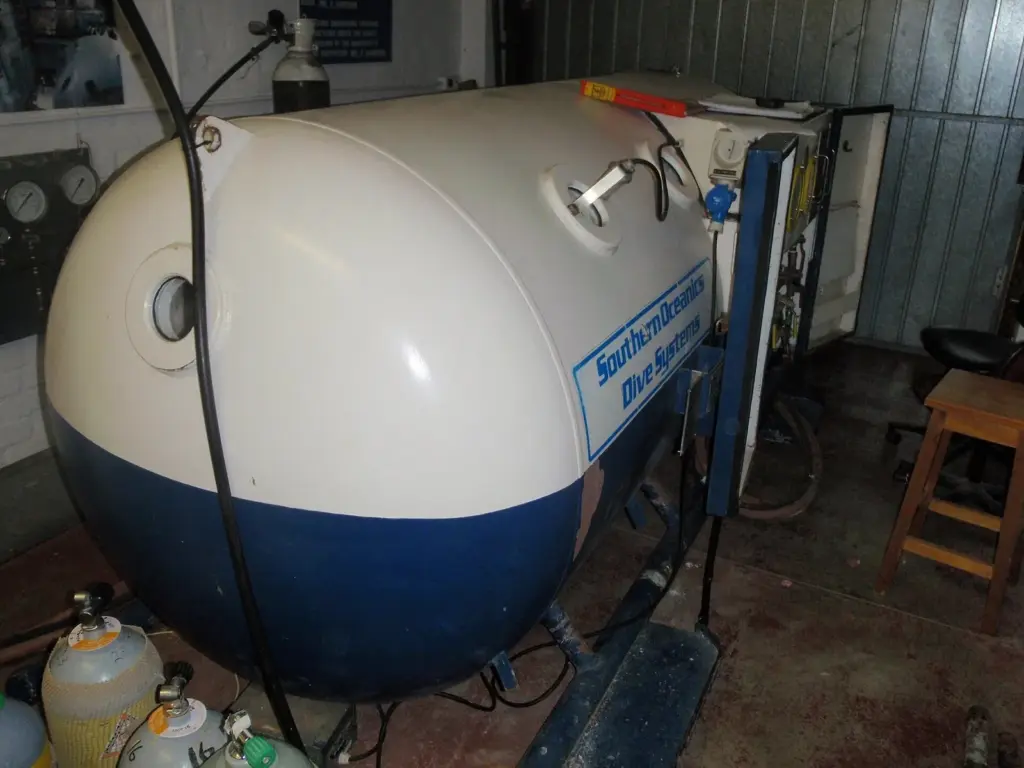
| Destination | Nearest chamber | Notes |
|---|---|---|
| Miami and South Florida | HCA Florida Mercy Hospital, Miami | Two multiplace chambers; DAN’s regional coordinator for Florida and the Caribbean |
| Florida Keys | Mariners Hospital, Tavernier | The only hospital-based chamber in the Keys |
| Hawaii | Hyperbaric Treatment Center, Kuakini Medical Center, Honolulu | The state’s only multiplace facility; (808) 587-3425 |
| Cozumel | Costamed hyperbaric chamber | A DAN Preferred Provider; free fitness-to-dive phone consults |
| Grand Cayman | Cayman Hyperbaric Services, George Town hospital | The islands’ only chamber, on call 24 hours a day |
| Bonaire | On-island recompression chamber | Listed by the tourism corporation |
| Roatan | Anthony’s Key Resort | In DAN’s international preferred provider network |
| Utila | Bay Islands College of Diving | On-site chamber |
| Ambergris Caye, Belize | Two chambers in San Pedro | Per a resort page last updated in 2022; confirm locally |
Remote destinations are a different story. Cocos Island is 36 to 48 hours by sea from mainland Costa Rica, Socorro is a 24-hour crossing from Cabo, and the northern Galapagos islands are far from any chamber. That’s one reason those trips require experienced divers, conservative profiles and proper evacuation insurance. On the Florida Panhandle, check where the nearest emergency chamber is before deep dives such as the Oriskany; a 2025 diver’s report says local hospital units there now focus on wound care.
Where diving is safest for beginners and older divers
No destination is risk-free, but some combine calm water, good operators and a recompression chamber close at hand. For a first trip after certification, or for divers over 50 who want the shortest path to help, these stand out (all facts checked September 2026):
| Destination | Why it suits cautious divers | Watch out for |
|---|---|---|
| Bonaire | Calm leeward shore diving, more than 85 sites, an on-island chamber, Level 1 advisory | Self-guided shore diving means you plan your own gas and navigation |
| Grand Cayman | Polished operators, a 24-hour on-call chamber in George Town, short nonstops, Level 1 | Walls drop deep; watch your depth |
| Florida Keys | Shallow reefs, a hospital chamber in Tavernier and Miami’s Mercy Hospital 61 miles from Key Largo, no passport | Boat traffic, summer storms, deep wrecks for the unprepared |
| Roatan | Mild currents on most north-side sites, a chamber at Anthony’s Key Resort, low prices | Level 3 country advisory, though the Bay Islands’ resort areas are noted as better policed |
| Cozumel | Experienced guides, a hospital-based chamber that’s a DAN Preferred Provider | Currents: every dive is a drift, so buoyancy matters |
| Oahu | The state’s multiplace chamber is in Honolulu, close to Oahu’s dive sites | Neighbor-island divers (Kona, Maui) face a flight to reach it |
That last row matters more than it looks. The Hyperbaric Treatment Center at Kuakini Medical Center in Honolulu describes itself as the only multiplace hyperbaric facility in Hawaii, so a diver bent off Kona or Maui needs an air transfer to Oahu, and flying is exactly what makes DCS worse. It’s one more reason to dive conservatively on the neighbor islands.
Common dive problems and how to prevent them
Most dive emergencies start as small problems that compound. These are the ones instructors see most, with the habit that prevents each:
| Problem | Usual cause | Prevention |
|---|---|---|
| Running low on air | Not checking the gauge; deeper or longer than planned | Check your gas often, agree a turn pressure, and surface with the reserve your briefing sets |
| Rapid ascent | Poor buoyancy control, a dropped weight, panic | Practice buoyancy, dump air early, follow your computer’s ascent alarm |
| Ear and sinus squeeze | Equalizing too late, or diving congested | Equalize early and often; don’t dive with a cold |
| Decompression sickness | Aggressive profiles, repetitive deep dives, flying too soon | Conservative computer settings, deepest dive first, safety stops, 24 hours before flying |
| Exhaustion | Swimming against current, poor fitness, cold | Plan dives with the current, stay fit, wear enough exposure protection |
| Separation from buddy or boat | Poor visibility, drift, distraction | Agree a lost-buddy plan, carry a surface marker buoy and a whistle |
| Seasickness | Rough surface conditions | Test any medication before a dive day; tell the crew early |
Two habits underlie almost every row: a proper buddy check before each dive (BCD, weights, releases, air and final check) and a dive plan you actually follow. Neither takes more than a few minutes, and both are taught on day one of every Open Water course.
Alcohol, sleep and hydration
Vacations and dive days pull in opposite directions. Alcohol dehydrates you and dulls judgment, a late night leaves you tired on a morning boat, and tropical heat drains fluids before you’re even in your wetsuit. None of these is a rule written into the training standards in a single number, but every instructor gives the same advice: no drinking before or between dives, a proper night’s sleep before a dive day, plenty of water, and a lighter schedule on the day after a big night. If you’re hungover, sunburned or simply feel off, skip the dive; there’s always another one.
Medications abroad
Bring enough of your regular medications for the trip plus a few extra days, in original containers, in your carry-on. The medical questionnaire asks about current prescriptions because some affect diving; antimalarials are exempt from that question except mefloquine (Lariam), which it singles out. If you’re starting any new medication for the trip, including seasickness or antimalarial tablets, ask your doctor about diving on it and try it before a dive day.
Getting back in the water after a break
Skills fade faster than divers like to admit. If it’s been six months or more since your last dive, book a refresher or an easy checkout dive before anything challenging; some operators insist. Bali Scuba, for example, requires a dive within the last six months, along with 25 logged dives, before it takes divers to Nusa Penida without a private guide. A refresher costs a morning; a fumbled regulator recovery at 60 feet costs much more.
Children and teens
Kids can start young: PADI’s Discover Scuba Diving has a minimum age of 10, with a maximum depth of 40 feet on its optional open-water dive, and Roatan Divers takes Open Water students from age 10. Young divers need the same medical screening as adults, signed by a parent or guardian, and closer supervision; choose operators with experience teaching children and keep their dives shallow and short.
How to choose a safe dive operator abroad
Your operator controls more of your safety than you do on a dive vacation: the boat, the briefing, the site choice and the emergency response. Here’s what to look for, and what to ask before you book.
- They check you. A good shop asks for your certification card and recent experience, and may want a checkout dive. Some set clear experience rules: Bali Scuba requires 25 logged dives and a dive in the last six months for Nusa Penida, or a private guide.
- Small groups. Ask about the guide-to-diver ratio. Key Dives in Islamorada advertises 1:6 guided dives, and Quicksilver on the Great Barrier Reef caps its introductory dives at four guests per instructor.
- Oxygen and a radio on the boat. Ask whether the boat carries an emergency oxygen kit with enough for the trip back, a first-aid kit and a radio, and whether the crew is trained to use them.
- A real briefing. Depth, time limits, currents, entry and exit, hazards and the plan if you get separated should all be covered.
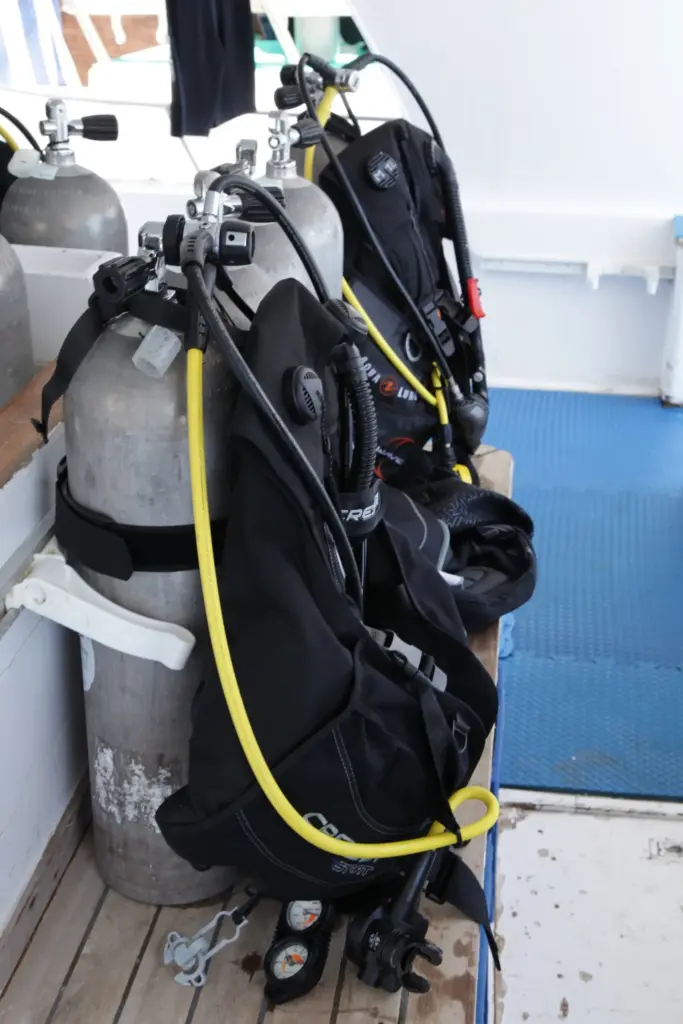
- Gear that works. Rental regulators and BCDs should look maintained, and the shop shouldn’t object when you check them.
- A headcount after every dive. The crew should check that every diver is back aboard before the boat leaves a site, and you should be counted, not just your group.
- On liveaboards, fire safety. After the Conception fire, the NTSB found the operator’s failure to keep a roving night patrol let the fire grow undetected, and it recommended interconnected smoke detectors in sleeping areas and secondary escape routes that exit into a different space. Ask about all three.
- Any diver can call a dive. A safe culture means anyone can cancel any dive at any time for any reason, with no pressure, which is advice DAN repeats in its own safety writing.
Your own kit matters too. Carry your regulator and computer in the cabin when you fly, and know the airline rules for batteries and cylinders: the FAA doesn’t allow oxygen cylinders in airline baggage, so you’ll rely on the operator’s oxygen kit. Our guide to travel scuba gear covers packing and the carry-on rules.
Questions to ask before booking a liveaboard
A liveaboard is a floating hotel far from shore, so its safety planning matters more than a day boat’s. Before you pay a deposit, ask:
- How much emergency oxygen is aboard, and is it enough to last until the boat can reach help?
- Where is the nearest recompression chamber, and how long would it take to reach it from the farthest dive site?
- What communications does the boat carry offshore, and what is the evacuation plan?
- Is the crew trained in first aid and oxygen administration, and is there a medical kit beyond basic first aid?
- Are there smoke detectors in every cabin, a night watch, and two separate escape routes from sleeping areas, the safeguards the NTSB called for after the Conception fire?
- What experience does the itinerary require, and how do guides handle divers who struggle on the first dive?
A reputable operator answers these without hesitation. Vague answers are your answer.
Dangerous marine life: smaller risk than you think
Marine animals are rarely behind serious dive injuries, and most marine-life injuries are stings, cuts and scrapes rather than bites. Fire coral, jellyfish, sea urchins, stonefish and scorpionfish are the usual culprits, and good buoyancy, gloves where allowed and a look before you put a hand down prevent most of them. Treat stings with what your guide or a local clinic advises, since treatment varies by animal.
Sharks get the headlines, but the numbers are small: the International Shark Attack File confirmed 65 unprovoked shark bites worldwide in 2025, with nine unprovoked fatalities, across all water users rather than divers alone. Organized shark dives have their own safety protocols and risks; our guide to shark diving covers how they work and how to choose an operator. A detailed guide to dangerous marine life for divers, species by species, belongs on its own page.
A pre-trip scuba diving safety checklist, step by step
- Six to eight weeks out: answer the medical questionnaire honestly. If any answer is yes, see a physician, ideally one familiar with dive medicine.
- Before booking: match the destination to your training and logbook, and check the State Department advisory and the nearest chamber.
- When booking: buy DAN membership and dive accident insurance, and trip insurance if your trip is costly or falls in hurricane season. Ask the operator about group size, oxygen on board and its briefing.
- Two weeks out: service your regulator if it’s due, update your computer, check your mask and fins, and dive locally or in a pool if you haven’t dived in six months or more.
- Packing: carry your certification card, DAN membership details, the DAN emergency number, insurance policy numbers and any medications in your carry-on.
- On the trip: start with an easy dive, dive conservatively, hydrate, skip alcohol the night before diving, and don’t dive if you’re ill, congested or exhausted.
- At the end: finish diving at least 24 hours before your flight home, and watch for DCS symptoms for a day or two after.
Mistakes to avoid
- Skipping the medical questionnaire’s “yes” because the trip is already booked.
- Diving with a cold or blocked sinuses, which risks ear and sinus injury.
- Making the deepest dive of the trip on the last day before flying.
- Assuming travel insurance covers a chamber or air evacuation.
- Following a group deeper than your training or comfort allows.
- Ignoring tingling, joint pain or fatigue after a dive day instead of calling DAN.
Dive computer settings and backups
Your computer is your decompression plan, so set it up before the trip rather than on the boat. Choose a more conservative setting if you’re over 50, carrying extra weight, diving in cold water or diving several days in a row. Check its battery and charging cable, update its firmware, and learn how it shows ascent-rate warnings, safety stops and no-fly time. On remote trips such as liveaboards, many divers carry a second computer as a backup; if your only computer fails mid-trip, a rental unit won’t know your previous dives, and the safe answer is to sit out a day.
Your emergency plan abroad
Write it down before the trip and keep it in your phone and your bag:
- Stop diving and breathe oxygen. If a diver shows signs of DCS or embolism, put them on 100% oxygen right away from the boat’s kit.
- Call for help. Use local emergency services for life-threatening problems, and call DAN’s 24/7 line, +1-919-684-9111, for dive medical advice and help locating a chamber.
- Call your insurer. Evacuation and treatment usually need the insurer’s approval; DAN membership’s travel assistance covers emergency transportation more than 50 miles from home.
- Don’t fly. Cabin pressure can worsen DCS, so evacuation should be arranged by medical professionals, not a commercial flight home.
- Keep records. Dive computer data, the dive profiles and a timeline of symptoms help doctors treat you, and your insurer will want receipts and medical reports for any claim.
Numbers to save in your phone before you go
- DAN 24/7 emergency line: +1-919-684-9111 (collect calls accepted)
- DAN membership and insurance: +1-919-684-2948
- Your insurer’s emergency assistance number and policy number
- The local emergency number and the nearest chamber at your destination, such as the Hyperbaric Treatment Center in Honolulu, (808) 587-3425
- Your dive operator’s office and the boat’s contact details

Frequently asked questions
Is scuba diving dangerous?
For fit, trained divers who dive within their limits, recreational diving is low-risk: DAN’s data for 2020 show about two deaths per 100,000 US and Canadian divers. About half of deaths are linked to an acute cardiac event, so health matters more than sharks or currents. Answer the medical questionnaire honestly and dive conservatively.
How long after scuba diving can I fly?
DAN’s guidelines call for at least 12 hours after a single no-decompression dive and at least 18 hours after multiple dives or multiple days of diving, and substantially longer after decompression dives. The CDC applies the same limits to any altitude above 2,000 feet, including mountain roads. Most divers leave 24 hours to be safe.
What is Divers Alert Network, and do I need it?
Divers Alert Network (DAN) is a nonprofit dive safety organization that runs a 24/7 emergency hotline and sells membership and dive accident insurance. Membership, $40 a year, includes emergency transportation and travel assistance, but it doesn’t pay dive accident medical costs; that takes a separate insurance plan. For travel abroad, both are worth having.
Can you scuba dive with asthma?
Sometimes. The medical questionnaire flags asthma, wheezing or congested airways that have limited your exercise in the past 12 months, which means a physician must evaluate you before diving. Well-controlled asthma doesn’t automatically rule diving out; the decision belongs to a doctor, ideally one familiar with dive medicine.
Can you scuba dive while pregnant?
No. The Diver Medical Participant Questionnaire, used by training agencies and dive operators, states plainly that women who are pregnant or attempting to become pregnant should not dive. Snorkeling at the surface is a common alternative on a dive trip, but check with your doctor about any water activity.
Is there an age limit for scuba diving?
There’s no upper age limit in the training standards; PADI’s Discover Scuba Diving, for example, has none. Over 45, the medical questionnaire adds questions about smoking, cholesterol, blood pressure and family heart history, and a “yes” requires a physician’s evaluation. Since a third of 2020’s fatalities were aged 50 to 80, regular check-ups matter.
What is a safety stop and why does it matter?
A safety stop is a short pause near the surface at the end of a dive, typically about three minutes at around 15 feet (5 m). It slows your ascent in the shallow water where pressure changes most, giving your body extra time to release nitrogen. It’s not mandatory decompression, but it’s a cheap margin on every dive.
What should I do if I think I have decompression sickness?
Stop diving, breathe 100% oxygen if it’s available, and call the DAN emergency line at +1-919-684-9111 or local emergency services. Symptoms such as joint pain, numbness, tingling, unusual fatigue or dizziness after diving need evaluation, and recompression in a chamber is the standard treatment. Don’t fly until a doctor clears you.
Sources and verification
Everything on this page was checked between September 23 and October 1, 2026 against the organizations listed below. The page is compiled from their published guidance and data, it doesn’t claim first-hand visits, and it isn’t a substitute for advice from a physician.
- Undersea and Hyperbaric Medical Society: Diver Medical Participant Questionnaire (2026 form)
- Divers Alert Network: Guidelines for flying after diving
- Divers Alert Network: Ascent rates
- Divers Alert Network: Membership
- Divers Alert Network: Dive accident insurance
- CDC Yellow Book: Scuba diving and decompression illness
- MSD Manual: Decompression sickness
- NTSB: Conception fire investigation
- PADI: Is scuba diving safe? (citing DAN data)
- HCA Florida Mercy Hospital: Hyperbaric medicine
- Hyperbaric Treatment Center, Honolulu
- Costamed, Cozumel: Hyperbaric chamber
- Cayman Islands Health Services Authority: Diving and hyperbaric medicine
Also checked: the FAA’s rules on oxygen cylinders; the International Shark Attack File’s 2025 summary; Baptist Health’s Mariners Hospital announcement; Anthony’s Key Resort; the Bay Islands College of Diving; Tourism Corporation Bonaire; Ramon’s Village Resort; Big Island Divers; Bali Scuba; Key Dives; Quicksilver Cruises; Liveaboards.com’s cost guide.
Scuba Tourism Guide is an independent publication. It is not affiliated with any agency, park or dive operator named here, and no one paid to be included.
Photo credits
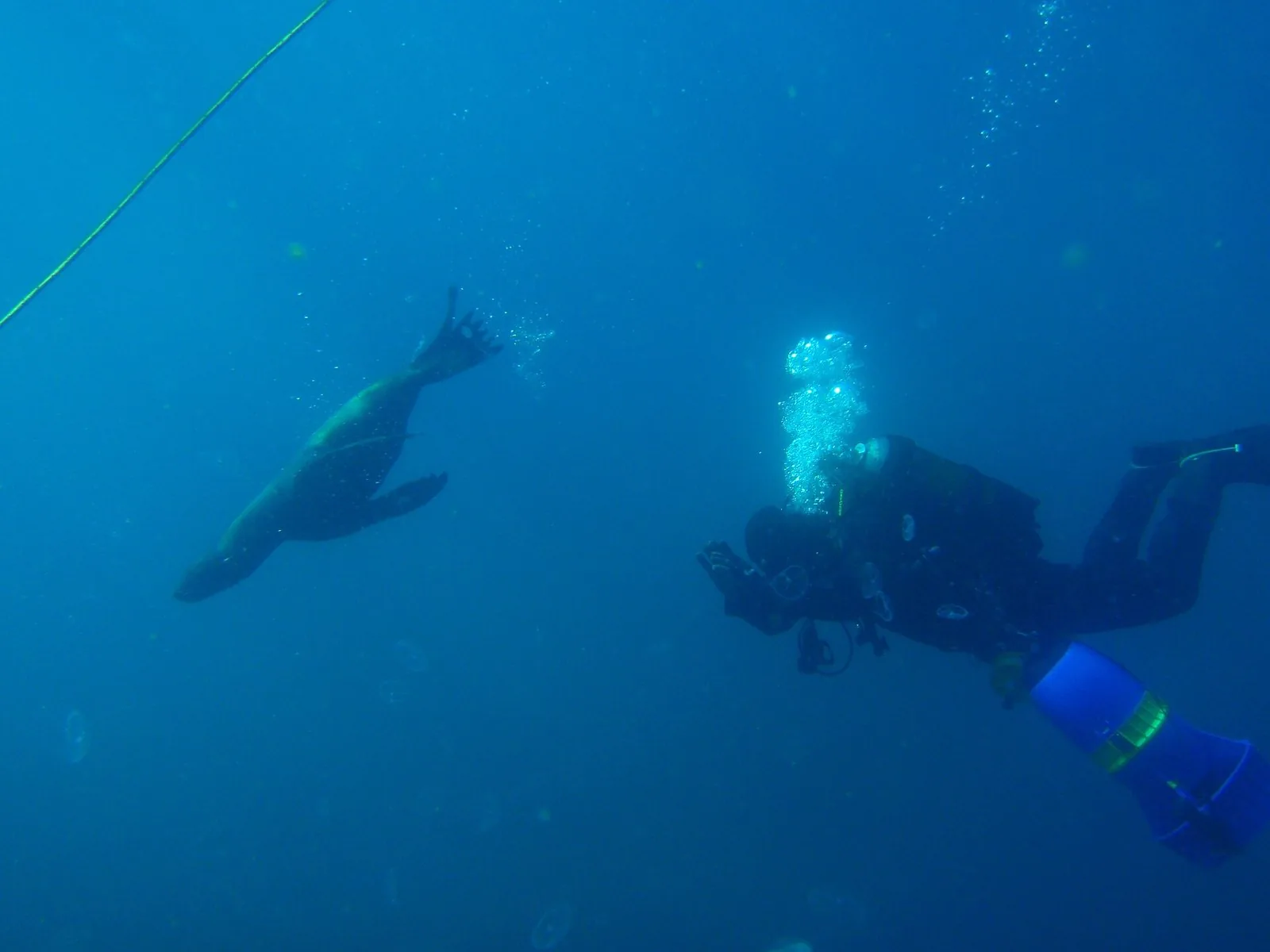
- Seal visiting a diver at the safety stop (featured image): photo by Peter Southwood, Wikimedia Commons (CC BY-SA 3.0)
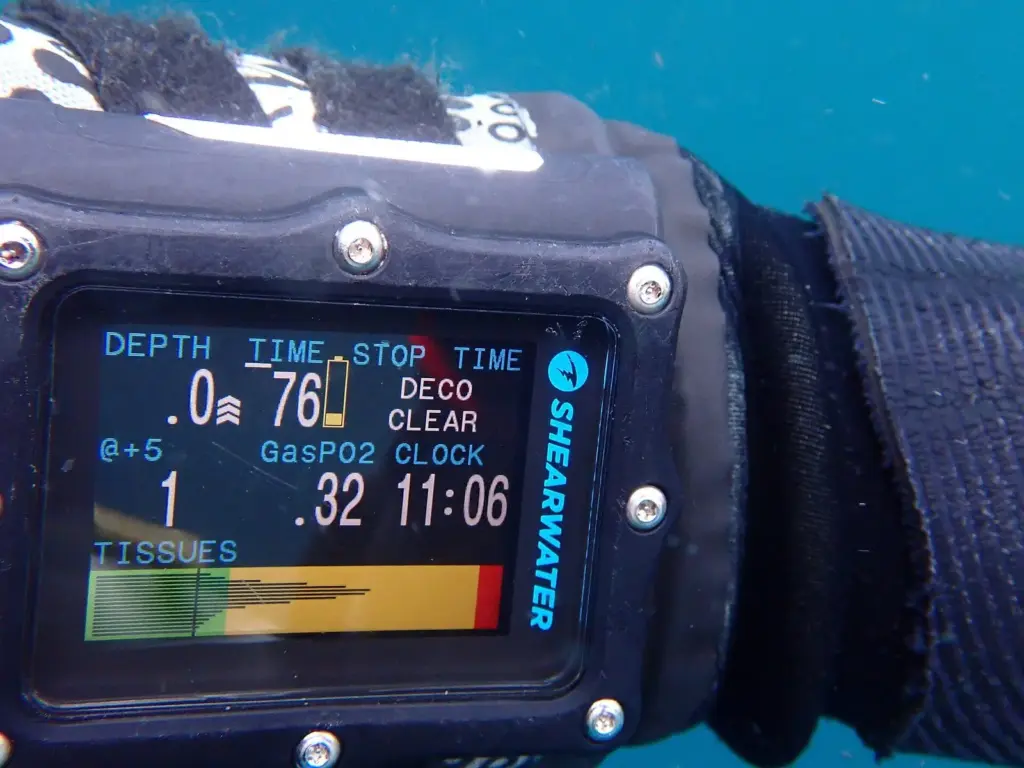
- Dive computer display of tissue loading after a dive (2021): photo by Peter Southwood, Wikimedia Commons (CC BY-SA 4.0)
- Technical diver at a decompression stop: photo by https://www.flickr.com/photos/pratts/, Wikimedia Commons (CC BY-SA 2.0)
- Dive computer showing no-fly time: photo by Thomei08 at German Wikipedia, Wikimedia Commons (public domain)
- Deck decompression chamber (2011): photo by Peter Southwood, Wikimedia Commons (CC BY-SA 3.0)
- BCD and regulator on a tank, Dahab: photo by Grand Parc – Bordeaux, France from France, Wikimedia Commons (CC BY-SA 2.0)
- Multiplace hyperbaric chamber (2008): photo by Mike, Wikimedia Commons (CC BY 2.0)


