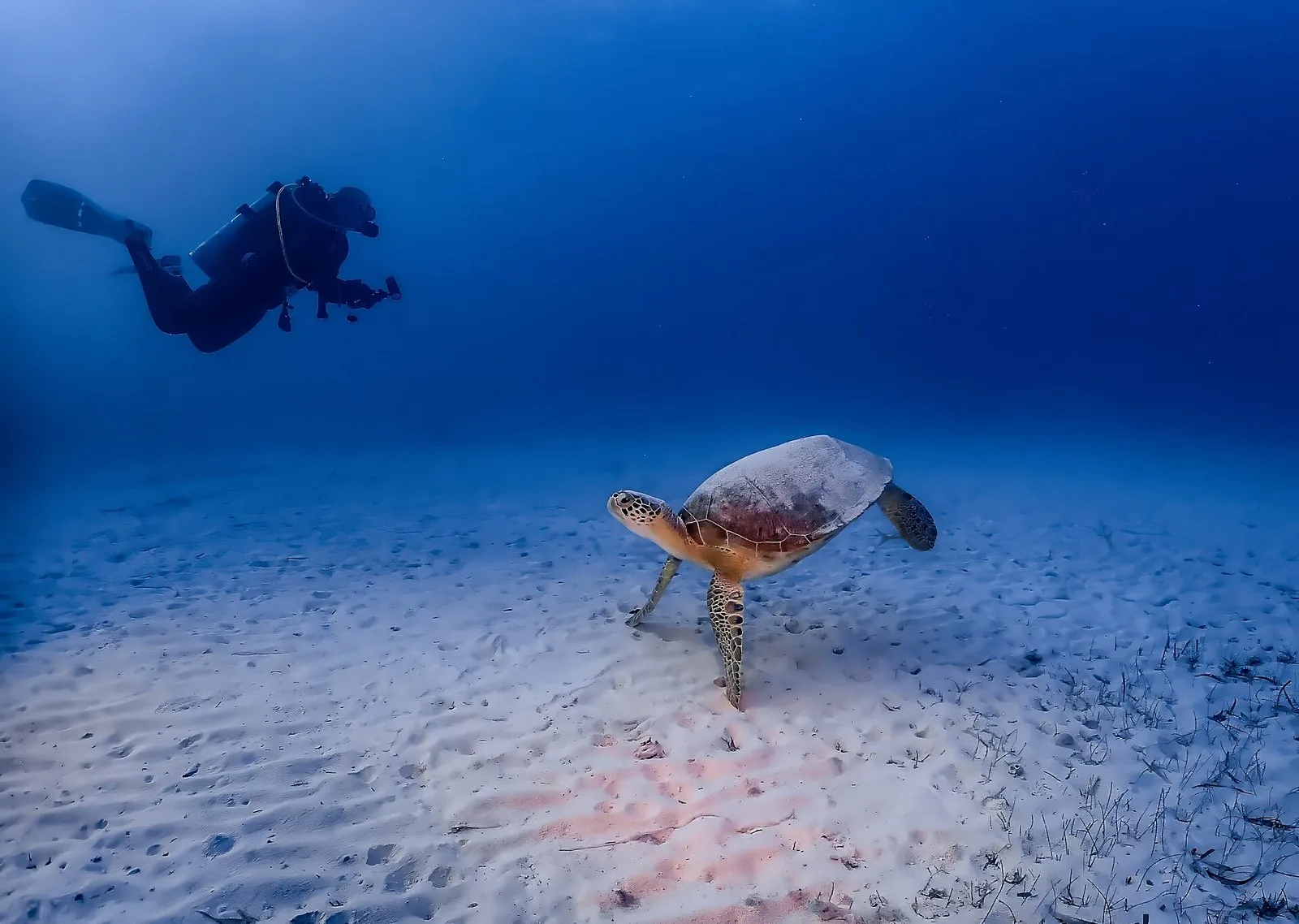
Walk up to a dive boat in Key Largo, Cozumel or Kona and the crew asks for one thing before your name goes on the manifest: proof that you’re trained. That proof is your scuba certification, a card (these days usually an app screen) showing you passed an entry-level course such as PADI or SSI Open Water Diver. Without it, reputable shops won’t fill your tank, rent you a regulator or take you on a fun dive.
Short answer: Scuba certification means passing an Open Water Diver course: 5-10 hours of online study, pool sessions and four open water dives, usually over two to four days. Full courses at the Florida Keys and Caribbean shops in this guide cost $450-$700. You need to be 10 or older, swim 200 yards and clear a medical questionnaire. The card never expires.
Every price, age limit and rule below was checked on September 23-24, 2026 against the training agencies’ and dive operators’ own websites. We name shops so you can compare like with like; none of them paid to appear here.
On this page: At a glance · What the card lets you do · How the course works · Home, vacation or referral · Getting certified on vacation · What it costs · How long it takes · PADI vs SSI vs NAUI vs SDI · Age and depth limits · Discover Scuba · After Open Water · Choosing a local shop · Gear · Safety and insurance · Does it expire? · FAQ
At a glance
| Question | Answer (checked September 2026) |
|---|---|
| The card you earn | Open Water Diver (PADI, SSI) or Open Water Scuba Diver (NAUI, SDI) |
| Minimum age | 10, with junior depth and buddy limits until 15 |
| Before you start | Float or tread water for 10 minutes, swim 200 yards (or 300 with mask, fins and snorkel), and complete a medical questionnaire, with a doctor’s sign-off if you answer yes to anything |
| Study | 5-10 hours of PADI eLearning; SSI’s digital course is free through its app |
| In the water | Pool (confined water) sessions, then four open water dives, usually over two days |
| Depth limit afterward | 60 ft (18 m) with a certified buddy; 40 ft (12 m) for ages 10-11 |
| Full-course price | $389 (Pensacola) to $857.59 plus eLearning (Maui) at the US dive shops in this guide; $450-$670 in the Caribbean and Puerto Rico |
| Referral dives only | $316 (Bonaire) to $800 (private, Kona) |
| Expiry | None, though shops may ask for a refresher after two or three years out of the water |
| Next steps | Advanced Open Water (100 ft), Enriched Air Nitrox, Rescue Diver, Divemaster |
What scuba certification is, and what the card lets you do
A certification card, or c-card, says you completed a course written to a published training standard. The standards come from agencies: PADI, SSI, NAUI and SDI are the four you’ll meet most in the US and the Caribbean. The teaching comes from dive shops and resorts affiliated with them. PADI is the biggest; its course pages count more than 30 million PADI-certified divers to date.
The entry-level card is what every agency calls some version of Open Water Diver, and it’s the one that matters for travel. PADI spells out what it allows: getting air fills, renting equipment, booking boat dives and diving with a certified buddy (who doesn’t need to be a professional) to a maximum of 60 feet (18 m). SSI’s standards add a sensible condition: you’re qualified to dive in environments equivalent to the ones you trained in. Learn in 82°F water with 80 feet of visibility, and a cold, green quarry is a different sport.
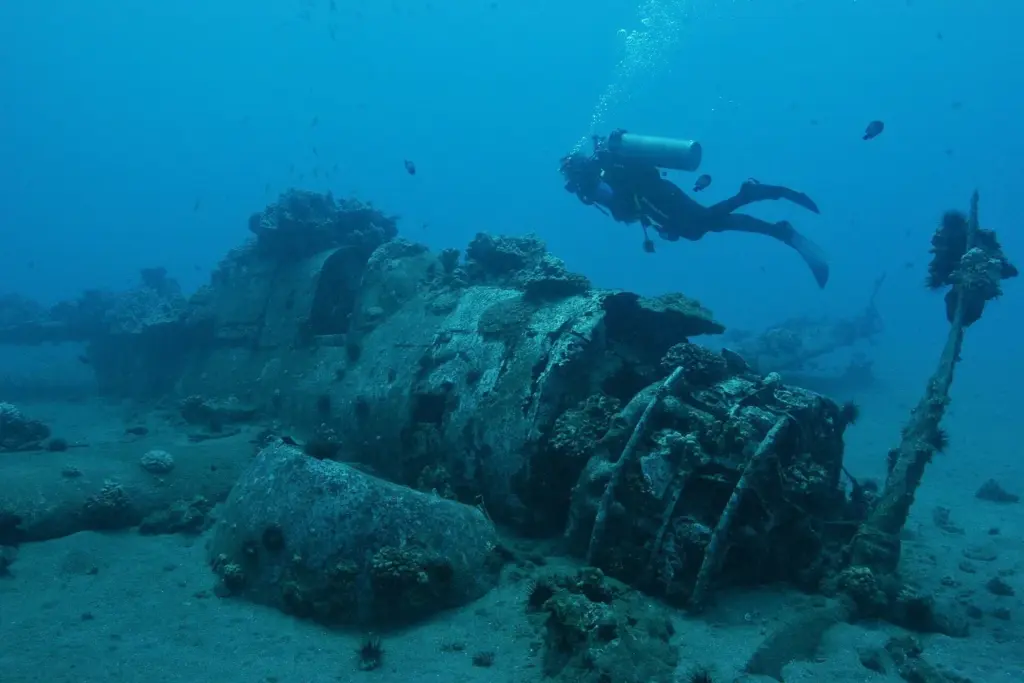
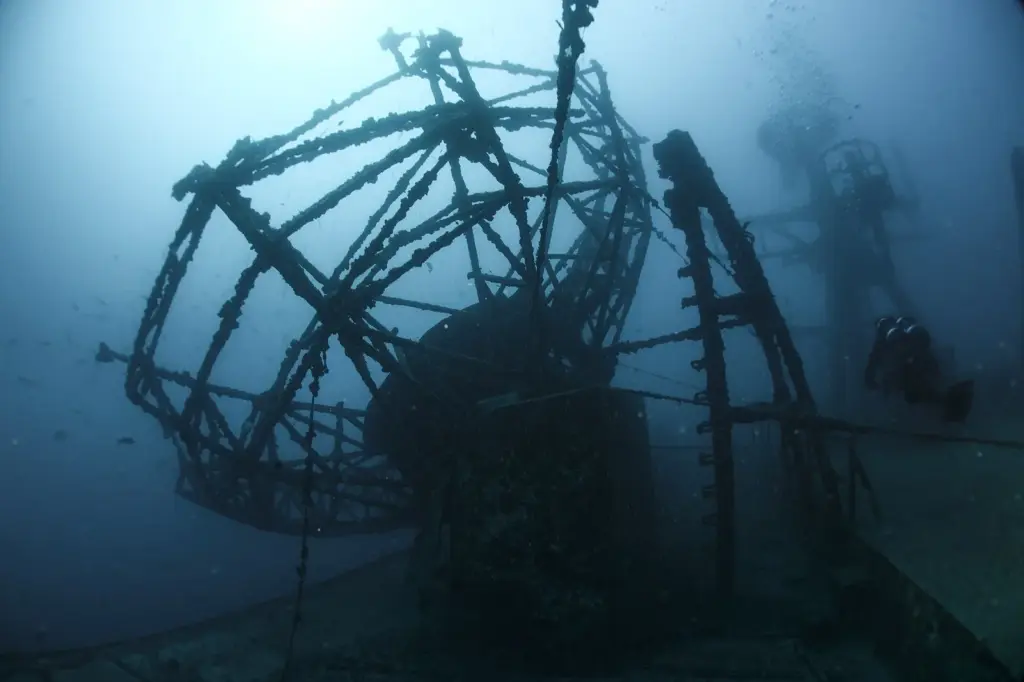
What the card doesn’t cover matters just as much. Open Water Divers don’t go below 60 feet, into wreck interiors or caves, or on dives that need planned decompression stops. Plenty of famous sites also set their own bar above the agency minimum. Operators running the Vandenberg wreck off Key West, the Great Blue Hole in Belize and Galapagos liveaboards ask for more training, more logged dives or recent experience, which is where the certification ladder comes in.
Supervised ratings and try dives are not the same thing
Two products look like certification and aren’t. PADI Scuba Diver (NAUI’s equivalent is Supervised Diver) is roughly the first half of the Open Water course: three pool sessions and two open water dives over two or three days. It lets you dive only under the direct supervision of a dive professional, to 40 feet (12 m). It’s useful if you’re short on time, and you can upgrade later by finishing the last two pool sessions and two dives.
Discover Scuba Diving (SSI calls its version Try Scuba) isn’t a certification at all. It’s a supervised taste of diving, and PADI’s rules say you can’t dive afterward without further training. More on that below.
How scuba diving certification works: three parts
Every major agency builds the Open Water course from the same three blocks: knowledge development, confined water training and open water dives. SSI and NAUI both describe their entry course as meeting the international standard for an autonomous diver (ISO 24801-2), which is part of why shops worldwide accept one another’s cards.
Part 1: Knowledge development (eLearning)
This is the classroom part, and almost everyone now does it online. PADI budgets 5-10 hours for its Open Water eLearning: the physics of pressure, how your ears and lungs respond, how the equipment works, planning a dive, hand signals and the rules that keep you out of trouble. The PADI Training app lets you download the course in sections (about 1.1 GB in total) and study offline on a plane, which is handy because PADI’s own advice is to finish the eLearning before you travel. Nobody wants to spend a vacation afternoon on a quiz about Boyle’s law.
Who pays for the materials is the biggest cost difference between agencies. PADI’s eLearning is sold separately: Rainbow Reef Dive Center in Key Largo values the code at $195, while Eco Dive Center in Los Angeles sells it for $246. SSI advertises free online training through its MySSI app, with digital certification cards.
Part 2: Confined water (the pool)
Pool training starts before your first open water dive, in a pool or pool-like shallow water. PADI’s course has five confined water sessions; SSI caps its confined water at 16 feet (5 m). You’ll assemble your gear, get comfortable breathing underwater, clear water from a flooded mask, recover a regulator that falls out of your mouth, share air from a buddy’s backup regulator and learn to hover without kicking up the bottom. None of it is athletic; it rewards calm far more than strength.
How long this takes depends on the setting. The University of Maryland’s RecWell class schedules 16 hours of pool time around a college calendar, while a vacation shop such as Rainbow Reef fits the pool work and all four open water dives into two days.
Part 3: Four open water dives
Then come four dives in the ocean, a lake, a quarry or a spring, usually over two days. SSI’s standards show the progression: the first two dives stay within 40 feet (12 m), the last two can reach 60 feet (18 m), and the four together must add up to at least 80 minutes underwater. You repeat the pool skills in real conditions, practice controlled ascents and safety stops, and by the last dive you’re planning the dive with your buddy while the instructor watches.
These four dives are the part you can move. PADI’s open water referral lets you finish the first two parts with a shop at home and make the dives anywhere in the world within 12 months (details below).
The swim test
PADI requires two water skills during the course: float or tread water for 10 minutes without aids, and swim 200 yards (or meters) without stopping, or 300 with mask, fins and snorkel. PADI’s FAQ is clear that there’s no time limit and any stroke is fine, and the snorkel version is easier for many people. If you haven’t swum laps in years, a few sessions at a local pool before the trip will save you a nervous morning.
The medical questionnaire
Before any in-water training you complete the Diver Medical Participant Questionnaire, written by the Diver Medical Screen Committee with the Undersea and Hyperbaric Medical Society (the current version is dated January 1, 2026). Answer yes to any item and a physician must sign the matching evaluation form before you get in the water. PADI also recommends a medical risk assessment for students over 45. Do this at home, weeks before a trip: showing up at a Caribbean dive shop with a yes and no doctor’s signature can cost you the course. Specific conditions such as asthma, diabetes or heart problems are questions for your doctor and a dive medicine specialist, not for a dive shop counter.
Three ways to get certified: at home, on vacation or split between both
You can take the whole course with a shop near home, take all of it at a dive destination, or split it: theory and pool work at home, open water dives on the trip. That last option is called a referral, and for anyone with limited vacation days it’s the most useful idea on this page.
| Route | How it works | Vacation days used | Prices we found (checked Sep 2026) | Best for |
|---|---|---|---|---|
| All at home | eLearning, pool and four checkout dives with a local shop, often in a quarry, lake, spring or local ocean | None | $389 in Pensacola with eLearning; $649 in Manhattan for eLearning, class and pool, with checkout dives extra; $1,481 all-in at Cal Poly Pomona for non-members | People with a local shop and a summer diving season; you arrive on vacation ready to dive |
| All on vacation | eLearning at home, then pool and four dives with a destination shop | 2-3 | $450-$700 in the Keys, Cayman, Bonaire, Roatan, Cozumel and Puerto Rico; $649-$857.59 in Hawaii | Trips of a week or more; warm, clear water from your first breath |
| Referral (split) | eLearning and pool at home; the four open water dives on your trip, within 12 months | 1.5-2 | $316-$800 for the referral dives, on top of what your home shop charges | Short trips, nervous learners, anyone who wants pool time with no clock running |
| College or rec-center class | A campus or community program on an academic calendar, sometimes for credit | None, or referral dives | $425-$475 at UMD for eLearning and pool; Cal Poly Pomona $495 for students | Students, and anyone who likes a structured weekly class |
How referral dives work
According to PADI’s referral guide, your home instructor signs off the knowledge and pool portions and gives you a referral form. You take it to any PADI facility, where the four open water dives typically take a day and a half. An open water referral is valid for up to 12 months, though PADI sensibly suggests finishing sooner, while the skills are fresh. SSI shops run the same arrangement, and some destination shops accept referrals from several agencies: Sunset House on Grand Cayman lists PADI, SSI and “universal” referrals.
Referral prices by shop:
- Bonaire: Dive Friends Bonaire, $316 for all open water dives (2026 price list; Bonaire’s $40 nature fee is extra).
- Puerto Rico: Sea Ventures Pro Dive Center in Fajardo, $185 for each day of two open water dives, so $370 for four.
- Grand Cayman: Sunset House, $400 with equipment, over two half-days.
- Cozumel: ScubaTony, $400.
- Kona, Hawaii: Kona Diving Company, $600 per student for two or more, $800 private, on two morning charters.
- Maui: Maui Dive Shop, from $659 for PADI or SSI referrals.
Sample schedules
| Format | Real example | How the days run |
|---|---|---|
| Two local weekends | Eco Dive Center, Los Angeles | About 10 hours of online study first; pool on two Saturdays, island boat dives at Catalina or Anacapa on the two Sundays |
| Evening classes | Pan Aqua Diving, Manhattan | Tuesday/Thursday or Saturday/Sunday evenings, 5-10 pm, in the Manhattan Plaza pool; you leave with referral paperwork for your four dives |
| Campus term | UMD RecWell, College Park | eLearning plus 16 pool hours; four checkout dives over two days at a local quarry in spring, summer or fall |
| Two-day vacation course | Rainbow Reef, Key Largo; Sunset House, Grand Cayman | eLearning done at home; pool training and two open water dives each day |
| Three-day vacation course | Sea Ventures, Puerto Rico; Roatan Divers, Roatan | Day 1 in the pool, then two open water dives on each of days 2 and 3 (Sea Ventures); five confined water dives and four open water dives over three days (Roatan Divers) |
| Referral finish | Kona Diving Company; Sunset House | Two morning charters, or two half-days, for the four dives |
Which route makes sense
If there’s a shop near you with a heated pool, do the eLearning and pool work at home over the winter and save the four dives for your trip. You’ll spend a day and a half of vacation on training dives instead of two or three days, and you can repeat a pool session at home without paying for it in beach time. If there’s no shop within reach, take the whole course at the destination, but put it at the start of the trip, never the end. And if the thought of breathing underwater makes you uneasy, a local class with more pool hours is money well spent. Nobody learns well while watching the clock on a nonrefundable vacation.
How to get scuba certified on vacation, step by step
Resorts across the Caribbean are set up for beginners: Sandals, for one, says it has issued more than 140,000 PADI certifications. Getting a vacation course right is mostly about sequencing.
- Pick a destination with easy training conditions. Calm, warm, shallow water close to the shop makes learning faster. The Florida Keys, Bonaire’s shore dives, Grand Cayman, Cozumel, Roatan and Puerto Rico (no passport needed) all qualify. If you’re traveling during Atlantic hurricane season (June 1 to November 30), check how the shop handles canceled days.
- Book the course before you fly. Confirm the agency, the days, the group size and whether eLearning, rental gear and marine park fees are included. Book early for spring break, summer and the Christmas holidays, when classes can fill.
- Finish the eLearning at home. Five to ten hours on your couch beats five to ten hours in a hotel room.
- Complete the medical questionnaire early. If anything needs a doctor’s signature, get it before you leave.
- Schedule the course for the first days of the trip. Weather or ear trouble can push a dive back a day, and you want room to catch up.
- Leave the last day dive-free. DAN’s flying-after-diving guidelines call for at least 12 hours after a single no-decompression dive and 18 hours after multiple dives or multiple days of diving. The CDC gives the same numbers. A certification course is multiple dives over multiple days, so plan for at least 18 hours, and a full day is simpler.
- Bring a mask, fins, snorkel and boots that fit. Many courses exclude them (Rainbow Reef does), and a mask that leaks will nag you through every skill.
- Collect your card. Agencies now issue digital cards: PADI’s eCard and SSI’s digital card in the MySSI app. Screenshot it for places with no signal.
Mistakes that cost people their course
- Booking the course for the last two days. One windy morning and you fly home uncertified, or you cut the 18-hour flying window close.
- Treating a cheap intro as certification. PADI warns that a beginner course priced under $200 is usually a half-day experience or in-water tuition only.
- Assuming the all-inclusive covers it. Sandals includes daily diving for certified guests, but its certification courses cost extra.
- Counting on a cruise excursion. Cruise lines sell courses that must be booked before you sail. Royal Caribbean’s PADI Open Water course starts at $599, with pool sessions, four open water dives and rental gear, and its scuba programs have a minimum age of 12.
How much does scuba certification cost?
At vacation dive shops in the Florida Keys and the Caribbean, a complete Open Water course typically costs $450 to $700. Hawaii runs higher, and programs at home vary more than you’d expect, because some prices include eLearning, gear and boat dives and some include almost nothing. Compare what’s in the box, not the headline.
| Where | Shop or program | What the price covers | Price (checked Sep 2026) |
|---|---|---|---|
| Pensacola, FL | Florida Dive Pros | PADI Open Water tuition with eLearning | $389 ($359 active duty and veterans) |
| Manhattan, NY | Pan Aqua Diving | eLearning code, class and pool; four checkout dives booked separately | $649 group, $749 private |
| College Park, MD | UMD RecWell | eLearning and 16 pool hours; quarry checkout dives extra | $425 students and members, $475 community |
| Pomona, CA | Cal Poly Pomona ASI | eLearning, pool and open water certification trips | $495 students, $1,481 non-members |
| Ponce de Leon, FL | Vortex Spring | NAUI Open Water in a 68°F spring | $605 |
| Key Largo, FL | Rainbow Reef Dive Center | 2 days, eLearning, dives, BCD and regulator; you bring mask, fins and snorkel | $525 |
| Key Largo, FL | Sea Dwellers Dive Center | 2 days, two pool sessions, two boat trips, gear, eLearning | $700 ($575 if you already have eLearning) |
| Islamorada, FL | Islamorada Dive Center | eLearning, all gear, four checkout dives | $555 on set dates, $650 custom dates |
| Fajardo, Puerto Rico | Sea Ventures Pro Dive Center | 3 days, eLearning, pool, boat dives, gear | $670 |
| Kauai, HI | Seasport Divers | eLearning and equipment | $655 plus tax |
| Oahu, HI | Island Divers Hawaii | 2-day course | $649 |
| Maui, HI | Maui Dive Shop | 2 days; eLearning booked separately | $857.59 |
| Grand Cayman | Sunset House | 2 full days, five pool sessions, four dives, equipment; eLearning paid to PADI | $450 |
| Bonaire | Dive Friends Bonaire | eLearning and equipment; marine park fee extra | $565 |
| Roatan, Honduras | Roatan Divers | 3 days, eLearning, gear with dive computer, 19% tax | $530 |
| Cozumel, Mexico | ScubaTony | Open Water with SSI or PADI eLearning | $560 SSI, $650 PADI |
| Koh Tao, Thailand | Koh Tao Divers | SSI Open Water over 3 days, groups of up to four | 10,900 baht (about $325) |
| At sea | Royal Caribbean | PADI Open Water with pool, four dives and rental gear; book before sailing | From $599 |
Baht converted at about 33 to the dollar, the rate on September 24, 2026. Utila in Honduras has long been the budget outlier: a 2024 traveler’s report put its courses at roughly $300-$360 including basic lodging, so check current prices with the schools.
What the price usually includes, and what it doesn’t
Four things swing the real cost:
- eLearning. Included at Rainbow Reef, Sea Dwellers, Islamorada Dive Center, Dive Friends Bonaire, Roatan Divers and Sea Ventures. Not included at Maui Dive Shop or Sunset House, where you buy it from PADI, typically $195-$246 at US shops.
- Rental gear. Usually included for BCD, regulator, tank and weights. Mask, fins, snorkel and boots often aren’t.
- Park and entry fees. Bonaire’s nature fee is $40 per calendar year (children under 12 are exempt). Cozumel’s marine park charges 225 pesos per diver per day, about $13.
- The card itself. Rainbow Reef and Sea Ventures list the certification card in the price. If a shop doesn’t say, ask.
The costs that aren’t on the course page
- Personal gear: Triangle Dive Shop in North Carolina prices student gear at $90-$300 for a mask, $100-$300 for fins, $40-$85 for a snorkel and $60-$150 for boots. Rainbow Reef’s eight-piece student package starts at $179, with $50 off if you buy it with the class.
- Tips: one widely used guideline from Girls That Scuba suggests 10-20% of the course price for your instructor. It’s customary, not required.
- Extra days: weather days and repeat pool sessions can add cost at some shops. Ask before you book.
- Getting to the dive site: parking, ferry tickets (Eco Dive Center’s course excludes parking and food) and quarry entry fees for checkout dives at home.
Put it together and the industry blog Business of Diving’s estimate holds up: courses are advertised from $50 to $600, but the true total usually lands between $500 and $1,000 before you buy much gear or travel.
When a low price is a red flag
A “certification” for $149 is almost always something else: a try dive, a pool session or tuition that leaves eLearning, gear and boat dives for later. PADI itself says a beginner course under $200 is usually a half-day experience. The honest cheap options are real ones: a college program if you’re a student, Koh Tao or Utila if you’re already in the region, or a referral split that lets you pay home-shop prices for the pool work.
How long does it take to get scuba certified?
Plan on 5-10 hours of online study, then two to four days in the water. PADI’s own pages quote the in-water portion as “as little as 2-4 days” in one place and 4-7 days in another, which tells you it depends on the shop’s schedule. SSI’s standards recommend 16-32 hours for the whole program.
Real schedules from dive shops:
- Two days: Rainbow Reef (Key Largo), Sunset House (Grand Cayman) and Maui Dive Shop, all with eLearning done beforehand.
- Three days: Roatan Divers, Sea Ventures in Puerto Rico and Koh Tao Divers.
- Two weekends: Eco Dive Center in Los Angeles.
- A term: UMD’s class, followed by a quarry weekend in the warmer months.
- A day and a half: referral dives at the destination.
Can you get certified in a weekend? Yes, if your eLearning is finished and the shop runs a two-day schedule with the pool and dives back to back. What slows people down is rarely the course content. It’s ears that won’t equalize, a windy day that cancels the boat, cold water that saps concentration, or a medical form that needs a signature. Leave slack for all four.
For later planning: Advanced Open Water takes two to three days, Rescue Diver four to seven, and Divemaster anywhere from two very intense weeks to six months.
PADI vs SSI vs NAUI vs SDI: which agency should you choose?
For a vacation diver, the agency matters far less than the instructor and the shop. All four teach the same core skills to the same 60-foot limit, and a patient instructor under any of them will make you a better diver than a rushed one under another. The differences are mostly about materials, cost and what’s taught around the edges.
| Agency | Entry course | Learning materials | Worth knowing | Where you’ll meet it |
|---|---|---|---|---|
| PADI | Open Water Diver | eLearning sold separately ($195-$246 at the US shops in this guide) | Largest agency, 30 million-plus certified divers; referral forms valid 12 months | Every Keys shop in our price table, the Maui, Kauai and Kona shops in this guide, Sunset House on Grand Cayman, Royal Caribbean |
| SSI | Open Water Diver | Free digital learning and digital cards in the MySSI app | Standards allow up to 8 adult students per instructor in open water and 4 for ages 10-14 (more with assistants) | ScubaTony in Cozumel (which teaches both), Koh Tao Divers in Thailand |
| NAUI | Open Water Scuba Diver | Set by the instructor or shop | Offers Supervised Diver and Tandem Diver ratings below Open Water, plus Master Scuba Diver and leadership courses | Vortex Spring in the Florida Panhandle, among others |
| SDI | Open Water Scuba Diver | SDI eLearning (included at Eco Dive Center in Los Angeles) | Founded 1998, sister agency of the technical agency TDI; students use a dive computer on every training dive from the start | Eco Dive Center in Los Angeles, which teaches both PADI and SDI |
PADI certification: the easy choice for trips
Every Florida Keys shop in our price table teaches PADI, as do the Maui, Kauai and Kona shops in this guide. That makes PADI certification the path of least resistance if you plan to finish a course on a trip, because PADI’s size makes it easy to find a shop for your referral dives. The trade-off is paying for eLearning. PADI Club members get 20% off select eLearning programs, which is worth checking before you buy.
When SSI saves money
Because SSI’s digital learning is free, the same shop often charges less for SSI. ScubaTony in Cozumel is a clean example: $560 for Open Water with SSI e-learning, $650 with PADI’s, a $90 difference for the same in-water course. At the Advanced level, the gap there is $595 versus $740.
Can you switch agencies later?
Yes. Destination shops routinely accept other agencies’ cards for fun dives and further training, and referral programs cross agencies too. Maui Dive Shop takes PADI or SSI referrals; Sunset House accepts PADI, SSI and universal referrals. Starting with one agency never locks you in.
Our take: pick the shop, then the agency. If you’ll finish on a trip, PADI’s network makes referrals simple. If your destination shop teaches SSI and you’re paying full price, the free materials save real money. Choose NAUI or SDI when the instructor you trust teaches it.
Age, depth and fitness limits by certification level
Depth limits scale with training and age. These are PADI’s figures; PADI’s restrictions page lists them in one place, and SSI uses the same 40-foot limit for 10- and 11-year-olds.
| Program | Minimum age | Maximum depth | The catch |
|---|---|---|---|
| Bubblemaker (pool) | 8 | 6 ft (2 m) | An experience for kids, not a certification |
| Discover Scuba Diving | 10 | 40 ft (12 m) | Not a certification; no diving afterward without training |
| Junior Open Water, ages 10-11 | 10 | 40 ft (12 m) | Must dive with a PADI professional or a certified parent or guardian |
| Junior Open Water, ages 12-14 | 12 | 60 ft (18 m) | Must dive with a certified adult; upgrades automatically at 15 |
| Open Water Diver | 15 for the adult card | 60 ft (18 m) | With a certified buddy, in conditions like your training |
| Scuba Diver (supervised) | Varies by agency | 40 ft (12 m) | Only under a dive professional’s direct supervision |
| Advanced Open Water | 12 | 100 ft (30 m); 70 ft (21 m) for ages 12-14 | Five adventure dives, including Deep and Navigation |
| Deep Diver specialty | 15 | 130 ft (40 m) | Needs Adventure Diver or Advanced first |
| Rescue Diver | 12 | n/a | First aid and CPR training within 24 months |
| Divemaster | 18 | n/a | 40 logged dives to start, 60 to certify |
Is there an upper age limit? No. PADI says there’s no upper age limit to learn or keep diving, but recommends a medical risk assessment before a course for anyone over 45 or with a major medical condition.
How fit do you need to be? Fit enough to pass the swim test, carry your gear a short distance and handle a few hours on a rocking boat. The medical questionnaire decides the rest, and a yes on any item is a conversation for your doctor, ideally one who knows dive medicine.
Not ready to commit? Try Discover Scuba first
Discover Scuba Diving is a supervised try dive: a briefing, a few skills in a pool or shallow water, then usually a guided dive to no more than 40 feet with an instructor at your side. The minimum age is 10, you’ll still fill out the medical questionnaire, and it doesn’t certify you. If you arrange it in advance, PADI lets the try dive count toward the Open Water course (the first confined session and first open water dive), provided you start the full course within 12 months.
Prices by shop, September 2026:
- Dive Friends Bonaire: $109
- Pelican Adventures, Aruba: $113.95
- Aqua Marine Dive Center, St Thomas: from $150
- Vortex Spring, Florida: $150
- ScubaTony, Cozumel: $170
- Sea Dwellers, Key Largo: $250 (morning pool session, then two guided reef dives)
- Southpoint Divers, Key West: $259
- Island Divers Hawaii, Oahu: $285
- Kona Diving Company, Hawaii: $350, with a private instructor for no more than two students
Some cruise ships run pool try dives too: Royal Caribbean charges $34 on Harmony of the Seas and Symphony of the Seas. Beaches resorts offer a roughly three-hour Discover Scuba for a nominal fee.
If you already know you want to learn, skip the try dive and put the money toward the course, unless the shop will credit it. If a partner or teenager is on the fence, a try dive is the cheapest way to find out whether they love it or never want to do it again.
After Open Water: the certification ladder for traveling divers
Beyond Open Water, a few courses change what you can do on a trip, and many more are optional. Here’s the core ladder with the prices we found.
| Course | Prerequisite | Time | What it unlocks | Prices seen (Sep 2026) |
|---|---|---|---|---|
| Advanced Open Water | Open Water; age 12 | 2-3 days; 6-8 hours eLearning | Dives to 100 ft; sites and boats that require “Advanced” | $378 Bonaire; $585 Key Largo; $595 SSI / $740 PADI Cozumel; 9,900 baht (about $297) Koh Tao |
| Enriched Air Nitrox | Open Water; age 12 | 1 day; 2-4 hours eLearning | Diving on nitrox blends, for longer no-stop times on repetitive dives | $181 Bonaire |
| Rescue Diver | Adventure Diver with Navigation, or Advanced; first aid and CPR within 24 months; age 12 | 4-7 days; 8-12 hours eLearning | Self-rescue and buddy-rescue skills; the gateway to professional levels | $435 Bonaire |
| Master Scuba Diver | Rescue Diver, five specialties, 50 logged dives | Built up over time | PADI’s top recreational rating; fewer than 2% of divers reach it | Sum of the courses |
| Divemaster | Rescue, first aid within 24 months, 40 dives to start, physician’s clearance within 12 months; age 18 | 2 weeks to 6 months | Professional rating: guiding certified divers, assisting instructors | $2,400 at Cal Poly Pomona (non-members) |
| Instructor (IDC) | Divemaster and more | Varies | Teaching courses | $3,945 IDC tuition at Cal Poly Pomona (non-members) |
Advanced Open Water: the one your trips will ask for
Advanced Open Water is five “adventure dives”: Deep and Underwater Navigation are required, and you choose three more, such as wreck, night or peak performance buoyancy. It raises your limit to 100 feet and, more practically, it’s the card operators ask for at deeper and more exposed sites:
- The Vandenberg, Key West: Captain Hook’s asks for Advanced plus a recent deep dive for its trips to the wreck; Southpoint Divers requires a guide if you don’t hold Advanced.
- Great Blue Hole, Belize: Belize Pro Dive Center wants a logged dive within six months and recent experience to at least 80 feet, and strongly recommends Advanced.
- Niihau, off Kauai: Seasport Divers requires Advanced or at least 30 logged dives.
- Cocos Island and the Galapagos: liveaboards typically require Advanced plus 30 dives (Cocos) or 50-100 dives (Galapagos).
Enriched Air Nitrox: the most useful one-day course
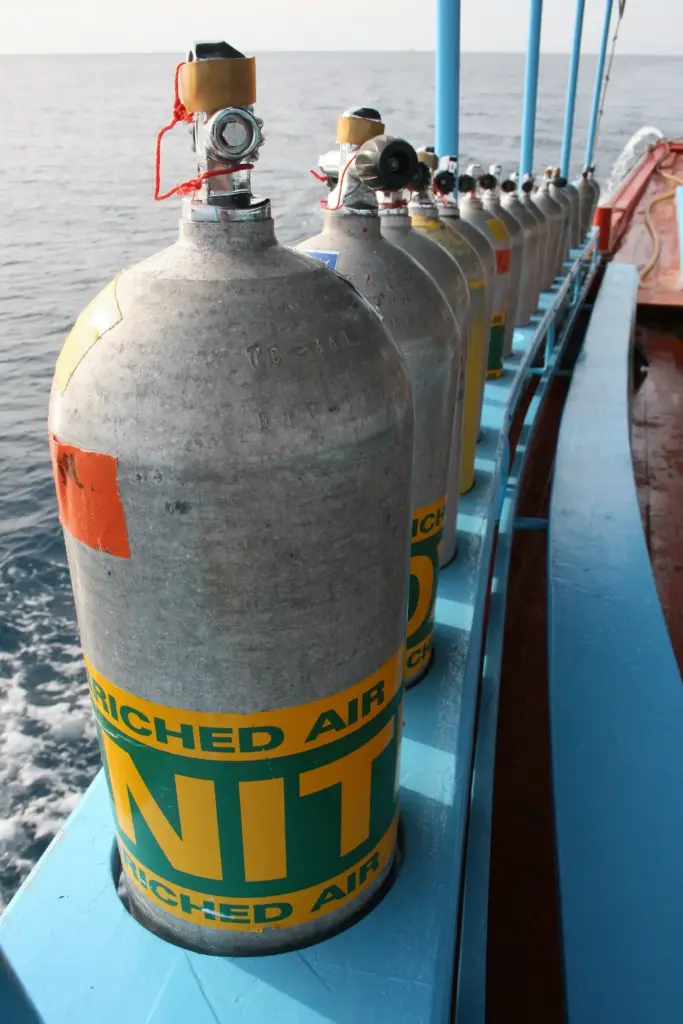
Nitrox is air with extra oxygen, and on a dive vacation with two or three dives a day it lets you stay longer at recreational depths before you reach no-decompression limits. The PADI course takes a day, the practice dives are optional, and you can bundle it with Open Water. Fills are cheap where you’ll use them: $12 a tank (or $20 for two) at Rainbow Reef in Key Largo and $13 a tank at Sand Dollar Sports in Cozumel. Some packages include it free, such as Caradonna’s Buddy Dive Resort special on Bonaire.
Rescue Diver and the professional levels
Rescue Diver shifts your attention from your own gear to the people around you, which makes you a better buddy on every trip after it. PADI requires Adventure Diver with the Navigation dive (Advanced Open Water also qualifies) and first aid and CPR training within 24 months, and recommends about 20 logged dives. Divemaster is the first professional rating, and at 18-plus with 60 logged dives to certify, it’s a career decision more than a vacation add-on. Some people do it as an internship at a dive resort abroad, with Utila, Roatan and Koh Tao among the usual choices.
Scuba certification near me: how to choose a local dive shop
Search “scuba certification near me” and Google will hand you a map of local shops. PADI, SSI and NAUI also run their own center locators. The listings tell you who exists. These questions tell you who’s good:
- How many students per instructor, in the pool and in open water? SSI’s standard allows up to eight adults per instructor in open water, more with certified assistants. Four or fewer is a better experience. Koh Tao Divers caps groups at four, and Kona Diving Company’s try dives are two students to one instructor.
- Where and when are the open water dives? At home that often means a quarry, lake or spring in season. UMD’s checkout dives run spring through fall.
- What’s included? eLearning, pool fees, rental gear, boat or site entry, and the card.
- What happens if weather cancels a dive, or you need another pool session? Ask for the policy in writing.
- Will you give me referral paperwork? Essential if you plan to finish on a trip.
- What must I buy? Mask, fins, snorkel and boots are standard. Be wary of a full equipment sale before your first pool session.
- What does a private course cost? At Pan Aqua in Manhattan, the difference between group and private was $100.
A good shop will answer all of this before you pay, lets you try on a mask in person, and sounds more interested in whether you’ll keep diving than in what you’ll buy today.
What gear you need for the course
Shops supply the expensive life-support gear for training: the buoyancy control device (BCD), regulator, tank and weights, and usually a wetsuit. You bring the personal fit items: mask, fins, snorkel and, for fins with open heels, boots. A mask that fits your face is the single best purchase you’ll make, because every minute spent clearing a leaking mask is a minute not spent learning.
After certification, rent before you buy. Rainbow Reef rents a full set (BCD, regulator, mask, fins, snorkel and wetsuit) for $35 a day, or a dive computer for $15. A dive computer is usually the first big purchase worth making: Bluewater Photo’s guide lists the Suunto Zoop Novo at $299.95 and the Mares Puck 4 at $319. Some courses include one; Roatan Divers’ price does, and SDI requires one on every training dive.
Water temperature decides the wetsuit. The Middle and Lower Keys run about 70-74°F in winter and 82-87°F in summer, according to Captain Hook’s seasonal guide; Catalina’s Casino Point drops to 55-59°F in winter. Checkout dives in a northern quarry or lake can be colder still at depth, so take the shop’s advice on thickness, hood and gloves.
Safety, medical and insurance basics for new divers
Recreational diving has a strong safety record when people dive within their training. PADI, citing DAN’s annual diving report, counts 24 recreational diving deaths among US and Canadian citizens in 2020, roughly two per 100,000 participants, and notes that about half of diving deaths are associated with an acute cardiac event. That’s why the medical questionnaire exists, and why older students should take the pre-course medical check seriously.
Three things to settle before your first trip:
- Flying after diving: at least 12 hours after a single no-decompression dive and 18 hours after repetitive or multi-day diving (DAN and the CDC agree).
- Dive accident coverage: DAN’s regular membership costs $40 a year for an individual or $60 for a family and includes up to $150,000 of emergency medical transportation for emergencies more than 50 miles from home. Dive accident insurance is a separate add-on, with plans paying up to $500,000.
- Ears: the CDC calls middle ear barotrauma (“ear squeeze”) the most common injury in divers. Equalize early and often on the way down, and don’t dive with a cold or congestion.
Does scuba certification expire? Refreshers, eCards and lost cards
No. PADI states plainly that its certification never expires. What dive operators care about is how recently you’ve been diving, and their rules vary:
- Maui Diamond Sea Sports asks divers who haven’t dived in over two years to do a guided dive or refresher before its Molokini trips.
- Kona Diving Company wants a dive within the last two years for its manta ray night dives.
- Stuart Cove’s in Nassau requires a refresher for its shark dive if you haven’t dived in three years.
- Belize Pro Dive Center wants a logged dive within six months before the Blue Hole.
PADI’s refresher, ReActivate, is 2-3 hours of eLearning and an optional in-water session priced by the dive shop. PADI Club members get the online part free. Royal Caribbean sells ReActivate to divers who have been out of the water for 2-10 years.
Keep your proof handy: PADI issues eCards and SSI puts digital cards in the MySSI app. If you’ve lost a card, contact the agency that issued it before the trip, not at the dive counter.
Frequently asked questions
How much does scuba certification cost?
A full Open Water course cost $450-$700 at the Florida Keys and Caribbean shops in this guide in September 2026, from $450 at Sunset House on Grand Cayman (plus eLearning) to $700 at Sea Dwellers in Key Largo. Hawaii runs $649-$857.59, and home programs range from $389 in Pensacola to $1,481 at Cal Poly Pomona. Add your own mask, fins, snorkel and boots (from about $180 for a basic package) plus tips.
How long does it take to get scuba certified?
Plan on 5-10 hours of online study plus two to four days in the water. Two-day vacation courses exist in Key Largo, Grand Cayman and Maui if your eLearning is finished before you arrive. Local programs spread the same work over two weekends or a term of evening classes. The referral option cuts the vacation portion to a day and a half.
Can you get scuba certified online?
Only partly. The knowledge portion is online, through PADI eLearning or SSI’s free MySSI course, but the pool sessions and four open water dives have to be done in person with an instructor. Beware of anything sold as a complete online certification. What you can do is finish the online study at home so your vacation days are spent underwater, not on quizzes.
Is PADI or SSI certification better?
Neither is better for a recreational diver. Both train you to the same 60-foot Open Water standard, and dive shops worldwide accept both cards. PADI has the larger network, which makes referrals easy to arrange. SSI’s digital materials are free, so SSI courses are often cheaper at the same shop: $560 versus $650 at one Cozumel operator. Choose the instructor first.
Do you have to know how to swim to scuba dive?
Yes, for certification. PADI requires you to float or tread water for 10 minutes and swim 200 yards without stopping, or 300 yards with mask, fins and snorkel. There’s no time limit and you can use any stroke. Discover Scuba try dives don’t include the certification swim, but you still need to be comfortable in water and fill out the medical questionnaire.
How old do you have to be to get scuba certified?
Ten, for Junior Open Water with PADI and SSI. Ages 10-11 are limited to 40 feet and must dive with a dive professional or certified parent, and ages 12-14 to 60 feet with a certified adult. Juniors upgrade to a full Open Water card at 15. Children 8 and up can try PADI’s Bubblemaker in a pool, and there’s no upper age limit.
Can I get certified in a weekend?
Yes, if you finish the eLearning before you arrive and book a shop that runs a two-day course. Rainbow Reef in Key Largo and Sunset House on Grand Cayman both teach the in-water portion over two days, with pool work and open water dives each day. Build in slack, though: a windy morning or ear trouble can push a dive, and a rushed course is a poor course.
Does scuba certification expire?
No. PADI says its certification never expires, so a card from 1995 is still valid. Dive operators do ask about recent experience, though: Maui Diamond and Kona Diving Company want a dive within the last two years, and Stuart Cove’s in Nassau requires a refresher after three years out. PADI’s ReActivate refresher takes a few hours and gets you current again.
Sources and verification
Everything on this page was checked on September 23-24, 2026 against the organizations listed below, and the page is compiled from them; we don’t claim first-hand visits to the shops named. Prices are the operators’ published rates and can change, so confirm before you book.
- PADI: Open Water Diver course (ages, swim test, time, depth, eLearning)
- PADI: Open Water referral and PADI diving restrictions by course
- SSI training standards: Open Water Diver
- NAUI: Learn to dive
- UHMS: Recreational diving medical screening system
- DAN: Guidelines for flying after diving and DAN membership
- CDC Yellow Book: Scuba diving
- Operators’ published prices: Rainbow Reef Dive Center, Sea Dwellers, Dive Friends Bonaire, Roatan Divers, Sunset House, Sea Ventures Pro Dive Center and Pan Aqua Diving
Also checked: Islamorada Dive Center, Florida Dive Pros, Eco Dive Center, Vortex Spring, Maui Dive Shop, Seasport Divers, Island Divers Hawaii, Kona Diving Company, Maui Diamond Sea Sports, ScubaTony, Sand Dollar Sports, Koh Tao Divers, Pelican Adventures, Aqua Marine Dive Center, Southpoint Divers, Captain Hook’s, Belize Pro Dive Center, Stuart Cove’s, Royal Caribbean, Sandals, Beaches, the University of Maryland RecWell program, Cal Poly Pomona ASI, STINAPA Bonaire, Triangle Dive Shop, Business of Diving, Girls That Scuba and Bluewater Photo.
Scuba Tourism Guide is an independent publication. It is not affiliated with PADI, SSI, NAUI, SDI or any dive operator named here, and no one paid to be included.
Photo credits
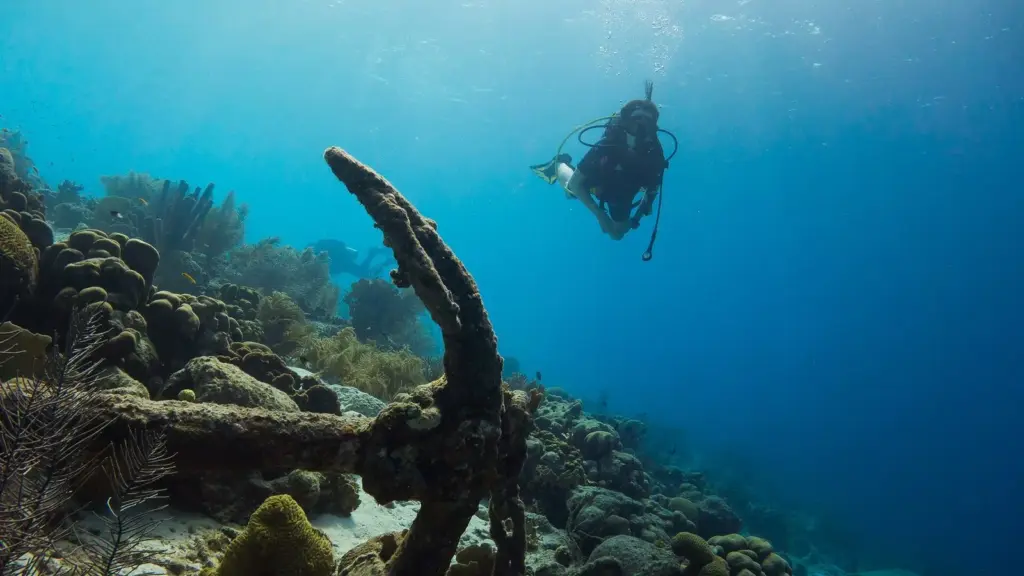
- Diver and green sea turtle, Key Largo (featured image): photo by Symbiosis, Wikimedia Commons (CC BY 2.0)
- Curtiss Helldiver wreck, Hawaiian Islands Humpback Whale National Marine Sanctuary: photo by National Marine Sanctuaries, Wikimedia Commons (public domain)
- Dive mask on a pool deck: photo by Lance Cpl. Christopher Mendoza, Wikimedia Commons (public domain)
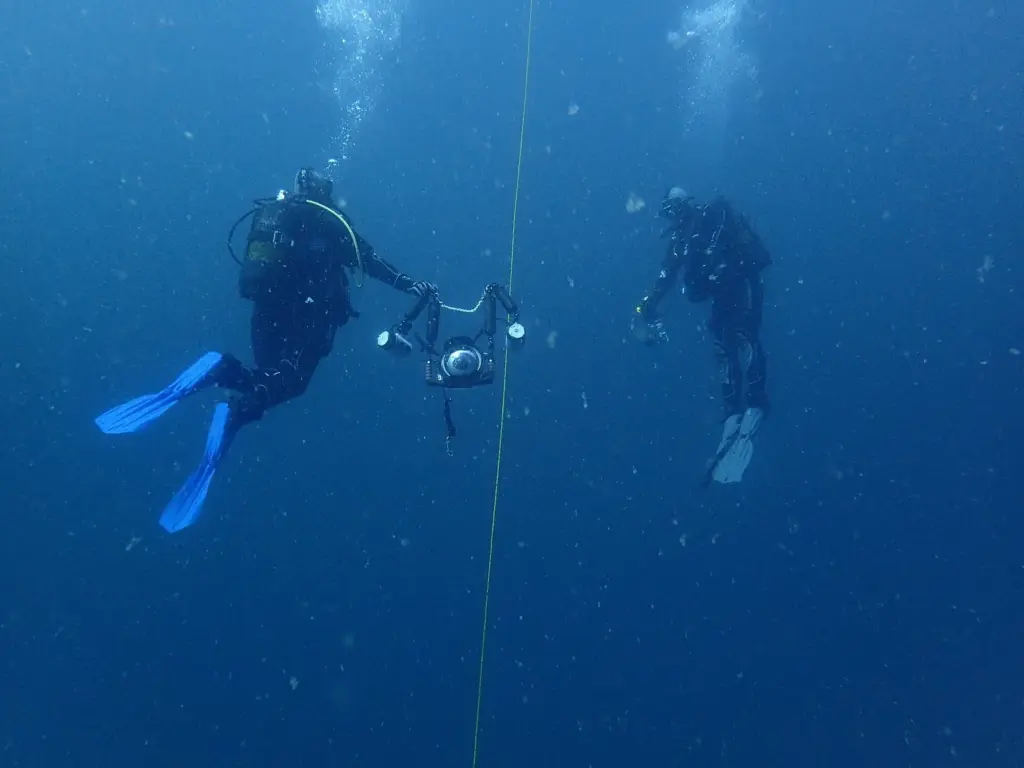
- Divers at a safety stop: photo by Peter Southwood, Wikimedia Commons (CC BY-SA 4.0)
- Shore diving, Bonaire: photo by Kris Mikael Krister, Wikimedia Commons (CC BY 3.0)
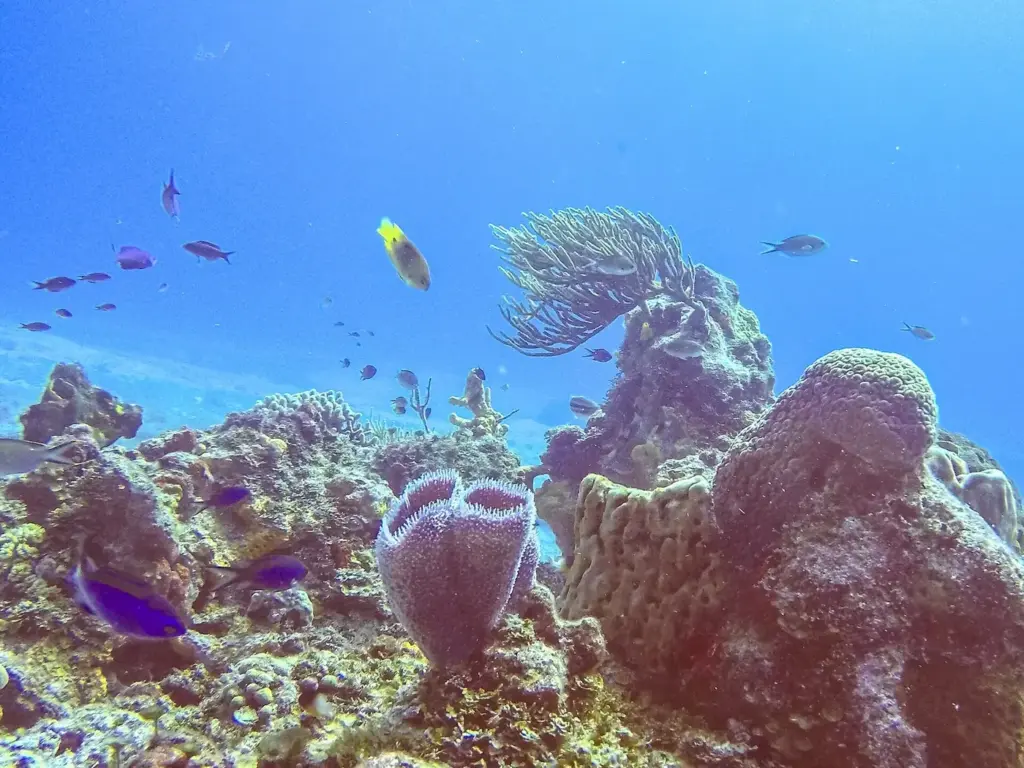
- Reef in Arrecifes de Cozumel National Park: photo by Matthew T Rader, Wikimedia Commons (CC BY-SA 4.0)
- USNS General Hoyt S. Vandenberg wreck, Key West: U.S. Navy photo by Mass Communication Specialist 2nd Class Nicholas S. Tenorio, Wikimedia Commons (public domain)
- Nitrox cylinders on a dive boat, Koh Tao, Thailand: photo by Eli Duke, Wikimedia Commons (CC BY-SA 2.0)


