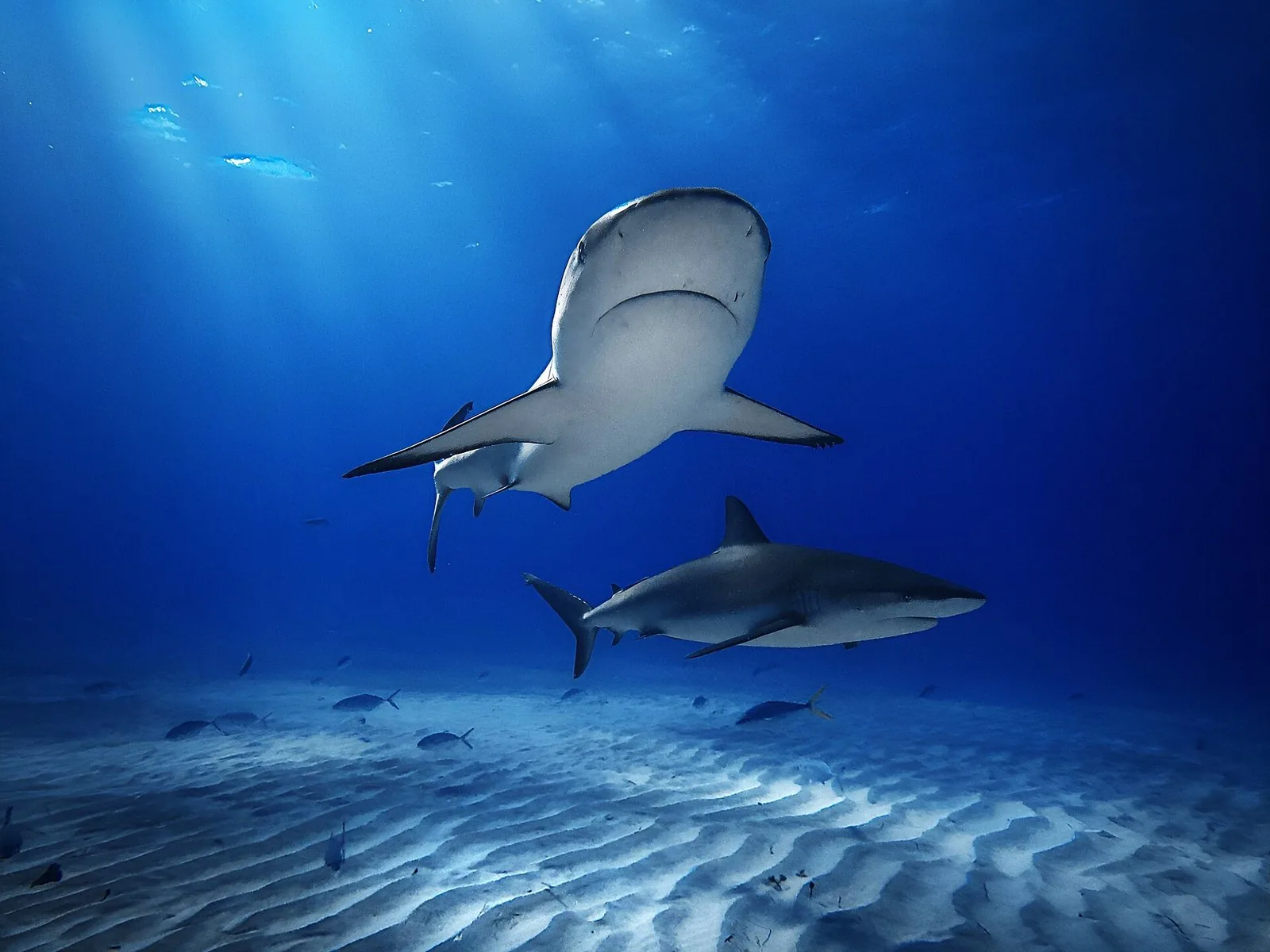
West End, at the tip of Grand Bahama, is just 56 nautical miles from Palm Beach, and offshore, at Tiger Beach, divers kneel on shallow sand while tiger sharks glide past. Bimini, where great hammerheads gather every winter, is about 50 miles from Miami. That closeness is the great advantage of a scuba diving Bahamas trip: some of the best shark diving in the world is a short flight, or even a ferry ride, from Florida. The trick is picking the right island, because the Bahamas has around 700 of them and only a handful matter to divers.
Short answer: The Bahamas is the best shark diving near the US: tiger sharks at Tiger Beach (October to June), great hammerheads at Bimini (November to April), oceanic whitetips off Cat Island (March to June) and Caribbean reef sharks off Nassau year-round. Add walls, blue holes and wrecks. Expect $185 to $240 a day for diving.
Prices, seasons and rules on this page were checked between September 23 and October 1, 2026 against the dive operators’, parks’ and government agencies’ own websites. No operator or resort paid to appear.
On this page: Cruise-day diving · What to pack · Shark science · Why dive the Bahamas · Island by island · Best dive sites · Shark diving · Blue holes · Marine life by season · Month by month · Getting there · Where to stay · Operators and prices · 7-night budget · Liveaboards · Courses · Safety · Bahamas vs Florida and the Caribbean · Non-divers · Sample itinerary · FAQ · Sources
| The Bahamas at a glance | Details (checked Sept-Oct 2026) |
|---|---|
| Skill level | All levels; Open Water for most shark dives, Advanced for night and specialty dives |
| Best months | By species: tiger sharks October-June, great hammerheads November-April, oceanic whitetips March-June |
| Water temperature | Reported at about 75-80°F (24-27°C) in winter and 78-84°F (26-29°C) in summer |
| Visibility | Up to 150-200 ft (46-61 m) at its best, per the tourism board |
| Depth range | 20-ft shark sites and shallow wrecks to walls dropping 6,000 ft into the Tongue of the Ocean |
| Signature marine life | Tiger, great hammerhead, Caribbean reef, lemon and oceanic whitetip sharks; dolphins |
| Typical diving cost | $369.60 for a two-day package in Nassau; $242.40 for the Nassau shark dive; $349 + VAT for a Bimini hammerhead day |
| Tax | 10% VAT added to many dive prices |
| Getting there | Nonstops to Nassau from more than a dozen US cities; Bimini, Freeport, Andros and Exuma from Florida and other hubs |
| Entry | US passport; no visa for a vacation stay |
| Advisory | Level 2, exercise increased caution |
Why dive the Bahamas, and who should skip it
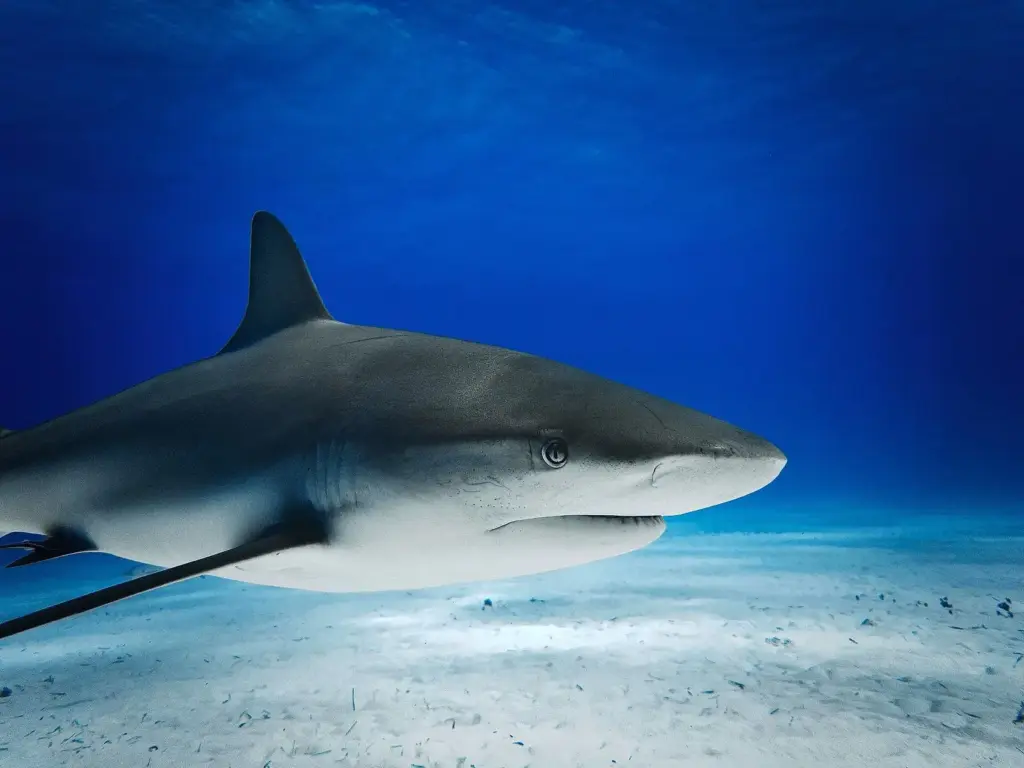
The Bahamas does one thing better than anywhere else within reach of the US: big sharks in clear, shallow water. Tiger Beach off Grand Bahama is a shallow sand flat where tiger sharks, Caribbean reef sharks and lemon sharks come in close, and Epic Diving says up to six shark species on one dive isn’t unusual. Bimini’s great hammerheads cruise over sand in about 20 feet of water. Off Cat Island, oceanic whitetips patrol the blue in spring. And off Nassau, Caribbean reef sharks are on the menu year-round.
The rest of the diving is good too. The Bahamas has some of the clearest water in the region, with the tourism board quoting visibility of 150 to 200 feet at its best. Nassau’s walls drop into the Tongue of the Ocean, a trench about 2,000 meters (6,600 feet) deep. Andros has the Andros Barrier Reef, which the Bahamas tourism board calls the third-largest barrier reef in the world at 190 miles, and dozens of blue holes. The Exumas have a marine park that has been a no-take zone since 1985. And Long Island has Dean’s Blue Hole, one of the deepest in the world.
Who should skip it? Budget divers: the Bahamas is one of the pricier destinations in the region, and most prices carry 10% VAT. Macro photographers will find better critter diving elsewhere. And anyone uneasy about fed shark encounters should know that several of the most famous dives use bait, a practice we look at honestly below. If you want cheap, easy reef diving, Roatan, Cozumel or Bonaire offer more for less.
Scuba diving Bahamas: island by island
The islands that matter to divers are spread across hundreds of miles of ocean, and each has a specialty. This chooser covers the main ones:
| Island | Best for | Signature dives | Getting there from the US |
|---|---|---|---|
| New Providence (Nassau) | Easy logistics, reef shark dive, walls and wrecks | Shark Buoy, James Bond wrecks, Tongue of the Ocean walls | Nonstops from more than a dozen US cities |
| Grand Bahama (Freeport, West End) | Tiger sharks | Tiger Beach, Ben’s Cave | Freeport from Miami and Fort Lauderdale |
| Bimini | Great hammerheads, reef sharks | Hammerhead sand flats, Victory Reef, Bimini Wall, SS Sapona | Flights from Miami and Fort Lauderdale; ferry to Port Everglades |
| Andros | Barrier reef, walls, blue holes | Andros Wall, The Crater, inland and ocean blue holes | Flights from Fort Lauderdale and Nassau |
| The Exumas | Protected reefs, remote cays | Exuma Cays Land and Sea Park, Amberjack Reef | Exuma from Miami, Charlotte, Fort Lauderdale and Atlanta |
| Long Island | Blue holes, walls | Dean’s Blue Hole, Conception Island Wall | Via Nassau |
| Cat Island | Oceanic whitetips | Offshore whitetip encounters, March-June | Usually by liveaboard |
| San Salvador | Remote walls, dive-resort weeks | Walls close to shore | Usually via Nassau |
Scuba diving in Nassau (New Providence)
Nassau is the easiest place to start, with nonstop flights from across the US and one of the country’s biggest dive operations, Stuart Cove’s. A typical morning starts with a wall that begins at 40 to 60 feet and drops about 6,000 feet into the Tongue of the Ocean; Stuart Cove’s divemasters lead to about 70 feet for 30 minutes, though divers with computers can stay shallower or go a little deeper. The second dive is a shallow reef, a movie site or a wreck, such as a 100-foot freighter in 50 feet of water or the “James Bond” wreck in 40. Transfers from your hotel, tanks and weights are included. Nassau’s other headline is the reef shark dive, covered below, and Nassau is also a cruise port, with Stuart Cove’s running trips around ship schedules.
Scuba diving in Freeport and Grand Bahama
Grand Bahama is the gateway to Tiger Beach, a sand flat off West End, which lies just 56 nautical miles (64 miles) from Palm Beach. Epic Diving runs Tiger Beach trips from October to June, and its residents include tiger, great hammerhead, Caribbean reef, bull, nurse and lemon sharks. PADI lists tiger shark season there as October to January and rates the dive as suitable for beginners, since much of it happens on shallow sand. Freeport also has reef diving and Ben’s Cave, and Grand Bahama is still recovering from Hurricane Dorian, which struck as a Category 5 storm on September 1, 2019, and damaged or destroyed nearly half the island’s homes.
Diving in Bimini
Bimini sits about 50 miles (80 km) east of Miami, close enough that a high-speed ferry links it with Port Everglades. It’s home to the Bimini Biological Field Station, the “Shark Lab,” founded in 1990 by Dr. Samuel Gruber, and its signature dive is the great hammerhead encounter from November to April. Neal Watson’s Bimini Scuba Center charges $349 plus 10% VAT for its Great Hammerhead Safari, with a maximum of 14 guests at a site about 20 feet deep, and a full 5 mm wetsuit, hood and gloves are required. Its year-round reef shark dive costs $160 plus VAT. Away from sharks, Bimini has Victory Reef, the Bimini Wall and the SS Sapona, a concrete-hulled steamer that ran aground in a 1926 hurricane, was used for bombing practice in World War II and now lies in 15 to 20 feet of water, an easy dive and snorkel.
Diving in Andros
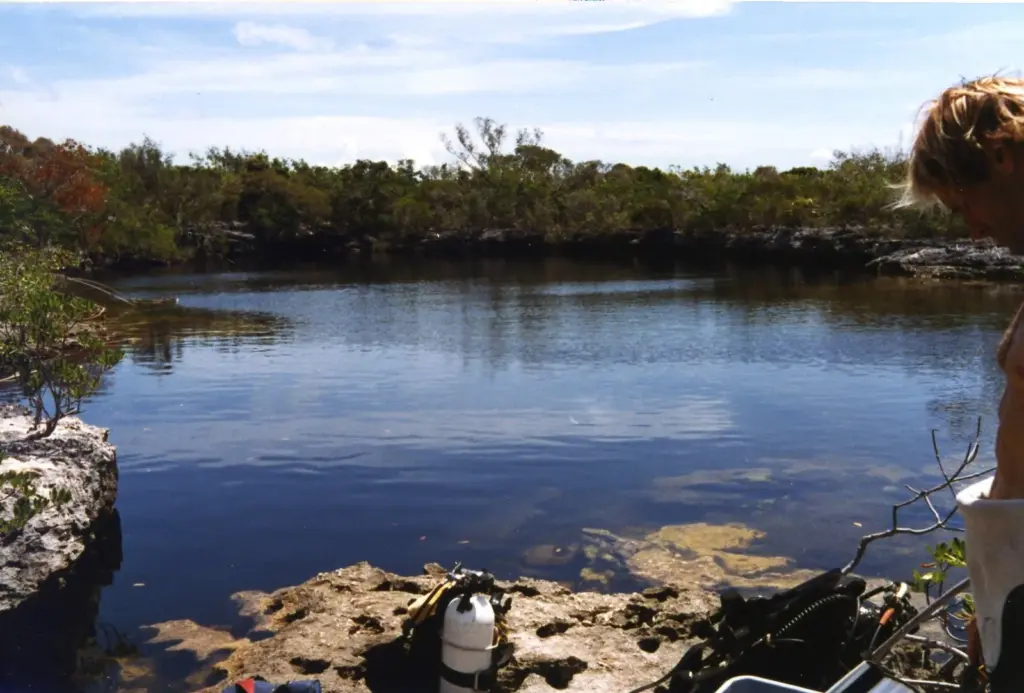
Andros is the largest island in the Bahamas, at 5,957 square kilometers (2,300 square miles), and the most diverse dive destination. Along its east coast runs the Andros Barrier Reef, which Wikipedia lists as the world’s sixth-longest at 225 kilometers (140 miles), and just beyond it the Tongue of the Ocean drops to about 2,000 meters. Andros has 178 inland blue holes and at least 50 more in the sea. Small Hope Bay Lodge, the island’s best-known dive resort, includes three tanks a day in its diving and runs everything from shallow reefs and vertical walls to blue holes, wrecks and shark observation dives. The nearest airport is about ten minutes away, with daily flights from Nassau and Fort Lauderdale.
Diving in the Exumas
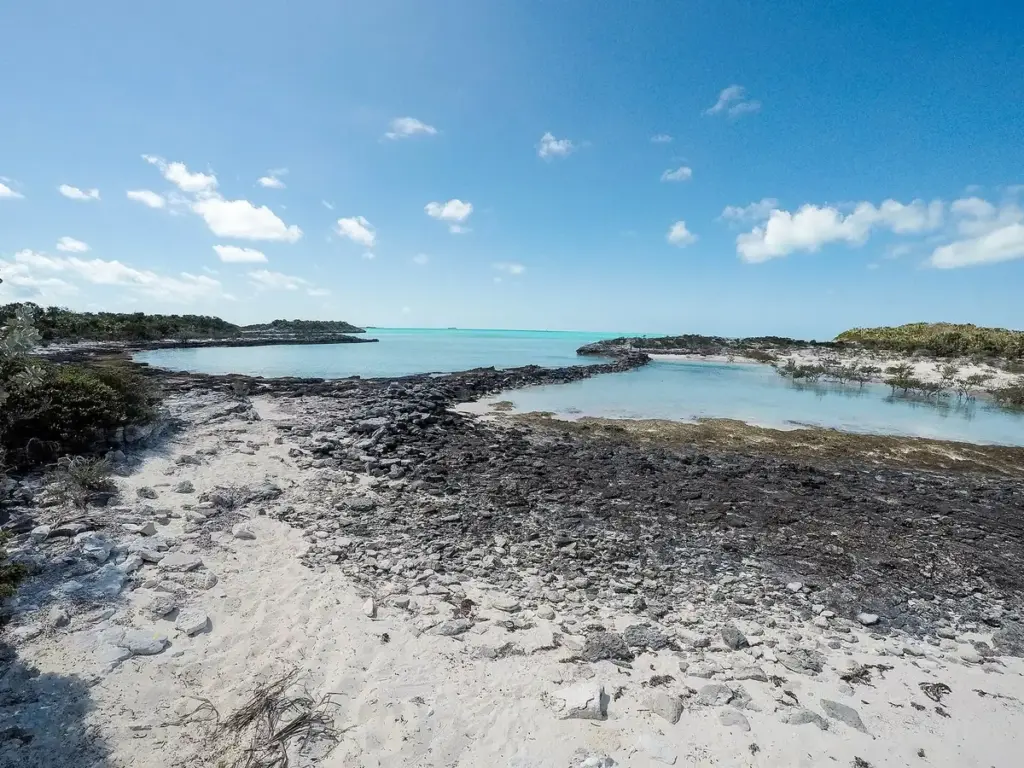
The Exumas are a chain of cays and clear-water sounds, and their diving centers on the Exuma Cays Land and Sea Park, established in 1958 and managed by the Bahamas National Trust. It covers 112,640 acres and has been a no-take replenishment zone, with all fishing prohibited, since 1985, which shows in the fish life. Amberjack Reef is among the tourism board’s site picks. The Exumas suit divers on a sailing or yacht trip, or anyone who wants quiet reefs and beaches between dives. Exuma’s airport has nonstops from Miami, Charlotte, Fort Lauderdale and Atlanta.
Long Island, Cat Island and San Salvador
The southern and eastern Out Islands are for divers who want remote walls and few other boats. Long Island has Dean’s Blue Hole, west of Clarence Town, and the walls of Conception Island. Cat Island is the place for oceanic whitetips, which Epic Diving finds there from March to June, usually from a liveaboard. San Salvador has walls close to shore and dive-resort weeks: Caradonna lists seven nights at Riding Rock Inn with 16 dives and 21 meals from $2,184 per person for 2027 travel.
Best dive sites in the Bahamas
These are the sites that define Bahamas diving, with depths and levels where operators and park authorities publish them:
| Site | Island | Depth | Level | Highlights |
|---|---|---|---|---|
| Tiger Beach | Grand Bahama (off West End) | Shallow sand flat | Open Water | Tiger, reef and lemon sharks, sometimes great hammerheads |
| Great hammerhead site | Bimini | About 20 ft | Open Water; 5 mm, hood and gloves required | Great hammerheads, November-April |
| Shark Buoy and the reef shark dive | New Providence | Shallow to mid-depth | Certified, 12+ | Caribbean reef sharks, year-round |
| Tongue of the Ocean walls | New Providence, Andros | Wall tops at 40-60 ft | All levels, guided | Drop-offs into a 6,000-ft trench |
| James Bond wrecks | New Providence | About 40 ft | Open Water | Movie-set wrecks, fish life |
| SS Sapona | Bimini | 15-20 ft | Snorkel or Open Water | Concrete-hulled 1920s steamer |
| Andros Wall and The Crater | Andros | Walls and blue holes | Intermediate+ | Barrier reef, ocean blue holes |
| Exuma Cays Land and Sea Park | Exumas | Shallow reefs | All levels | No-take reefs since 1985 |
| Dean’s Blue Hole | Long Island | To 663 ft (202 m) | Snorkel or experienced divers only | One of the world’s deepest blue holes |
| Cat Island offshore | Cat Island | Blue water | Advanced, experienced | Oceanic whitetips, March-June |
Most Bahamas boat dives are guided, and on the walls the guide’s planned depth matters: wall tops start around 40 to 60 feet and the drop below is effectively bottomless, so watch your computer and your buoyancy. Shark sites are shallow by design, which makes them accessible to new divers who can hold their position calmly on the sand.
Bahamas shark diving
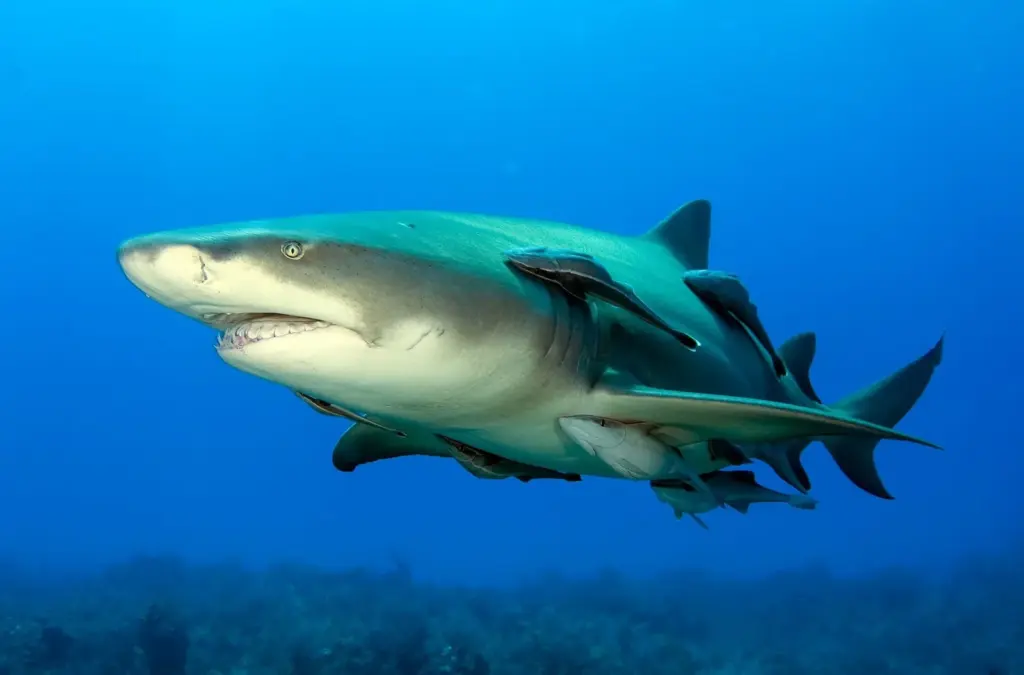
Shark diving is the reason most Americans choose the Bahamas over other Caribbean islands, and the country offers more species, more reliably, than anywhere else this close to the US. The tourism board’s own summary is simple: tiger sharks at Freeport, silky sharks at Nassau, hammerheads at Bimini and oceanic whitetips at Cat Island. Here’s how the main encounters compare (checked September 2026):
| Encounter | Season | Operator and price | Requirements |
|---|---|---|---|
| Caribbean reef shark dive, Nassau | Year-round | Stuart Cove’s two-dive Shark Adventure, $242.40 with transfers; gear and wetsuit extra | Certified, age 12+; refresher if you haven’t dived in 3 years; full-length wetsuit |
| Tiger Beach, Grand Bahama | October-June (tigers peak October-January) | Epic Diving day trips and liveaboard; deposit $500-$1,000 | Open Water; Advanced for night dives |
| Great hammerheads, Bimini | November-April | Bimini Scuba Center, $349 + 10% VAT | Full 5 mm wetsuit, hood and gloves; max 14 guests |
| Reef sharks, Bimini | Year-round | Bimini Scuba Center, $160 + 10% VAT | Certified divers |
| Oceanic whitetips, Cat Island | March-June | Epic Diving liveaboard | Experienced in blue water |
Shark diving in Nassau
Stuart Cove’s Shark Adventure is the best-known shark dive in the country. It’s a two-dive trip with Caribbean reef sharks, which are fed during the second dive: a feeder offers fish from a bait box on the tip of a pole spear while divers watch from fixed positions, with 5- to 6-foot sharks circling close. Stuart Cove’s says the dives are about observation, and it runs a Shark Awareness specialty ($324) for divers who want to learn more. Booking online saves $10 per person.
The honest part: fed shark dives
Several of the Bahamas’ most famous shark encounters use bait, and divers should go in with open eyes. Feeding concentrates sharks at predictable sites, which is why the encounters are so reliable and why operators can promise close views. Critics worry that feeding changes behavior and associates people with food; supporters point out that shark tourism gives the animals a value alive, and the Bahamas has long been described as a shark sanctuary where commercial shark fishing is banned. Our view: choose operators that brief clear protocols, keep divers in fixed positions, use trained feeders and limit group sizes, and never feed, touch or chase sharks yourself. For how these dives compare with shark encounters elsewhere, from Fiji to South Africa, see our shark diving guide.
Our take: If you only do one Bahamas shark dive, make it Tiger Beach for variety or Bimini for the hammerheads. Nassau’s reef shark dive is the easiest to fit into a short trip or a cruise day, and the best introduction for nervous first-timers.
Blue holes: Dean’s Blue Hole and Andros
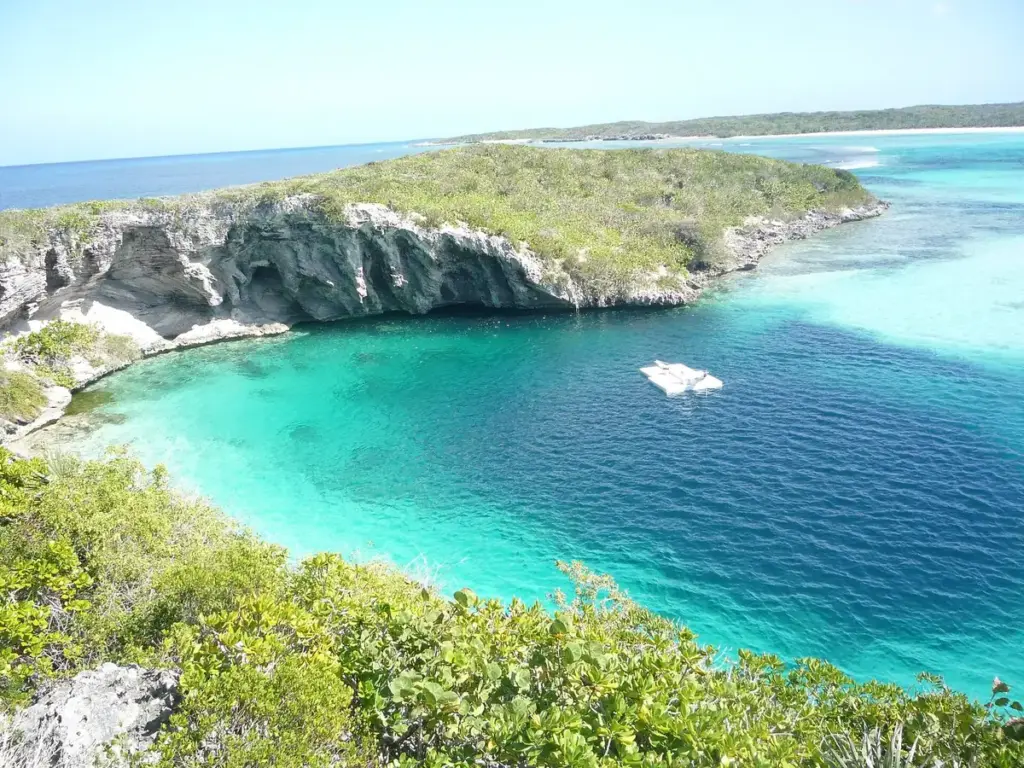
Blue holes are sinkholes formed when sea levels were lower, and the Bahamas has more of them than almost anywhere. Dean’s Blue Hole, on Long Island west of Clarence Town, is about 202 meters (663 feet) deep, the third-deepest blue hole in the world. It’s about 30 meters wide at the surface and opens into a cavern roughly 100 meters across below, and it hosts the Vertical Blue freediving competition. For most visitors it’s a snorkel or a shallow dive around the rim; the depths are for trained freedivers and technical divers only.
Andros is the blue hole capital, with 178 inland and at least 50 ocean blue holes. Ocean blue holes along the barrier reef can be dived with local operators such as Small Hope Bay Lodge, while inland blue holes are caves and caverns that call for specific training. Treat every blue hole as an overhead environment once you go below its opening: ocean blue holes can have tidal currents, and beyond the light, cave training is essential.
Marine life and the seasonal calendar
Beyond sharks, Bahamas reefs hold the usual Caribbean cast (turtles, rays, groupers, barracuda, morays and reef fish), with the clear water that makes the islands famous. Dolphins are part of the picture too: Bimini runs wild dolphin trips, and Grand Bahama’s Sanctuary Bay offers managed dolphin encounters. The shark calendar is what most divers plan around:
- Tiger sharks: Tiger Beach, October to June, with PADI listing October to January as the peak.
- Great hammerheads: Bimini, November to April; PADI lists December to April.
- Oceanic whitetips: Cat Island, March to June.
- Caribbean reef sharks: Nassau, Bimini and Tiger Beach, year-round.
- Lemon sharks: regulars at Tiger Beach in season.
Bahamas diving month by month
Water in the Bahamas is reported at about 75 to 80°F (24 to 27°C) in winter and 78 to 84°F (26 to 29°C) in summer, so a 3 mm suit covers most of the year and a 5 mm with a hood is wise for winter shark dives, as Bimini requires. The Atlantic hurricane season runs June to November.
| Months | Water | What’s on |
|---|---|---|
| December-February | Coolest, mid-to-high 70s°F | Bimini great hammerheads; Tiger Beach tigers; northerly fronts can cancel boats |
| March-April | Warming | Hammerheads continue to April; Cat Island oceanic whitetips begin; Tiger Beach |
| May-June | Warm | Oceanic whitetips through June; Tiger Beach season ends in June; calm seas |
| July-September | Warmest, low-to-mid 80s°F | Reef and wall diving at its warmest; Nassau’s reef sharks; peak hurricane season |
| October-November | Cooling | Tiger Beach season reopens in October; Bimini hammerheads arrive in November |
The best time to dive the Bahamas depends on what you want to see. For the most shark variety, go between November and April, when you can combine Bimini’s hammerheads with Tiger Beach. For oceanic whitetips, go in spring. For warm, calm reef diving, late spring and early summer are hard to beat.
Getting there from US gateways
No Caribbean country is easier to reach. According to the Bahamas Ministry of Tourism, Nassau has nonstop service from Miami, Fort Lauderdale, Charlotte, Atlanta, New York (JFK, Newark and LaGuardia), Boston, Washington (Reagan National and Dulles), Dallas, Denver, Houston, Chicago, Orlando and Tampa. The Out Islands have their own links: Bimini from Miami and Fort Lauderdale, Andros from Fort Lauderdale, Exuma from Miami, Charlotte, Fort Lauderdale and Atlanta, and Freeport from Miami and Fort Lauderdale. Long Island connects through Nassau. Bimini also has a high-speed ferry to Port Everglades, which makes it a weekend trip from South Florida.
Entry is straightforward for Americans: a valid US passport, no visa for a vacation stay, and an immigration form on arrival; carry a return ticket. Many dive prices in the Bahamas are quoted before 10% VAT, so check whether a quote is inclusive. Some shark operators, such as Epic Diving, don’t include airport transport, so arrange it ahead.
Where to stay
Nassau and Paradise Island have everything from big resorts to small hotels, and Stuart Cove’s collects divers from hotels around New Providence. Grand Bahama suits Tiger Beach trips, with hotels around Freeport and West End. Bimini is small and dive-focused, centered on the Bimini Big Game Club, home of Neal Watson’s Bimini Scuba Center; Caradonna lists a seven-night package there with six days of two-tank morning dives plus free afternoon dives from $2,308 per person. Andros means lodges such as Small Hope Bay. The Exumas and Out Islands range from small resorts to liveaboards and sailing yachts.
For a short trip, Nassau is the obvious base. For a dedicated shark trip, stay near the action: West End or Freeport for Tiger Beach, the Big Game Club for Bimini’s hammerheads. For a classic dive-lodge week, Andros or San Salvador.
Choosing an operator: prices and what’s included
Bahamas dive prices are in US dollars, which are used alongside the Bahamian dollar, and the main variables are VAT, gear and transfers. Published prices, checked October 1, 2026:
| Operator | Price | Included | Extra |
|---|---|---|---|
| Stuart Cove’s, Nassau | 2-day package $369.60; 3 days $514.80; 4 days $646.80; 5 days $778.80 | Hotel transfers, tanks, weights | Nitrox $12 a tank; wetsuit $14.40 a day; private divemaster $216 a half day |
| Stuart Cove’s Shark Adventure | $242.40 | Two dives, tanks, weights, belt, hotel transfers | Gear, wetsuit, tips |
| Bimini Scuba Center | Hammerhead day $349; reef shark dive $160 | Tanks and weights | 10% VAT |
| Small Hope Bay Lodge, Andros | Lodge packages | Three tanks and weights a day | 10% VAT |
| Epic Diving, Grand Bahama | Tiger Beach trips and liveaboard | Lunch, drinks and snacks on boat days | Airport transport; deposit $500-$1,000; no refunds for weather |
Nassau’s five-day package works out to about $156 a day for two-tank diving, roughly what you’d pay in Grand Cayman and more than in Cozumel or Roatan. Shark dives cost more because of the specialized boats, feeders and longer runs. Tipping is customary for divemasters and boat crews; ask your operator what’s normal. And read the weather terms: Epic Diving, for example, gives no refunds when weather cancels a day, which is worth knowing before you book a short Tiger Beach trip.
What a week of Bahamas diving costs: a 7-night budget
Three ways to spend a week, using the published prices above. Flights and hotels depend on dates and taste, so they’re left as line items.
| Item | Nassau, independent | Bimini dive package | Andros or San Salvador lodge |
|---|---|---|---|
| Diving | 5-day package $778.80 | Included: six days of two-tank mornings plus afternoon dives | Included or packaged with the lodge |
| Shark dive | Shark Adventure $242.40 | Hammerhead day $349 + 10% VAT in season | Lodge shark-observation dives |
| Lodging and meals | Your choice of hotel | Included in Caradonna’s package from $2,308 | San Salvador from $2,184 with 21 meals and 16 dives |
| Extras | Nitrox $12 a tank; gear rental; tips | VAT, nitrox, tips | VAT, tips |
| Diving subtotal | About $1,021 for five days plus the shark dive | About $2,308 to $2,700 all-in before flights | About $2,184 all-in before flights |
Our take: For a first Bahamas trip, a long weekend in Nassau with the reef shark dive is hard to beat on convenience. For a dedicated shark trip, book Bimini’s hammerhead season or a Tiger Beach liveaboard, and budget for weather days.
Bahamas liveaboards
Liveaboards are the best way to reach the remote shark sites and the Out Islands. Epic Diving’s M/V Thresher follows the sharks by season: Bimini’s great hammerheads from November to April, Cat Island’s oceanic whitetips from March to June, and Tiger Beach from October to June. Other boats cover the Exumas and the southern islands. Liveaboards.com puts typical Caribbean and Bahamas cabin rates at $1,800 to $4,200 per person for 7 to 10 nights (checked September 2026).
A liveaboard bahamas trip suits divers who want the most shark time per dollar, since the boat sits on the sites rather than running out and back each day. It suits less well if you get seasick, want non-diving days, or are traveling with non-divers. Ask what’s included (nitrox, gear, transfers), what the boat does if weather blocks a crossing, and how many divers share each dive guide.
Courses and skill level
The Bahamas is a good place to learn, with shallow reefs, warm water and large, experienced operators such as Stuart Cove’s, which teaches the full PADI ladder from Open Water to Divemaster. Most of the famous shark dives need only an Open Water card: Stuart Cove’s requires certified divers aged 12 and up and a refresher for anyone who hasn’t dived in three years, and Epic Diving requires Open Water certification, with Advanced for night and specialty dives.
Specialties make sense here too. Stuart Cove’s Shark Awareness specialty costs $324, and its Shark Feeder program, which puts you in a chainmail suit, costs $3,180. The walls reward good buoyancy, and nitrox, at $12 a tank in Nassau, extends bottom time on deeper wall dives. If you’re new, start with Nassau’s shallow reefs and wrecks before Tiger Beach or Bimini.
Safety: currents, chambers, insurance and hurricanes
Diving conditions. Most Bahamas dives are guided boat dives in clear water, but the walls drop into very deep water, offshore sites can have current, and winter cold fronts can stir up the seas and cancel trips. On shark dives, follow the briefing exactly: stay in position, keep your hands to yourself and don’t swim after the animals.
Chambers and insurance. Nassau has had a hyperbaric clinic with a recompression chamber at Lyford Cay. In 2006 the clinic stopped accepting DAN America insurance over unpaid claims while still treating every patient. Today’s arrangement may differ, so ask DAN how a claim would be handled before you travel. The Out Islands are a flight away from Nassau’s chamber, and Miami’s Mercy Hospital, DAN’s regional coordinator for Florida and the Caribbean, is close by air. Buy dive accident insurance before you go; DAN’s own site explains the options, and its 24/7 emergency line is +1-919-684-9111.
Hurricanes. The Atlantic hurricane season runs June to November, and the Bahamas has been hit hard: Hurricane Dorian devastated Grand Bahama in 2019. Buy trip insurance for summer and fall trips, and check that your operator has a clear weather policy.
The advisory and flying home. The Bahamas is at Level 2, exercise increased caution, on the State Department’s scale; read the current advisory before you go. Plan your last dive for at least 18 hours before your flight after a multi-day trip, per DAN’s guidelines, and 24 hours is safer.
Bahamas vs Florida and the rest of the Caribbean
The Bahamas sits between Florida and the Caribbean in more ways than geography. Compared with scuba diving in Florida, it offers clearer water, bigger walls and far more reliable big sharks, though Florida has the edge on wrecks, cost and convenience. Compared with the rest of the region, covered in our guide to the best scuba diving in the Caribbean, the Bahamas is the shark specialist: Cozumel wins on drift diving and price, Bonaire on shore diving, and the Cayman Islands on polished walls, but none matches Tiger Beach or Bimini’s hammerheads.
| Factor | Bahamas | Florida Keys | Cozumel |
|---|---|---|---|
| Signature diving | Sharks, walls, blue holes | Wrecks, shallow reefs | Drift diving on walls |
| Two-tank price | About $156-$185 a day in Nassau packages | $99 in Key Largo | About $102 a day on a five-day package |
| Getting there | Short nonstops; ferry to Bimini | Drive from Miami | Nonstops from Texas and Miami |
| Passport | Required | Not required | Required |
| Advisory | Level 2 | Domestic | Level 2 |
Scuba diving from a cruise ship in Nassau
Nassau is one of the busiest cruise ports in the Caribbean, and diving is one of the best ways to spend a port day there. Stuart Cove’s runs cruise-friendly trips: morning dives leave at 9 a.m. and return by noon, afternoon dives leave at 1 p.m. and return by 4 p.m., and shark dives return at 5 p.m., with dock drop-off by 6:20 p.m. Stuart Cove’s has contracts with Holland America, Disney Cruise Line and Royal Caribbean, and passengers on those lines must book through the cruise line; everyone else can book directly and save $10 per person by booking online. Bring your certification card, leave a margin before all-aboard time, and keep port-day dives conservative.
What to pack for Bahamas diving
- Exposure protection by season: a 3 mm suit for most of the year; a full 5 mm wetsuit, hood and gloves for Bimini’s winter hammerhead dives, which require them. Stuart Cove’s shark dive requires a full-length wetsuit.
- Certification card and logbook: shark operators check, and Stuart Cove’s wants a refresher if you haven’t dived in three years.
- A surface marker buoy: wall and offshore dives can drift.
- A dive computer and nitrox card: nitrox costs $12 a tank in Nassau and extends bottom time on the walls.
- Cash for tips and VAT-inclusive budgeting: many prices add 10% VAT.
- A light jacket: Epic Diving suggests one for cool evenings and long days on the water.
The Bimini Shark Lab and Bahamas shark science
The Bahamas’ sharks are some of the best studied in the world. The Bimini Biological Field Station, known as the Shark Lab, was founded in 1990 by Dr. Samuel Gruber, and decades of research on Bimini’s lemon sharks and other species have shaped what we know about shark behavior. That science is part of why the Bahamas takes shark protection seriously, and why shark tourism there is a showcase for the argument that sharks are worth more alive than dead. Divers can support it by choosing operators with good protocols and by treating every encounter as an observation, not a photo opportunity to chase.
For non-divers
The Bahamas is an easy sell to non-divers. Nassau and Paradise Island have beaches, casinos, restaurants and resort water parks; the Exumas have some of the region’s most photographed beaches and cays; and Bimini and the Out Islands offer quiet, small-island life. Snorkelers can join many dive boats, including Bimini’s reef shark trips ($120 for adults plus VAT) and the shallow SS Sapona. Grand Bahama’s Sanctuary Bay offers a Dolphin Encounter from $85 for adults and a 2.5-hour Dolphin Swim at $219, plus VAT. Inland, Andros’s blue holes make a good bike or kayak outing.
A sample 7-day Bahamas dive trip
- Day 1: Fly nonstop to Nassau; settle in.
- Day 2: Morning two-tank trip with Stuart Cove’s: a Tongue of the Ocean wall and the James Bond wreck.
- Day 3: The Shark Adventure in the afternoon; a free morning.
- Day 4: Fly or ferry to Bimini (in season) or Grand Bahama.
- Day 5: Great hammerheads at Bimini, November to April, or Tiger Beach, October to June.
- Day 6: Reef shark dive or Victory Reef, plus a snorkel on the SS Sapona; last dives.
- Day 7: No diving; beach day, then fly home the next morning, outside DAN’s 18-hour guideline.
Frequently asked questions
Can you scuba dive in the Bahamas?
Yes, and it’s one of the most popular dive destinations for Americans. Operators on New Providence, Grand Bahama, Bimini, Andros, the Exumas and the Out Islands run reef, wall, wreck, blue hole and shark dives, and Nassau has nonstop flights from more than a dozen US cities. You need a certification card for fun dives; operators also teach beginners.
How much is scuba diving in the Bahamas?
Expect about $156 to $185 a day for two-tank diving on Nassau’s multi-day packages: Stuart Cove’s charges $369.60 for two days and $778.80 for five (checked October 2026). Shark dives cost more: $242.40 for Nassau’s Shark Adventure and $349 plus 10% VAT for a Bimini hammerhead day. Many prices exclude VAT, gear and tips.
Where is the best scuba diving in the Bahamas?
For sharks, Tiger Beach off Grand Bahama, Bimini for great hammerheads and Cat Island for oceanic whitetips. For walls and easy logistics, Nassau’s Tongue of the Ocean dives. For a barrier reef and blue holes, Andros. For protected reefs, the Exuma Cays Land and Sea Park, and for remote walls, Long Island and San Salvador.
Can you shark dive in the Bahamas?
Yes, and the Bahamas is one of the best places in the world for it. Nassau’s reef shark dive runs year-round, Tiger Beach brings tiger, lemon and reef sharks from October to June, Bimini’s great hammerheads arrive from November to April, and Cat Island’s oceanic whitetips peak from March to June. Most shark dives need only an Open Water card.
How much is shark diving in the Bahamas?
Stuart Cove’s two-dive Shark Adventure in Nassau costs $242.40, including transfers (checked September 2026). In Bimini, Neal Watson’s Bimini Scuba Center charges $349 plus 10% VAT for a great hammerhead day and $160 plus VAT for a reef shark dive. Tiger Beach trips with Epic Diving require a $500 to $1,000 deposit.
Is scuba diving good in the Bahamas?
Very good, especially if you like sharks and clear water. The Bahamas offers some of the most reliable big-shark encounters anywhere, walls that drop into the Tongue of the Ocean, blue holes, and visibility the tourism board puts at up to 150 to 200 feet. It’s pricier than Cozumel or Roatan, and macro life is less of a draw.
What is the water temperature in the Bahamas by month?
Published accounts put Bahamas water at about 75 to 80°F (24 to 27°C) from December to March and 78 to 84°F (26 to 29°C) in summer, warmest from July to September. A 3 mm suit works most of the year; Bimini’s winter hammerhead dives require a full 5 mm wetsuit, hood and gloves.
Do I need a passport to dive in the Bahamas?
Yes. US citizens need a valid passport to fly to the Bahamas, but no visa for a vacation stay; you’ll fill out an immigration form on arrival. Cruise passengers follow their cruise line’s document rules. Bring your certification card, because operators such as Stuart Cove’s require proof of certification for shark dives.
Sources and verification
Everything on this page was checked between September 23 and October 1, 2026 against the organizations listed below. The page is compiled from their published prices, rules and descriptions, and it doesn’t claim first-hand visits.
- Stuart Cove’s: dive trips and multi-day packages
- Stuart Cove’s: shark diving
- Neal Watson’s Bimini Scuba Center: great hammerheads and reef sharks
- Epic Diving: FAQs and trip terms
- Small Hope Bay Lodge, Andros
- Bahamas Ministry of Tourism: flights
- Caradonna Dive Adventures: package listings
- Divers Alert Network: dive insurance
- HCA Florida Mercy Hospital: hyperbaric medicine
- DeeperBlue: Bahamas recompression chamber announcement (2006)
Also checked: the Bahamas Ministry of Tourism’s dive pages; PADI’s shark season lists; Liveaboards.com’s 2026 cost guide; Wikipedia’s articles on Andros, Bimini, the Andros Barrier Reef, Dean’s Blue Hole, the SS Sapona and Hurricane Dorian; the Bahamas National Trust’s Exuma Cays Land and Sea Park; Sanctuary Bay’s Dolphin Experience; the US State Department’s Bahamas advisory level.
Scuba Tourism Guide is an independent publication. It is not affiliated with any agency, park or dive operator named here, and no one paid to be included.
Photo credits
- Two Caribbean reef sharks at Tiger Beach (featured image): photo by Dennis Hipp (Zepto), Wikimedia Commons (CC0)
- Caribbean reef shark at Tiger Beach (2022): photo by Dennis Hipp (Zepto), Wikimedia Commons (CC0)
- Guardian Blue Hole, Andros: photo by R Pollack at English Wikipedia, Wikimedia Commons (public domain)
- Exuma Cays Land and Sea Park (2018): photo by Craig Stanfill, Wikimedia Commons (CC BY-SA 2.0)
- Lemon shark with remoras, Bahamas: photo by Albert kok, Wikimedia Commons (CC BY-SA 3.0)
- Dean's Blue Hole, Long Island (2011): photo by Ton Engwirda, Wikimedia Commons (CC BY-SA 3.0 nl)


