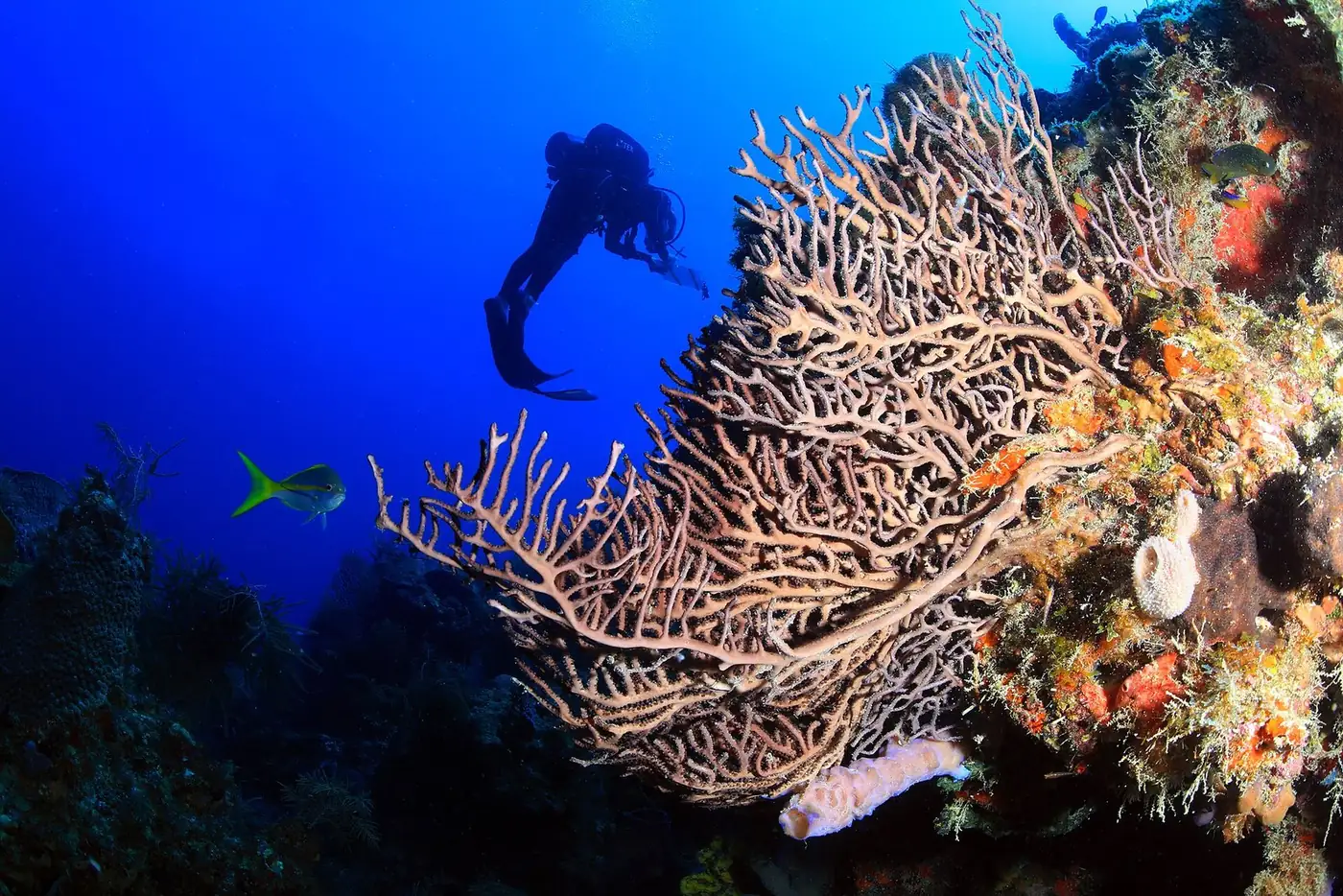
Florida is the only state where you can drift along a coral reef in the Gulf Stream before breakfast, shore dive among seahorses under a highway bridge at lunchtime, and still make it to a spring with 72°F water by evening. Scuba diving Florida means choosing between very different coasts: the warm, clear Atlantic side from Palm Beach to Miami, the Keys and their reef tract, the Panhandle with the largest artificial reef in the world, the Gulf coast’s wrecks and ledges, and the springs inland. Most Americans can reach at least one of them by car. Here’s how the coasts compare, the best sites, water temperatures month by month, the Florida rules divers need to know, prices and where the chambers are.
Short answer: The best scuba diving in Florida is on the southeast coast (Jupiter, Palm Beach, Fort Lauderdale), in the Keys, and on the Panhandle’s wrecks, led by the USS Oriskany off Pensacola. Two-tank boat dives cost about $90-$160 (checked September 2026). Atlantic water stays above 72°F year-round; the Panhandle drops below 60°F in winter.
Prices, rules and water temperatures below were checked on September 23-24, 2026 against NOAA, Florida’s state agencies and the operators’ own websites. We name shops so you can compare like with like; none of them paid to appear here.
On this page: At a glance · Why dive Florida · The coasts compared · Best sites · Wrecks · Shore diving · Marine life · Best time to go · Florida dive rules · Getting there · Where to stay · Operators and prices · Budget · Getting certified · Safety · Non-divers · Sample trips · FAQ
Scuba diving Florida at a glance
| Question | Answer (checked September 2026) |
|---|---|
| Skill level | All levels: shallow shore dives and reefs for beginners; Gulf Stream drifts and deep wrecks such as the Oriskany for experienced divers |
| Best months | Year-round in the southeast and the Keys; May-October on the Panhandle and Gulf coast |
| Water temperature | Miami 72.5°F (22.5°C) in January to 88°F (31°C) in August; Pensacola 56.9°F (13.8°C) in January to 86.6°F (30.3°C) in August |
| Visibility | Often 40-100 ft (12-30 m) off Palm Beach and Jupiter on the edge of the Gulf Stream; less near shore after storms |
| Depth range | 5-20 ft (1.5-6 m) at Blue Heron Bridge to 212 ft (65 m) at the bottom of the Oriskany |
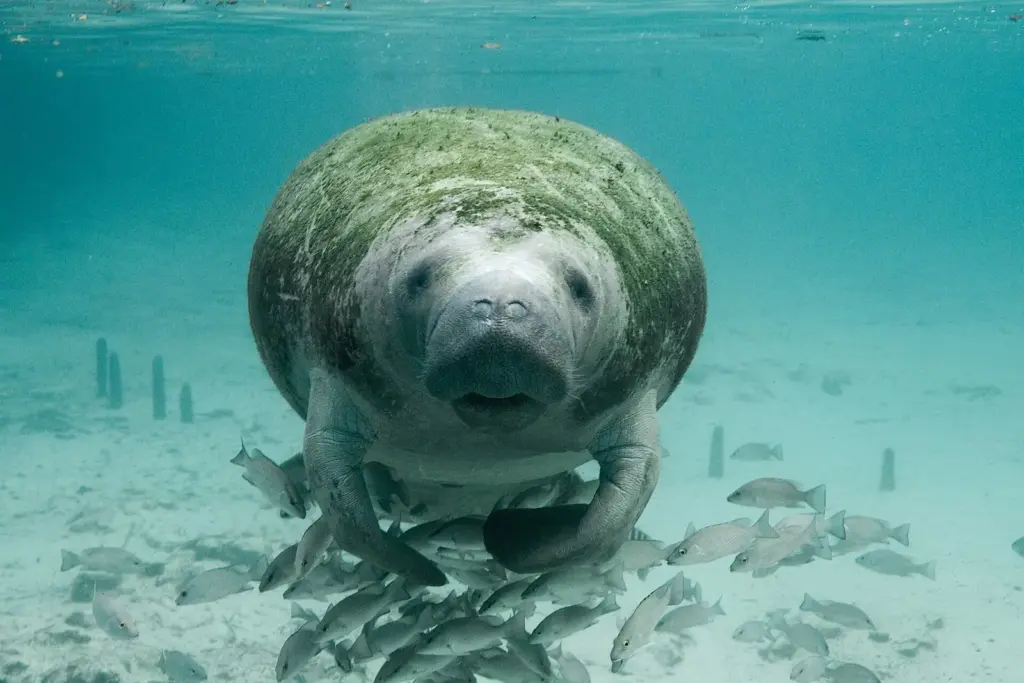
| Signature marine life | Goliath groupers, sea turtles, sharks off Jupiter, nurse sharks, macro critters, manatees in the springs in winter |
| Two-tank boat dive | $90 (Pompano Beach, cash) to $160 with nitrox (Palm Beach); $225 for the Oriskany |
| Getting there | Fly to Miami, Fort Lauderdale, Palm Beach, Orlando, Tampa or Pensacola, or drive; Orlando to Jupiter is about 2 h 55 min |
| Entry rules | Domestic travel; a REAL ID or passport for flights |
Why dive Florida, and who should look elsewhere
Florida’s appeal is variety within driving distance. The Florida reef tract, the only coral barrier reef in the continental United States, runs down the southeast coast and through the Keys. Off Palm Beach and Jupiter, the Gulf Stream sweeps so close to shore that boats run drift dives over reefs and wrecks in warm, blue water a few miles out. The state has sunk hundreds of ships, tanks and structures as artificial reefs, including the largest artificial reef in the world, and inland, freshwater springs hold water at 72°F all year. For a diver in Atlanta, Charlotte or Dallas, Florida is often the cheapest, simplest dive trip available: no passport, no currency exchange and, from much of the Southeast, no flight.
The honest caveats: Florida’s reefs have been hit by coral bleaching and disease in recent years, and they don’t match the coral color of Bonaire or the Coral Triangle. Visibility near shore swings with weather and runoff. The Panhandle and Gulf coast are cold in winter, and the Atlantic side can be rough when the wind blows from the east. And much of the best diving is drift diving in the Gulf Stream, which is exciting but not for divers who dislike current.
Our take: For the best all-round Florida diving, go to Palm Beach County: Gulf Stream drift dives, goliath groupers in late summer, sharks off Jupiter and the Blue Heron Bridge for macro, all within a 30-minute drive. For wrecks, the Panhandle and the Oriskany are hard to beat; for classic reef diving with the most operators, choose the Keys.
Florida’s dive coasts compared
| Region | Best for | Water, January / August | Two-tank price (Sept 2026) | Drive time |
|---|---|---|---|---|
| Palm Beach and Jupiter | Gulf Stream drifts, sharks, goliaths, Blue Heron Bridge | 74.5°F / 85.7°F (Lake Worth Pier) | $120-$160 | Orlando to Jupiter about 2 h 55 min |
| Fort Lauderdale and Pompano Beach | Shore diving, wreck trek, easy reefs | About 72-75°F / 88°F | $90-$93 | Orlando to Fort Lauderdale about 4 h |
| Miami and Key Biscayne | Wrecks and reefs close to the city | 72.5°F / 88.0°F (Virginia Key) | Check operators | In town |
| The Florida Keys | The reef tract, the Spiegel Grove and Vandenberg wrecks | 72.5°F / 88.7°F (Key West) | $85-$110 | Miami to Key Largo 58 miles |
| The Panhandle (Pensacola, Destin, Panama City Beach) | Big wrecks, including the Oriskany | 57-60°F / 86°F | $175-$225 | Atlanta to Destin about 6 h 40 min |
| Gulf coast (Tampa Bay, Clearwater) | Artificial reefs, ledges | 61.5°F / 87.8°F (Clearwater Beach) | Check operators | Tampa to Clearwater Beach about 40 min |
| The springs (north-central Florida) | Clear freshwater, caverns, manatees in winter | 72°F all year | Admission $48-$61 | Orlando to Crystal River about 1 h 50 min |
Palm Beach and Jupiter: Gulf Stream drift diving
Off Palm Beach County the Gulf Stream runs close to the coast, so its reefs and wrecks are dived as drifts: you drop in, the current carries you along, and the boat follows your surface marker buoy. Pura Vida Divers in Palm Beach charges $120 for a two-tank charter with your own tanks, $150 with tanks supplied and $160 with nitrox, and runs blackwater charters from $120 (checked September 2026). Off West Palm Beach, the Corridor Wreck Trek links six sites in 63-90 ft, including the Ana Cecilia freighter sunk in 2016 and the 441-ft Amaryllis, and is rated advanced. Scuba diving in West Palm Beach is the best all-round diving in the state for experienced divers.
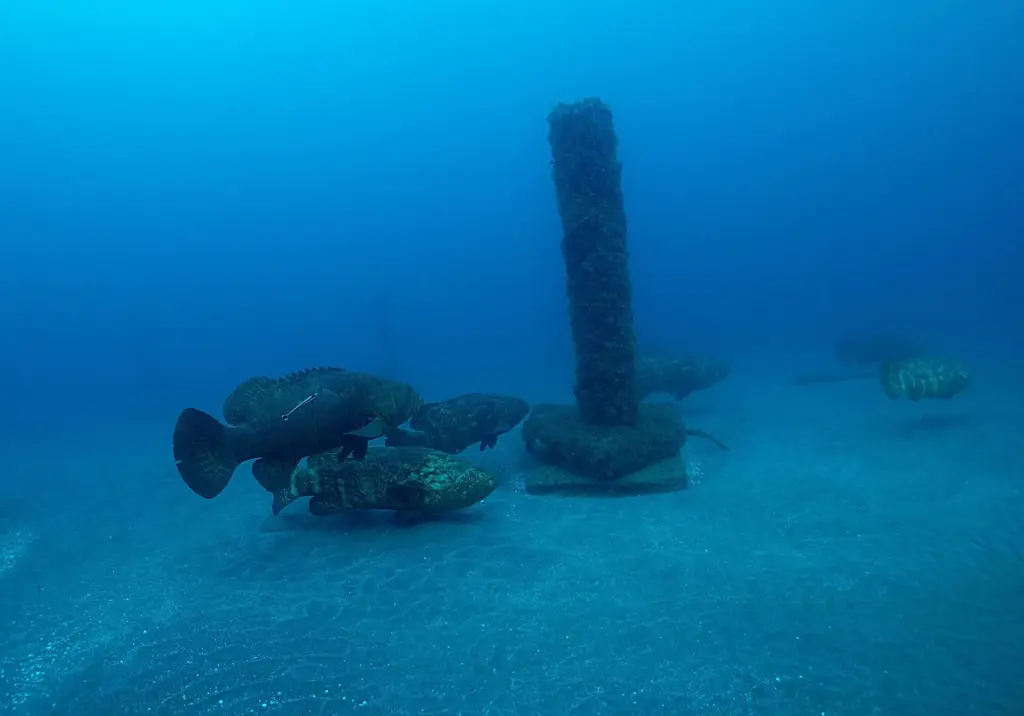
Jupiter, at the county’s north end, is famous for sharks and goliath groupers. Goliaths gather to spawn from August through September, lemon sharks visit from January through March, and sea turtle encounters are most likely from March to September. Salty Divers runs its shark sites 3 or more miles out on the edge of the Gulf Stream, with visibility of 40-100 ft, and charges $140 plus tax for a morning three-tank shark dive. Non-divers can join shark snorkels here too, which our shark diving guide covers in detail.
The Blue Heron Bridge
The Blue Heron Bridge, at Phil Foster Park in Riviera Beach, is one of the most famous shore dives in the country, and it’s all about small animals. Divers have found seahorses, pipefish, octopus, batfish, frogfish, stargazers, flying gurnards and more than 100 species of nudibranchs here. The depth is only 5-20 ft, and the best time to dive is from an hour before to an hour after high tide, when clear ocean water floods in and the current slackens. Diving is allowed from sunrise to sunset outside the guarded swimming area, and anyone teaching diving there needs a county permit. Miami to Phil Foster Park is about 1 h 40 min by car.
Fort Lauderdale and Pompano Beach
Broward County’s reefs run close to shore. Lauderdale-By-The-Sea calls itself Florida’s beach diving capital, because the first of its three reef lines lies just 100 yards off the beach, so you can swim out from shore. Offshore, Wreck Trek Lauderdale is a single 65-72 ft dive past three wrecks, the Jay Scutti tug, the Tracy/Ken Vitale and the Mercy Jesus, and the Lady Luck, a 324-ft former tanker sunk off Pompano Beach in 2016, sits in 131 ft with its deck at 105 ft and casino-themed art on board. South Florida Diving Headquarters in Pompano Beach charges $90 cash or $92.70 by card for a two-tank trip (checked September 2026). Scuba diving in Fort Lauderdale is the easiest to combine with a city vacation.
Miami and Key Biscayne
Scuba diving in Miami is closer than most visitors realize. Diver’s Paradise at Crandon Park Marina on Key Biscayne says it can reach more than 60 wrecks and 30 reefs within 30 minutes of its dock, including the Proteus, a 220-ft freighter to a maximum of 72 ft, and the Neptune Memorial Reef, an artificial memorial reef built as an interpretation of the Lost City of Atlantis, about 3.25 miles east of Key Biscayne, with a maximum depth of 45 ft.
The Florida Keys
The Keys deserve their own trip, and they get their own guide in this series. In brief: the Florida Keys National Marine Sanctuary now protects 4,539 square miles from south of Miami to the Dry Tortugas, and more than 700,000 divers and snorkelers enter its waters every year. Key Largo has the Spiegel Grove, a 510-ft landing ship with recreational depths of 60-135 ft, and John Pennekamp Coral Reef State Park, the first undersea park in the country; Key West has the Vandenberg, sunk in 2009 in nearly 150 ft. Two-tank reef trips in the Keys cost about $85-$110 (checked September 2026), and Miami to Key Largo is 58 miles.
The Panhandle: Pensacola, Destin and Panama City Beach
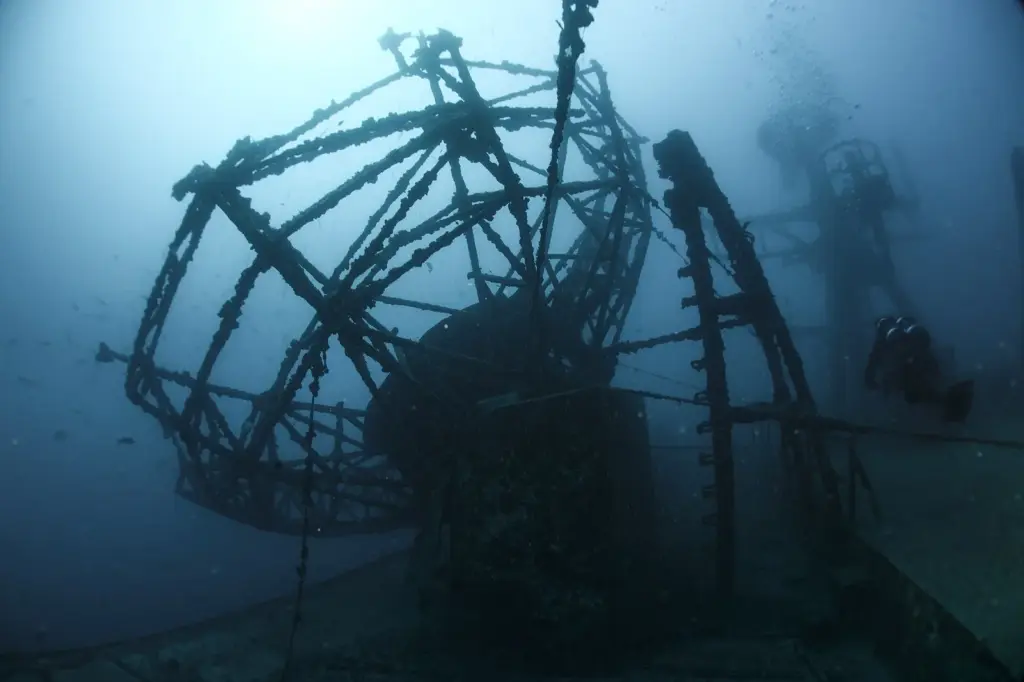
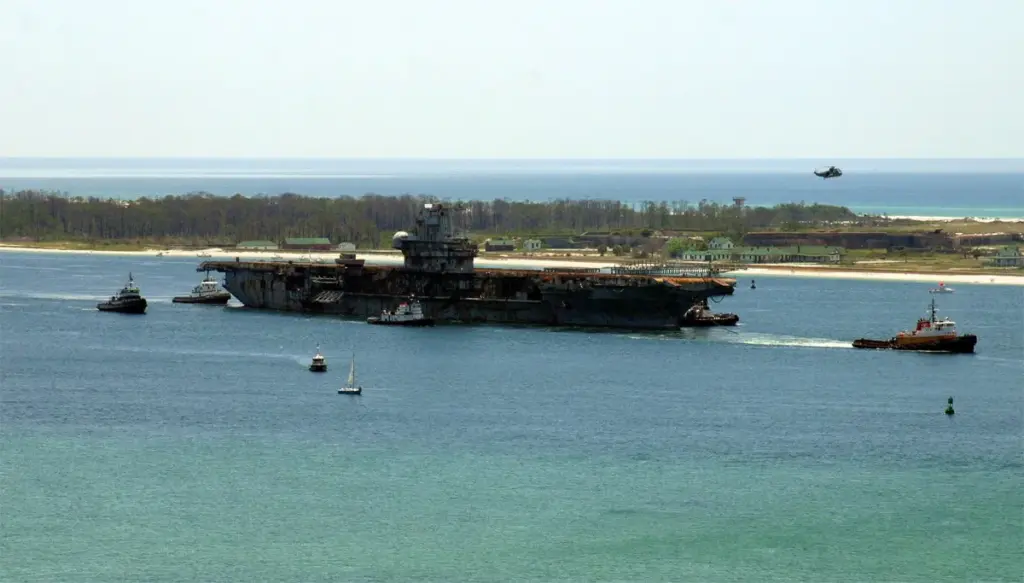
Northwest Florida is wreck country. The Florida Panhandle Shipwreck Trail, run by the Florida Department of State, lists 20 wrecks from Pensacola to Mexico Beach. The headliner is the USS Oriskany, an 888-ft aircraft carrier sunk on May 17, 2006, about 22 miles south of Pensacola, in 212 ft of water. It’s the largest artificial reef in the world: the top of the island is at about 80 ft and the flight deck at about 145 ft. Niuhi Dive Charters in Pensacola charges $225 for a two-tank Oriskany trip, and $175-$225 for its other two-tank trips (checked September 2026). Other Pensacola wrecks include the Pete Tide II, an upright 166-ft supply vessel in about 100 ft, and the USS Massachusetts, a battleship scuttled in 1921 that lies in just 10-30 ft in Pensacola Pass. Scuba diving in Pensacola is the Panhandle’s headline act.
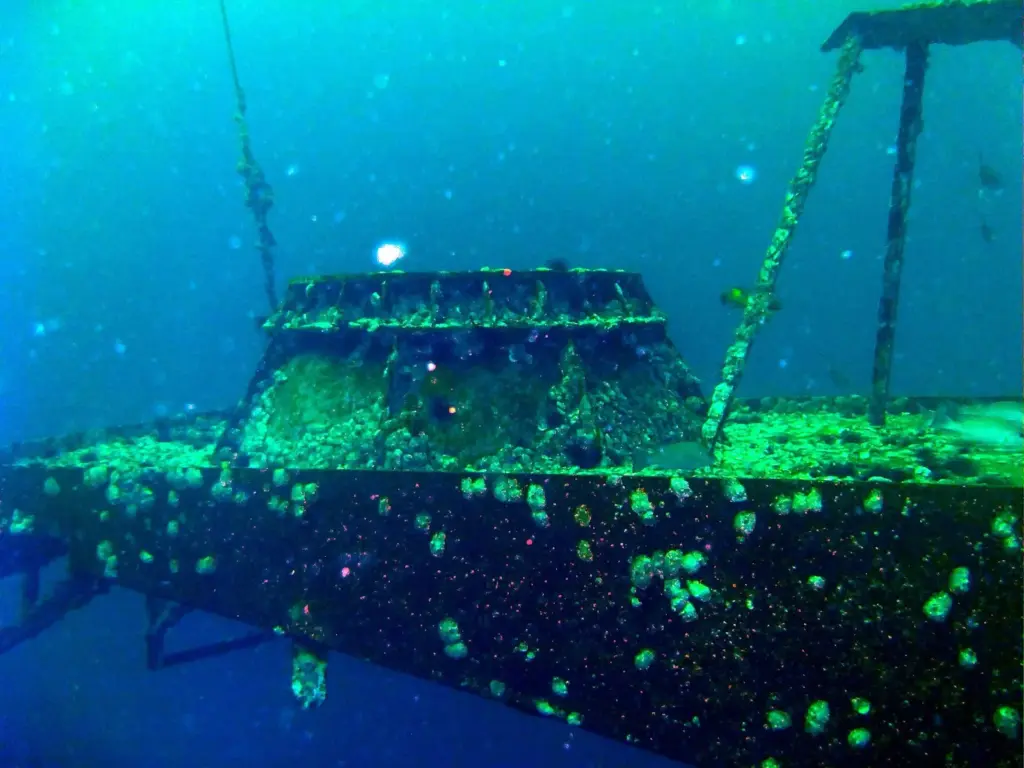
Destin and Fort Walton Beach claim more than 580 artificial reefs, and the 100-Fathom Curve brings clear water and big fish close to shore. The Destin Liberty Ship, a 360-ft World War II Liberty ship sunk in 1977 south of the Okaloosa Island pier, lies in 90 ft. Diving in Destin also has one headline that hasn’t happened yet: Okaloosa County’s plan to sink the ocean liner SS United States as an even bigger reef. As of September 2026, it has not been sunk; the county says the ship is undergoing remediation and assessments and that the deployment date is to be determined, with at least 30 days’ notice. Ignore any website that tells you it’s already down there.
Scuba diving in Panama City Beach centers on wrecks sunk as artificial reefs: the USS Strength, a World War II minesweeper in 80 ft; the Black Bart, a 185-ft supply vessel in 85 ft with its wheelhouse at 40 ft; the El Dorado, a 157-ft cruise vessel sunk in 2019 in 103 ft; and the SS Tarpon preserve, a 1933 wreck in 95 ft. For beginners, St. Andrews State Park has a developing reef by the jetties in about 15 ft and a shallow, calm “Kiddie Pool” on the landward side.
The Gulf coast: Tampa Bay and Clearwater
Scuba diving near Tampa means artificial reefs and limestone ledges rather than coral reefs. Pinellas County has 43 artificial reefs along its Gulf coast from Tarpon Springs to St. Pete Beach, from 200 yards to 38 miles offshore, built from about 50,000 tons of material since 1975. Visibility is generally lower than on the Atlantic side, and the best diving is well offshore, so this coast suits locals and divers already in the area more than it suits a dedicated dive trip. Tampa to Clearwater Beach is about 40 minutes by car.
Diving near Orlando: the springs
Orlando has no ocean, but it’s about two hours from Florida’s springs, and they’re some of the most unusual diving in the country. Devil’s Den in Williston holds 72°F water year-round and charges divers $48 admission. Blue Grotto, also in Williston, has a basin to 40 ft and an upper cavern to 50 ft, with diver admission of $61. Crystal River, about 1 h 50 min from Orlando, is the place to snorkel with manatees in winter. The springs and caverns have their own guide in this series; for scuba diving near Orlando, they’re the realistic day trip, with the coast 2-3 hours away.
Best scuba diving in Florida: the sites to plan around
| Site | Region | Depth | Level | Highlights |
|---|---|---|---|---|
| USS Oriskany | Pensacola | 80 ft (island top) to 212 ft; flight deck about 145 ft | Advanced; deep and technical options | The world’s largest artificial reef |
| Blue Heron Bridge | Riviera Beach | 5-20 ft | All levels (shore) | Seahorses, frogfish, octopus, nudibranchs |
| Corridor Wreck Trek | West Palm Beach | 63-90 ft | Advanced | Six wrecks in one drift |
| Jupiter shark and goliath sites | Jupiter | Offshore, on the Gulf Stream edge | Experienced | Sharks year-round; goliaths August-September |
| Lady Luck | Pompano Beach | Deck at 105 ft; sand at 131 ft | Advanced | 324-ft tanker with casino-themed art |
| Wreck Trek Lauderdale | Fort Lauderdale | 65-72 ft | Intermediate | Three wrecks in one dive |
| Spiegel Grove | Key Largo | 60-135 ft; best parts 70-90 ft | Advanced | 510-ft landing ship |
| Vandenberg | Key West | Top 40-45 ft; sand near 150 ft | Advanced, with recent deep diving | 524-ft ship sunk as a reef in 2009 |
| Destin Liberty Ship | Destin | 90 ft | Intermediate to advanced | 360-ft World War II Liberty ship |
| Black Bart | Panama City Beach | 40 ft (wheelhouse) to 85 ft | Intermediate | 185-ft supply vessel |
| USS Massachusetts | Pensacola Pass | 10-30 ft | All levels, in calm conditions | Battleship scuttled in 1921, gun turrets often awash |
Best wreck diving in Florida
Florida has sunk ships on purpose for decades, and the result is some of the best wreck diving in North America. Two state-backed trails make them easy to find. NOAA’s Florida Keys Shipwreck Trail links nine historic wrecks, from shallow sites such as the Benwood and the City of Washington to the Duane at more than 100 ft, where currents can be swift. The Florida Panhandle Shipwreck Trail lists 20 wrecks from Pensacola to Mexico Beach.
| Wreck | Where | Depth | Story |
|---|---|---|---|
| USS Oriskany | Off Pensacola | 80-212 ft | 888-ft carrier sunk in 2006; the largest artificial reef in the world |
| Spiegel Grove | Off Key Largo | 60-135 ft | 510-ft landing ship; sank upside down in 2002 and was rolled upright by Hurricane Dennis in 2005 |
| Duane | Off Key Largo | Mast about 60 ft; sand at 120 ft | 327-ft Coast Guard cutter sunk in 1987, with its sister ship Bibb nearby |
| Vandenberg | Off Key West | 40-45 ft to about 150 ft | 524-ft ship sunk in 2009 |
| Thunderbolt | Off Marathon | Superstructure about 75 ft; sand at 120 ft | 189-ft former Army minelayer sunk in 1986 |
| Lady Luck | Off Pompano Beach | Deck at 105 ft; sand at 131 ft | 324-ft tanker sunk in 2016, with casino-themed art |
| Benwood | Off Key Largo | 25-45 ft | 360-ft freighter lost in 1942 after a collision |
| City of Washington | Off Key Largo | 25 ft | 300-ft iron steamship that ran aground in 1917 |
| USS Strength | Off Panama City Beach | 80 ft | World War II minesweeper sunk in 1987 |
The shallow historic wrecks suit new divers; the big artificial reefs mostly start at 60-80 ft and need Advanced training, a computer you trust and good air management. The best wreck diving in Florida comes down to which coast you’re on: the Keys for variety, the Panhandle for sheer size.
Shore diving in Florida
You don’t need a boat for some of Florida’s best dives. The Blue Heron Bridge is the famous one, with depths of 5-20 ft and the best conditions around high tide. Lauderdale-By-The-Sea’s first reef line is just 100 yards off the beach. On the Panhandle, the USS Massachusetts lies in 10-30 ft in Pensacola Pass, Escambia County maintains two snorkel reefs at Pensacola, and St. Andrews State Park in Panama City Beach has a developing reef by the jetties in about 15 ft. Shore diving in Florida is cheap and flexible, but it comes with two rules: fly a dive flag and stay close to it, and check tides and boat traffic before you enter, because passes and inlets can run hard and busy.
Florida marine life and when to see it
| Animal | When | Where |
|---|---|---|
| Goliath groupers (spawning) | August-September | Jupiter and Palm Beach wrecks |
| Lemon sharks | January-March | Jupiter |
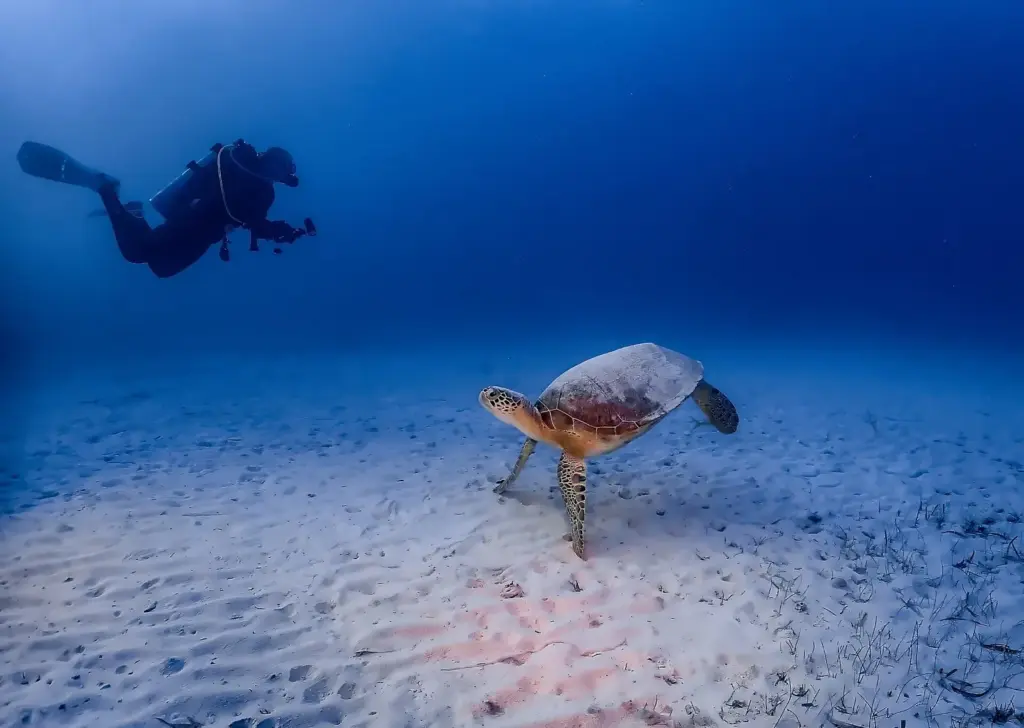
| Sea turtles | Most likely March-September | Palm Beach County reefs, the Keys |
| Sharks (tiger, bull, hammerhead, reef and others) | Year-round | Jupiter, 3+ miles offshore |
| Macro critters (seahorses, frogfish, nudibranchs) | Year-round | Blue Heron Bridge |
| Manatees | Winter | Crystal River and other springs |
| Spiny lobster (season) | Two-day sport season in late July; regular season from early August to March 31 | Statewide, with extra rules in the Keys |
Goliath groupers are one of Florida’s great conservation stories. Harvest has been closed in federal waters of the southeastern US since 1990, and the fish, which reach up to 800 lb and 8 ft, have come back strongly enough to form spawning aggregations off Jupiter. Florida now allows a very limited harvest in state waters through a lottery of up to 200 permits a year, which took effect in spring 2023; the original proposal excluded state waters from Palm Beach County south.
Best time to scuba dive in Florida, month by month
Florida has two diving climates. The Atlantic side from Palm Beach to Key West stays warm enough to dive in a 3-5 mm suit all year, while the Panhandle and Gulf coast get cold in winter, and some operators there slow down. The table uses NOAA’s long-term monthly averages for Miami (Virginia Key) and Pensacola.
| Month | Miami water | Pensacola water | What’s happening |
|---|---|---|---|
| January | 72.5°F (22.5°C) | 56.9°F (13.8°C) | Lemon sharks at Jupiter; Panhandle diving is for the hardy |
| February | 74.2°F (23.4°C) | 59.1°F (15.1°C) | Lemon sharks; manatees in the springs |
| March | 75.7°F (24.3°C) | 65.4°F (18.6°C) | Turtle season starts in Palm Beach County; spring break crowds |
| April | 79.1°F (26.2°C) | 71.9°F (22.2°C) | Warming everywhere; Panhandle season begins |
| May | 82.5°F (28.1°C) | 79.0°F (26.1°C) | Calm seas; good all-round month |
| June | 85.6°F (29.8°C) | 84.1°F (28.9°C) | Hurricane season begins June 1 |
| July | 87.6°F (30.9°C) | 86.3°F (30.2°C) | Lobster sport season (late July); summer crowds |
| August | 88.0°F (31.1°C) | 86.6°F (30.3°C) | Goliath grouper spawning at Jupiter; warmest water |
| September | 86.5°F (30.3°C) | 83.3°F (28.5°C) | Goliaths; peak hurricane risk around September 10 |
| October | 82.8°F (28.2°C) | 75.7°F (24.3°C) | Still warm in the south; quieter crowds |
| November | 78.2°F (25.7°C) | 66.6°F (19.2°C) | Hurricane season ends November 30 |
| December | 75.1°F (23.9°C) | 60.2°F (15.7°C) | Holiday crowds in the south; cold Panhandle water |
Other NOAA stations for comparison, January versus August: Lake Worth Pier in Palm Beach 74.5°F versus 85.7°F, Panama City Beach 59.5°F versus 85.6°F, Clearwater Beach 61.5°F versus 87.8°F and Key West 72.5°F versus 88.7°F. The Atlantic hurricane season runs from June 1 to November 30 and peaks on September 10, with most activity from mid-August to mid-October.
Our take: The best time to scuba dive in Florida is May to June statewide, before peak hurricane season, with warm water on both coasts and calm seas. Come to Jupiter in August or September for goliath groupers, in winter for lemon sharks, and to the springs in winter for manatees. Save the Panhandle for May to October unless you own a thick wetsuit.
Florida dive rules every visitor should know
- The divers-down flag law. Under Florida law, a divers-down flag must be at least 20 x 24 inches when flown from a boat and at least 12 x 12 inches on a float. Divers must make reasonable efforts to stay within 300 ft of the flag in open water and within 100 ft in rivers, inlets and navigation channels, and boats must keep 300 ft (or 100 ft) away or slow to idle speed inside those distances. Take the flag down once everyone is out of the water.
- Spiny lobster. The 2026 two-day sport season was July 29-30 (always the last consecutive Wednesday and Thursday of July), and the regular season runs from August 6, 2026 to March 31, 2027. The daily limit is 6 per person in Monroe County (the Keys) and 12 north of it, and the Keys add extra rules, such as no night diving during the sport season and no-take zones including John Pennekamp.
- Goliath grouper. Closed to harvest in federal waters; a tiny lottery-based harvest exists in some state waters. For divers: look, don’t touch.
- The Florida Keys National Marine Sanctuary. NOAA’s final rule of January 17, 2025, expanded the sanctuary to 4,539 square miles and reshaped its zones; in protected zones you can’t take anything or touch or stand on coral, and some new anchoring bans don’t take effect until 2027. Divers must fly a dive flag throughout the sanctuary.
- Sunscreen. Key West voted to ban oxybenzone and octinoxate sunscreens, but Florida’s 2020 law pre-empted local sunscreen rules before the ban took effect, so no Florida city can enforce one. Mineral sunscreen and rash guards are still the reef-friendly choice.
- Blue Heron Bridge. Dive only from sunrise to sunset and outside the guarded swimming area; instructors need a county permit.
Getting to Florida’s dive coasts
For US citizens, Florida is domestic travel: bring a REAL ID-compliant license or a passport for the flight. Fly into Miami or Fort Lauderdale for Broward and Miami-Dade, Palm Beach for Jupiter and the Blue Heron Bridge, Miami or Key West for the Keys, Orlando for the springs and a drive to either coast, Tampa for the Gulf coast, and Pensacola for the Panhandle.
Driving is often easier. Approximate road times: Orlando to Jupiter 2 h 55 min, Orlando to Phil Foster Park 3 h 10 min, Orlando to Fort Lauderdale about 4 h, Miami to Phil Foster Park 1 h 40 min, Orlando to Crystal River 1 h 50 min, Tampa to Crystal River 1 h 35 min, Atlanta to Pensacola 6 h 10 min and Atlanta to Destin 6 h 40 min. For the Keys, the Overseas Highway runs 113 miles and crosses 42 bridges; Key Largo is 58 miles from Miami and Key West 159.
Where to stay for a Florida dive trip
- Palm Beach County: stay between Jupiter and Palm Beach to reach the Jupiter boats, the Blue Heron Bridge and the Palm Beach drift boats easily.
- Broward: Lauderdale-By-The-Sea and Pompano Beach put you near the shore-diving reefs and the Pompano boats.
- Miami: Key Biscayne is closest to the Crandon Park boats.
- The Keys: Key Largo for reef and wreck variety, Key West for the Vandenberg and nightlife.
- The Panhandle: Pensacola for the Oriskany, Destin for its reef program, Panama City Beach for its wrecks and St. Andrews State Park.
- The springs: Gainesville, Williston or High Springs for Devil’s Den, Blue Grotto and Ginnie Springs; Crystal River for manatees.
Florida has lodging in every tier on every coast, from motels and condos to beach resorts. Book early for spring break, the July lobster season and the winter holidays.
Choosing a Florida dive operator: prices and tipping
| Operator | Region | Price (checked Sept 2026) | Notes |
|---|---|---|---|
| South Florida Diving Headquarters | Pompano Beach | Two-tank $90 cash / $92.70 card; three-tank $130 / $133.90; night dive $70 | Air gear package $70 |
| Pura Vida Divers | Palm Beach | Two-tank $120 (own tanks), $150 (air), $160 (nitrox); blackwater from $120 | Three-tank with lunch $150-$195 |
| Salty Divers | Jupiter | Three-tank shark dive $140 plus tax | Tank rental $18 aluminum, $22 steel |
| Niuhi Dive Charters | Pensacola | Oriskany two-tank $225; other two-tank trips $175-$225 | Nearshore, midshore and offshore trips |
| Rainbow Reef Dive Center | Key Largo | Two-tank reef trip $99 | Tanks, weights and guide included |
| Sea Dwellers Dive Center | Key Largo | Two-tank trip $110 | Tanks and weights included |
Florida dive boats range from six-pack charters to large boats with 20 or more divers. Ask how many divers go on the boat, whether a guide dives with you (some Florida boats run unguided dives with buddy teams), whether tanks and weights are included, and what the drift procedure is. Tipping works as it does elsewhere in the US: a common guideline is $5-$10 per tank for the crew, more for a guide who leads your dive.
What a week of diving in Florida costs
This example covers the diving alone for a week in southeast Florida with five two-tank boat days and two Blue Heron Bridge shore dives, at September 2026 prices.
| Item | Low | High | Notes |
|---|---|---|---|
| Five two-tank boat trips | $450 | $800 | $90 cash in Pompano to $160 with nitrox in Palm Beach |
| Tank rental for two shore dives | $36 | $44 | $18 aluminum or $22 steel, per tank |
| Gear rental | $0 | $350 | $70 air gear package for five boat days |
| Crew tips | $50 | $100 | $5-$10 per tank |
| DAN membership | $40 | $40 | Per year; dive accident insurance is extra |
| Diving total | $576 | $1,334 | Before lodging, food and gas |
If you drive in, Florida can be the cheapest good dive week available to Americans. A Panhandle Oriskany trip costs more per dive, at $225 for two tanks, because the boat runs more than 20 miles offshore.
Getting certified and diving Florida as a beginner
Florida is one of the best places in the country to learn, with warm, calm shore sites and a long list of shops. Keys prices for the full PADI Open Water course, for example, run from $499 at Key Largo Scuba Diving to $525 at Rainbow Reef (including eLearning), $540 at the Coral Reef Park Company, $595 at Key Dives and $700 at Sea Dwellers (checked September 2026). The Blue Heron Bridge, with its 5-20 ft depths, and the springs are popular training sites, and instructors need a permit to teach at the bridge.
For scuba diving in Florida as a beginner, start with the shallow reefs off Lauderdale-By-The-Sea, the Keys’ shallow reef trips, St. Andrews State Park on the Panhandle, or a guided Blue Heron Bridge dive at high tide. Save the Gulf Stream drifts, the Lady Luck, the Spiegel Grove and the Oriskany until you’re comfortable with current and depth, and consider an Advanced course first.
Safety: current, boats, weather and chambers
Gulf Stream drifts. On drift dives, stay with your buddy and the group, carry a surface marker buoy and deploy it before you surface, and know the boat’s pickup procedure. A diver who surfaces away from the group in the Gulf Stream can drift a long way quickly.
Boat traffic. Florida’s waters are busy. Fly the dive flag, stay within 300 ft of it in open water and 100 ft in channels, and surface slowly while looking up and listening for engines.
Weather. Summer afternoons bring thunderstorms and lightning, and hurricane season runs June through November. Morning dives are usually calmer.
Chambers. HCA Florida Mercy Hospital in Miami has two multiplace hyperbaric chambers, treats decompression illness and arterial gas embolism, and says it’s the Divers Alert Network’s regional coordinator for Florida and the Caribbean. In the Keys, Mariners Hospital in Tavernier has what Baptist Health describes as the only hospital-based hyperbaric chamber in the Keys. Chamber coverage varies by region, so ask your Pensacola or Destin operator where injured divers are sent. In any emergency, call 911, then DAN’s 24-hour line at +1-919-684-9111.
Insurance and flying. DAN membership costs $40 a year and includes up to $150,000 of emergency medical transportation for emergencies more than 50 miles from home; dive accident insurance is sold separately (checked September 2026). If you’re flying home, the CDC advises at least 12 hours after a single no-decompression dive and 18 hours after multiple dives or multiple days of diving.
Florida for non-divers in your group
- Snorkeling. The Blue Heron Bridge snorkel trail covers two acres in 6-10 ft of water, built from 600 tons of rock. Lauderdale-By-The-Sea’s first reef is 100 yards from the beach. Escambia County maintains two snorkel reefs at Pensacola, and St. Andrews State Park’s Kiddie Pool is shallow and calm.
- Shark snorkels. Jupiter operators run shark snorkels with no certification needed: Shark Addicts charges $199 and Florida Shark Diving $205 for cage or freedive trips (checked September 2026).
- Manatees. Crystal River National Wildlife Refuge was established in 1983 to protect the West Indian manatee; its springs flow at 72°F, and winter sanctuary zones close to snorkelers and boaters.
- John Pennekamp. The first undersea park in the United States charges $8 per vehicle for entry, and runs snorkel and glass-bottom boat trips.
Sample Florida dive trips
A week in Palm Beach County. Day 1: arrive and check in near Jupiter. Day 2: two-tank Gulf Stream drift off Palm Beach. Day 3: Jupiter wrecks (goliaths in August and September). Day 4: Blue Heron Bridge at high tide, twice. Day 5: shark dive off Jupiter. Day 6: Corridor Wreck Trek or a Broward wreck. Day 7: beach day, and fly home the next morning, at least 18 hours after your last dive.
A long weekend on the Panhandle. Day 1: drive or fly to Pensacola. Day 2: two-tank Oriskany trip (Advanced divers with deep experience). Day 3: nearshore wrecks such as the Pete Tide II, or the USS Massachusetts in calm conditions, then the drive home that evening, or a rest day before any flight.
Frequently asked questions
Where is the best scuba diving in Florida?
For reefs and variety, Palm Beach County and the Keys; for wrecks, the Panhandle, led by the USS Oriskany off Pensacola; for macro, the Blue Heron Bridge; for freshwater, the springs near Williston, High Springs and Crystal River. Palm Beach County has the best all-round diving, with Gulf Stream drifts, sharks, goliath groupers and the bridge all close together.
How much does scuba diving in Florida cost?
Two-tank boat dives cost about $90 in Pompano Beach (cash), $99-$110 in Key Largo, $120-$160 in Palm Beach and $175-$225 on the Panhandle, with $225 for the Oriskany (checked September 2026). Spring admission runs $48-$61 at Devil’s Den and Blue Grotto. Add gear rental, tips and a few dollars for tank rental on shore dives.
Do you need a license to scuba dive in Florida?
You don’t need a state license, but you do need a scuba certification card from an agency such as PADI or SSI to rent gear, fill tanks or join a dive boat. Devil’s Den, Blue Grotto and most boats require at least Open Water certification. Non-certified visitors can try a Discover Scuba program with an instructor, or join snorkel trips.
Can you swim with manta rays in Florida?
Manta rays are seen off southeast Florida from time to time, but not reliably enough to plan a trip around. For guaranteed-feeling manta encounters, the Kona manta night dive in Hawaii or mantas in Mexico, the Maldives and Indonesia are better bets. Florida’s big-animal highlights are goliath groupers, sharks off Jupiter, sea turtles and manatees.
When is the best time to scuba dive in Florida?
Southeast Florida and the Keys are good year-round, with Miami’s water ranging from 72.5°F in January to 88°F in August. The Panhandle and Gulf coast are best from May to October. May and June offer warm water and calm seas before peak hurricane season, and August and September bring goliath groupers to Jupiter.
Is Florida good for beginner divers?
Yes. Warm water, shallow reefs, shore dives such as Lauderdale-By-The-Sea and the Blue Heron Bridge, and plenty of shops make Florida one of the easiest places in the US to learn and to log your first dives. Keys Open Water courses cost about $499-$700. Leave the Gulf Stream drifts and deep wrecks until you’re more experienced.
Has the SS United States been sunk off Destin?
Not as of September 2026. Okaloosa County says the former ocean liner is undergoing remediation and assessments, the deployment date is to be determined, and it will post at least 30 days’ notice before the sinking. Until then, the USS Oriskany off Pensacola remains the largest ship ever sunk as an artificial reef.
Sources and verification
Everything on this page was checked on September 23-24, 2026 against the organizations listed below, and the page is compiled from them; we don’t claim first-hand visits to the sites or shops named. Prices are the operators’ published rates and can change, so confirm before you book.
- NOAA NCEI: Coastal Water Temperature Guide
- NOAA Florida Keys National Marine Sanctuary: regulations
- Florida Statutes 327.331: divers-down flags
- Florida Fish and Wildlife Conservation Commission: spiny lobster and goliath grouper
- Florida Panhandle Shipwreck Trail
- HCA Florida Mercy Hospital: hyperbaric medicine and Baptist Health: Mariners Hospital hyperbaric chamber
- NOAA National Hurricane Center, DAN membership and the CDC Yellow Book: Scuba diving
- Operators’ published prices: South Florida Diving Headquarters, Salty Divers, Rainbow Reef Dive Center, Sea Dwellers, Shark Addicts and Florida Shark Diving
Also checked: Pura Vida Divers, Niuhi Dive Charters, Diver’s Paradise, Palm Beach County parks (Phil Foster Park), Lauderdale-By-The-Sea, Destin-Fort Walton Beach tourism, Visit Panama City Beach, Pinellas County’s artificial reef program, Okaloosa County’s SS United States updates, Devil’s Den, Blue Grotto, Ginnie Springs, Crystal River National Wildlife Refuge and John Pennekamp Coral Reef State Park.
Scuba Tourism Guide is an independent publication. It is not affiliated with any agency, park or dive operator named here, and no one paid to be included.
Photo credits
- Diver on the reef, Florida Keys National Marine Sanctuary (featured image): photo by National Marine Sanctuaries, Wikimedia Commons (public domain)
- Goliath groupers at Warriors Reef, Jupiter: photo by Geraldecarroll, Wikimedia Commons (CC BY-SA 3.0)
- USNS General Hoyt S. Vandenberg wreck, Key West: U.S. Navy photo by Mass Communication Specialist 2nd Class Nicholas S. Tenorio, Wikimedia Commons (public domain)
- USS Oriskany artificial reef, Pensacola: photo by Greg Grimes, Wikimedia Commons (CC BY-SA 2.0)
- Florida manatee (US Fish and Wildlife Service): photo by Keith Ramos / USFWS, Wikimedia Commons (public domain)
- Ex-USS Oriskany leaving Pensacola, May 2006 (US Navy): U.S. Navy Photo by Mike O'Connor, Wikimedia Commons (public domain)
- Diver and green sea turtle, Key Largo: photo by Symbiosis, Wikimedia Commons (CC BY 2.0)


