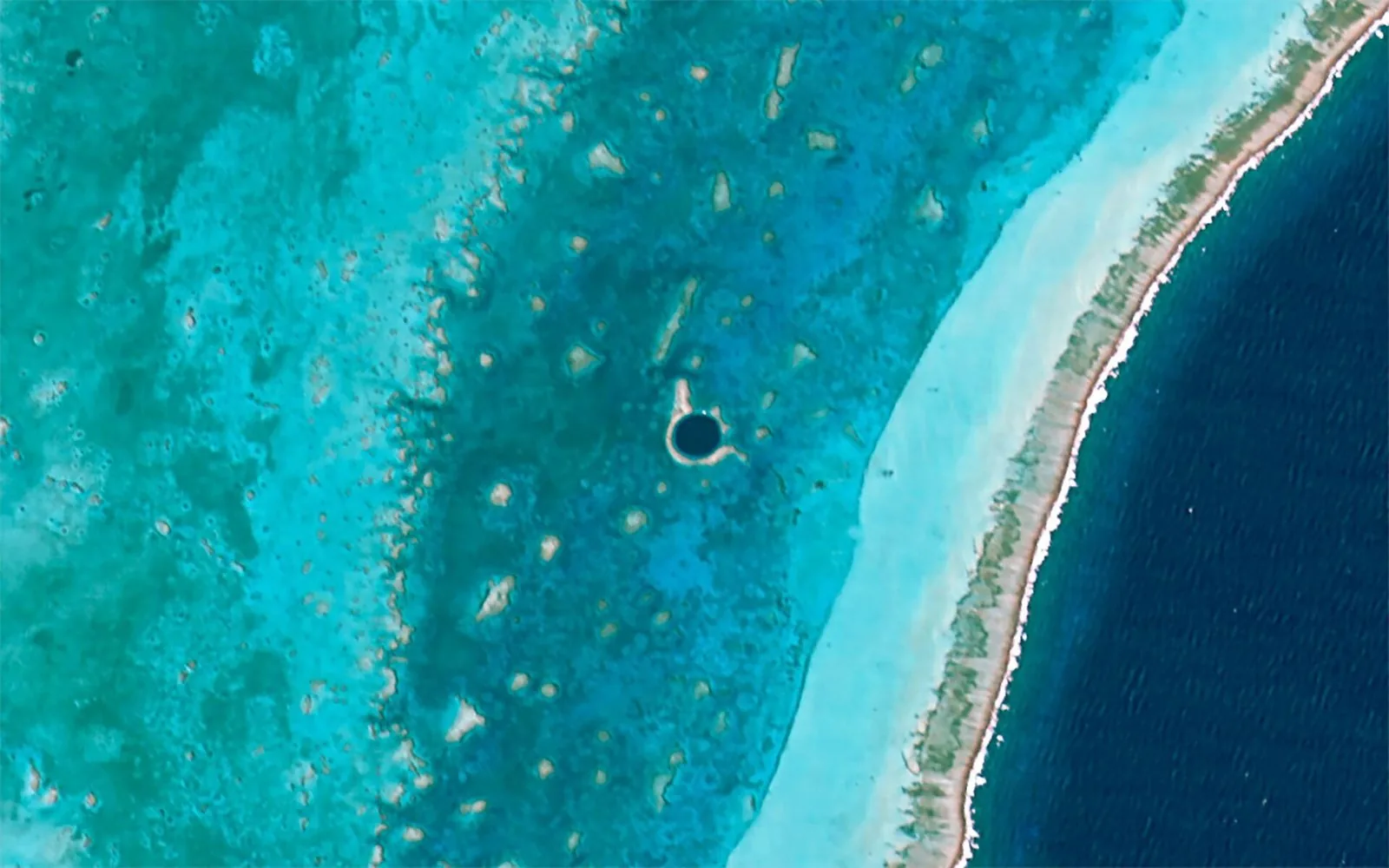
The famous picture of Belize is taken from the air: a near-perfect circle of deep blue, 1,043 feet across, in the middle of a pale turquoise atoll. That’s the Great Blue Hole, and it sits on almost every diver’s wish list. But Belize diving is much bigger than one hole. Belize has the largest barrier reef in the northern hemisphere running the length of its coast, three offshore coral atolls, whale sharks off Placencia in spring, and some of the easiest reef diving in the Caribbean a short boat ride from Ambergris Caye. It’s also English-speaking, uses a currency pegged to the dollar and sits two to three hours’ flight from Texas, Georgia and Florida. Here’s how to plan it: where to base, which dives are worth the long boat rides, when to go, what it costs and how to stay safe.
Short answer: Belize pairs a long barrier reef with three offshore atolls. Base on Ambergris Caye or Caye Caulker for easy reef dives and Hol Chan, add a day trip to Turneffe or the Blue Hole ($285 plus a $40 park fee and tax, checked September 2026). Water runs 79-84°F; December to May is calmest.
Prices, park fees and flight details below were checked on September 23-24, 2026 against the operators’ own websites, UNESCO and the US State Department. We name operators so you can compare like with like; none of them paid to appear here.
On this page: At a glance · Why dive Belize · Reef vs atolls · The Blue Hole · Dive sites · Marine life · Best time to go · Getting there · From a cruise ship · Where to stay · Operators and prices · Budget · Getting certified · Safety · Non-divers · Sample itinerary · FAQ
Belize diving at a glance
| Question | Answer (checked September 2026) |
|---|---|
| Skill level | All levels on the barrier reef; the Blue Hole and the atoll walls suit experienced divers |
| Best months | Year-round. December-May is the dry season, generally calmer and clearer; March-June for whale sharks at Gladden Spit |
| Water temperature | About 79°F (26°C) in winter to 84°F (29°C) in summer |
| Visibility | Typically 50-100 ft (15-30 m) |
| Depth range | 30 ft (9 m) in the Hol Chan Cut to about 130 ft (40 m) inside the Blue Hole |
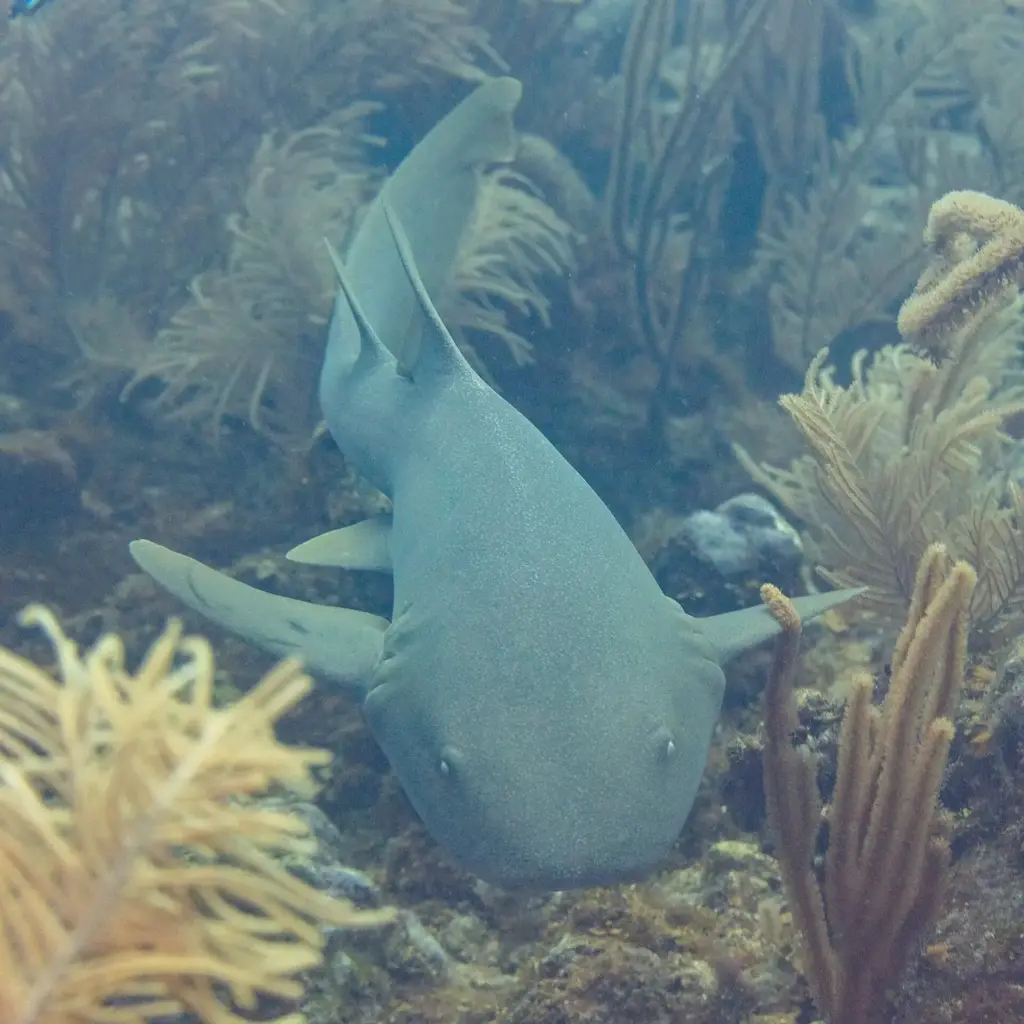
| Signature marine life | Nurse sharks and southern stingrays at Shark Ray Alley, turtles, reef sharks, spawning groupers, whale sharks in spring, manatees in the lagoons |
| Two-tank boat dive | About $80-$92 a day in multi-day packages on Ambergris Caye, plus 12.5% tax; Blue Hole day $285 plus fees |
| Park fees | Blue Hole $40, Turneffe $10, Hol Chan $15 (Belize Pro Dive Center’s published fees) |
| Getting there | Year-round nonstops to Belize City (BZE) from Dallas/Fort Worth, Miami, Atlanta, Houston and Los Angeles, then a short flight or ferry to the cayes |
| Entry rules | US passport; the State Department rates Belize Level 2, with Belize City’s Southside at Level 3 |
Is Belize diving good? Who it suits, and who should look elsewhere
Belize’s coast is protected by a reef system that UNESCO describes as the largest barrier reef in the northern hemisphere, with three atolls beyond it, several hundred sand cays and a web of mangroves and lagoons. Charles Darwin called it “the most remarkable reef in the West Indies.” Inside the reef is a shallow, sheltered lagoon, and outside it the seabed drops away to deep water, which gives Belize two very different kinds of diving: easy, shallow reef dives close to the cayes, and wall dives on the outer reef and the atolls.
That range is Belize’s strength. A new diver can do a week of gentle reef dives from Ambergris Caye or Caye Caulker; an experienced diver can spend the same week on the atoll walls, or on a liveaboard. Belize is also easy for Americans in practical ways: English is the official language, US dollars are widely accepted, and the flights are short.
Now the caveats. The best atoll diving means long boat rides: the Blue Hole day from Ambergris Caye starts at 6 a.m. and runs about 11 hours. Lodging on the cayes and atolls isn’t cheap, and neither are the atoll resorts. Visibility inside the reef can drop after rain or strong wind. And the Blue Hole itself, famous as it is, is a deep, short dive that some divers find less rewarding than the reef dives around it.
Our take: For a first Belize trip, base on Ambergris Caye, dive the barrier reef for a few days, then add one atoll day: Turneffe if you want the best reef diving, the Blue Hole if you want the famous one. Experienced divers who care most about the atolls should stay on one, or take a liveaboard.
The Belize Barrier Reef vs the three atolls
Almost all Belize diving happens in one of five areas. This is how they compare.
| Area | Where it is | Best for | Park fee (per Belize Pro Dive Center) | Level |
|---|---|---|---|---|
| Northern barrier reef (Ambergris Caye, Caye Caulker) | Minutes by boat from San Pedro and Caye Caulker | Easy reef dives, Hol Chan and Shark Ray Alley | Hol Chan $15 | All levels |
| Turneffe Atoll | About 20 miles from Belize City | The best all-round reef and wall diving, mangroves, big fish | $10 | All levels |
| Lighthouse Reef (Blue Hole, Half Moon Caye) | About 43 miles (70 km) from Belize City; 2.5-3 hours from Ambergris Caye | The Blue Hole, Half Moon Caye Wall | $40 for the Blue Hole | Experienced |
| Glover’s Reef | About 28 miles (45 km) off southern Belize | Remote walls and patch reefs, spawning groupers | Check locally | All levels to experienced |
| Southern reef (Placencia) | Gladden Spit is 22 miles (36 km) off Placencia | Whale sharks in spring, quieter reefs | Check locally | All levels |
A protected World Heritage reef
UNESCO inscribed the Belize Barrier Reef Reserve System as a World Heritage Site in 1996. It’s made up of seven protected areas: Bacalar Chico National Park and Marine Reserve, the Blue Hole Natural Monument, Half Moon Caye Natural Monument, South Water Caye Marine Reserve, Glover’s Reef Marine Reserve, Laughing Bird Caye National Park and the Sapodilla Cayes Marine Reserve. The site spent years on UNESCO’s List of World Heritage in Danger and came off it in 2018, after Belize banned offshore oil exploration in the reserve. Park fees help pay for that protection, which makes them the easiest part of the bill to justify.
The northern barrier reef: Ambergris Caye and Caye Caulker
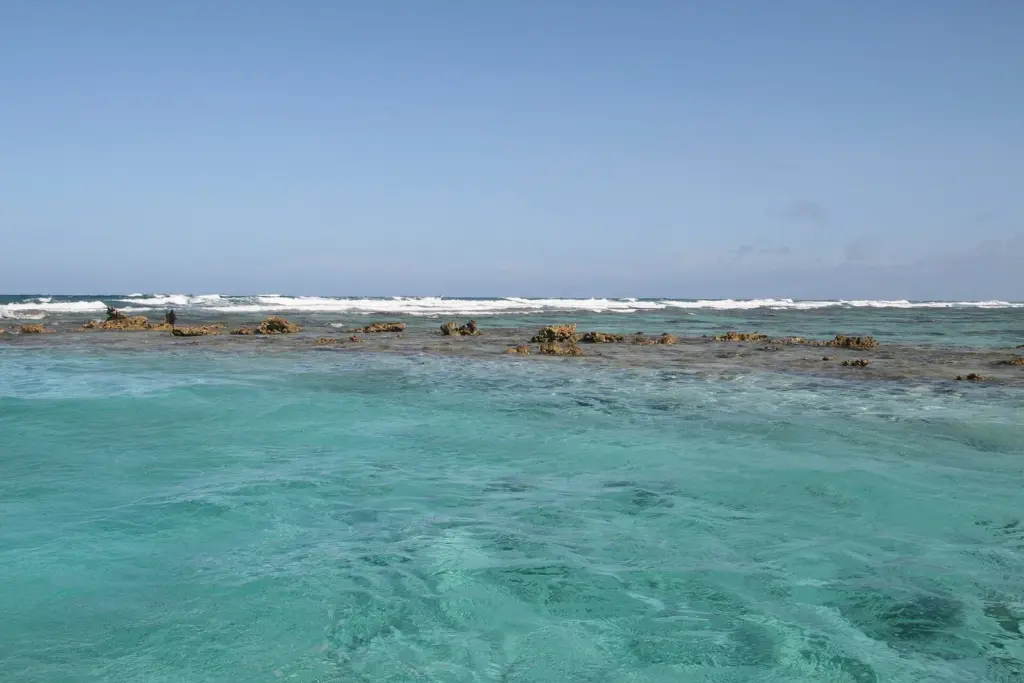
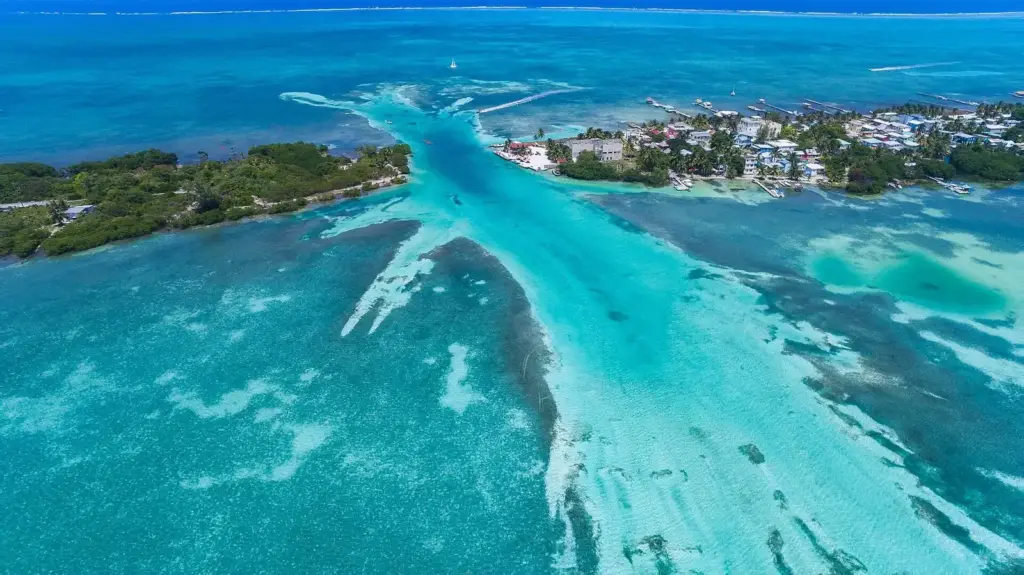
Most visiting divers stay on Ambergris Caye, Belize’s largest island at about 25 miles (40 km) long and barely a mile wide, where San Pedro town has around 13,400 residents. The barrier reef runs just offshore, so two-tank reef dives are a short boat ride away, and the diving is mostly shallow to moderate: spur-and-groove coral, swim-throughs, turtles, rays and plenty of reef fish. Caye Caulker, just south, is smaller, cheaper and more laid-back, with the same reef on its doorstep. Ambergris Caye diving is the easiest introduction to Belize, and a good base for day trips to the atolls.
Hol Chan Marine Reserve and Shark Ray Alley
Belize’s most visited marine reserve sits just south of San Pedro. Hol Chan Marine Reserve was established in July 1987 and covers about 7 square miles (18 km²). Its centerpiece, the Hol Chan Cut, is a channel through the reef about 75 ft (23 m) wide and 30 ft (9 m) deep, packed with fish. Shark Ray Alley, added to the reserve in 1999, is a shallow sand patch where nurse sharks and southern stingrays gather around boats; it’s usually snorkeled rather than dived. Belize Pro Dive Center adds a Hol Chan dive to its local packages for $60 plus 12.5% tax and a $15 park fee (checked September 2026).
Turneffe Atoll
Turneffe is the largest atoll in Belize and in the whole Mesoamerican Reef, about 30 miles (48 km) long and 10 miles (16 km) wide, with more than 150 mangrove islands and more than 500 fish species. It became a marine reserve on November 22, 2012. Because it’s closer than Lighthouse Reef, about 20 miles from Belize City, it’s the most practical atoll day trip from Ambergris Caye. Turneffe atoll diving gives you walls, coral gardens and big schools of fish. If you only do one atoll day, a strong case can be made for Turneffe over the Blue Hole.
Lighthouse Reef and Half Moon Caye
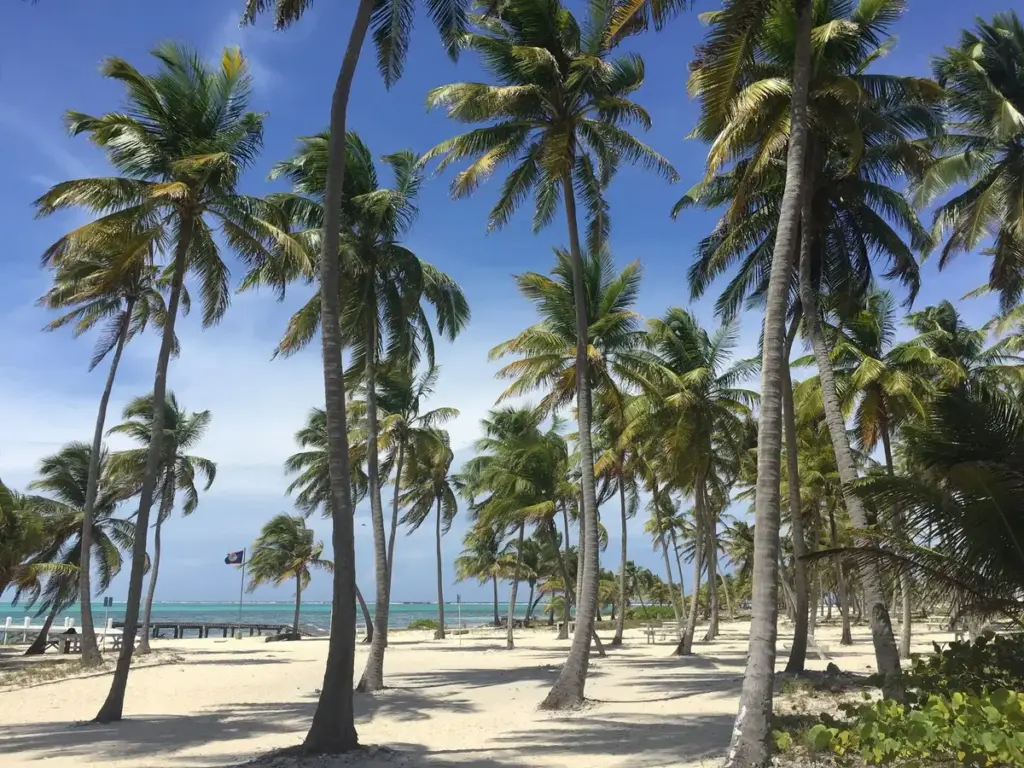
Lighthouse Reef, about 43 miles (70 km) from Belize City, holds the Great Blue Hole and Half Moon Caye, both part of UNESCO’s Belize Barrier Reef Reserve System. Half Moon Caye Wall and the Long Caye Aquarium are the usual second and third dives on Blue Hole day trips, and for many divers they’re the highlight of the day.
Glover’s Reef Atoll
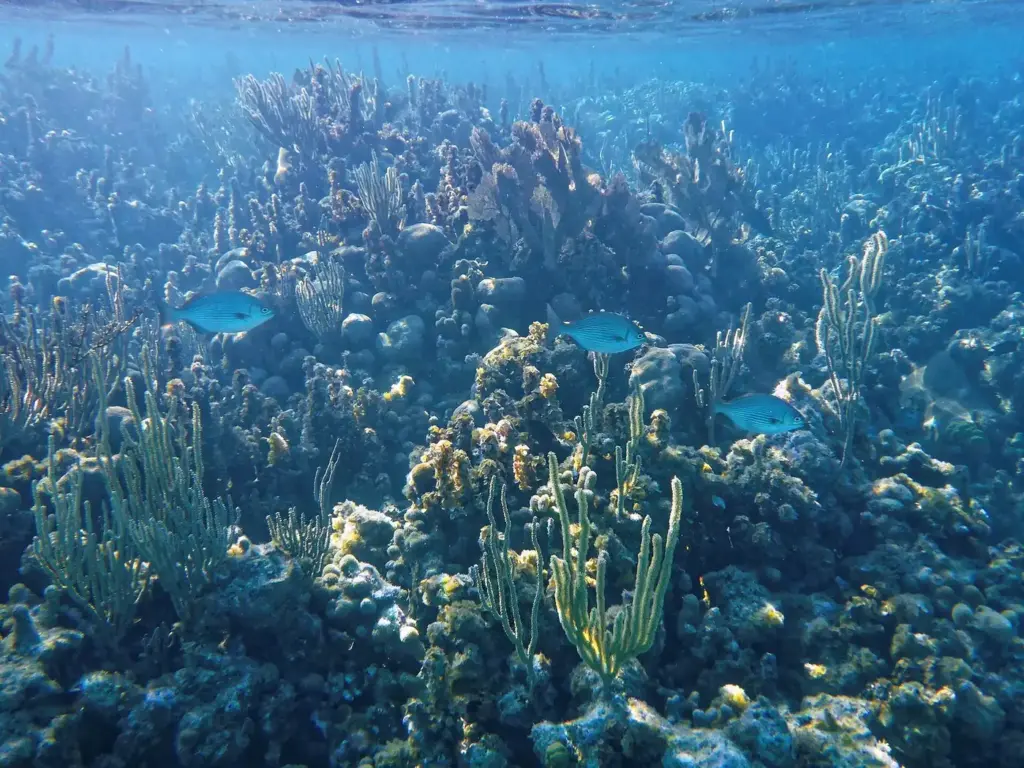
Glover’s Reef lies about 28 miles (45 km) off southern Belize, an atoll roughly 20 miles by 7 miles (32 km by 12 km) with about 850 patch reefs in its lagoon. It has been a marine reserve since 1993 and part of the UNESCO site since 1996, and it’s one of only two viable spawning sites left for Nassau groupers. Glover’s is the most remote of the three atolls, and it’s usually dived by people staying on the atoll itself or on a liveaboard. Glover’s Reef atoll is the choice for divers who want few other boats.
The southern reef and Placencia
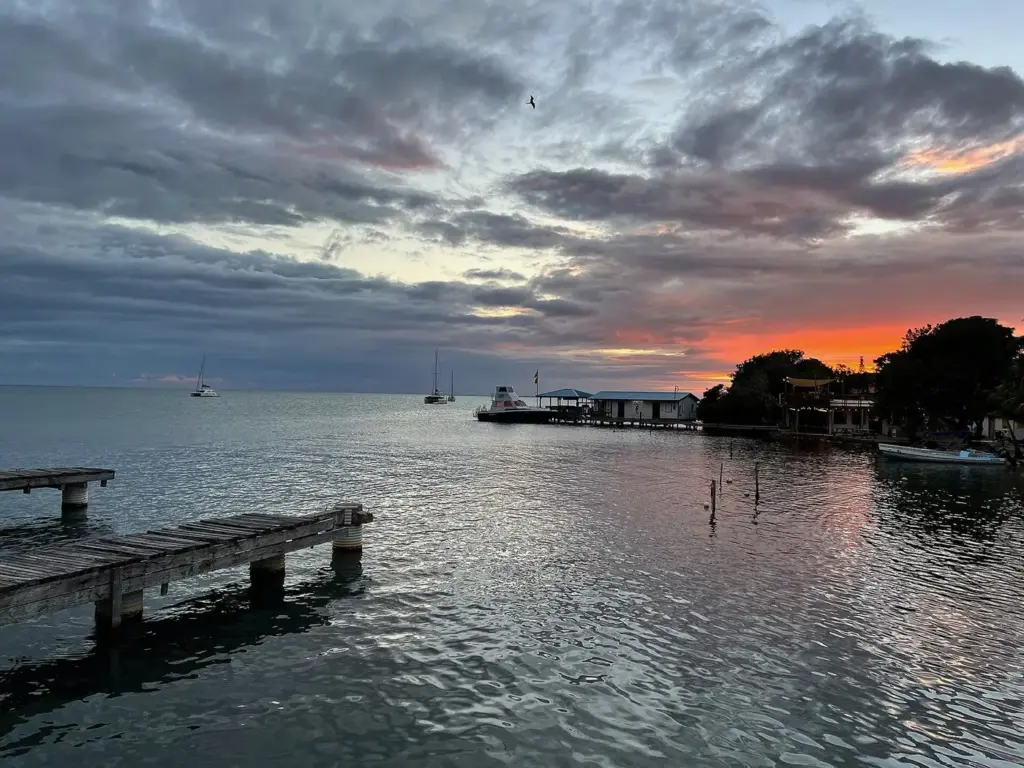
The south is quieter. Placencia, a peninsula village on the mainland, is the base for the Gladden Spit and Silk Cayes Marine Reserve, about 22 miles (36 km) offshore, where whale sharks gather in spring to feed on the spawn of snapper and grouper. The UNESCO site’s southern reserves, Laughing Bird Caye National Park and the Sapodilla Cayes Marine Reserve, are also down here.
Diving the Great Blue Hole: what it’s like, and is it worth it?
The Great Blue Hole is a submerged sinkhole about 1,043 ft (318 m) across and 407 ft (124 m) deep, near the center of Lighthouse Reef. Jacques Cousteau brought it to fame in 1971, and a 2018 submarine expedition found a layer of hydrogen sulfide at about 300 ft (91 m), below which the water is dark, oxygen-free and lifeless. Around the rim, the reef sits at about 16 ft (5 m), slopes to about 33 ft (10 m) and then drops away as a near-vertical cliff, with groupers, midnight parrotfish and reef sharks including nurse, Caribbean reef and blacktip sharks.
The trip. Belize Pro Dive Center’s Blue Hole day from San Pedro costs $285 plus the $40 park fee (paid in cash) and $35.63 in tax, $360.63 in total. It leaves at 6 a.m., takes about 2.5 hours each way and makes a day of roughly 11 hours with three dives: the Blue Hole, Half Moon Caye Wall and the Long Caye Aquarium. The Blue Hole dive itself goes to about 130 ft (40 m) for 25-30 minutes, with a maximum of six divers per guide (checked September 2026). PADI describes it as “not a beginner dive,” says guides may take divers to 131 ft (40 m), and puts it at about three hours by boat from Ambergris Caye and about four from Placencia.
The requirements. Belize Pro Dive Center requires Open Water certification plus a logged dive within the past six months and recent experience to at least 80 ft, strongly recommends Advanced Open Water, and sets a minimum age of 15. That’s sensible: 130 ft is beyond Open Water training and near the limit of recreational diving, and the dive is short because of the depth.
Our take: Belize Blue Hole diving is worth doing once if you’re Advanced, comfortable at depth and curious about the geology, and it comes packaged with two genuinely good atoll dives. If you’re a newer diver, or you care more about coral and fish than about ticking off a famous site, spend the day at Turneffe instead. Either way, it’s a long day on a boat, so take seasickness precautions.
The best dive sites in Belize
These are the dives most visitors plan around, with depths from the operators and marine park authorities where they’re published.
| Site | Area | Depth | Level | Highlights |
|---|---|---|---|---|
| Great Blue Hole | Lighthouse Reef | To about 130 ft (40 m) | Advanced; recent experience to 80 ft | The sinkhole wall; reef sharks at the rim |
| Half Moon Caye Wall | Lighthouse Reef | Wall; the guide sets the depth | Blue Hole day-trip divers | Coral wall on the Blue Hole day trip |
| Long Caye Aquarium | Lighthouse Reef | Reef; the guide sets the depth | Blue Hole day-trip divers | Fish-packed reef, often the last dive of the day |
| Hol Chan Cut | Ambergris Caye | About 30 ft (9 m) | All levels | Channel through the reef, dense fish life |
| Shark Ray Alley | Ambergris Caye | Shallow; usually snorkeled | Snorkelers and divers | Nurse sharks and southern stingrays |
| Turneffe walls and reefs | Turneffe Atoll | Reef and wall | All levels | Walls, schooling fish, mangrove-fed reefs |
| Gladden Spit | Southern reef | Open water | Snorkel and scuba | Whale sharks in spring |
| Glover’s Reef walls | Glover’s Reef | Wall and patch reefs | All levels to experienced | Remote atoll, spawning groupers |
Belize dive shops don’t publish depths for many of their reef sites the way Cozumel’s do, because the guide picks the site and profile on the day based on conditions and the group. On the barrier reef, expect mostly shallow to moderate dives; on the atoll walls, the reef top is often shallow and the wall drops far below recreational limits, so your computer, not the scenery, should set your depth.
Belize marine life and when to see it
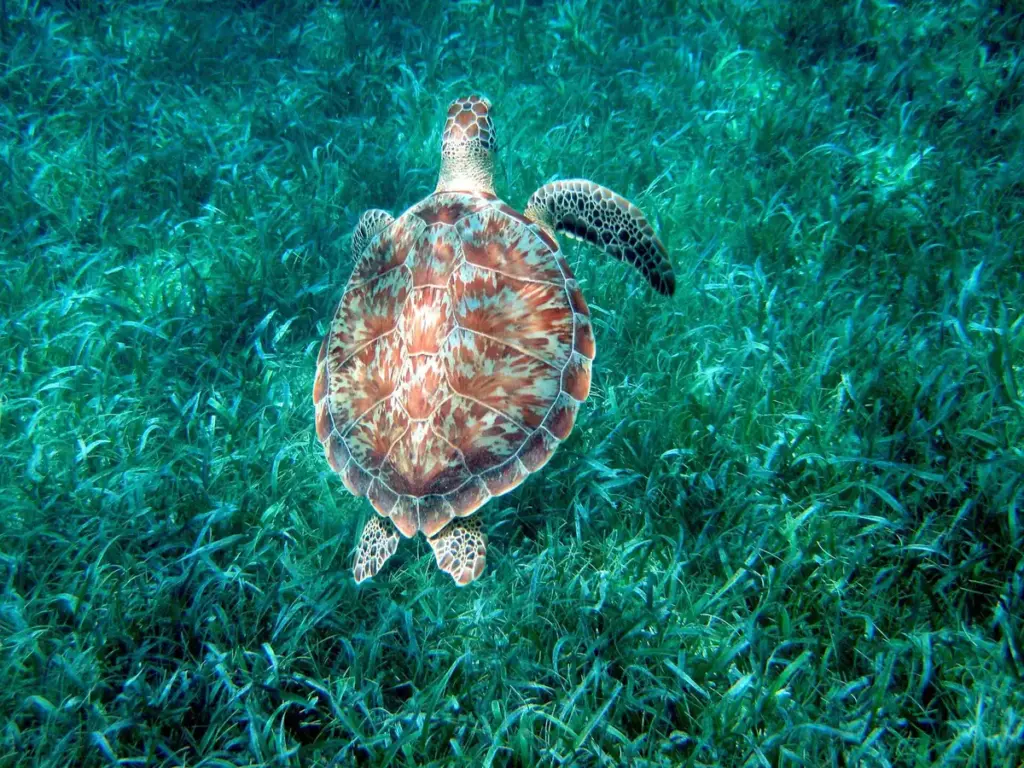
Belize’s reefs support more than 500 fish species at Turneffe alone, plus turtles, rays, eels, lobsters and reef sharks. A few encounters make the trip:
| Animal | When | Where |
|---|---|---|
| Whale sharks | March-June, especially around the full moon | Gladden Spit, off Placencia |
| Nurse sharks and southern stingrays | Year-round | Shark Ray Alley and the reef around Ambergris Caye |
| Reef sharks (Caribbean reef, blacktip, nurse) | Year-round | The Blue Hole rim and the atoll walls |
| Green turtles | Year-round | Hol Chan, the barrier reef and the atolls |
| Nassau groupers (spawning) | Seasonal; ask locally | Glover’s Reef, one of the last viable spawning sites |
| West Indian manatees | Year-round | Protected areas at the Northern Lagoon, Swallow Caye and Gales Point |
Swimming with whale sharks in Belize is a snorkel or scuba trip from Placencia during the spring spawning season; sightings depend on the fish spawning, so no operator can guarantee them. Manatees live in the lagoons and are best seen from a boat on a guided trip into one of the three protected manatee areas.
Best time to dive Belize
You can dive Belize year-round. According to SSI, water runs about 79°F (26°C) in winter and 84°F (29°C) in summer, and visibility is typically 50-100 ft (15-30 m). The dry season, December to May, is generally considered the best time: calmer seas and clearer water, which matters on long atoll crossings. The wet season brings more rain and afternoon storms, and it overlaps the Atlantic hurricane season, which runs from June 1 to November 30 and peaks around September 10, according to NOAA.
Belize water temperature by season
| Season | Water | Visibility and seas | Wetsuit |
|---|---|---|---|
| Winter (December-February) | About 79°F (26°C) | Dry season; generally calmer and clearer | 3 mm full suit; 5 mm or a hood if you chill easily |
| Spring (March-May) | Warming | Dry season; the best conditions for atoll crossings | 3 mm full suit |
| Summer (June-August) | About 84°F (29°C) | Wet season; visibility can drop after rain | 3 mm full suit or a shorty |
| Fall (September-November) | Warm | Wet season and peak hurricane risk | 3 mm full suit |
A full-length suit also protects against stings and scrapes on the reef, which matters more than warmth for many divers here.
| Month | Conditions | What’s happening |
|---|---|---|
| January | Dry season; cooler water, about 79°F | Some shops black out discounted packages until January 4 |
| February | Dry season | Presidents’ Day week is busy |
| March | Dry season | Whale shark season opens at Gladden Spit; spring break |
| April | Dry season; calm | Whale sharks; Easter week is busy |
| May | End of dry season; warming | Whale sharks; calm seas for atoll crossings |
| June | Wet season begins; about 84°F | Last whale sharks; hurricane season begins |
| July | Warm, wetter | Summer family travel |
| August | Warm, wetter | Hurricane risk rising |
| September | Warm; stormiest period | Peak hurricane risk; quietest month for visitors |
| October | Warm; hurricane risk continues | Low season |
| November | Transition to the dry season | Hurricane season ends November 30; package blackouts start November 20 at some shops |
| December | Dry season begins | Christmas and New Year’s are the busiest, priciest weeks |
Our take: The best time to dive Belize is April or May: the dry season’s calm seas, warming water, whale sharks at Gladden Spit, and none of the holiday crowds. If you’re set on the Blue Hole, pick the dry season, because a rough three-hour crossing each way can ruin the day.
Getting to Belize from the US
Flights. Belize City’s Philip S. W. Goldson International Airport (BZE) has year-round nonstops from Dallas/Fort Worth and Miami (American), Los Angeles (Alaska), Atlanta (Delta), Houston-Hobby (Southwest) and Houston-IAH (United). Seasonal flights add Charlotte (American), Seattle (Alaska), Baltimore and Denver (Southwest), and Chicago-O’Hare, Denver, Los Angeles, Newark and San Francisco (United), and BermudAir is adding Boston, Fort Lauderdale, Orlando-Sanford, Raleigh-Durham and St. Pete from December 2026 (checked September 2026). The airport handled about 1.23 million passengers in 2024.
To the cayes. From Belize City, Tropic Air and Maya Island Air fly small planes to San Pedro on Ambergris Caye, and fast ferries run from Belize City to the cayes. San Pedro also has ferry links to Chetumal in Mexico. For the atoll resorts, transfers are usually arranged by the resort.
Entry rules. US citizens need a passport to fly to Belize and to fly home; published visa tables list Americans as not needing a visa for a tourist visit, but check the State Department’s Belize page before you go. The State Department rates Belize Level 2, “exercise increased caution,” and rates the Southside of Belize City Level 3, “reconsider travel,” because of crime (checked September 2026). Most divers pass through Belize City only on the way to the cayes.
Belize scuba diving from a cruise ship
Belize City is a cruise port, and if your ship offers a dive excursion, it will head for the barrier reef or a nearer site. On a port day, keep expectations realistic: the reef and the nearer atoll are a boat ride away, the Blue Hole trip takes about 11 hours from Ambergris Caye and isn’t practical on a cruise stop, and you need to be back before all-aboard. Book with an operator that runs cruise-day trips and knows your ship’s schedule, and bring your certification card. The flying-after-diving rules don’t apply to your ship, but they do apply to any flight home soon after the cruise.
Where to stay: Belize dive resorts, cayes and liveaboards
- Ambergris Caye (San Pedro). The biggest choice of hotels, condos and dive shops, restaurants within walking or golf-cart distance, and day trips to Hol Chan, Turneffe and the Blue Hole. Best for first-timers and mixed groups.
- Caye Caulker. Smaller, cheaper and more backpacker-friendly, with the same reef nearby and “go slow” island life. Best for budget divers.
- Placencia. A mainland peninsula in the south with beaches and quieter reefs, and the base for Gladden Spit whale sharks in spring.
- Atoll resorts. Lodges on Turneffe, Lighthouse Reef and Glover’s put you on top of the best diving, with no long daily crossings. They cost more and usually come as all-inclusive dive packages.
- Liveaboards. A Belize liveaboard visits all three atolls in a week, including the Blue Hole, without the daily commute. Aggressor Adventures is one operator that runs Belize liveaboard trips.
Ambergris, Caye Caulker, Placencia or an atoll? How to choose
| If you want | Base | Why |
|---|---|---|
| Easy reef dives, restaurants and a mixed group | Ambergris Caye | The most shops and lodging, Hol Chan next door, and day trips to the atolls |
| A budget, laid-back trip | Caye Caulker | A smaller, cheaper island with the same barrier reef offshore |
| Whale sharks | Placencia, March-June | The closest base for Gladden Spit |
| The best diving with no long commutes | An atoll resort | Walls and reefs close to the dock every day |
| All three atolls and the Blue Hole in one week | A liveaboard | The boat moves between the atolls while you sleep |
Belize dive packages can make the atolls affordable. Caradonna’s September 2026 specials, for example, listed seven nights at Turneffe Island Resort (stay seven, pay four) with 15 boat dives and a Blue Hole day trip from $4,118 per person, land-only, double occupancy. On Ambergris Caye, you’ll usually book lodging and diving separately, which gives you more choice.
Choosing a Belize dive operator: prices, fees and tipping
Belize Pro Dive Center in San Pedro publishes clear rates, so we use it as the example (checked September 2026). Its prices exclude Belize’s 12.5% tax, and it rents gear for $20 a day plus tax.
| Package | Price | Notes |
|---|---|---|
| Local two-tank dives | 3 days $275, 4 days $360, 5 days $425, 6 days $490, 7 days $560 | Barrier reef dives near San Pedro |
| Local dives plus Blue Hole | 2 days $460 to 5 days $670 | Plus the $40 Blue Hole fee and tax |
| Local dives plus Turneffe | 2 days $430 to 6 days $700 | Plus the $10 Turneffe fee and tax |
| Blue Hole day trip | $285 ($360.63 with fee and tax) | Three dives, about 11 hours |
| Hol Chan add-on dive | $60 | Plus 12.5% tax and the $15 park fee |
Its discounted packages are blacked out from November 20 to January 4, so holiday divers should expect to pay more. Wherever you book, ask:
- How many divers per guide? Belize Pro Dive Center caps the Blue Hole at six divers per guide; ask for the same number on reef dives.
- Which fees and taxes are included? The 12.5% tax and park fees add meaningfully to the quoted price.
- What boat goes to the atolls? A bigger, faster boat makes the long crossings more comfortable.
- What are the requirements for the Blue Hole? Expect to show your card, logbook and recent experience.
Cash and paperwork. Belize Pro Dive Center collects the Blue Hole park fee in cash, so carry some US dollars on atoll days. Bring your certification card and logbook: operators check recent experience before deep trips such as the Blue Hole. Pack seasickness remedies for the atoll crossings, and a reef-friendly mineral sunscreen or, better, a rash guard for the long hours on deck.
Tip the crew as on any dive boat: a common guideline is $5-$10 per tank for a day-boat crew and 10-20% of the course price for an instructor.
What a week of diving in Belize costs
Here’s the diving alone for a seven-night trip based on Ambergris Caye with five days of local reef dives and one Blue Hole day, at Belize Pro Dive Center’s published prices (checked September 2026).
| Item | Low | High | Notes |
|---|---|---|---|
| Five-day local two-tank package | $425 | $425 | Barrier reef dives |
| 12.5% tax on the package | $53 | $53 | |
| Blue Hole day trip | $361 | $361 | Three dives, with the $40 park fee and tax |
| Rental gear | $0 | $135 | $20 a day plus tax for six days |
| Crew tips | $65 | $130 | $5-$10 per tank for 13 tanks |
| DAN membership | $40 | $40 | Per year; dive accident insurance is extra |
| Diving total | $944 | $1,144 | Before flights, lodging, meals and island transfers |
Add flights to Belize City, the hop or ferry to the cayes, lodging and meals. Prices on Ambergris Caye run higher than on Caye Caulker, and atoll resorts are priced as packages that include lodging, meals and diving.
Getting scuba certified in Belize
You can get scuba certified in Belize, and the shallow, sheltered reefs inside the barrier reef make a gentle classroom. Shops on Ambergris Caye and Caye Caulker teach Open Water and Advanced courses, and some offer referrals for divers who did the theory and pool sessions at home. Compare prices and ask which agency’s eLearning is included.
If you want to dive the Blue Hole or the atoll walls, the Advanced Open Water course is the one that pays off: Belize Pro Dive Center wants recent experience to at least 80 ft for the Blue Hole and strongly recommends Advanced. Doing Advanced during the first days of your trip, on the barrier reef, sets you up for an atoll day later in the week. Our Cozumel diving guide covers the other easy place in the region to learn and log dives before a Belize trip.
Safety: depth, boats, chambers and insurance
Depth. The Blue Hole goes to about 130 ft, and the atoll walls drop far deeper than recreational limits. Follow your guide’s profile, watch your computer, and don’t let a famous site push you past your training.
Long crossings. Atoll days mean two to three hours each way in open water. Take seasickness precautions, bring sun protection and water, and choose an operator with a well-equipped boat that carries oxygen and a radio.
Chambers. A resort page last updated in 2022 lists two recompression chambers in San Pedro, both open around the clock and both accepting DAN insurance: the Belize Hyperbaric Facility, opened in 1989 beside the San Pedro airstrip (226-2851), and the DAN-affiliated Belize Chamber Project at the Ambergris Hope Clinic on Pescador Drive (226-2660). Confirm the current contacts with your dive shop when you arrive. From the atolls, getting to a chamber means a long boat ride or a flight, which is a good reason for dive accident insurance.
Insurance and emergencies. DAN membership costs $40 a year and includes up to $150,000 of emergency medical transportation for emergencies more than 50 miles from home, but membership alone doesn’t cover treatment; DAN’s dive accident insurance, sold separately, pays up to $500,000 on its top plan (checked September 2026). DAN’s 24-hour emergency line is +1-919-684-9111.
Crime. Follow the State Department’s advice, avoid Belize City’s Southside, and use the usual care with valuables on the cayes.
Flying home. The CDC advises waiting at least 12 hours after a single no-decompression dive and at least 18 hours after multiple dives or days of diving before flying. That includes the small-plane hop back to Belize City, so plan a non-diving last day.
Belize for non-divers in your group
- Snorkeling. Hol Chan and Shark Ray Alley are among the best snorkel trips in the Caribbean for beginners, and Belize Pro Dive Center also runs snorkel trips to Mexico Rocks and Turneffe Atoll.
- Whale sharks. Snorkelers can join spring whale shark trips from Placencia to Gladden Spit.
- Manatees. Boat trips visit the protected manatee areas at the Northern Lagoon, Swallow Caye and Gales Point.
- Inland Belize. Mayan ruins, jungle lodges and cave tours on the mainland make a good add-on before or after the diving, and they’re a natural way to fill the no-fly day at the end.
A sample seven-night Belize dive trip
| Day | Plan |
|---|---|
| 1 | Fly to Belize City, then a short flight or ferry to San Pedro on Ambergris Caye. |
| 2 | Two-tank reef dives on the barrier reef to check weighting and buoyancy. |
| 3 | Two-tank reef dives, including the Hol Chan Cut; snorkel Shark Ray Alley in the afternoon. |
| 4 | Atoll day: Turneffe, three dives. |
| 5 | Easy two-tank reef day to recover from the long day. |
| 6 | Blue Hole day: the Blue Hole, Half Moon Caye Wall and the Long Caye Aquarium (Advanced divers with recent deep experience). |
| 7 | Non-diving day: beach, kayaking, or a mainland trip to ruins or caves. |
| 8 | Fly home, well over 18 hours after your last dive. |
With more time, add three or four nights at Placencia in the spring whale shark season, or trade the cayes for a week at an atoll resort or on a liveaboard.
Mistakes to avoid when you plan a Belize dive trip:
- Booking the Blue Hole without the experience. Operators want recent dives to about 80 feet, and the dive itself goes to about 130. Do the Advanced course first, or pick Turneffe.
- Forgetting the extras. The 12.5% tax, park fees and gear rental can add a quarter or more to a quoted dive price.
- Underestimating the crossings. Atoll days start early and run long; don’t schedule a dinner reservation or a flight around them.
- Staying in Belize City. Divers are better off heading straight to the cayes or an atoll resort.
- Diving the day before you fly. The small-plane hop to Belize City counts as flying. Keep the last day dry.
- Holiday pricing surprises. Some shops black out discounted packages from November 20 to January 4.
Frequently asked questions
Where is the best diving in Belize?
The atolls have Belize’s best diving. Turneffe offers the best all-round reef and wall diving and is the easiest atoll day trip; Lighthouse Reef has the Great Blue Hole and Half Moon Caye Wall; Glover’s Reef is the most remote. For easy everyday diving, the barrier reef off Ambergris Caye and Caye Caulker, including the Hol Chan Marine Reserve, is hard to beat.
How much is scuba diving in Belize?
On Ambergris Caye, Belize Pro Dive Center’s local two-tank packages run $275 for three days to $560 for seven, plus 12.5% tax, which works out to about $80-$92 a day. The Blue Hole day costs $285 plus a $40 park fee and tax, $360.63 in total. Gear rental is $20 a day plus tax (checked September 2026).
Is diving the Blue Hole in Belize worth it?
For Advanced divers comfortable at depth, once is worth it: the dive goes to about 130 ft for 25-30 minutes, and the day includes two good atoll dives at Half Moon Caye Wall and the Long Caye Aquarium. Newer divers, or those who care more about reef life than geology, will usually get more from a day at Turneffe.
When is the best time to dive in Belize?
Belize is diveable year-round, but the dry season from December to May is generally calmer and clearer, which helps on the long atoll crossings. March to June brings whale sharks to Gladden Spit, and April and May combine calm seas with warm water. June to November is hurricane season, with the highest risk from mid-August to mid-October.
Is Belize drift diving?
Some Belize dives are drift dives, but most are reef and wall dives where the current is usually mild. Currents can pick up in channels and at the ends of the atolls, and your guide will plan those dives as drifts. If you want a week of classic drift diving, Cozumel is the better choice.
Can you get scuba certified in Belize?
Yes. Shops on Ambergris Caye and Caye Caulker teach Open Water and Advanced courses, and some offer referral dives for people who did the theory and pool training at home. The shallow reefs inside the barrier reef are a good place to learn, and the Advanced course is worth taking if you want to dive the Blue Hole.
What is the water temperature in Belize?
SSI puts Belize’s water at about 79°F (26°C) in winter and 84°F (29°C) in summer, with visibility typically 50-100 feet. A 3 mm full wetsuit works for most divers year-round; in December to February, a 5 mm suit or a hood helps if you get cold on repeat dives or long atoll days.
Do you need a passport to dive in Belize?
Yes. US citizens need a passport to fly to Belize and to fly home. Published visa tables list Americans as not needing a visa for a tourist visit, but confirm the current entry rules on the State Department’s Belize page before you travel. Bring your dive certification card and logbook too, because operators check them before deep or atoll dives.
Can you swim with whale sharks in Belize?
Yes, in season. Whale sharks gather at Gladden Spit, about 22 miles off Placencia, from roughly March to June, especially around the full moon, to feed on spawning snapper and grouper. Trips leave from Placencia for snorkelers and divers. Sightings depend on the spawning, so they aren’t guaranteed.
Sources and verification
Everything on this page was checked on September 23-24, 2026 against the organizations listed below, and the page is compiled from them; we don’t claim first-hand visits to the sites or operators named. Prices are the operators’ published rates and can change, so confirm before you book.
- UNESCO: Belize Barrier Reef Reserve System
- Belize Pro Dive Center: dive packages and Blue Hole dive (prices, park fees, tax and requirements)
- PADI: Diving in Belize (Blue Hole depth and boat times)
- SSI: Belize scuba diving guide (water temperature, visibility, seasons, manatee areas, Gladden Spit)
- US State Department: Belize travel advisory
- Ramon’s Village Resort: San Pedro recompression chambers
- NOAA National Hurricane Center
- DAN membership and the CDC Yellow Book: Scuba diving
- Caradonna Adventures: dive package specials
Also checked: Wikipedia’s entries on the Great Blue Hole, Turneffe Atoll, Glover’s Reef, Ambergris Caye, Belize’s airport and Belize’s visa policy; Aggressor Adventures’ Belize page; and the Hol Chan Marine Reserve’s history.
Scuba Tourism Guide is an independent publication. It is not affiliated with any agency, park or dive operator named here, and no one paid to be included.
Photo credits
- Great Blue Hole, Lighthouse Reef (featured image): photo by Axelspace Corporation, Wikimedia Commons (CC BY-SA 4.0)
- Belize Barrier Reef off Ambergris Caye: photo by Bernt Rostad, Wikimedia Commons (CC BY 2.0)
- Half Moon Caye, Lighthouse Reef, Belize: photo by Dronepicr, Wikimedia Commons (CC BY 3.0)
- Glover's Reef atoll, Belize: photo by KimonBerlin, Wikimedia Commons (CC BY-SA 2.0)
- Green sea turtle, Hol Chan Marine Reserve: photo by Nikdahl, Wikimedia Commons (CC BY-SA 3.0)
- Nurse shark, San Pedro, Belize (2025): photo by Diego Delso, Wikimedia Commons (CC BY-SA 4.0)
- Caye Caulker from the air: photo by dronepicr, Wikimedia Commons (CC BY 2.0)
- Placencia, Belize, at sunset: photo by Jim McIntosh, Wikimedia Commons (CC0)


