In the Maldives, the current runs the show. It decides which side of an atoll has clear water, where grey reef sharks hang in a channel mouth, and when a hundred manta rays crowd into one small bay in Baa Atoll to feed. Maldives diving is mostly drift diving through channels and around submerged pinnacles in warm, clear water, and once you understand how the monsoons move that water, choosing the right atoll, month and type of trip gets much easier. This page covers all three, plus what the 2025 tax increases add to the bill and how to get there from the US without connecting through the Gulf.
Short answer: Dive the Maldives from November to April for drier weather and clear water on the eastern sides of the atolls, or from May to November for Hanifaru Bay’s manta feeding. A liveaboard reaches the most sites. Resorts charge about $115 a dive with service charge and tax, local islands about $50. There are no US nonstops.
Prices, taxes, rules and advisories on this page were checked between September 23 and October 1, 2026 against the Maldivian authorities’, dive operators’ and the State Department’s own information. No resort, liveaboard or dive center paid to appear.
On this page: Why dive the Maldives · The atolls · Monsoons and currents · Best dive sites · Mantas, whale sharks and sharks · Month by month · Liveaboard, resort or local island · Getting there · Costs and budget · Courses and skill level · Safety · What to pack · Maldives vs Red Sea vs Indonesia · Seychelles, Mauritius, Sri Lanka · Non-divers · Sample trips · When to book · FAQ · Sources
| Maldives at a glance | Details (checked Sept-Oct 2026) |
|---|---|
| Skill level | Open Water minimum; Advanced recommended, because many dives go deeper than 60 ft (18 m) in current |
| Best months | November-April for drier weather; May-December for Hanifaru Bay’s manta feeding |
| Water temperature | 80-86°F (27-30°C) year-round; thermoclines possible below about 65 ft (20 m) |
| Visibility | About 33-100+ ft (10-30 m+), clearest on the side of the atoll the monsoon current is flowing into |
| Depth limit | 100 ft (30 m) for recreational divers; dive computers compulsory |
| Signature marine life | Reef mantas, whale sharks (South Ari, year-round), grey reef sharks, tiger sharks at Fuvahmulah, turtles |
| Typical 2-tank price | About $230 at a resort with service charge and tax ($90 a dive before them); about $100 on a local island, taxes included |
| Getting there | No US nonstops; connect in Istanbul, London, Singapore or Colombo, and avoid Gulf hubs under Level 3 advisories |
| Entry | Free 30-day visa on arrival; online IMUGA arrival declaration within 96 hours before your flight |
| Taxes | Green tax $12 a night at resorts (the tax authority applies the same rate to liveaboards); $6 at small guesthouses; 17% T-GST plus a 10% service charge |
| Advisory | Level 2, exercise increased caution (terrorism) |
| Chambers | ADK Hospital in Malé, Kandima in Dhaalu Atoll, and several resorts |
Why go scuba diving in the Maldives, and who should skip it
The Maldives is built for big-animal diving. Its 1,192 coral islands sit in a double chain of 26 atolls stretching 871 km (541 miles) from north to south, and only 298 square kilometers of that is dry land. Everything else is reef, lagoon and the deep channels between them, where tidal currents carry plankton and the animals that feed on it. Reef mantas visit cleaning stations across the country, whale sharks cruise the outer reef of South Ari Atoll all year, grey reef sharks patrol channel mouths, and in the far south, Fuvahmulah has tiger sharks year-round. The water is warm in every month, and visibility on a good day runs past 100 feet.
The other draw is choice. Most resorts have their own dive center, liveaboards run week-long routes through the central and northern atolls, and guesthouses on local islands now make it possible to dive the Maldives on a fairly normal budget. Few dive destinations offer that range, from a $50 dive with taxes included to a liveaboard cabin above $5,000.
Who should skip it? Divers who aren’t yet comfortable in current: the best Maldives dives happen when the water is moving, and operators warn that inexperienced divers may find some sites demanding. Divers who want pristine shallow coral should also adjust expectations. Much of the country’s coral bleached in 1998, a 2016 warming event killed about 75% of its corals, and reports in April 2026 noted some bleaching on shallow reefs, though deeper, current-swept structures still hold plenty of life. Macro photographers will find more variety in Indonesia or the Philippines. And from the US, the Maldives is a long way: no nonstop flights, two long legs, and the convenient Gulf connections now carry Level 3 advisories.
The Maldives atolls explained: thilas, kandus and which atoll to choose
An atoll is a ring of reef around a lagoon. In the Maldives, the rim is broken by channels, called kandus, where water pours in and out of the lagoon with the tides, and the lagoons and channels are dotted with thilas, underwater pinnacles that rise toward the surface without breaking it. Most of the famous dives are one or the other: a drift through a kandu or a dive around a thila that sits in the current. Shark action happens where the current hits a thila or rushes into a channel mouth, and the mantas gather at cleaning stations on reef tops and thilas.
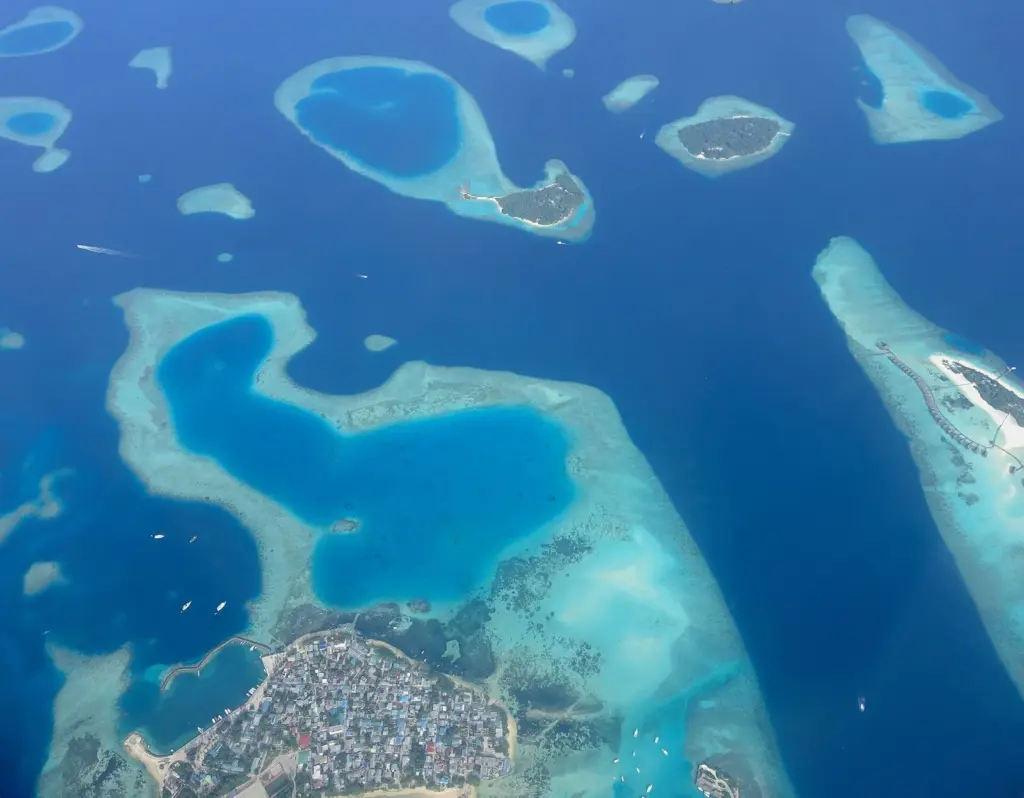
Which atoll you dive depends on what you want to see and how you’re traveling. Liveaboards cover several atolls in a week; resorts and guesthouses tie you to one. This matrix sums up the main dive regions:
| Atoll or region | Known for | Best for | How you get there |
|---|---|---|---|
| North and South Malé (Kaafu) | Banana Reef, Cocoa Corner’s shark show, Guraidhoo Kandu | Short trips, local islands such as Maafushi, first visits | Speedboat or ferry from Malé |
| Ari (North and South) and Rasdhoo | Maaya Thila, Fish Head, Kudarah Thila; whale sharks year-round in South Ari | The classic all-rounder | Seaplane or speedboat; on most liveaboard routes |
| Vaavu | Channel dives on central liveaboard routes | Experienced drift divers | Mostly by liveaboard |
| Baa | Hanifaru Bay’s manta feeding (snorkel only); Dharavandhoo and Nelivaru Thilas; UNESCO biosphere reserve since 2011 | Mantas, May-December | Domestic flight to Dharavandhoo, seaplane, or northern liveaboards |
| Lhaviyani and Raa | Manta cleaning stations such as Fushivaru Thila | Northern liveaboard routes | Seaplane or liveaboard |
| Meemu, Thaa and Laamu | Quieter channels on longer southern routes | Repeat visitors | Liveaboard |
| Deep south: Huvadhu, Fuvahmulah, Addu | Fuvahmulah’s tiger sharks year-round; the British Loyalty wreck in Addu | Experienced divers (Emperor recommends 30 logged dives) | Domestic flights to Fuvahmulah and Gan; Deep South liveaboards |
For a first trip, the Ari and Malé atolls make the most sense: they’re the closest to the airport, they’re on almost every liveaboard’s “Best of Maldives” route, and they mix thilas, channels and South Ari’s whale sharks. Baa is the place to be for manta feeding in the southwest monsoon. The deep south is for experienced divers chasing sharks, and it takes either a domestic flight or a dedicated liveaboard to reach.
Our take: First time? Book a week-long “Best of Maldives” liveaboard through Ari, Vaavu and the Malé atolls. Come back for Baa in the southwest monsoon or the deep south once you have 30 or more drift dives in your log.
Which side of the atoll? Monsoons and currents explained
This is the part most Maldives guides skip, and it’s the key to the whole trip. The Maldives sits in the Indian Ocean monsoon belt and has two seasons. From about November to April, the northeast monsoon, called Iruvai, brings drier weather, less rain and more sunshine. From about May to November, the southwest monsoon, Hulhangu, brings more rain and stronger winds, though sunny days are still common.
The monsoon also sets the direction of the ocean current, and that decides where the water is clear. During the northeast monsoon, dive sites on the eastern side of an atoll have good visibility, because clean ocean water is flowing in, while the western side has reduced visibility as plankton-rich lagoon water flows out. During the southwest monsoon it’s the opposite. Mantas follow the plankton, so they’re most often found on the side with reduced visibility. That’s why the same atoll can be a shark-and-clear-water destination in one season and a manta destination in the other.
| Season | Weather | Clear-water side of the atolls | Where the mantas usually are |
|---|---|---|---|
| Northeast monsoon (Iruvai), about November-April | Drier, sunnier, less rain | East | West |
| Southwest monsoon (Hulhangu), about May-November | Wetter and windier | West | East (Hanifaru Bay sits on Baa’s eastern side) |
Tides and the moon matter too. The moon phase, the seasons and whether the current is running into or out of an atoll all change current strength and visibility, and Emperor Divers warns that strong, unpredictable currents can occur anywhere in the Maldives, particularly around new and full moons. On an incoming current, channel dives are at their best: clear water, and sharks and trevally lined up in the flow at the channel mouth. Getting to that spot can mean a quick, negative descent (dropping straight down without stopping at the surface) and some hard finning, so a good level of fitness pays off. Guides often have divers hook onto dead rock with a reef hook to watch the show without fighting the current, then let go and drift into the channel.
Visibility ranges from about 33 feet to more than 100 feet (10 to 30 m+), depending on the season, the current and the side of the atoll. Your guide will pick sites and entry points by the current on the day, so treat any itinerary’s site list as a plan rather than a promise.
How a channel dive works
A typical Maldives channel dive on an incoming current goes like this. The guide checks the current from the dhoni before anyone gets wet, then briefs the plan: where to enter, where to hook in and where to let go. You roll in together and go straight down, without waiting on the surface, so the current doesn’t scatter the group before you reach the reef. At the channel mouth you hook your reef hook onto dead rock, inflate your BCD slightly so you hang in the flow, and watch the sharks and trevally work the current in front of you. When the guide signals, you unhook and drift into the channel along the wall, slowly coming shallower. The safety stop often happens in open water, which is why everyone carries an SMB: you send it up so the dhoni can follow you and pick the group up together.
Maldives diving: the best dive sites
These are the sites that come up again and again on liveaboard routes and resort dive menus. Depths are given where published; many Maldives sites have no single depth because the thila or channel spans a wide range.
| Site | Atoll | Depth | Level | Highlights |
|---|---|---|---|---|
| Maaya Thila | North Ari | Varies | Intermediate; advanced in strong current | Day and night dives on a thila; safety float in current |
| Fish Head (Mushi Mas Mingili Thila) | Ari | Varies | Intermediate | One of the country’s best-known thilas |
| Kudarah Thila | South Ari | Varies | Intermediate+ | A protected marine area dived on an incoming current |
| Maalhos Thila | Ari | Mostly below 80 ft (25 m) | Advanced | Deeper thila; safety float required in strong current |
| South Ari outer reef | South Ari | Varies | All levels | Whale sharks year-round |
| Cocoa Corner (Cocoa Thila) | South Malé | Varies | Intermediate+ | The best shark show near Malé when the current is right |
| Guraidhoo Kandu South | South Malé | Varies | Advanced | Strong current and turbulence; channel action |
| Banana Reef | North Malé | Varies | Intermediate | Overhangs and schooling fish; current can be strong |
| Dharavandhoo Thila | Baa | 20-100 ft (6-30 m) | Intermediate | Caves at different depths and plenty of marine life |
| Nelivaru Thila | Baa | From 16 ft (5 m) | All levels | A manta hotspot in season |
| Hanifaru Bay | Baa | Snorkel only | Snorkelers | Manta and whale shark feeding, May-December |
| Fushivaru Thila | Lhaviyani | Varies | Intermediate | Manta cleaning stations |
| Fuvahmulah | Fuvahmulah (deep south) | Varies | Beginner-intermediate, per PADI | Tiger sharks year-round |
| British Loyalty wreck | Addu | About 110 ft (33 m) | Advanced | A 440-ft (134 m) tanker lying on its port side |
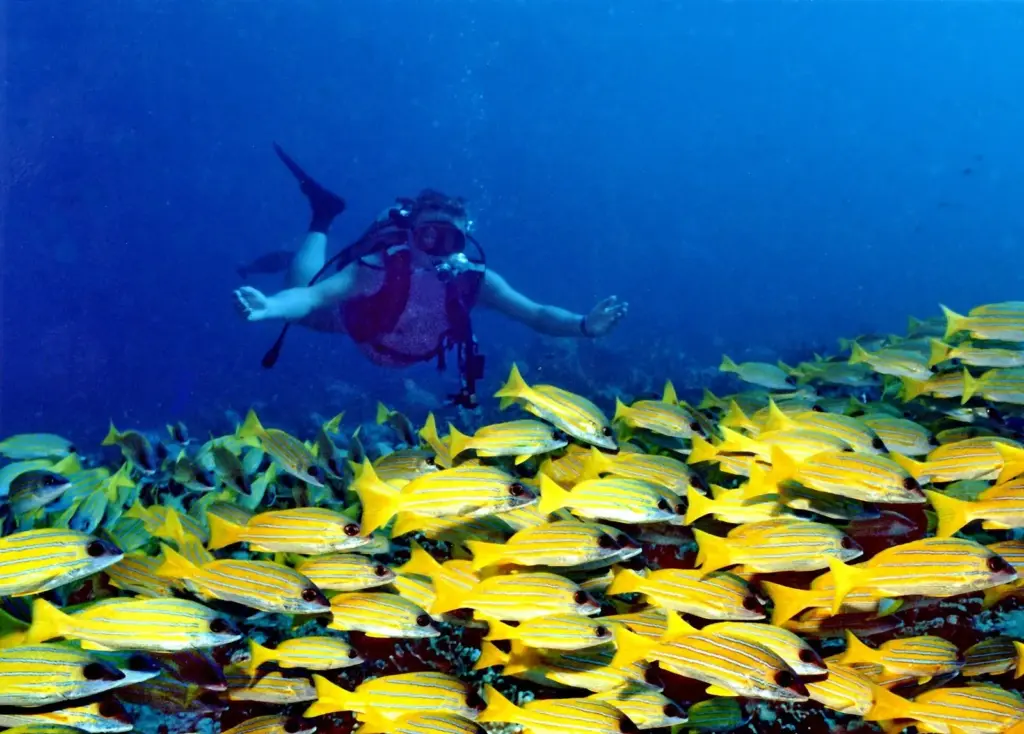
Ari Atoll is the heart of Maldives diving. Maaya Thila works by day and by night, though in strong current it becomes an advanced dive where you’ll need a safety float. Fish Head, also called Mushi Mas Mingili Thila, is one of the country’s most popular sites, and Kudarah Thila is a protected marine area dived when the current is flowing into it. Maalhos Thila is for advanced divers, since most of it lies deeper than 80 feet (25 m). South Ari’s outer reef is the country’s whale shark coast.
The Malé atolls are where most short trips and local-island stays happen. In South Malé, Cocoa Corner (Cocoa Thila) can give the best shark show around the atoll when the current cooperates, while Guraidhoo Kandu South is strictly for experienced divers: the current can pull you off the reef, with turbulence below. In North Malé, Banana Reef has overhangs and fish schools, and currents and turbulence around the overhangs at times.
Baa Atoll is the manta atoll. Beyond Hanifaru Bay, which is snorkel only, its thilas are good dives in their own right: Dharavandhoo Thila runs from about 20 to 100 feet (6 to 30 m) with caves at different depths, and Nelivaru Thila starts at just 16 feet (5 m) and is a manta hotspot in season.
The deep south is different again. Addu Atoll, the southernmost, was the only area in the Maldives not affected by the 1998 bleaching, and it holds the wreck of the British Loyalty, a 440-foot (134 m) tanker lying on its port side at about 110 feet (33 m), close to the recreational limit. Fuvahmulah, a single island with its own airport since 2011, is famous for tiger sharks; PADI rates the dive beginner to intermediate, but it’s a big-shark dive in open water, and experience helps.
Night diving
Night dives are part of most Maldives trips but not a nightly event. Maaya Thila in Ari is the best-known night site, a thila that works after dark as well as by day. Emperor’s liveaboards normally offer one night dive per trip and none on southern routes, and resorts charge a supplement: $15 a dive at Crossroads. Bring a torch, and expect your guide to choose a sheltered site when the current is running.
Mantas, whale sharks and sharks: Maldives marine life
The Maldives is one of the world’s recognized manta destinations and one of the most reliable places anywhere for big animals. Expect large schools of reef fish, sharks, manta and eagle rays and dolphins across the atolls, and, depending on the season and route, regular whale sharks and grey reef sharks.
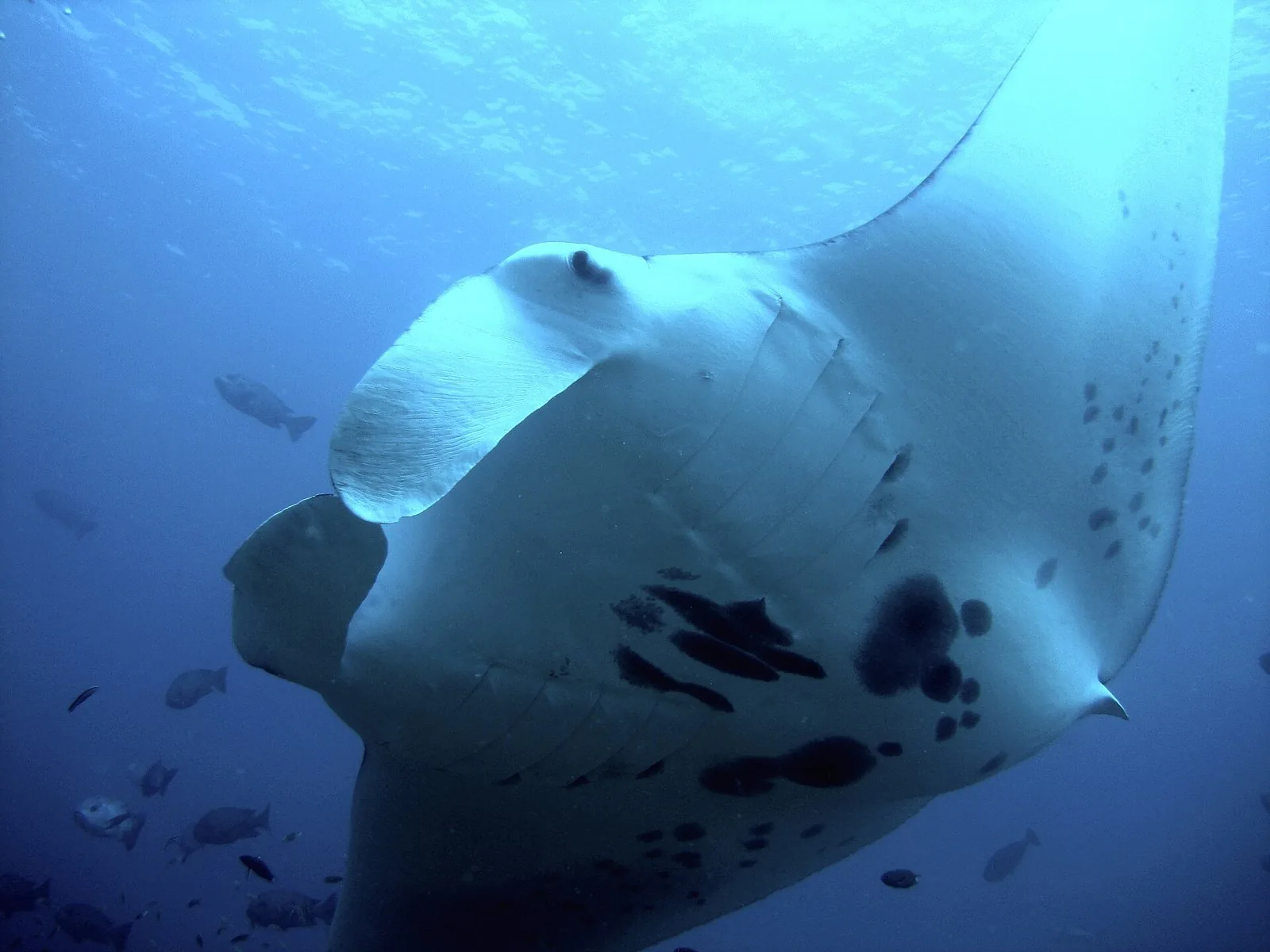
Manta rays
Reef mantas visit cleaning stations on thilas and reef tops across the country, where small fish pick parasites off them, and they move with the monsoon to the side of the atoll where plankton makes the water murkier. In the northeast monsoon that’s generally the west side, and in the southwest monsoon the east side. Liveaboards plan their routes around this, and so should you if mantas are the priority: Baa and the northern atolls in the southwest monsoon, and western manta stations such as those in Ari during the northeast monsoon.
Hanifaru Bay: the manta feeding frenzy (snorkel only)
Hanifaru Bay, a small inlet in Baa Atoll, regularly sees some of the largest manta gatherings in the world, with up to about 100 mantas feeding in the bay when the tide pushes plankton in, and whale sharks join them at times. The government made Hanifaru a Marine Protected Area on June 8, 2009, and its management plan, in full effect from 2012, banned scuba diving and fishing in the bay. Visits are snorkel only, with limits on boats and visitors at any one time, a certified Hanifaru guide for every 10 snorkelers, and a per-person fee that goes to the Baa Atoll Conservation Fund ($20 when the Convention on Migratory Species profiled the bay; ask your operator for the current amount). Rangers have patrolled almost daily since 2015. The feeding season runs with the southwest monsoon, roughly May to December, and Baa Atoll as a whole has been a UNESCO biosphere reserve since June 2011.
Whale sharks
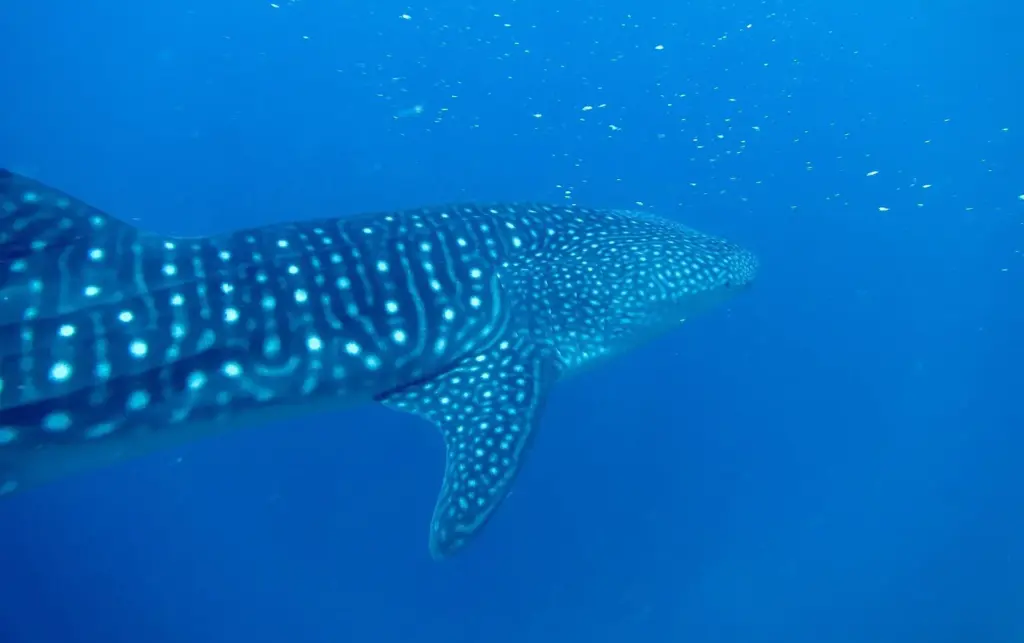
South Ari Atoll’s outer reef has whale sharks year-round, which makes it one of the few places on Earth where you can look for them in any month. The whale sharks seen at Hanifaru are mostly young males. You may meet one on snorkel or on a dive along the reef edge, and good operators keep groups back and never let anyone touch or chase. For how the Maldives compares with Mexico, the Philippines and Australia for whale sharks, see our guide to where to swim with whale sharks.
Sharks
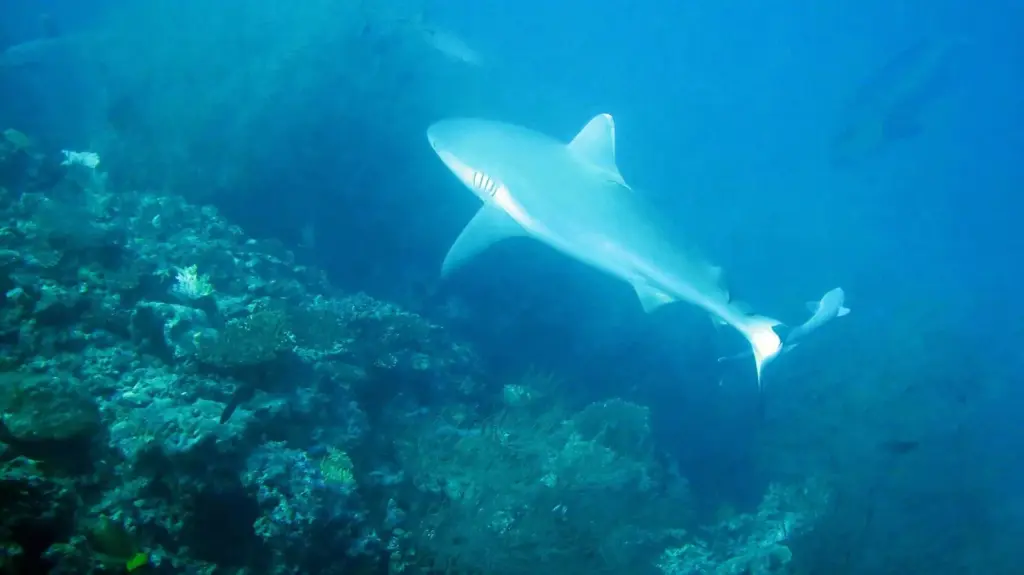
Blacktip, whitetip and grey reef sharks are common, and the channel dives on an incoming current are where you’ll see them in numbers. Hammerheads turn up only at a few specific sites. In the deep south, Fuvahmulah’s “Tiger Zoo” has tiger sharks year-round, which PADI rates as a beginner-to-intermediate dive. The Maldives is listed among the earliest countries to protect sharks nationally. For the world’s best shark encounters and how to choose a responsible operator, see our shark diving guide.
Reefs, turtles and the rest
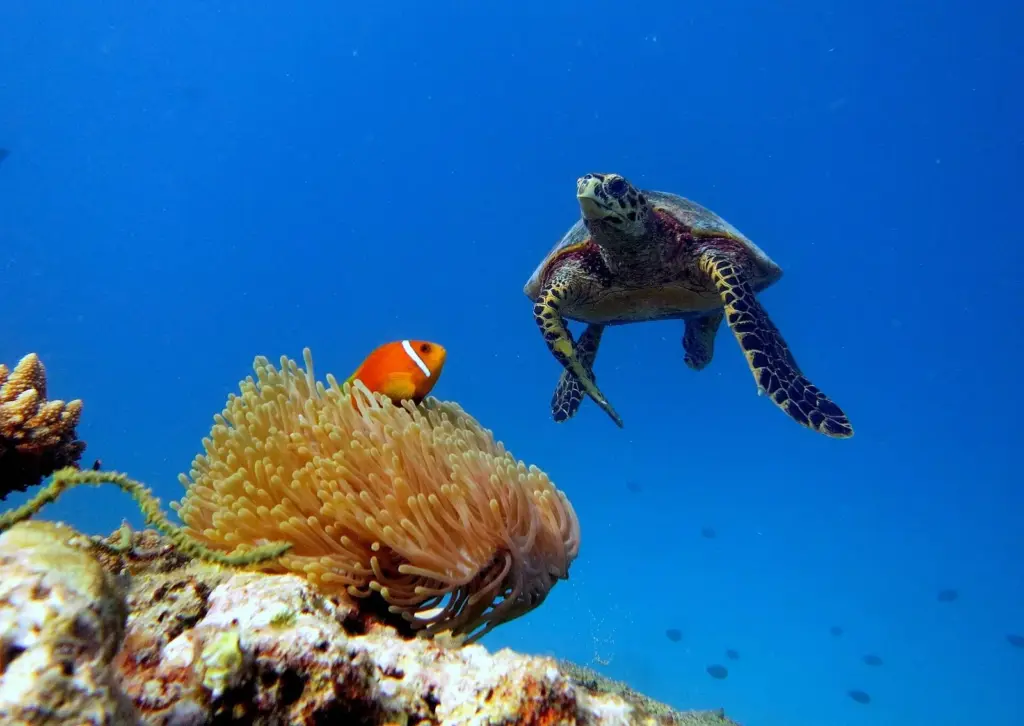
Between the big animals, the reefs hold turtles, schooling snappers, reef fish and anemonefish, including the Maldives’ own clownfish. Coral health varies a lot by site. The 1998 and 2016 bleaching events hit the shallows hard, and the best coral and fish life now tend to be on deeper, current-swept structures.
Best time to dive the Maldives, month by month
The water is warm all year, so the question is what you want to see and how much rain you’ll accept. This is how the year usually runs:
| Months | Weather | Diving highlights |
|---|---|---|
| December-March | Northeast monsoon: drier and sunnier | Clear water on the eastern side of the atolls and sharks in the channels; mantas on the western side |
| April | End of the northeast monsoon | Still dry-season diving; the monsoon changes around April and May |
| May-June | Southwest monsoon arrives: more rain and wind | Hanifaru’s manta season starts; western sites clear up |
| July-October | Southwest monsoon | Often the biggest Hanifaru gatherings; mantas on the eastern sides |
| November | Changeover month | Mixed conditions as the monsoon turns; Hanifaru’s season can run into December |
| Year-round | Water 80-86°F (27-30°C) | Whale sharks in South Ari; tiger sharks at Fuvahmulah |
For Americans, the northeast monsoon lines up well with the holidays: Thanksgiving, Christmas and spring break all fall in drier months, though Christmas and New Year’s are busy, so book early. Summer vacation falls in the southwest monsoon, which is wetter but is exactly when Hanifaru’s mantas feed. If you’re torn, February to April gives the most reliable weather; July to October gives the best manta odds.
Liveaboard, resort or local island? Three ways to dive the Maldives
How you stay shapes your diving more in the Maldives than almost anywhere, because the islands are spread so far apart. Here’s how the three options compare, using published 2026 prices:
| Liveaboard | Dive resort | Local-island guesthouse | |
|---|---|---|---|
| Typical price | From about $2,700 for a week; typical 7-10 night cabins $2,800-$5,500 | Room plus about $90 a dive before 10% service charge and 17% T-GST | Room plus about $43-$50 a dive, taxes included |
| Green tax | $12 a night | $12 a night | $6 a night at guesthouses with 50 rooms or fewer |
| Diving | Several atolls; several dives a day | One atoll’s sites; dives priced one at a time or in packages | The nearby atoll’s sites by boat |
| Best for | Divers who want the most and best sites | Couples and families with non-divers | Budget travelers and longer stays |
| Downside | Little to do but dive; fixed routes | Cost, especially with taxes and transfers | Simpler lodging; local customs apply |
Maldives liveaboards
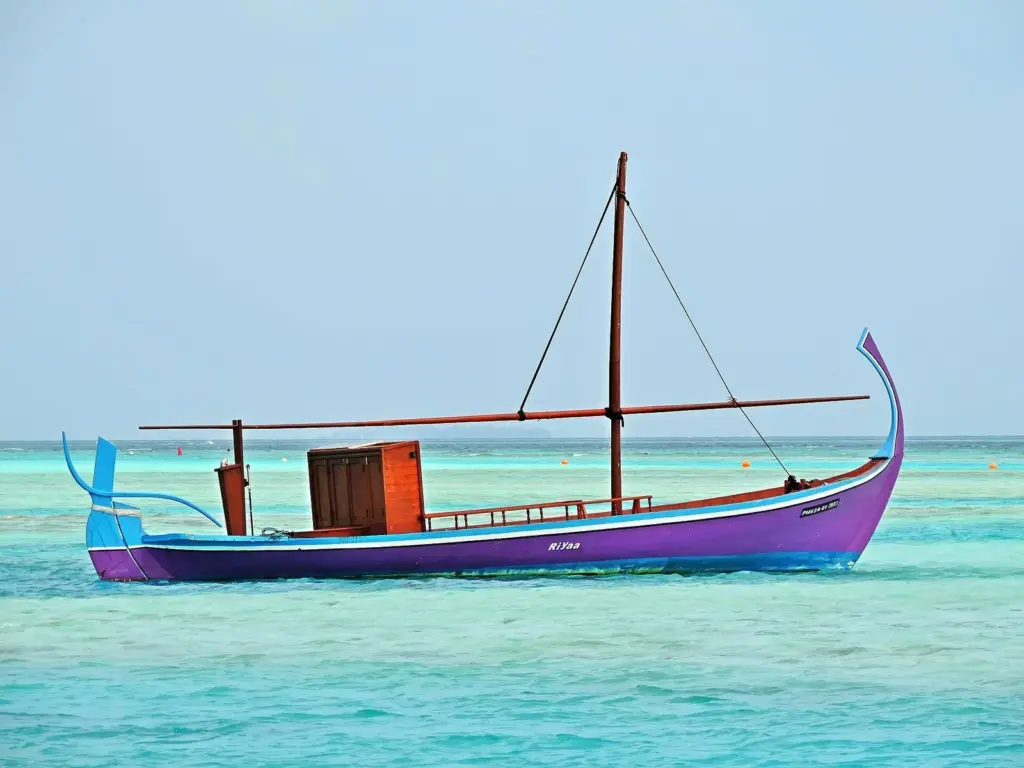
A liveaboard is the best way to see the Maldives underwater. The boats move between atolls, often overnight, and on many of them, including Emperor’s, all the diving is done from a separate dhoni, a traditional Maldivian boat that can drop divers precisely at the channel mouth or thila. Emperor Divers’ “Best of Maldives” route covers Rasdhoo, North and South Ari, Vaavu and the Malé atolls, its northern routes add Lhaviyani, Baa and Raa for Hanifaru season, and its Deep South trips cover Huvadhu, Fuvahmulah and Addu. Explorer Ventures’ Maldives whale shark trips start at $2,700, and a typical 7-to-10-night cabin runs $2,800 to $5,500.
Read the inclusions closely. Emperor builds environmental taxes, bed taxes and port fees into its liveaboard prices, while equipment rental and onboard purchases add sales tax. Expect one night dive per trip on most routes (Emperor offers none in the south), and budget crew tips of roughly $150 to $300 a week. Expect to need at least Open Water certification, and because many dives go deeper than 60 feet (18 m), Advanced training is worth having; Emperor recommends 30 logged dives for its Deep South trips.
Questions to ask before you book a Maldives liveaboard:
- Which atolls does this departure cover, and does the route suit the season? Hanifaru’s mantas need a northern route between May and December.
- Are the green tax, port fees and other taxes in the price, or added on board?
- How many dives a day and how many night dives, and is nitrox included?
- Is the diving done from a separate dhoni, and how many divers share each guide?
- What certification and how many logged dives does this route require?
- What insurance do you require, and what proof do I need at check-in?
- What happens if weather or current rules out a planned site?
Maldives dive resorts
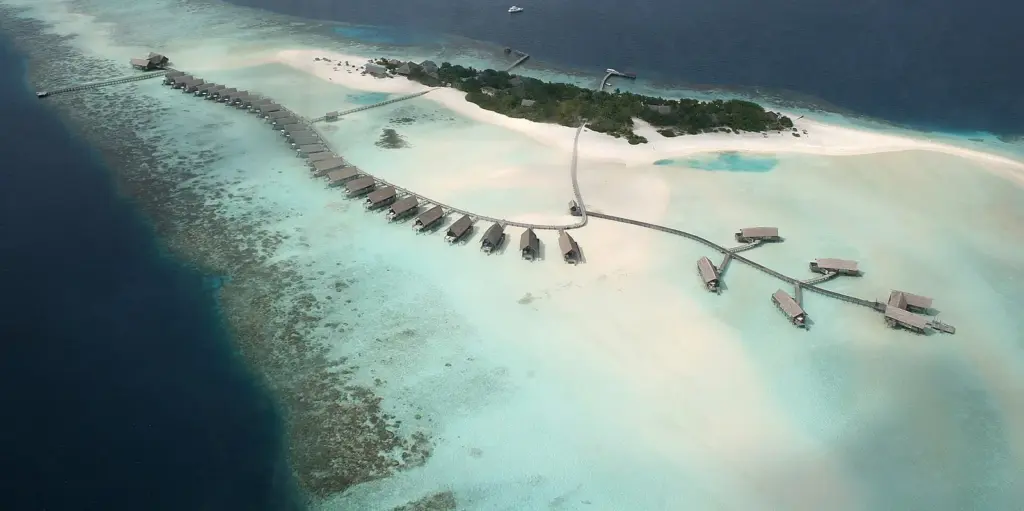
Most Maldives resorts have their own dive center, and resort diving is the easy choice for couples or families with non-divers. Prices are per dive, with discounts as you dive more. Crossroads Diving at Hard Rock Hotel Maldives, for example, charges $90 a dive for your first four, falling to $85, $80, $75 and finally $60 from your 20th dive, while full rental gear adds $40 a dive. Another resort’s March 2026 list charges $90 for dives one to five, $85 for six to 11 and $80 after that. Every one of those prices carries a 10% service charge and 17% T-GST on top, which makes a $90 dive cost roughly $115.
Resorts also differ in their transfers: some are a short speedboat ride from the airport, while others need a seaplane or a domestic flight plus a boat. Trans Maldivian Airways, the country’s oldest air transfer operator, flies seaplane transfers to many resorts and once had the world’s largest seaplane fleet. Transfers are usually priced separately and can add a lot to the bill, so check the cost before you choose a resort. For how true dive resorts compare with mainstream all-inclusives elsewhere, see our guide to all inclusive dive resorts.
Choosing a resort for its diving: pick the atoll first, then the dive center. A resort in South Ari puts you near the whale shark reef all year, one in Baa near Hanifaru suits the southwest monsoon, and one near Malé gives the shortest, cheapest transfer. Then ask the dive center for its full price list with the “++” spelled out, its package discounts, what rental gear costs ($27 to $40 a dive before taxes in published price lists), whether nitrox is available and how many divers go out on each boat. If a resort’s transfer, taxes and diving add up to more than a liveaboard week, a diver may simply be better off on a boat.
Local islands and guesthouses
Local islands, where Maldivians live, have opened up to guesthouse tourism, and they’re the budget way to dive the Maldives. Maafushi, in South Malé Atoll, is the best-known example. Maafushi Dive and Water Sports charges certified divers $50 for a single dive and $430 for 10, with all equipment, boat, divemaster and taxes included, adds $5 a dive for nitrox, and knocks $5 a dive off if you bring your own gear. The public ferry to Malé takes about 90 minutes and costs $2. Green tax at smaller guesthouses on inhabited islands is $6 a night instead of $12.
The trade-offs are real. Local islands are traditional Muslim communities, so ask your guesthouse about dress and alcohol rules and expect a quieter evening than at a resort. The diving covers the nearby reefs and channels rather than a liveaboard’s spread of atolls, and the guesthouses themselves are simpler. For divers who want to dive a lot and don’t need a villa, it’s the best value in the country.
Our take: Dive-focused travelers should choose a liveaboard. Couples with a non-diver should pick a resort whose dive center has a good reputation and a reasonable transfer. On a budget, a local island such as Maafushi gives you two dives a day for about $100, taxes included.
Getting to the Maldives from the US without the Gulf
There are no nonstop flights between the US and the Maldives; everyone connects through Europe, the Middle East or Asia to Velana International Airport in Malé. Until 2026 the easy answer was a Gulf carrier through Doha, Dubai or Abu Dhabi. Since hostilities began between the US and Iran in February 2026, though, the State Department has rated Qatar, the United Arab Emirates, Bahrain and Saudi Arabia at Level 3, reconsider travel, citing the risk of armed conflict. For most Americans, that makes the other routes the better choice:
- Istanbul: Turkish Airlines flies Istanbul to Malé. Turkey is at Level 2, with a do-not-travel warning for the border region with Syria and Iraq, far from Istanbul.
- London: British Airways flies from Heathrow, with Virgin Atlantic adding seasonal flights; the UK is at Level 2.
- Singapore and Kuala Lumpur: Singapore Airlines flies from Singapore (Level 1), and Malaysia Airlines and AirAsia from Kuala Lumpur (Level 1); good for West Coast travelers.
- Colombo: SriLankan flies from Colombo, an easy add-on if you’re also visiting Sri Lanka (Level 2).
- Elsewhere in Europe: Edelweiss from Zurich, Discover from Frankfurt and seasonal flights from Paris and Rome.
Expect two long flights and plan to arrive a day before any liveaboard departure. With a long travel day at each end, a week of diving is the practical minimum, and 10 to 12 days lets you combine a liveaboard with a few days at a resort or on a local island. Once in Malé, transfers depend on where you’re going: speedboats to the Malé atolls, seaplanes to many resorts, and domestic flights to airports such as Dharavandhoo in Baa, Fuvahmulah and Gan in Addu. A taxi from the airport costs about $15, and Maafushi’s public ferry leaves from Malé, not the airport.
Getting around the atolls
Distances in the Maldives are long, so your transfer is part of the trip. Speedboats serve resorts and local islands in the Malé atolls. Seaplanes, run by operators such as Trans Maldivian Airways, fly to resorts in Ari, Baa, Lhaviyani and beyond and give you a remarkable view of the atolls on the way in. Maldivian, the domestic airline, flies to island airports including Dharavandhoo in Baa, Hanimaadhoo in the north, and Fuvahmulah and Gan in the south, usually followed by a short boat ride. Public ferries are the cheapest option but run on fixed schedules. Remember that a seaplane or domestic flight on your last day counts as part of your journey home, so check your operator’s rule on how long to wait after your last dive.
Entry rules. Americans get a free 30-day visa on arrival. You need a machine-readable passport valid for at least a month, a confirmed return ticket, a prepaid confirmed booking at a registered resort, guesthouse or liveaboard, and enough money for your stay. Every visitor must also submit the free IMUGA arrival declaration online within 96 hours before the flight. Since December 1, 2024, foreign passengers pay a departure tax of $50 in economy ($120 in business and $240 in first), so check that it’s in your airfare.
What Maldives diving really costs: taxes, fees and a 7-night budget
Maldives prices often appear with “++” after them, and those two plus signs matter. The first is a 10% service charge and the second is the Tourism Goods and Services Tax (T-GST), which rose to 17% in July 2025. Together they add roughly 27% to 29% to any resort price, including dives, courses, meals and rental gear. Then there’s the green tax, which the government doubled on January 1, 2025: $12 per adult per night at resorts and hotels, a rate the tax authority’s circular also applies to liveaboards, and $6 at guesthouses and hotels on inhabited islands with 50 or fewer rooms, with children under two exempt. In 2025 it raised $145.9 million from a record 2.25 million visitors.
| Item | Local island (Maafushi) | Dive resort | Liveaboard |
|---|---|---|---|
| Diving | 10 dives: $430, taxes and gear included | 10 dives at Crossroads: $865 before service charge and tax, about $1,100 after | Several dives a day, included |
| Green tax (7 nights) | $42 | $84 | $84, often built into the price |
| Rental gear | Included | $40 a dive plus taxes at Crossroads | Extra on many boats |
| Lodging and meals | Guesthouse rates, the cheapest option | Resort rates, the most expensive option | Cabin and meals included: from about $2,700 to $5,500 |
| Transfers | Public ferry from Malé, $2 each way | Speedboat, seaplane or domestic flight | Airport transfers often arranged by the boat |
| Tips | At your discretion | At your discretion | About $150-$300 a week |
| Diving and taxes subtotal | About $475 | About $1,185 before gear and transfers | About $2,700-$5,500 plus tips |
Liveaboard dive counts vary by boat and route, so ask how many dives a week to expect. Other costs to plan for: Hanifaru Bay’s snorkel fee, nitrox ($5 a dive on Maafushi; resorts and boats vary), Discover Scuba for a non-diving partner ($205 plus taxes at Crossroads), the $50 departure tax if it isn’t in your fare, and dive insurance, which many operators require.
Our take: The taxes are the surprise for most Americans. Ask every resort for “all-in” prices including service charge, T-GST and green tax, and compare liveaboards on what’s included rather than the headline price. A liveaboard that includes taxes, port fees and nitrox can work out cheaper than one with a lower sticker price.
Ways to cut the cost:
- Stay on a local island: dives at about $43 to $50 with taxes and gear, and half the green tax.
- Buy dives in bulk: Crossroads’ price drops from $90 to $60 a dive by your 20th dive.
- Bring your own gear: rental runs $27 to $40 a dive before taxes at resorts, and Maafushi Dive takes $5 a dive off if you bring your own.
- Choose a resort near Malé, where a speedboat transfer replaces a seaplane or domestic flight.
- Pay in cash where card surcharges apply; Maafushi Dive adds 3% for cards.
Learning to dive in the Maldives, and what level you need
You can learn to dive in the Maldives, but it isn’t cheap, and the conditions favor divers with some experience. Crossroads Diving charges $665 for PADI Open Water, $550 for Advanced Open Water and $130 for Enriched Air (nitrox), all with equipment and before the 10% service charge and 17% T-GST; another resort’s 2026 list charges $800 for Open Water before the same additions. That’s at or above the top of the US prices we found ($389 in Pensacola to about $858 on Maui), so many Americans certify at home and come to the Maldives to dive. If you do learn here, the shallow, sandy lagoons around most islands, sheltered from strong current, make good classrooms.
For certified divers, the level that matters is your comfort in current. Emperor Divers recommends Open Water as a minimum and Advanced or Deep training because many dives go deeper than 60 feet (18 m), and divers should be comfortable drifting. Some routes set minimum logged dives, so check before you book. Nitrox is worth having for repetitive days, and a refresher at your resort is smart if you haven’t dived for a while. Discover Scuba is available for non-divers who want a taste, at $205 plus taxes for a boat dive at Crossroads.
Families can dive here too. PADI and SSI both start Junior Open Water certification at age 10, and Crossroads offers a lagoon Discover Scuba from age 10 for $150, a Bubblemaker pool session for 8- and 9-year-olds for $95 and a five-dive Seal Team program for $400, all before service charge and tax. With younger children, choose a resort with a calm lagoon and a dive center that runs kids’ programs, and ask about them before you book.
Is the Maldives good for beginners?
Yes, with the right choices. New divers do best at a resort or on a local island in the Malé or Ari atolls, where the dive center can pick sheltered reefs and lagoon dives on days when the channels are ripping, and where you can build experience at your own pace. Tell the dive center your experience honestly, start with an orientation or refresher dive, and skip any dive the briefing describes as strong current until you’ve done a few gentler drifts. Liveaboards suit beginners less well, since the boat’s schedule is built around the channel dives, although Emperor’s classic routes have no minimum dive count and cruise directors can steer newer divers away from the hardest sites.
Safety: currents, the 100-foot limit, chambers and insurance
The rules. The maximum depth for recreational diving in the Maldives is 30 meters (100 feet), and diving with a computer is compulsory. Operators add their own rules: Emperor requires a dive computer, a surface marker buoy and a reef hook on every dive and a torch at night, and Crossroads includes an SMB and a surface alert horn with every dive and won’t let guests dive within 24 hours of a flight. Resort dive centers may start you with an orientation dive; Crossroads lists one at $105 without rental gear.
The May 2026 accident. On May 14, 2026, five Italian divers from the liveaboard MV Duke of York died in Dhekunu Kandu cave, known locally as Shark Cave, in Vaavu Atoll, about 60 miles from Malé. The cave’s entrance chamber lies 55 to 58 meters (180 to 190 feet) down, far below the 30-meter limit. Three of the five had research authorization to dive to 50 meters, which didn’t cover cave penetration. A Maldivian military diver also died during the search, and an international team organized by Divers Alert Network recovered the deepest victims. It was the deadliest diving accident ever recorded in the Maldives, and a reminder that the caves and overhangs in recreational dive briefings are open features you swim past, not caves you enter.
Currents. Current is the main hazard in Maldives diving: divers can be carried off a reef, separated from the group, or surface far from the boat. Stay with your guide, plan, begin and finish every dive with your buddy, follow the briefing on where to hook in and where to let go, deploy your SMB early when you drift off the reef, and skip dives beyond your experience; cruise directors may ask less experienced divers to sit out the toughest ones.
Chambers. ADK Hospital in Malé opened the country’s first hospital hyperbaric unit in January 2023, and Kandima Maldives in Dhaalu Atoll opened a chamber in November 2021, which it described as the country’s fourth. Other chambers have been reported at resorts such as Bandos (near Malé), Kuramathi (Rasdhoo) and Kuredu (Lhaviyani), but confirm the nearest one with your operator before you dive, especially in the far atolls.
Insurance. Some operators make insurance a condition of diving: Emperor requires proof of dive injury, medical evacuation and travel insurance at check-in. Divers Alert Network says its membership alone doesn’t cover dive accident costs; its insurance is bought separately, and its top plan pays eligible accident medical expenses up to $500,000. DAN’s emergency line is +1-919-684-9111.
Flying. DAN’s guidance is at least 18 hours between your last dive and your flight after several days of diving, and some Maldives operators, such as Crossroads, ask for 24. Ask your operator how it treats seaplane and domestic flights, and plan your last dive around your transfer, not just your international departure.
The advisory. The Maldives is at Level 2, exercise increased caution, because of terrorism; the State Department notes attacks could happen with little warning and that response times are longer on remote islands.
What to pack for Maldives diving
- A 3 mm wetsuit, or 5 mm if you feel the cold. The water is 80-86°F (27-30°C), but thermoclines below about 65 feet (20 m) can feel noticeably cooler, and Emperor notes that divers making several dives a day may prefer a 5 mm suit.
- Your own dive computer. Diving with one is compulsory in the Maldives, and Emperor suggests bringing spare batteries.
- A surface marker buoy and a reef hook. Emperor requires both on every dive and recommends an SMB with at least 5 meters (16 feet) of line.
- A dive torch for night dives, which Emperor also requires.
- Proof of insurance. Some operators, Emperor among them, won’t let you dive without dive injury, evacuation and travel cover.
- A doctor’s clearance if you need one. If you have any condition listed on the dive medical form, bring written clearance dated within 12 months.
- Your certification card and logbook, since some routes set minimum logged dives.
- US dollars and a card. Resorts and dive centers price in dollars, and some add a surcharge for card payments.
How the Maldives compares with the Red Sea and Indonesia
Americans choosing a big Indian Ocean or Asia dive trip usually end up weighing these three. Here’s how they compare on the numbers we have on file:
| Maldives | Egypt’s Red Sea | Indonesia (Raja Ampat, Komodo) | |
|---|---|---|---|
| Water | 80-86°F (27-30°C) year-round | 70-75°F (21-24°C) in winter, 79-84°F (26-29°C) in summer | About 82-86°F (28-30°C) in Raja Ampat’s best season |
| Best season | November-April; May-December for Hanifaru | March-May and September-November | Raja Ampat October-April; Komodo April-October |
| 7-10 night liveaboard | $2,800-$5,500 | $1,800-$3,800 | $3,200-$7,500 |
| Depth limit | 100 ft (30 m) | 130 ft (40 m) with deep training, a qualified buddy and insurance | Set by operators |
| Signature diving | Mantas, whale sharks, channel sharks | Wrecks such as the Thistlegorm, walls, oceanic whitetips at Elphinstone in October-December | The richest reef life, mantas in season |
| State Department level | 2 | 2 (do not travel to North and Middle Sinai) | 2 |
The Maldives wins on big animals and warm water in every month. The Red Sea is cheaper, has the wrecks, and is the better fit if you’re already in Europe; our Red Sea diving guide covers it in detail. Indonesia has the richest reefs and costs the most. All three are a long way from the US, so the deciding factors tend to be season and budget.
Beyond the Maldives: Seychelles, Mauritius, Sri Lanka and the Andamans
The Maldives is the headline act in the Indian Ocean, but it has neighbors worth knowing about, each covered in its own guide:
| Destination | Signature diving | Advisory | Notes |
|---|---|---|---|
| Seychelles | Granite islands and reefs; Sainte Anne Marine National Park off Mahé | Level 1 | The park, created in 1973, was the Indian Ocean’s first |
| Mauritius | Reefs and lagoons; Blue Bay Marine Park in the southeast | Level 2 (crime) | Marine park since 2000, Ramsar wetland since 2008 |
| Sri Lanka | Pigeon Island near Trincomalee on the east coast; Hikkaduwa on the west | Level 2 | Easy to pair with the Maldives via Colombo |
| Andaman Islands (India) | Havelock Island (Swaraj Dweep) and Dixon’s Pinnacle | Level 2 | India’s main dive center |
Seychelles diving centers on granite islands rather than coral atolls, and Sainte Anne Marine National Park, created in 1973 as the first marine park in the Indian Ocean, is popular for scuba diving and snorkeling among coral gardens and reef sharks. The Seychelles is at Level 1. Mauritius has lagoon and reef diving; Blue Bay Marine Park in the southeast became a marine park in 2000 and a Ramsar wetland in 2008, and the country is at Level 2 because of crime. Sri Lanka is the natural add-on, one short flight from Malé: Pigeon Island National Park near Trincomalee holds some of the country’s best remaining coral, and Hikkaduwa’s shallow reef on the west coast, about 16 feet (5 m) deep, has been a national park since 2002. Sri Lanka is at Level 2 because of unrest, terrorism and landmines. In India’s Andaman Islands, Havelock Island (Swaraj Dweep) is the country’s main dive center, with PADI and SSI schools diving sites such as Dixon’s Pinnacle.
Of the four, Sri Lanka is the easiest to combine with a Maldives trip, since SriLankan flies between Colombo and Malé.
For non-divers and snorkelers
The Maldives may be the best dive destination in the world for a non-diving partner, because the resorts are designed around doing very little in beautiful surroundings. Most resorts offer snorkeling from the beach or by boat, and Hanifaru Bay’s manta feeding is a snorkeling experience, not a dive, so a non-diver sees the same spectacle as you. A one-dive Discover Scuba session costs $150 in the lagoon or $205 by boat, plus taxes, at Crossroads. On local islands, sandbank trips, snorkeling and the quieter pace of island life fill the days, though you’ll need to respect local customs. Whale shark snorkeling in South Ari is open to anyone comfortable in open water.
Sample Maldives dive trips
The classic: a 10-night liveaboard and resort trip
- Days 1-2: Fly from the US to Malé through Istanbul, London or Singapore; overnight near the airport.
- Days 3-9: A seven-night “Best of Maldives” liveaboard through North and South Ari, Rasdhoo, Vaavu and the Malé atolls, with South Ari’s whale sharks, Ari’s thilas and a channel dive or two each day.
- Days 10-11: Two nights at a resort near Malé with snorkeling only, keeping 24 hours clear of diving before your flight.
- Day 12: Fly home.
The budget week: a local island
- Day 1: Arrive in Malé and take the public ferry or a speedboat to Maafushi.
- Days 2-6: Two dives a day with a local dive center in South Malé Atoll: 10 dives for about $430 with taxes and gear.
- Day 7: A snorkeling or sandbank day, with no diving within 24 hours of your flight.
- Day 8: Ferry to Malé and fly home.
For manta lovers: Baa in the southwest monsoon
Between July and October, book a northern liveaboard route through Baa, Lhaviyani and Raa, or a resort in Baa Atoll near Dharavandhoo’s domestic airport, and plan several days so you can snorkel Hanifaru when the plankton arrives. Feeding events depend on the tide and the plankton, so the more days you have, the better your odds.
When to book
- Six to twelve months ahead: liveaboards for Christmas, New Year’s and February to April, and northern routes during Hanifaru’s season, the most popular departures.
- Three to four months ahead: flights on a non-Gulf routing, and your resort’s transfer.
- One to two months ahead: dive accident, evacuation and travel insurance; any medical clearance; and course eLearning if you’re taking one.
- Within 96 hours of your flight: submit the IMUGA arrival declaration.
Hanifaru is the one experience you can’t book to the day. The mantas feed when the tide and plankton line up, so give yourself several days in Baa rather than one.
Frequently asked questions
What is the best time to dive in the Maldives?
November to April, during the northeast monsoon, brings drier weather and clear water on the eastern sides of the atolls, with sharks in the channels. May to November, the southwest monsoon, is wetter but brings Hanifaru Bay’s manta feeding, roughly May to December. Whale sharks in South Ari and tiger sharks at Fuvahmulah are year-round, and the water stays 80-86°F (27-30°C).
How much is scuba diving in the Maldives?
Resort dive centers charge about $90 a dive before a 10% service charge and 17% T-GST, roughly $115 all in; Crossroads Diving at Hard Rock Hotel Maldives lists $90 for each of the first four dives in 2026. Local-island centers such as Maafushi Dive charge $50 a dive with taxes and gear included. Liveaboards start at about $2,700 a week, checked October 2026.
Where is the best scuba diving in the Maldives?
Ari Atoll is the classic, with thilas such as Maaya Thila and Fish Head and whale sharks year-round in South Ari. Baa Atoll has Hanifaru Bay’s manta feeding from roughly May to December, and the deep south, including Fuvahmulah’s tiger sharks and Addu’s British Loyalty wreck, suits experienced divers. A liveaboard covers several atolls in one week.
What is cave diving in the Maldives?
Many thilas have caves and overhangs at recreational depths that you swim past and look into. True cave penetration is technical diving and lies outside the Maldives’ 30-meter recreational limit. In May 2026, five Italian divers died in Vaavu Atoll’s Dhekunu Kandu cave, whose entrance lies 55-58 meters down, the deadliest diving accident recorded in the Maldives.
Do you need to be an advanced diver for the Maldives?
Not always, but it helps. Open Water divers can dive many sites with a guide, but strong currents are common and many dives go deeper than 60 feet (18 m), so operators such as Emperor Divers recommend Advanced or Deep training. Some routes require minimum logged dives; Emperor recommends 30 for its Deep South trips, checked October 2026.
Can you dive with whale sharks in the Maldives?
Yes. South Ari Atoll’s outer reef has whale sharks year-round, one of the few places where they’re seen in every month, and they also feed in Hanifaru Bay during the southwest monsoon, where only snorkeling is allowed. Encounters are often by snorkel as the shark passes the reef. Keep your distance and never touch or chase.
How much is the Maldives green tax?
Since January 1, 2025, green tax is $12 per adult per night at resorts and hotels, a rate the tax authority also applies to liveaboards, and $6 at guesthouses and hotels on inhabited islands with 50 or fewer rooms. Children under two are exempt. It’s charged on top of the 10% service charge and 17% T-GST that apply to most tourist prices, checked October 2026.
Do Americans need a visa for the Maldives?
No advance visa is needed. Americans receive a free 30-day visa on arrival, with a passport valid at least a month, a confirmed return ticket, a prepaid booking at a registered property and enough funds. Every visitor must submit the free IMUGA arrival declaration online within 96 hours before the flight, checked October 2026.
Sources and verification
Everything on this page was checked between September 23 and October 1, 2026 against the organizations listed below. The page is compiled from their published prices, rules and records, and it doesn’t claim first-hand visits.
- PSM News: Maldives green tax rates and 2025 revenue
- TTG Asia: T-GST and departure tax increases
- Crossroads Diving, Hard Rock Hotel Maldives: 2026 price list
- Maafushi Dive and Water Sports: prices and information
- Emperor Divers: Maldives FAQ and itineraries and diving guidelines
- Convention on Migratory Species: Hanifaru Bay factsheet
- Maldives Immigration: IMUGA arrival declaration portal
- US State Department: travel advisory data (Maldives, Gulf hubs, transit countries, neighbors)
- Hotelier Maldives: ADK Hospital hyperbaric unit and Kandima chamber
- Divers Alert Network: flying after diving
Also checked: Wikipedia’s pages on the Maldives, diving in the Maldives, the 2026 Dhekunu Kandu cave diving incident, Baa Atoll, the Velana International Airport destination table, the visa policy of the Maldives, Trans Maldivian Airways, Sainte Anne Marine National Park, Blue Bay Marine Park, Pigeon Island and Hikkaduwa National Parks and Havelock Island; a second resort dive center’s March 2026 price list; Explorer Ventures’ published from-prices; liveaboard budget and tipping guidance; PADI’s tiger shark site notes; US Open Water prices from Florida Dive Pros and Maui Dive Shop.
Scuba Tourism Guide is an independent publication. It is not affiliated with any agency, park or dive operator named here, and no one paid to be included.
Photo credits
- Reef manta at Fushivaru Thila, Lhaviyani Atoll (featured image): photo by asands from London, UK, Wikimedia Commons (CC BY-SA 2.0)
- Aerial view of Guraidhoo, Kaafu Atoll (2019): photo by Luka Peternel, Wikimedia Commons (CC BY-SA 4.0)
- Snapper school on Banana Reef, Maldives (2008): photo by This illustration was made by (User:Royonx) and released under the license(s) stated above. You are free to use it for any purpose as long as you credit me and follow the terms of the license. Example : © Michel Royon / Wikimedia Commons If you use this image outside of the Wikimedia projects, I would be happy to hear from you par courriel ( royonx gmail.com). Thanks ! Ce message en français, Wikimedia Commons (CC0)
- Hawksbill turtle and clownfish, Baa Atoll (2014): photo by Ahmed Abdul Rahman, Wikimedia Commons (CC BY-SA 4.0)
- Whale shark in the Maldives: photo by Jerome Paillet (IFREMER, Laboratoire d'Océanographie Physique et Spatiale, Centre Bretagne – ZI de la Pointe du Diable – CS 10070 – 29280 Plouzané), Wikimedia Commons (CC BY 4.0)
- Grey reef shark, Maldives (2015): photo by Dr. Thomas Dörner, Wikimedia Commons (CC BY-SA 4.0)
- Traditional dhoni, Maldives (2015): photo by Nevit Dilmen (talk), Wikimedia Commons (CC BY-SA 3.0)
- Resort island on its reef, Maldives (2007): photo by Dr. Ondřej Havelka (cestovatel), Wikimedia Commons (CC BY-SA 4.0)


