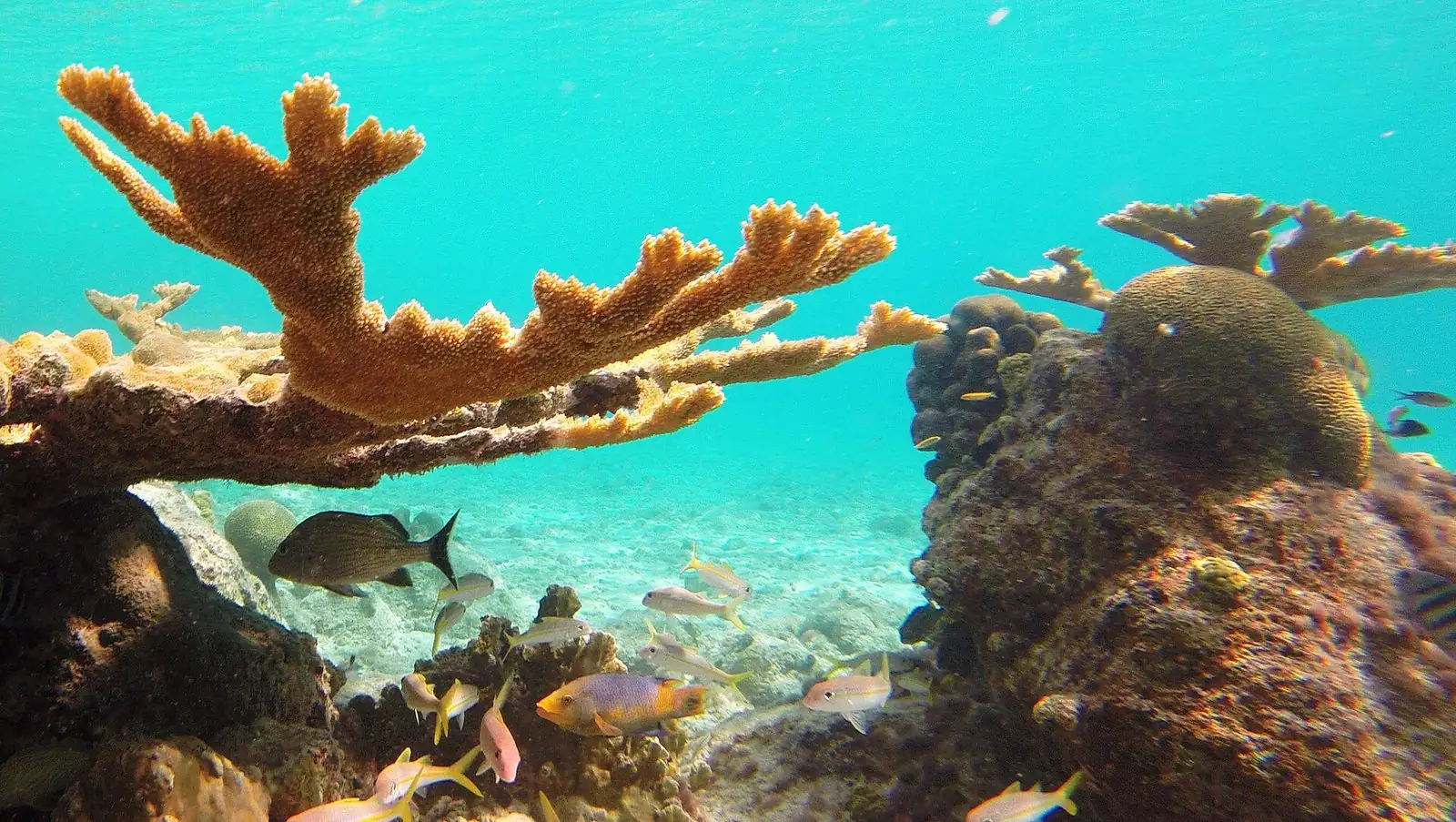
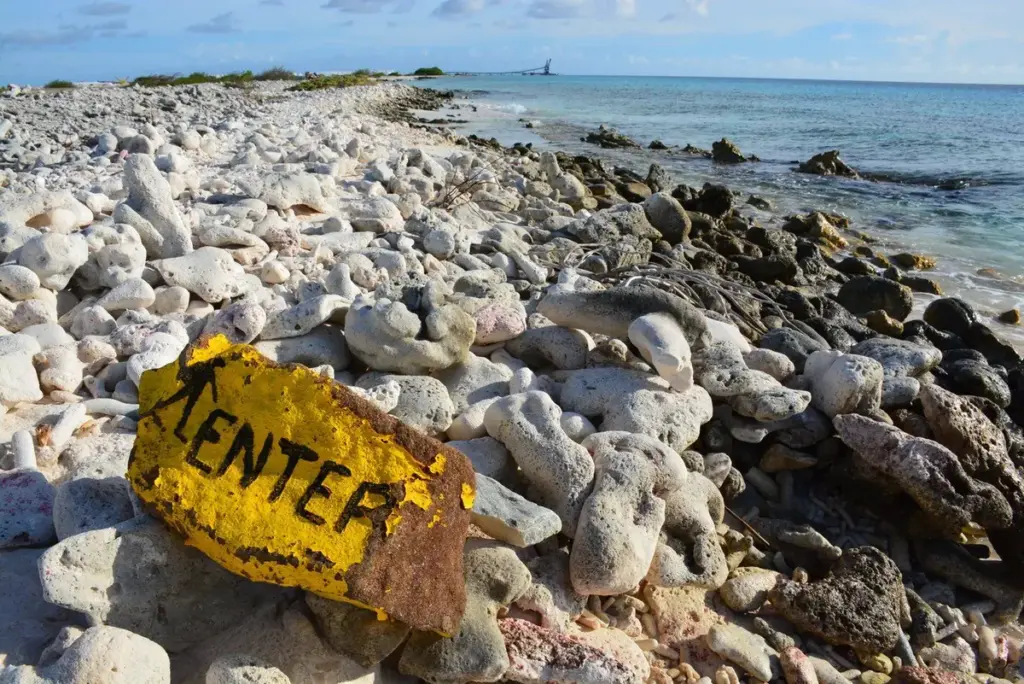
On Bonaire, the dive sites are painted on rocks. Drive the coast road in a pickup truck with tanks rattling in the back, stop at a yellow stone with a name on it, kit up on the tailgate, and walk in: the reef usually starts within about 30 feet of the shore. That freedom, dive when you want, where you want, as often as you want, is why Bonaire diving has such a loyal following among Americans. The island protected its reefs early, the water is calm and clear, and Bonaire sits outside the main hurricane belt. Here’s how to plan it: the fees every visitor pays, how the truck-and-tank system works, the best sites, when to go, what a week costs and the rules that keep the reef alive.
Short answer: Bonaire is the Caribbean’s best shore diving: more than 85 sites, 54 reachable from shore, calm water around 80°F and visibility often above 100 ft. Budget the $40 nature fee and $75 entry tax, then about $234 for six days of unlimited shore diving (checked September 2026). US nonstops fly from Miami, Atlanta, Newark and Houston.
Fees, prices, rules and flight details below were checked on September 23-24, 2026 against STINAPA, the Bonaire tourism board and the dive operators’ own websites. We name operators so you can compare like with like; none of them paid to appear here.
On this page: At a glance · Why dive Bonaire · Fees and the marine park · How shore diving works · Dive sites · Marine life · Best time to go · Getting there · Resorts and packages · Dive shops and prices · Budget · Learning to dive · Reef rules · Planning a dive day · What to pack · Reef health · Safety · Bonaire vs Curaçao · Non-divers · Sample week · FAQ
Bonaire diving at a glance
| Question | Answer (checked September 2026) |
|---|---|
| Skill level | All levels. Calm water, minimal current and reefs that start close to shore make it one of the best places to learn and to build experience. |
| Best months | Year-round; diving is possible 24 hours a day, 365 days a year |
| Water temperature | About 80°F (27°C) on average |
| Visibility | Often more than 100 ft (30 m) |
| Depth range | Shallow reef tops near shore, a drop-off within about 30 ft (10 m) of the beach, and the Hilma Hooker wreck at about 100 ft (30 m); the marine park runs to 200 ft (60 m) |
| Signature marine life | More than 350 fish species, 57 coral species, turtles, tarpon, frogfish, seahorses, moray eels |
| Prices | Six days of unlimited shore diving $234; two-tank boat dive $131 (Dive Friends) |
| Fees | $40 STINAPA nature fee per calendar year plus a $75 visitor entry tax |
| Getting there | Nonstops from Miami (American), Atlanta (Delta), Newark and Houston (United) |
| Entry and money | US passport; Bonaire uses the US dollar |
Why dive Bonaire, and who should look elsewhere
Bonaire is a small, dry island off the coast of Venezuela, 111 square miles of cactus and salt pans ringed by fringing reef. It’s a special municipality of the Netherlands, and it has used the US dollar since 2011. What makes it special for divers is access. The tourism board counts more than 85 dive sites, 54 of them easily reachable from shore, and diving is possible around the clock, every day of the year. Most visitors rent a pickup truck, collect tanks from their dive shop’s drive-through station, and dive on their own schedule.
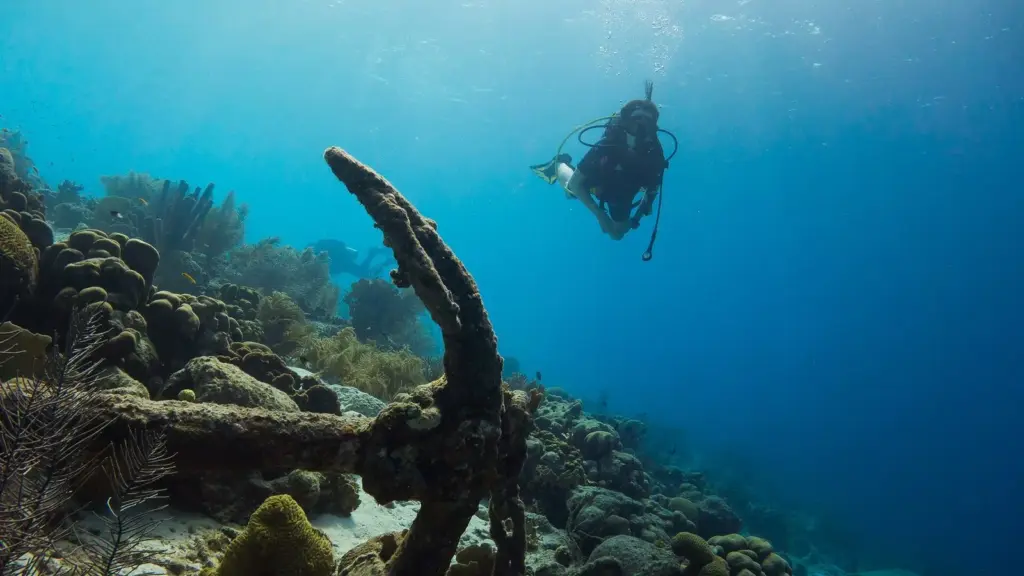
The island also protected its reefs earlier than almost anywhere else in the Caribbean. Bonaire National Marine Park dates from 1979, and STINAPA, the nonprofit that runs it, from 1962; the tourism board credits the late Captain Don Stewart with helping get it started. The park covers all the water around Bonaire and Klein Bonaire from the high-tide line down to 200 ft (60 m), about 6,672 acres.
It isn’t for everyone. There’s little big-animal action: no organized shark, manta or whale shark encounters. The reef is a sloping fringe rather than dramatic walls or pinnacles, and the topside island is quiet, arid and low-key. If you want a boat to pick you up and a guide to lead every dive, Bonaire’s do-it-yourself style may feel like more work than a Cozumel or Belize trip. And coral disease reached the island in 2023, which is why divers now disinfect their gear.
Our take: Bonaire is the best Caribbean island for divers who want to log a lot of dives, practice buoyancy and photography, and set their own schedule. Book a room near a dive shop with a drive-through tank station, rent a truck, and plan two or three shore dives a day plus a boat dive to Klein Bonaire.
Bonaire’s fees and the national marine park
Two charges apply to almost every visiting diver, and both are paid before or on arrival (checked September 2026).
The STINAPA nature fee: $40. Since January 1, 2023, everyone who enters the water on Bonaire pays the same $40 nature fee, which covers both Bonaire National Marine Park and Washington Slagbaai National Park; the separate, higher diver fee was dropped. The fee is valid for the calendar year (January 1 to December 31), so a December trip and a January trip need two fees. Residents of the Dutch Caribbean islands with ID and children under 12 are exempt. You buy it online through STINAPA’s nature fee portal and receive a QR code by email.
The visitor entry tax: $75. Bonaire has charged a $75 visitor entry tax per person per visit since July 1, 2022; since July 1, 2024, a paid tax is valid for one month. The QR code is scanned at e-gates at Flamingo International Airport, which also has self-service kiosks; reduced rates and exemptions are handled in person.
STINAPA, founded in 1962, manages the marine park and Washington Slagbaai National Park for the island government and is funded largely by visitors, so these fees pay for the reef you’re diving. Washington Slagbaai, founded in 1969, covers about 17% of the island’s land, has 50 km of unpaved roads and opens Tuesday to Sunday from 8 a.m. to 5 p.m. (entry until 2:30 p.m.); STINAPA lists it as closed for diving (checked September 2026).
How Bonaire shore diving works
Bonaire shore diving is the reason people come, and it works like this:
- Rent a truck. Pickup trucks are the island standard, because you can load tanks and gear in the back and change on the tailgate. Some dive packages include a vehicle.
- Buy a tank package. Dive shops sell unlimited shore diving by the day or week. Dive Friends Bonaire charges $42 for a day of unlimited shore diving and $234 for six days, with tanks available at seven locations around the island (checked September 2026). Buddy Dive Resort runs a two-lane, drive-through air and nitrox tank station.
- Find the yellow stones. Every shore dive site is marked with its name painted on a yellow stone by the road, and moorings offshore are yellow buoys carrying the site’s name.
- Walk in, check the entry and swim out. The fringing reef usually starts within about 30 ft (10 m) of shore, often on a shallow terrace, then slopes down along a drop-off. Reefs run parallel to shore, so you swim out, turn along the reef, and come back the same way.
- Keep it simple. Most dives are out-and-back along the reef at a comfortable depth. Note a landmark at your entry point so you can find the exit.
Leave valuables at your hotel. Many divers leave nothing at all in the truck at dive sites, so there’s nothing worth breaking in for; ask your rental company and dive shop for their current advice on locking up.
The best Bonaire dive sites
Buddy Dive counts as many as 60 officially listed sites on Bonaire and another 20 around Klein Bonaire, the uninhabited islet just offshore. Most are on the sheltered west coast. These are the ones most visitors plan around.
| Site | Access | Level | Highlights |
|---|---|---|---|
| Hilma Hooker | Shore or boat | Intermediate to advanced (about 100 ft) | 235-240 ft cargo ship sunk in 1984, lying between two reefs |
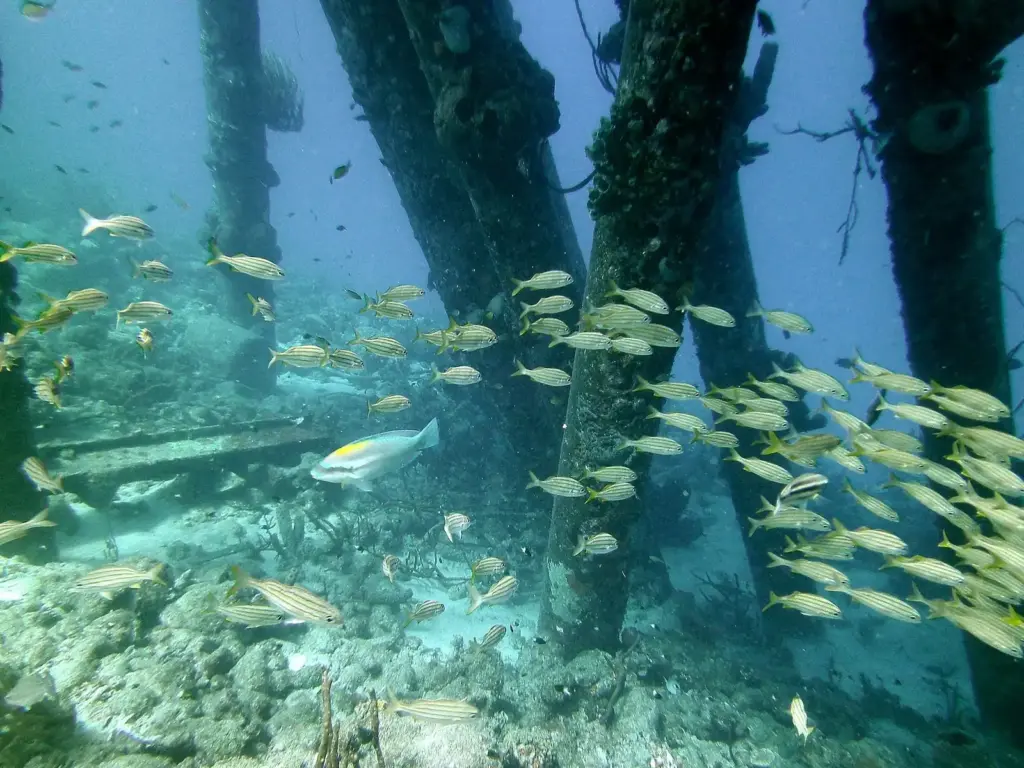
| Salt Pier | Shore | All levels, when open | Pier pylons covered in sponges and coral, schooling fish, tarpon |
| Bari Reef | Shore | All levels | An easy, fish-filled reef close to Kralendijk |
| Karpata | Shore | All levels | Reef on the north coast road |
| Klein Bonaire sites | Boat or water taxi | All levels | About 20 sites around the protected islet |
| Lac Bay | Snorkel | Snorkelers | A shallow bay on the windward coast, inside the marine park |
Bonaire’s dive sites by area
Bonaire’s dive sites fall into a few areas along the sheltered west coast, plus Klein Bonaire offshore. The yellow stones and your dive shop’s site map will show you dozens more; these are well-known starting points.
- North, along the coast road: sites such as 1000 Steps, Karpata and Oil Slick Leap sit below limestone cliffs, with steep stairs or ladders at some entries. Quieter, with healthy reef slopes, and worth the drive.
- Central, around Kralendijk: Bari Reef, Something Special and the house reefs of the main resorts. Easy entries and plenty of fish, and the most convenient for night dives.
- South: the Hilma Hooker, Angel City, Alice in Wonderland, the Salt Pier and other sites along the flat southwest coast, near the salt pans.
- Klein Bonaire: around 20 sites circling the protected islet, reached by boat or water taxi.
- The east (windward) coast: rougher water and far less diving; Lac Bay, inside the marine park, is the calm spot on this side and suits snorkelers.
For Bonaire dive sites in general, start with a checkout dive on your resort’s house reef, then work north and south on successive days so you learn how the entries differ.
The Hilma Hooker
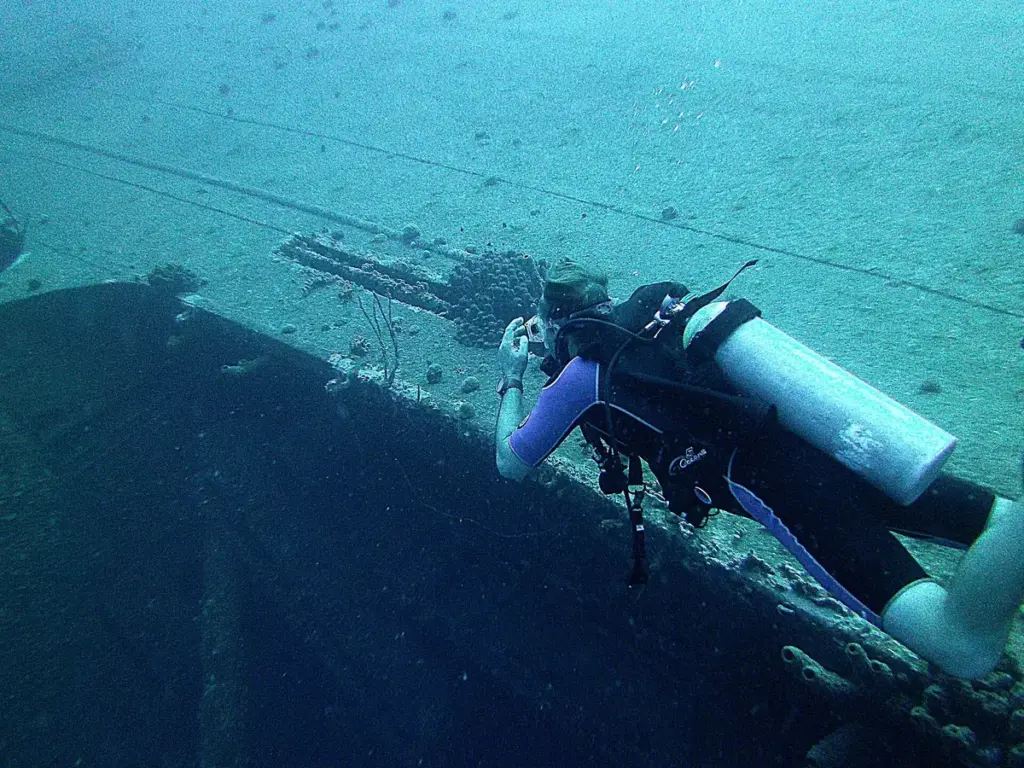
The Hilma Hooker is Bonaire’s famous wreck. The cargo ship was detained in a drug-smuggling investigation after 25,000 lb of marijuana was found behind a false bulkhead, and it sank off Bonaire on September 12, 1984. It rests on sand between two reef systems near Angel City in about 100 ft of water and is about 235-240 ft long. It’s a deep dive for Open Water divers; plan it as a guided dive or after your Advanced course, and watch your no-decompression time.
The Salt Pier
The Salt Pier, a working pier on the southwest coast, is one of Bonaire’s best-loved dives, with pylons covered in sponges and coral and schools of fish and tarpon moving through the shade. Because it’s an active industrial pier, access depends on shipping activity, so check with a local dive shop that the pier is open to divers before you go.
Klein Bonaire
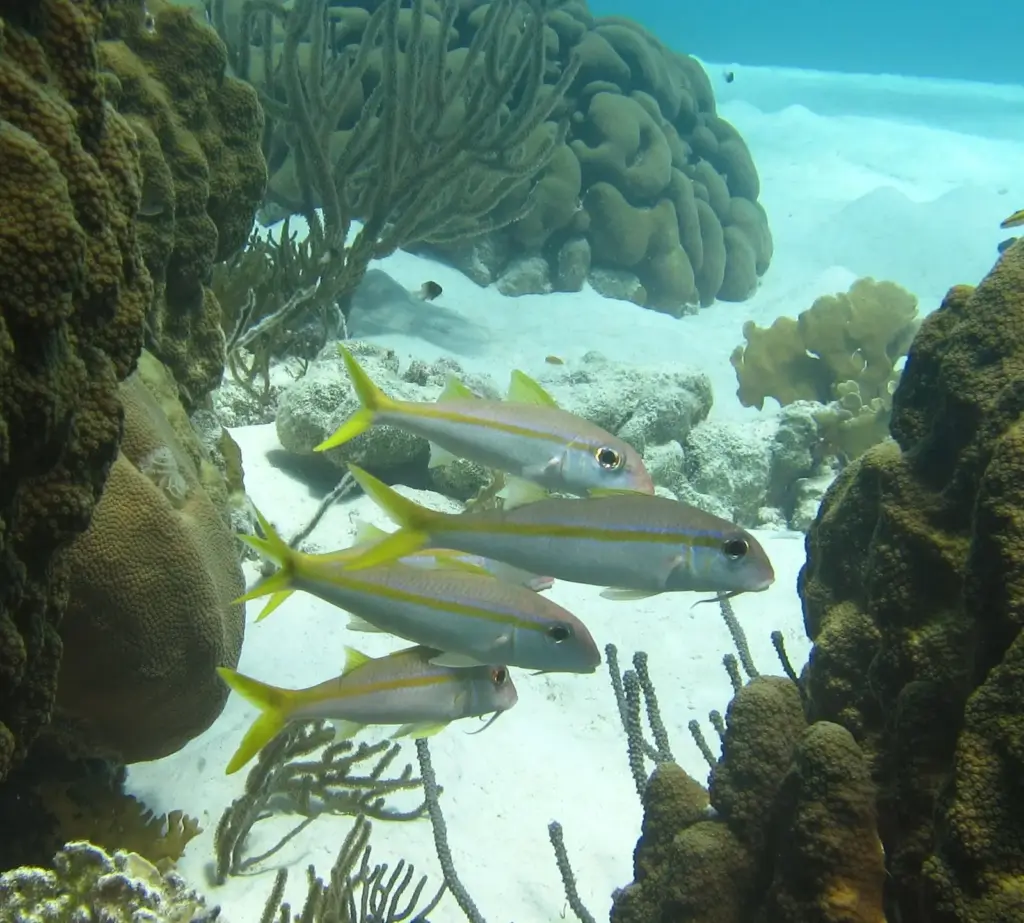
Klein Bonaire is an uninhabited islet of about 2.3 square miles (6 km²), roughly half a mile (800 m) west of Bonaire, protected as a nature reserve since 2001 within the marine park. Its reefs, around 20 sites in all, are reached by dive boat or water taxi, so a two-tank boat trip to Klein Bonaire makes a good break from shore diving. Bonaire dive sites around the islet tend to be quieter because fewer people reach them.
Night diving in Bonaire
Because you control your own schedule, night diving in Bonaire is easy: grab a tank and a light and dive a site you already know from the daytime. Dive Friends runs guided night dives and ostracod night dives, when tiny crustaceans put on a light show, for $60 each (excluding light rental, $15), with a minimum of two divers (checked September 2026). Dive your first night dive at a site you’ve dived in daylight, and always carry a backup light.
Bonaire marine life
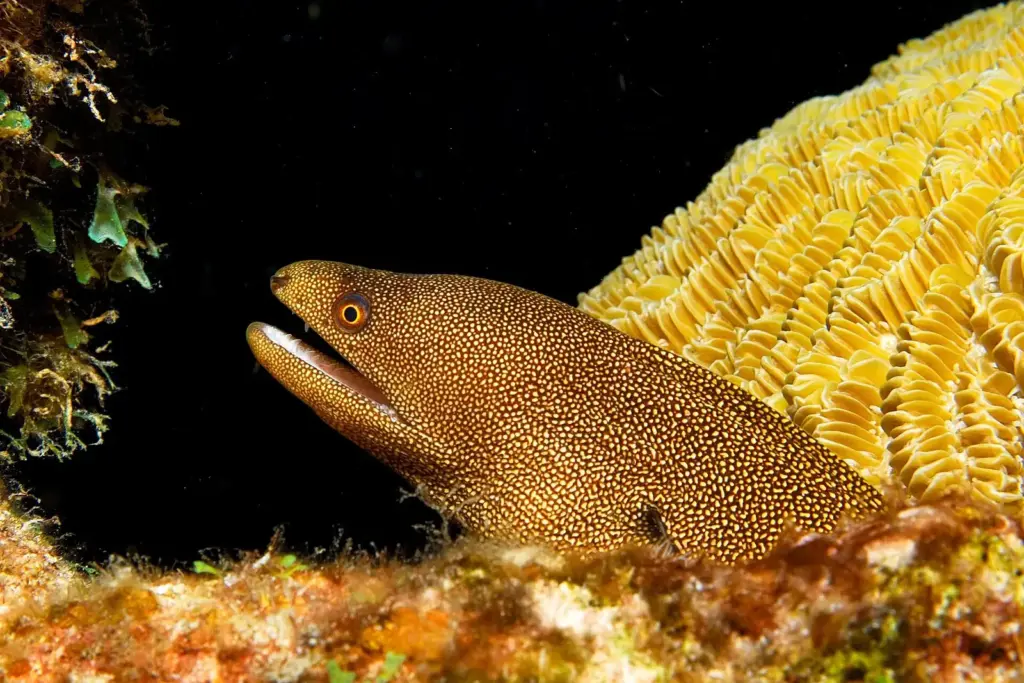
Bonaire’s reefs hold more than 350 fish species and 57 species of coral, according to the tourism board. The appeal is the density of reef life close to shore: parrotfish, angelfish, schooling grunts and snappers, moray eels, frogfish, seahorses, turtles and, around the Salt Pier and some reefs, big tarpon. It’s a photographer’s island more than a big-animal one.
Lionfish. Invasive lionfish reached the Caribbean years ago, and Bonaire’s dive community hunts them to protect native fish. Dive Friends Bonaire, for example, runs a Lionfish Hunter course that includes a boat dive, with a minimum of two divers. Ask your dive shop about the local rules before you hunt, and don’t bring your own spear.
Best time to dive Bonaire
There’s no bad time. Water averages about 80°F (27°C), visibility often exceeds 100 ft, and Bonaire lies outside the Main Development Region for Atlantic tropical cyclones, so hurricanes are much less of a worry than farther north in the Caribbean. The Atlantic hurricane season still runs June 1 to November 30; an average season (1991-2020) brings 14 named storms, 7 hurricanes and 3 major hurricanes across the Atlantic, and storms passing well to the north can stir up the sea for a few days even when they stay far away.
| Season | What to expect |
|---|---|
| December-April | The winter escape season for North Americans; busiest around Christmas, New Year’s, Presidents’ Day and spring break, so book trucks and rooms early |
| May-August | Warm water, quieter resorts and often better package prices; summer school holidays bring families |
| September-November | Warmest water and the quietest months; hurricane season elsewhere, but Bonaire sits outside the main storm belt |
Our take: The best time to dive Bonaire is when you can get away. If you have a choice, aim for May to June or September to November, when the island is quieter and the water is warm, and avoid the Christmas and spring break weeks if you want an easy time booking a truck.
Getting to Bonaire from the US
Flights. Bonaire’s Flamingo International Airport has US nonstops from Miami (American), Atlanta (Delta), and Newark and Houston (United), and connections via Aruba and Curaçao (checked September 2026). WestJet flies from Toronto.
Entry. US citizens need a passport. Before you fly, pay the $75 visitor entry tax and the $40 nature fee online, and keep both QR codes on your phone. Money is simple: Bonaire uses the US dollar.
On the island. Rent a pickup truck for shore diving; the island is small, with a land area of 111 square miles (288 km²), and the main dive coast is a short drive from Kralendijk, the capital.
Bonaire basics for American visitors
Bonaire has been a special municipality of the Netherlands since October 10, 2010, when the Netherlands Antilles were dissolved, and it switched to the US dollar in 2011, so there’s no currency to exchange. It’s a small place: about 26,550 people lived on the island at the start of 2025, on 111 square miles (288 km²) of land. Flamingo International Airport has operated since 1945 and sits just south of Kralendijk, close to many of the southern dive sites. Because the island is so small, almost every shore dive site is within a short drive of wherever you stay, and most visitors find a week is enough to dive the sites they care about most and return to favorites.
Bonaire dive resorts and dive packages
Most Bonaire dive resorts sit along the west coast near Kralendijk, with a dive shop, a house reef and a dock on site. The best ones for independent divers have a drive-through tank station and a house reef you can dive any time. Buddy Dive Resort, for example, runs six dive boats and a two-lane, drive-through air and nitrox station, and it’s a regular host for Kids Sea Camp family dive weeks.
Bonaire dive packages usually bundle a room, a truck and unlimited tanks. Caradonna’s September 2026 specials listed seven nights at Buddy Dive Resort with six days of unlimited shore diving, free nitrox, a vehicle and breakfast from $1,097 per person (land-only, double occupancy, with a second-diver-dives-free promotion). Compare that with booking an apartment, a truck and a tank package separately; either way works well on Bonaire.
Choosing a Bonaire dive shop: prices and tipping
Dive Friends Bonaire’s 2026 price list gives a good picture of typical costs (checked September 2026):
| Item | Price | Notes |
|---|---|---|
| Unlimited shore diving, 1 day | $42 | Tanks and weights; seven fill locations |
| Unlimited shore diving, 6 days | $234 | |
| 6 days unlimited shore plus 3 two-tank boat dives | $461 | |
| Two-tank boat dive | $131 | Includes tanks and unlimited shore diving the same day |
| Dusk boat dive | $104 | Including tank |
| Single tank and weights | $23 | |
| Guided shore dive, 1 tank | $60 | |
| Guided night or ostracod dive | $60 | Light extra ($15) |
| Full rental gear with computer | $57 | Excludes light and tanks |
| Quick refresher | $88 | $124 with gear |
When you compare shops, check the number and location of tank stations, whether nitrox costs extra, how easy it is to book boat dives to Klein Bonaire, and whether the shop offers the gear-disinfection facilities STINAPA asks divers to use. Tip boat crews and guides as you would elsewhere: a common guideline is $5-$10 per tank for a boat crew, more for a private guide.
What a week of diving in Bonaire costs
Here’s the diving alone for seven nights with six diving days, at Dive Friends Bonaire’s published prices (checked September 2026).
| Item | Low | High | Notes |
|---|---|---|---|
| STINAPA nature fee | $40 | $40 | Per calendar year |
| Visitor entry tax | $75 | $75 | Per visit |
| Diving package | $234 | $461 | Six days unlimited shore; high adds three two-tank boat dives |
| Guided night or ostracod dive | $0 | $60 | |
| Rental gear | $0 | $342 | $57 a day for six days |
| Boat crew tips | $0 | $60 | $5-$10 per tank on boat dives |
| DAN membership | $40 | $40 | Per year; dive accident insurance is extra |
| Total | $389 | $1,078 | Before flights, lodging, truck rental and food |
Few places anywhere let you dive this much for this little. The truck rental and lodging are the bigger costs; packages that bundle a room, truck and tanks, like the $1,097 Buddy Dive special, can be good value.
Learning to dive in Bonaire
Bonaire’s calm water, easy entries and minimal current make it one of the best places in the Caribbean to learn. Dive Friends Bonaire’s 2026 prices include the full Open Water course with eLearning and equipment at $565, an Open Water referral (your open water dives after training at home) at $316, Discover Scuba at $109, Advanced Open Water with eLearning at $378, Enriched Air Nitrox at $181 and Rescue Diver at $435; the marine park fee is extra (checked September 2026). Our scuba certification guide explains how referrals work.
For certified divers, Bonaire is also the ideal place to take the next step: buoyancy, navigation, nitrox and night diving all come naturally when you can dive three or four times a day from shore. It’s also a good place to do your Advanced course and then dive the Hilma Hooker with your new depth rating.
Bonaire’s reef rules
- Pay the nature fee and carry your QR code.
- No touching or removing anything, living or dead, and no gloves, which discourages touching.
- No pointer sticks.
- Good buoyancy at all times. Stay off the bottom and away from the coral.
- Disinfect your gear. Since stony coral tissue loss disease reached Bonaire in 2023, STINAPA asks divers to disinfect their gear before their first dive on the island and after their last, to avoid carrying the disease between reefs and islands.
- Use the moorings. Boats tie up to the yellow mooring buoys rather than anchoring.
These rules are the reason Bonaire’s reefs are still worth the trip. Divers who ignore them get a talking-to from local divers, and rightly so.
Planning a Bonaire dive day
With unlimited tanks and no boat schedule, it’s easy to overdo it. A sensible Bonaire dive day looks like this:
- Morning: your deepest dive of the day, while you’re fresh. Load two tanks in the truck and head for a site farther from your hotel.
- Surface interval: at least an hour, with water and shade. Bonaire is hot and dry, and dehydration is a known risk factor for decompression sickness.
- Midday: a shallower second dive at a nearby site.
- Late afternoon or evening: a relaxed house-reef dive or a night dive at a site you already know.
Three or four dives a day for six days adds up to a lot of nitrogen. Use a dive computer, dive nitrox if you’re certified for it, keep your deepest dive first, make every dive a no-stop dive with a safety stop, and leave at least one easy day in the middle of the week. If you’re diving on air, your computer, not the tank package, should decide how many dives you do.
What to pack for Bonaire
- Exposure protection. With water around 80°F, a 3 mm full suit suits most divers for multiple dives a day; some switch to a shorty or skin in the warmest months.
- Boots and open-heel fins. Shore entries cross rock, rubble and old coral.
- A surface marker buoy and a whistle. Useful on any unguided dive.
- A primary and a backup light for night dives. Dive Friends rents lights for $15 if you’d rather not carry them.
- Your own mask, computer and, if you have them, BCD and regulator. Full rental with a computer costs $57 a day at Dive Friends, so your own kit pays off over a week.
- Something to carry gear to the truck, such as a mesh bag or a crate, and a towel to sit on the tailgate.
- Mineral sunscreen and a rash guard. You’ll spend hours in the sun between dives.
Coral disease and how divers can help
Bonaire’s reputation rests on healthy reefs, and they face the same threats as reefs across the Caribbean. The most urgent is stony coral tissue loss disease, which reached Bonaire in 2023. It kills many species of hard coral, and it can be spread on dive gear, which is why STINAPA asks every diver to disinfect gear before their first dive on the island and after their last. Your dive shop will show you where and how.
Beyond disinfection, the most useful things a visiting diver can do are simple: keep perfect buoyancy and never touch the reef, stay off the bottom on shore entries once you’re over coral, don’t feed the fish, and report anything unusual, such as diseased coral or a stranded animal, to your dive shop. The $40 nature fee is part of the answer too: STINAPA is funded largely by visitors, and the fee pays for the rangers, moorings and monitoring that keep the park working.
Safety on Bonaire
Self-guided diving. Most Bonaire dives are unguided, so you and your buddy do the planning. Agree on depth, time and turn pressure before you walk in, note your entry point, and don’t let the easy conditions tempt you past your limits on depth or no-decompression time, especially on repeat dives over several days.
Entries and exits. Some shore entries cross rock, rubble or old coral, and surf can pick up. Wear boots, enter slowly, and if the entry looks rough, choose another site.
Current. Currents are generally minimal on the west coast, but conditions vary. Ask your dive shop about any site with a reputation for current before you dive it.
Chamber. Bonaire has a recompression chamber for diving emergencies, according to the tourism board. Call the local emergency services, alert your dive shop, and call DAN’s 24-hour line at +1-919-684-9111.
Insurance and flying. DAN membership ($40 a year) includes up to $150,000 of emergency medical transportation for emergencies more than 50 miles from home, but membership alone doesn’t cover treatment; buy dive accident insurance separately (checked September 2026). With so much diving, the flying rule matters: the CDC advises at least 18 hours after multiple dives or multiple days of diving before flying home.
Bonaire vs Curaçao diving
Curaçao, about 40 miles (65 km) north of Venezuela and west of Bonaire, is Bonaire’s closest rival for a shore-diving trip. Both islands sit outside the main Atlantic hurricane belt and offer shore diving with trucks and tank packages.
| Bonaire | Curaçao | |
|---|---|---|
| Style | Shore diving in a long-protected marine park; 54 shore sites | Shore and boat diving |
| Currency | US dollar | Caribbean guilder (XCG) |
| Park and entry fees | $40 nature fee plus $75 entry tax | Check current fees |
| Typical package | 7 nights, unlimited shore diving, truck and breakfast from $1,097 (Buddy Dive) | 7 nights, 6 days unlimited shore air and a truck from $904 (All West Apartments and Go West Diving) |
| Best for | Divers who want to log the most dives inside a long-protected marine park | Divers who also want a bigger town, restaurants and nightlife |
Bonaire vs Curaçao diving comes down to priorities: Bonaire is the purer diving trip, while Curaçao gives non-divers more to do.
Bonaire for non-divers
- Snorkeling. Many shore sites are good snorkeling too, and Dive Friends runs two-hour snorkel trips by boat or from shore for $57 with gear (checked September 2026). Snorkelers pay the same $40 nature fee.
- Klein Bonaire. The uninhabited islet is a water-taxi ride away for beach and snorkel days.
- Lac Bay. A shallow bay on the windward coast, inside the marine park, popular for snorkeling and water sports.
- Washington Slagbaai National Park. Nearly 4,286 acres of rugged northern landscape with 50 km of dirt roads, open Tuesday to Sunday.
Bonaire for families and photographers
Bonaire works well for families. Calm, shallow shore sites suit kids who snorkel, Dive Friends’ Discover Scuba costs $109, and Buddy Dive Resort is one of the resorts on the 2026-27 schedule of Kids Sea Camp, which runs family dive weeks (checked September 2026). It’s also one of the best islands in the Caribbean for underwater photography: you can return to the same site day after day, shoot the Salt Pier’s pylons or macro subjects on the house reef at your own pace, and Dive Friends even rents a SeaLife Micro 3.0 camera if you want to try before you buy.
A sample Bonaire dive week
| Day | Plan |
|---|---|
| 1 | Fly in, pick up the truck, register at your dive shop, disinfect your gear and do a checkout dive on the house reef. |
| 2 | Two or three shore dives on the central west coast (Bari Reef and nearby sites). |
| 3 | Southern sites, including the Salt Pier if it’s open, plus a night dive. |
| 4 | Two-tank boat dive to Klein Bonaire; afternoon shore dive. |
| 5 | Northern sites along the coast road toward Karpata. |
| 6 | Hilma Hooker (guided or with your Advanced card) and a shallow second dive; last dive by early afternoon. |
| 7 | Topside day: Washington Slagbaai, Lac Bay or a Klein Bonaire beach day; disinfect your gear. |
| 8 | Fly home, at least 18 hours after your last dive. |
Frequently asked questions
How does shore diving in Bonaire work?
You rent a truck, buy an unlimited tank package from a dive shop (about $42 a day or $234 for six days at Dive Friends), pick up tanks at a drive-through station, and drive to sites marked by named yellow stones along the road. The reef usually starts within about 30 feet of shore, so you walk in, swim out and dive along the reef, then return to your entry point.
How much does it cost to dive in Bonaire?
Every diver pays a $40 STINAPA nature fee per calendar year and a $75 entry tax per visit. Six days of unlimited shore diving costs $234 at Dive Friends Bonaire, a two-tank boat dive $131 and full rental gear $57 a day (checked September 2026). A week’s diving can cost under $400 if you bring your own gear.
When is the best time to dive in Bonaire?
Any time. Water averages about 80°F, visibility often exceeds 100 feet, and Bonaire lies outside the main Atlantic hurricane belt. May to June and September to November are quieter and good value; December to April is the busy winter season, so book trucks and rooms early.
Is Bonaire drift diving?
Mostly not. Bonaire’s west-coast reefs run parallel to shore with calm water and minimal currents, so most dives are relaxed out-and-back shore dives, and Klein Bonaire is dived from boats. If you want classic drift diving, Cozumel is a better match.
Do you need a truck to dive Bonaire?
You don’t have to have one, but most shore divers rent a pickup truck, because it carries tanks and gear and makes kitting up on the tailgate easy. Some dive packages include a vehicle, such as Buddy Dive’s seven-night package from $1,097. Without a truck, you can dive your resort’s house reef and join boat dives, but you’ll miss most of the 54 shore sites.
Is Bonaire good for beginner divers?
Yes. Calm water, minimal current, reefs that start within about 30 feet of shore and many easy entries make Bonaire one of the best places in the Caribbean to learn and to build experience. Dive Friends’ full Open Water course costs $565 and Discover Scuba $109 (checked September 2026). Beginners should start with guided shore dives before diving on their own.
Can you shore dive Klein Bonaire?
Not from the main island. Klein Bonaire is an uninhabited islet about half a mile offshore, so its roughly 20 dive sites are reached by dive boat or water taxi. A two-tank boat dive with Dive Friends costs $131 and includes unlimited shore diving the same day (checked September 2026). Snorkelers can take a water taxi to its beaches.
What is the Bonaire nature fee?
It’s a $40 fee, paid online to STINAPA, that every visitor who enters the water pays, covering Bonaire National Marine Park and Washington Slagbaai National Park. It’s valid for the calendar year, from January 1 to December 31. Children under 12 and residents of the Dutch Caribbean islands are exempt. It’s separate from the $75 visitor entry tax.
Can you dive the Hilma Hooker as an Open Water diver?
The wreck lies in about 100 feet of water, deeper than the 60-foot recommended limit for Open Water divers. Take the Advanced course first, or dive it with a guide after discussing it with your dive shop, and plan the dive carefully around your no-decompression time. Shallower reef nearby makes a good second dive.
Why do I have to disinfect my dive gear in Bonaire?
Stony coral tissue loss disease reached Bonaire in 2023. To avoid spreading it between reefs and islands, STINAPA asks divers to disinfect their gear before their first dive on Bonaire and after their last. Dive shops can tell you how and where to do it.
Sources and verification
Everything on this page was checked on September 23-24, 2026 against the organizations listed below, and the page is compiled from them; we don’t claim first-hand visits to the sites or shops named. Prices are the operators’ published rates and can change, so confirm before you book.
- STINAPA Bonaire (marine park, nature fee, reef rules and gear disinfection) and its nature fee portal
- Tourism Corporation Bonaire: diving
- Dive Friends Bonaire: 2026 price list
- Buddy Dive Resort: diving on Bonaire
- Caradonna Adventures: dive package specials
- NOAA National Hurricane Center, DAN membership and the CDC Yellow Book: Scuba diving
Also checked: Bonaire’s visitor entry tax site, Flamingo International Airport, Kids Sea Camp, the Hilma Hooker’s history, Washington Slagbaai National Park, and Curaçao’s tourism and dive operators.
Scuba Tourism Guide is an independent publication. It is not affiliated with STINAPA, the tourism board or any dive operator named here, and no one paid to be included.
Photo credits
- Bari Reef, Bonaire (featured image): photo by SNORKELINGDIVES.COM, Wikimedia Commons (CC BY 2.0)
- Shore diving, Bonaire: photo by Kris Mikael Krister, Wikimedia Commons (CC BY 3.0)
- Shore dive entry marker, southwest coast of Bonaire: photo by Paul Arps from The Netherlands, Wikimedia Commons (CC BY 2.0)
- Hilma Hooker wreck, Bonaire: photo by amanderson2, Wikimedia Commons (CC BY 2.0)
- Salt Pier, Bonaire: photo by amanderson2, Wikimedia Commons (CC BY 2.0)
- Goldentail moray, Bonaire: photo by LASZLO ILYES from Cleveland, Ohio, USA, Wikimedia Commons (CC BY 2.0)
- Yellow goatfish, Klein Bonaire: photo by RAPHAEL DUPRAT, Wikimedia Commons (CC BY-SA 4.0)


