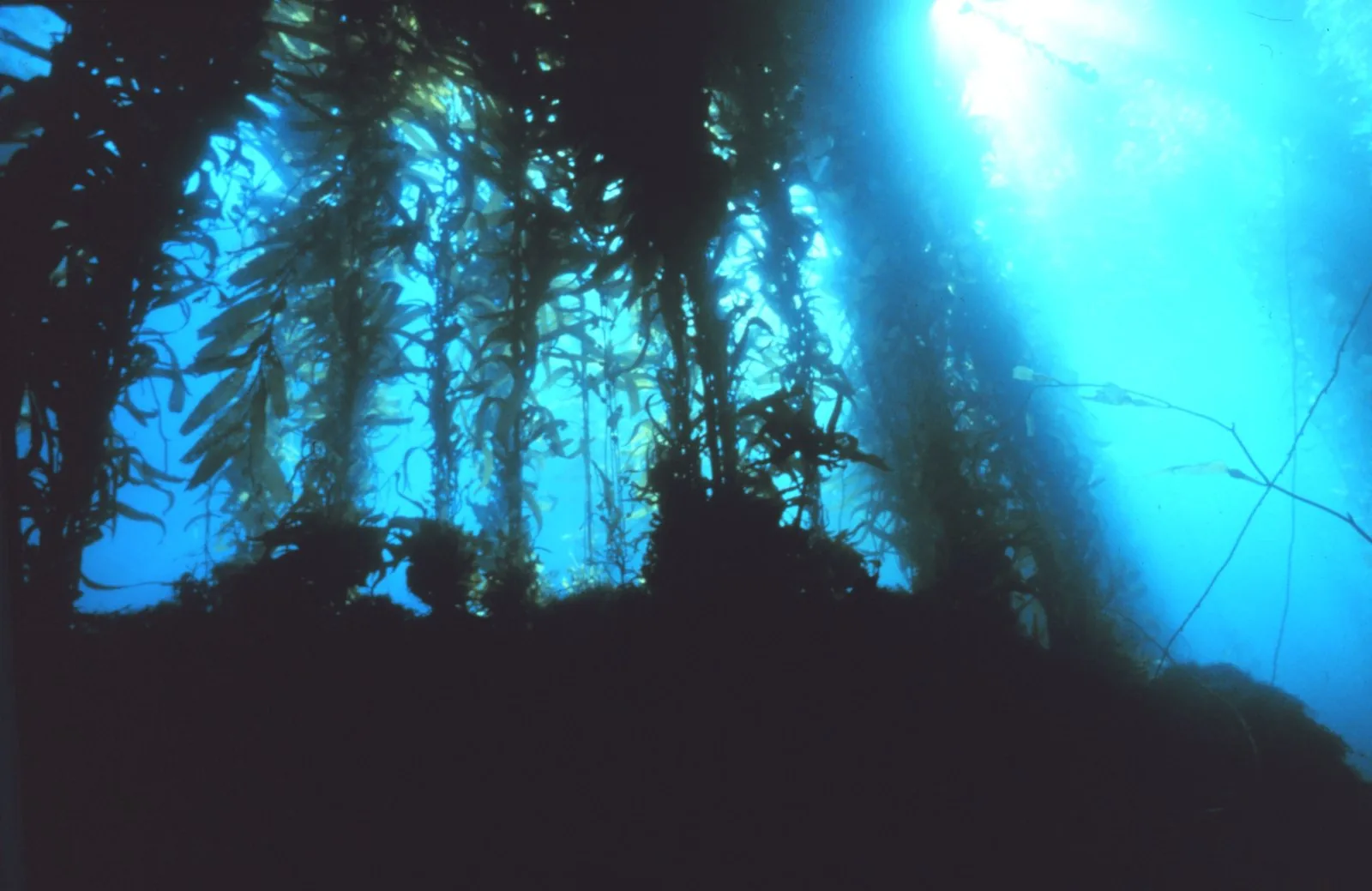
On a September morning off Catalina Island, the water at Casino Point can top 70°F, garibaldi flash orange through a forest of giant kelp, and the ferry that brought you there left Long Beach barely an hour earlier. Two thousand miles east, a German U-boat lies in 110 feet of water off Morehead City, North Carolina, and in Lake Huron nearly 100 historic shipwrecks lie preserved in cold fresh water. The best places to scuba dive in the US aren’t only the Florida Keys and Hawaii. They include kelp forests, Civil War and World War II wrecks, Gulf of Mexico coral banks, freshwater quarries, and a 90°F spring inside a limestone dome in Utah. All of it is reachable without a passport, and most of it by car.
Short answer: For warm water, the Florida Keys and Hawaii are the best scuba diving in the US. For kelp forests, go to Catalina, the Channel Islands and Monterey. For wrecks, North Carolina, the Great Lakes and Pensacola’s Oriskany. Texas has the Flower Garden Banks. Two-tank boat trips cost about $85-$330 depending on the region (checked September 2026).
Prices, rules and seasons on this page were checked on September 23-24, 2026 against the agencies’ and operators’ own websites, including NOAA’s national marine sanctuaries, the National Park Service, California State Parks and each dive operator’s price page. We name operators so you can compare like with like; none of them paid to appear here.
On this page: At a glance · Why dive the US? · The top 12 · Where to dive by month · Warm vs cold water · Marine life · California · Pacific Northwest and Alaska · North Carolina · Texas and the Gulf · Great Lakes · Northeast · Lakes, quarries, springs and aquariums · Florida and Hawaii · Prices · Choosing an operator · Getting there · Beginners · Safety · Non-divers · Trip ideas · Near the US · FAQ
Best places to scuba dive in the US at a glance
| Question | Answer (checked September 2026) |
|---|---|
| Skill level | Every level. Florida, Hawaii and California’s dive parks suit beginners; North Carolina’s wrecks, the Oriskany and the Great Lakes’ deeper wrecks call for Advanced training, and cold water needs extra skills. |
| Best months | Year-round somewhere: winter in Florida, Hawaii and the springs; summer and fall for California, North Carolina, Texas and the Great Lakes |
| Water temperature | From 48-52°F (9-11°C) at depth off Monterey to 88.7°F (31.5°C) in August at Key West; Utah’s Homestead Crater holds 90-96°F all year |
| Visibility | 10-25 ft on an average Monterey day, 60 ft on a good Catalina day, often more in Hawaii, the Keys and the Florida springs |
| Depth range | Shallow dive parks from 5-20 ft; the U-352 at 110 ft; the Oriskany’s flight deck at about 145 ft |
| Signature marine life | Garibaldi, giant black sea bass, sea lions and harbor seals in California; sand tiger sharks and U-boats off North Carolina; manta rays in Hawaii; goliath groupers in Florida; giant Pacific octopus in Puget Sound |
| Two-tank boat trip | $85-$115 in the Keys; $175-$225 off Pensacola; $185 off North Carolina; $179-$329 per diver off San Diego |
| Getting there | Mostly drive-to: Monterey is about 2 hours 20 minutes from San Francisco, Morehead City about 3 hours from Raleigh, Freeport about 1 hour 15 minutes from Houston |
| Entry rules | No passport for US sites; TSA accepts a REAL ID or passport for flights. Some trips (Mexico’s Coronado Islands from San Diego) need a passport. |
Why dive the US? Who it suits, and who should go elsewhere
The case for diving at home is simple: no passport, no currency exchange, no long-haul flight, and often no flight at all. A diver in Los Angeles can be in the kelp at Catalina a couple of hours after leaving home; one in Houston can board a Flower Garden Banks liveaboard after a 75-minute drive. The CDC estimates there are somewhere between 0.6 and 3.5 million scuba divers in the US, and many of them do most of their diving within a day’s drive of home.
Diving in the US suits divers who want variety (kelp, wrecks, coral, springs and fresh water), divers building experience between big trips, families on a budget and anyone who’d rather spend a long weekend underwater than a day in airports. It suits wreck enthusiasts better than almost anywhere else, with U-boats, an aircraft carrier and Great Lakes schooners all within reach.
It’s the wrong choice in a few cases:
- You want warm, clear coral in January and you’re not going to Florida or Hawaii.
- You hate cold water. Most US diving outside those two states calls for a 7 mm suit or a drysuit.
- You need guaranteed calm seas. California swell, Carolina wind and Great Lakes weather cancel boats regularly, so build in a spare day.
The best scuba diving in the US: our top 12
Ranking US dive destinations means comparing warm coral reefs with cold kelp forests and freshwater wrecks, which isn’t quite fair to any of them. So this list ranks on how good each place is at what it does, and how easily an American diver can get there and dive it.
| # | Where | Why go | Water | Best months | Level |
|---|---|---|---|---|---|
| 1 | Florida Keys | The only coral barrier reef in the continental US, plus the Spiegel Grove, Duane and Vandenberg wrecks | 72-89°F | May-October | All |
| 2 | Hawaii (Kona, Maui, Oahu, Kauai) | The Kona manta night dive, lava tubes, endemic fish, humpbacks in winter | 77-82°F | Year-round | All |
| 3 | Catalina Island, California | Casino Point Dive Park and giant kelp an hour from Long Beach | 55-74°F | August-October | All |
| 4 | Channel Islands, California | Wild kelp forests, sea lions and giant black sea bass in a national marine sanctuary | 55-70°F | Late summer and fall | Intermediate |
| 5 | Monterey and Point Lobos, California | Seventy-foot kelp forests, sea otters and harbor seals | 48-60°F | Fall | Intermediate; cold |
| 6 | North Carolina’s Graveyard of the Atlantic | The U-352 and dozens of wrecks, with sand tiger sharks | Warm offshore in summer | Mid-May to October | Advanced |
| 7 | Pensacola and the Florida Panhandle | The Oriskany, the world’s largest artificial reef | Gulf water, 57-87°F by season | Summer | Advanced |
| 8 | San Diego and La Jolla | La Jolla’s underwater park, Wreck Alley and blue and mako shark trips | 59-68°F | Summer and fall | All |
| 9 | Flower Garden Banks, Texas | Healthy Gulf coral 80-125 miles offshore, August coral spawning | Warm in summer | July-September | Advanced, liveaboard |
| 10 | Great Lakes shipwrecks | Thunder Bay’s nearly 100 wrecks, preserved in fresh water | Cold | June-September | Intermediate to technical |
| 11 | Puget Sound, Washington | Giant Pacific octopus, wolf eels and Edmonds Underwater Park | Cold | Year-round | Intermediate; cold |
| 12 | Alaska | Resurrection Bay, Whittier and Homer for well-equipped cold-water divers | Rarely below 40°F | Summer | Advanced; drysuit |
Honorable mentions: Florida’s freshwater springs, Utah’s Homestead Crater, the Georgia Aquarium’s whale shark dive and the best of the Midwest quarries. Each gets its own section below.
Our take: If you’ve only ever dived warm water, make California kelp your next trip. Catalina in September is the gentlest introduction, and the difference between a coral reef and a sunlit kelp forest is as big as the difference between two continents.
Where to dive in the US by month
The US has diving in every month; it just moves around. Here’s where to go, month by month, based on the seasons the parks, sanctuaries and operators publish.
| Month | Where to go | Why |
|---|---|---|
| January | Florida Keys, Hawaii, Crystal River, Homestead Crater | Winter humpbacks in Hawaii (November-April); manatee season at Crystal River (November 15-March 31); 90-96°F water in Utah |
| February | Hawaii, Florida springs, the Keys | Humpback season; springs hold 68-72°F year-round |
| March | Hawaii, Crystal River, the Keys | Last month of Crystal River’s manatee season; Keys water warming to about 76°F |
| April | Hawaii, the Keys | End of humpback season; Keys water about 79°F |
| May | The Keys, North Carolina, Thunder Bay | North Carolina’s daily charters start mid-May; Thunder Bay’s seasonal moorings go in |
| June | San Diego, North Carolina, Great Lakes, the Keys | San Diego’s offshore blue and mako shark season begins (June-November) |
| July | Flower Garden Banks, Great Lakes, the Keys | Whale sharks most likely at the Flower Gardens July-September; Keys lobster mini-season |
| August | Flower Garden Banks, Catalina, North Carolina | Flower Garden coral spawning, 7-10 days after the August full moon; the warmest Keys water |
| September | Catalina, the Farallones, Monterey, Great Lakes | Catalina’s warmest water (September to mid-October); Farallon white shark trips from September 15 |
| October | Catalina, North Carolina, the Farallones, San Diego | Farallon peak season (late September to mid-November); North Carolina’s last full month |
| November | The Farallones, San Diego, Crystal River, Hawaii | Farallon trips end November 30; manatee season opens November 15; humpbacks return to Hawaii |
| December | The Keys, Hawaii, Crystal River, Florida springs | Warm-water winter escapes and spring diving |
Warm water vs cold water: what changes, and what to pack
This is the part most “best of” lists skip. Diving in the US ranges from bathwater to seriously cold, and the gear and skills change with it.
| Where | Water temperature | Typical exposure protection |
|---|---|---|
| Key West | 72.5°F in January to 88.7°F in August (NOAA) | 3 mm or less in summer; 5 mm in winter |
| Hawaii (Honolulu, Kawaihae) | About 77-82°F year-round (NOAA) | 3 mm |
| Florida springs (Ginnie, Vortex) | 68-72°F year-round | 5-7 mm |
| Catalina (Casino Point) | 55-59°F in winter, 70-74°F in summer | 7 mm with hood in winter; 5-7 mm in summer |
| La Jolla, San Diego | 58.9°F in January to 68.4°F in August (NOAA) | 7 mm with hood; drysuit for long days |
| Channel Islands | 55-70°F (National Park Service) | 7 mm with hood, or a drysuit |
| Monterey | 54.8°F in January to 59.6°F in August at the surface (NOAA); 48-52°F at depth | Drysuit, or 7 mm with hood and gloves |
| Alaska | Rarely below 40°F, even in winter | Drysuit; shops require drysuit certification to rent one |
| Homestead Crater, Utah | 90-96°F year-round | Swimsuit or rash guard |
Cold water isn’t just a thicker wetsuit. You’ll carry more weight, your air goes faster, your hands lose dexterity, and a drysuit is a skill of its own, with its own certification. If you’re a warm-water diver heading for Monterey or Puget Sound, book a local guide or a refresher for the first day, or do a drysuit course before the trip. It’s the difference between enduring the dive and enjoying it.
Marine life: what you’ll see, region by region
Part of the fun of diving at home is how different each coast looks underwater.
- California: bright orange garibaldi (the state marine fish), giant black sea bass, California moray eels, bat rays, Spanish shawl nudibranchs, sea lions and harbor seals in the south; lingcod, rockfish, harbor seals and sea otters around Monterey and Point Lobos. Blue and mako sharks offshore from June to November, and great whites at the Farallones in the fall.
- The Pacific Northwest and Alaska: giant Pacific octopus, wolf eels, lingcod and huge plumose anemones in the cold, green water, with humpback whales in Alaska’s summer.
- North Carolina: sand tiger sharks and schooling baitfish on the wrecks, with tropical species riding the Gulf Stream.
- The Gulf of Mexico: healthy coral and big fish at the Flower Garden Banks, with whale sharks most likely from July to September and manta rays through the year.
- Florida: goliath groupers (up to 800 lb) on the wrecks, manatees at Crystal River in winter, spiny lobster, and sea turtles. Six sea turtle species occur in US waters, and all are listed under the Endangered Species Act.
- Hawaii: reef manta rays, endemic reef fish, green sea turtles and, from November to April, humpback whales.
- The Great Lakes: not much fish life, and that’s fine: the wrecks are the attraction, and the cold fresh water keeps them in remarkable shape.
Wherever you dive, US law protects much of what you’ll see. Keep 100 yards from humpback whales in Hawaii and Alaska, never touch or chase manatees or turtles, and remember that many parks and sanctuaries, from La Jolla’s ecological reserve to Casino Point, are no-take zones.
Scuba diving in California: kelp forests from San Diego to Monterey
Scuba diving in California means kelp. Giant kelp grows in cool, nutrient-rich water along the coast and around the offshore islands, forming forests up to 70 feet tall that shelter garibaldi, sea lions, harbor seals, giant black sea bass and bat rays. The water is cool, visibility varies with swell and plankton, and on a good day there’s nothing quite like it.
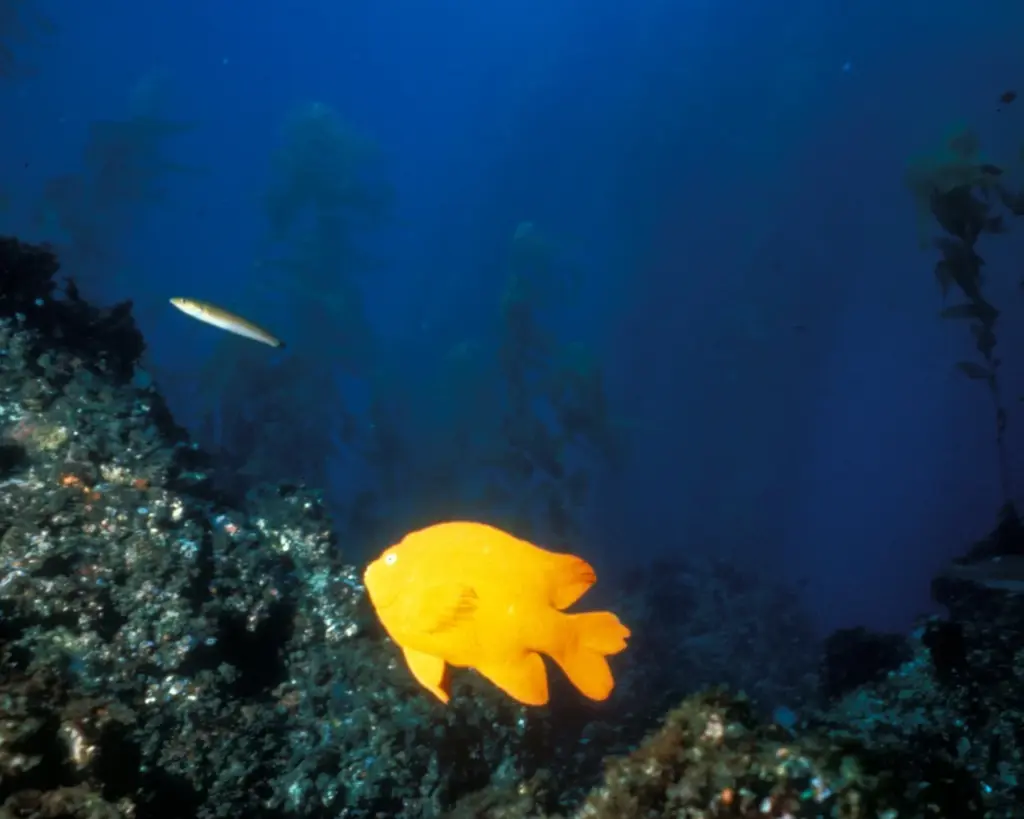
Catalina Island
Catalina Island scuba diving is the easiest way into California kelp. Catalina Express runs year-round from Long Beach, San Pedro and Dana Point, with up to 30 departures a day and a crossing of about an hour; an adult round trip from Long Beach or San Pedro to Avalon costs $99 including the island wharfage fee. In Avalon, the Casino Point Dive Park, established in 1962, runs from the rocky shoreline to 95 ft, with buoys keeping boats and divers apart. It’s a no-take State Marine Conservation Area. Catalina Divers Supply, inside the historic Casino building, handles air, nitrox, rentals and guided dives. Water at Casino Point runs 55-59°F in winter and 70-74°F in summer, with September to mid-October the warmest period.
Diving Catalina’s conditions report for September 23, 2026 showed 76°F at the surface and 60 ft of visibility at Casino Point. To escape Avalon’s crowds, Catalina Express also sails from San Pedro to Two Harbors, the gateway to the island’s quieter west end, for $97 round trip including wharfage. Seniors (55 and up) pay $90 from Long Beach or San Pedro to Avalon, and children $78.50.
The Channel Islands
Channel Islands scuba diving is California at its wildest. The Channel Islands National Marine Sanctuary protects 1,470 square miles around Anacapa, Santa Cruz, Santa Rosa, San Miguel and Santa Barbara islands, and the National Park Service says diving is best on Santa Barbara, Anacapa and eastern Santa Cruz, with water of 55-70°F and conditions that are highly variable and sometimes dangerous. Boats run from Ventura; Peace, a Ventura-based dive boat, lists giant black sea bass, garibaldi, sea lions, harbor seals, bat rays and Spanish shawl nudibranchs among the sights, and provides air fills, meals and nitrox.
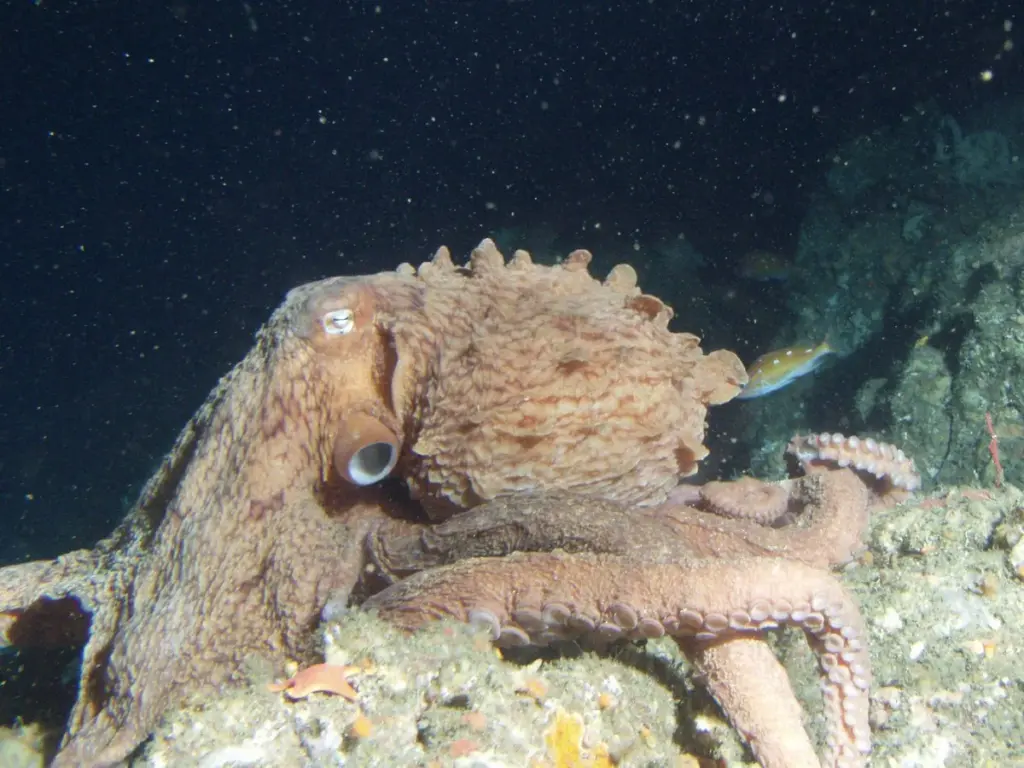
Monterey and Point Lobos
Monterey scuba diving takes place inside the Monterey Bay National Marine Sanctuary, designated in 1992, which covers 6,094 square miles and 276 miles of coastline. The crown jewel is Point Lobos State Natural Reserve, where California State Parks describes 70-foot kelp forests with lingcod, rockfish, harbor seals and sea otters. It’s tightly managed: diving is by advance reservation, limited to 10 teams of two a day, solo diving isn’t allowed, and you show your certification card at registration. The dive fee is $30 per pair on weekends and holidays and $20 on weekdays, plus a processing fee and $10 for parking. For boat diving, Beachhopper II out of Monterey visits Monterey Bay, Carmel Bay and Point Lobos and says to expect 48-52°F at diving depths and average visibility of 10-25 ft.
Beachhopper II runs whole-boat charters for the person booking plus up to 11 others, a good fit for a club or a group of friends. And if you’ve never dived with sea otters and harbor seals, Point Lobos is the place to start: State Parks calls it one of the richest marine habitats in California, and a dive there is as much wildlife watching as it is diving.
San Diego and La Jolla
Scuba diving in San Diego starts at La Jolla. La Jolla Cove lies inside the San Diego-La Jolla Underwater Park Ecological Reserve, where fishing and taking anything are prohibited, and La Jolla Shores, next door, is where many novice classes are held because its summer waves are usually the gentlest in the city. Offshore, Wreck Alley holds the HMCS Yukon, a 366-ft Canadian destroyer that sank a day early in 2000 and now lies on its port side in about 100 ft. Waterhorse Charters prices public boat dives at $179-$329 per diver and visits the Yukon and the Ruby E.; its trips to Mexico’s Coronado Islands need a passport.
Shark diving in San Diego is a summer and fall thing. PADI lists offshore shortfin mako and blue sharks from June to November, and California Shark Diving runs trips where you choose a cage or free-diving with the sharks, with no certification needed. Waterhorse’s two-dive Shark Safari costs $185. For great whites, Incredible Adventures runs 12-hour cage trips to the Farallon Islands from San Francisco Bay between September 15 and November 30, at $925 for a cage diver.
Those Farallon trips last about 12 hours aboard the 65-ft Derek M Baylis from Richmond’s Marina Bay. They use a surface cage with surface-supplied air, so no dive experience is needed; topside passengers pay $525, peak season runs from late September to mid-November, and there’s no shark guarantee.
Los Angeles
Scuba diving in Los Angeles mostly means leaving it: Catalina by ferry, Anacapa by boat from Ventura (about 66 miles, 1 hour 20 minutes, from downtown in light traffic) or the shore sites of Palos Verdes and Malibu. LA shops use those same sites for training; Eco Dive Center in West Los Angeles, for example, runs its Open Water course over two weekends, with pool days on Saturdays and island boat dives at Catalina or Anacapa on Sundays.
Puget Sound, the Pacific Northwest and Alaska
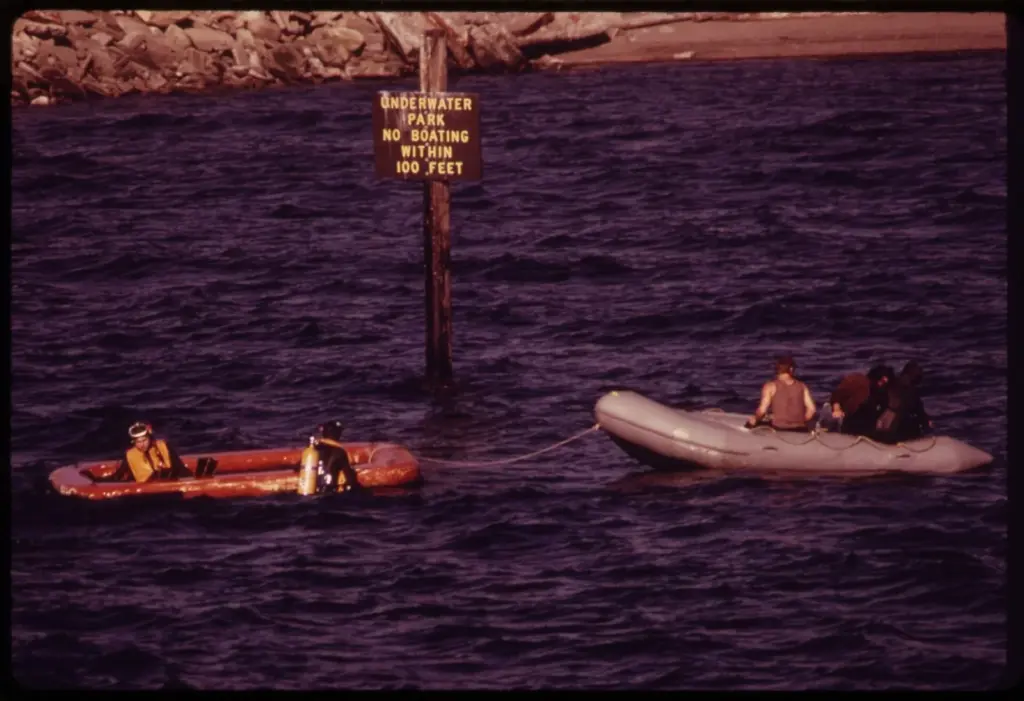
Puget Sound scuba diving is cold, green and full of big animals: giant Pacific octopus, wolf eels, lingcod and huge plumose anemones. The classic shore dive is Edmonds Underwater Park at Brackett’s Landing, set up by the city in 1970. It covers more than 27 acres, has man-made reef structures and the 325-ft De Lion Dry Dock, sunk in 1935, and bottoms out at 45 ft at high tide near the ferry dock. Nothing may be taken, parking is limited to four hours, and night dives need a permit applied for at least 72 hours ahead.
Beyond Edmonds, Puget Sound diving is planned around the tides. The Sound’s big tidal exchange drives strong currents at many sites, so local shops time dives for slack water, and many local divers find the visibility best in the colder months, when there’s less plankton in the water. A drysuit is standard all year, and a local guide for the first dive saves a lot of guesswork.
Scuba diving in Alaska is for the committed. Dive Alaska in Anchorage says the nearest site is almost an hour’s drive away, with diving at Whittier, Seward’s Resurrection Bay, Homer and even Matanuska Glacier; ocean water rarely drops below 40°F even in winter, and you need drysuit certification to rent a drysuit. From Anchorage it’s about 1 hour 25 minutes to Whittier (through a tunnel that runs on a schedule) and 2 hours 45 minutes to Seward. Humpbacks are part of the appeal, and federal rules make it illegal to approach within 100 yards of one.
Matanuska Glacier, on Dive Alaska’s list, is a genuine oddity: a freshwater dive at a glacier. Summer brings the long days and the calmest weather, but conditions change fast in Alaska, so go with a local shop the first time and bring more warmth than you think you’ll need.
Scuba diving in North Carolina: the Graveyard of the Atlantic
Scuba diving in North Carolina is some of the best wreck diving in the world, full stop. The waters off the Outer Banks and Cape Lookout earned the name Graveyard of the Atlantic, and the warm Gulf Stream brings clear blue water and tropical fish to wrecks from both world wars. Sand tiger sharks are a big part of the draw: Olympus Dive Center in Morehead City runs a Project AWARE sand tiger shark conservation course and a Spot A Shark USA photo-ID course.
The headliner is the U-352, a 220-ft German Type VIIC U-boat sunk by the Coast Guard cutter Icarus off Cape Lookout on May 9, 1942. It lies in 110 ft, is on the National Register of Historic Places, and was the first U-boat sunk by the Coast Guard off the US East Coast in World War II. Olympus Dive Center in Morehead City runs full-day, two-dive trips at $185 to wrecks such as the U-352, Papoose, Schurz, Aeolus, Spar, Caribsea and Atlas, in 90-120 ft, every day from mid-May through October and most weekends in April and November. Morehead City is about three hours’ drive from Raleigh.
Of the U-352’s crew of 48, 33 survived the sinking. Treat it, like every wreck off this coast, as a historic site: look, photograph and leave everything where it lies. Most boats run two dives a day in 90-120 ft, so nitrox and Advanced training make a big difference to your bottom time, and a full day on the water can mean a 6 a.m. departure.
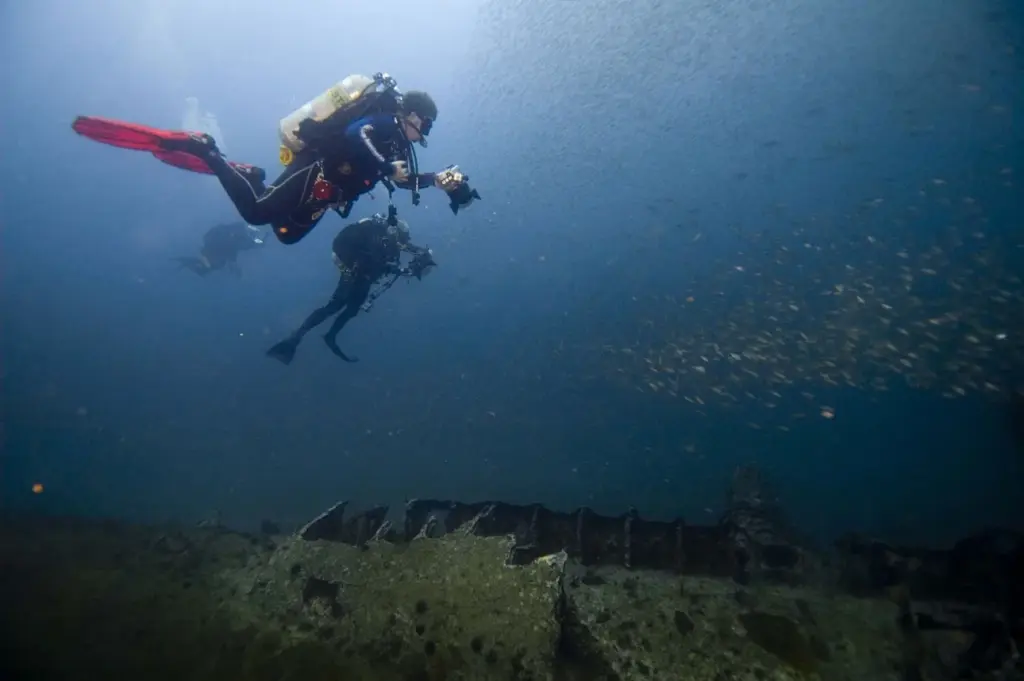
Farther north, the Civil War ironclad USS Monitor lies about 16 miles off Cape Hatteras in about 230 ft. It became the nation’s first national marine sanctuary on January 30, 1975, and diving it requires a free permit from the sanctuary’s office in Newport News, Virginia. It’s a technical dive, but it’s a reminder of how much history sits off this coast.
Scuba diving in Texas and the Gulf of Mexico
Scuba diving in Texas surprises people. The Flower Garden Banks National Marine Sanctuary, 80 to 125 miles off the Texas and Louisiana coasts, protects some of the healthiest coral in the Gulf. It was designated in 1992 with the East and West Flower Garden Banks, Stetson Bank was added in 1996, and in 2021 parts of 14 more banks were added, bringing it to 17 reefs and banks. The banks are famous for mass coral spawning about 7-10 days after the August full moon, generally between 9 p.m. and midnight, and whale sharks are most likely from July to September. The sanctuary says there’s no special season for manta rays, which turn up through the year.
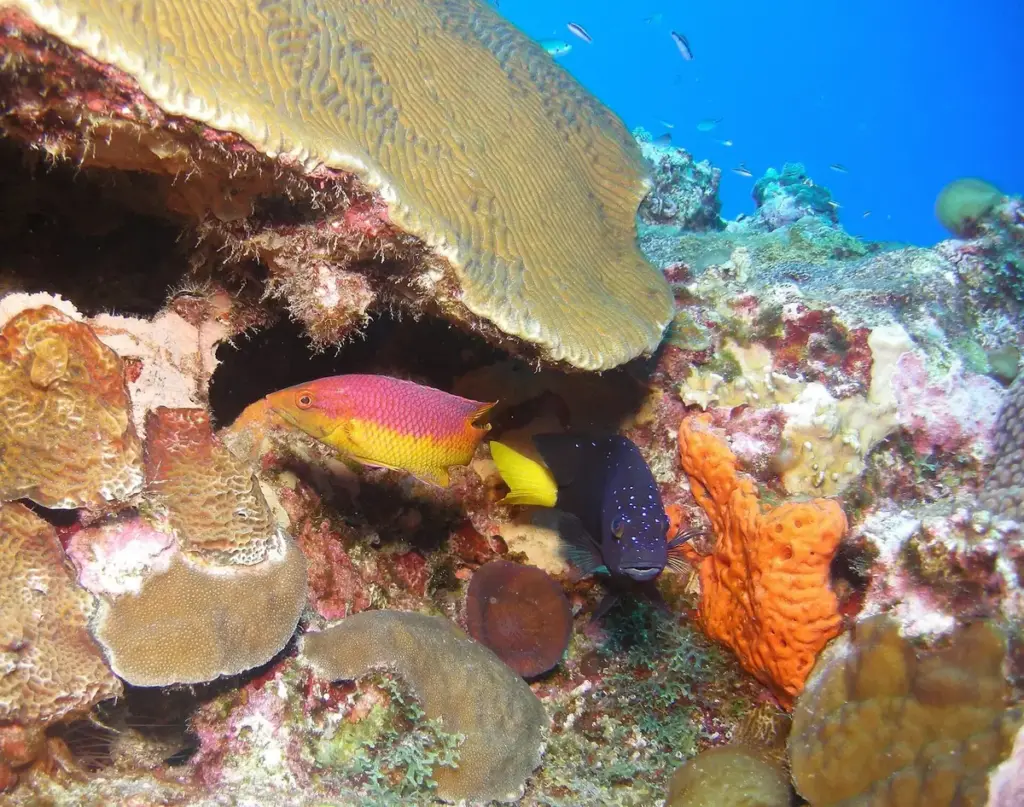
Flower Garden Banks diving is liveaboard diving. The M/V Fling sails from Freeport, about an hour and 15 minutes from Houston, to the Flower Gardens and Stetson Bank on trips listed from $1,191 to $1,945; its most popular weekend trip starts at $1,251. The crossing is long and the Gulf can be rough, so this is a trip for experienced divers who don’t mind a night at sea.
Closer to shore, the USTS Texas Clipper, a 473-ft ship sunk on November 17, 2007, about 17 miles off South Padre Island, is the largest of 13 ships in the Texas Artificial Reef Program. Inland, Texas divers train and play in lakes: Mansfield Dam Park on Lake Travis has four underwater dive platforms set at different lake levels, and Athens Scuba Park, about 1 hour 20 minutes from Dallas, has more than 25 sunken wrecks and attractions in water up to 28 ft deep.
The Clipper earns its keep: Texas Parks and Wildlife says the reef generates more than $1 million a year from anglers and $1.4-$2 million from divers for the local economy. Mansfield Dam Park is open daily from sunrise to civil twilight, and its platforms at different depths mean there’s always one at a usable depth, whatever the lake level.
Great Lakes shipwreck diving
Great Lakes shipwreck diving is the country’s best-kept secret. Cold fresh water preserves wooden ships in a way salt water never does, so wrecks a century old still have masts, deck gear and rigging. NOAA protects three areas as national marine sanctuaries:
- Thunder Bay, Michigan (Lake Huron): designated October 7, 2000, the first Great Lakes sanctuary, protecting nearly 100 historic shipwrecks. More than 50 have mooring buoys, set out from May to September, and access to the wrecks isn’t restricted. Alpena is about 4 hours 45 minutes’ drive from Detroit.
- Wisconsin Shipwreck Coast (Lake Michigan): designated in 2021, covering 962 square miles with 36 historic shipwrecks, 27 of them on the National Register of Historic Places.
- Lake Ontario, New York: designated in 2024, covering 1,722 square miles.
Sanctuary rules are light: at Thunder Bay, boats must use the moorings where they’re present, and the Great Lakes Maritime Heritage Center in Alpena, the sanctuary’s visitor center, is worth a stop before your first dive.
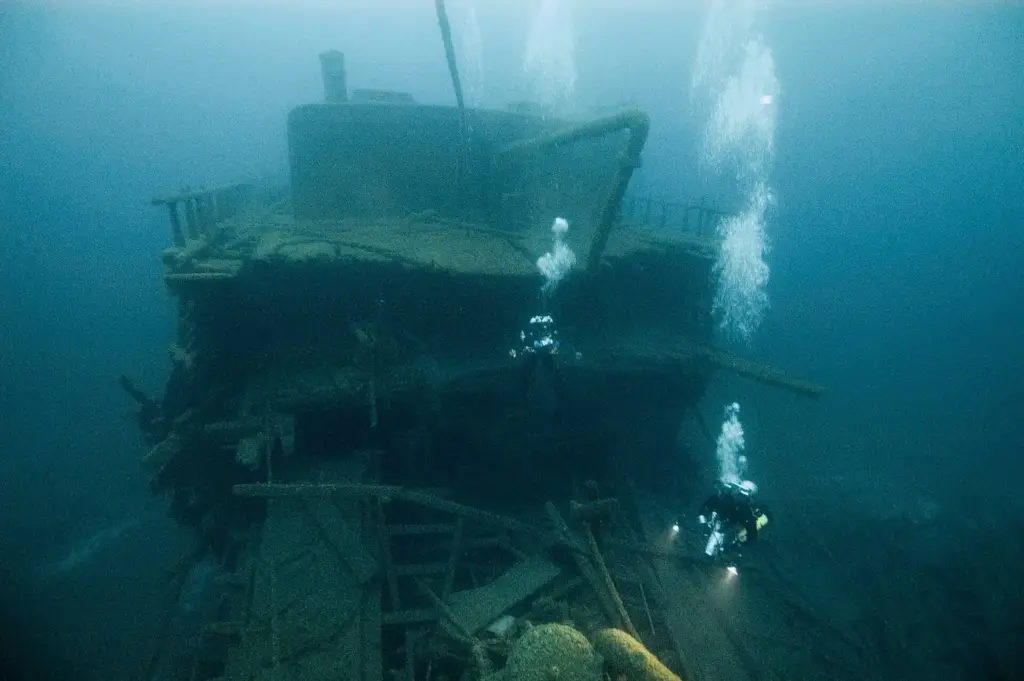
The water is cold, visibility changes with the season and the lake, and many wrecks sit deep. Summer is the season, a drysuit is standard, and a local charter that knows the sites is worth every dollar. It’s a road trip rather than a flight for most Midwestern divers.
Scuba diving in New England and near New York City
Scuba diving in New England and the Mid-Atlantic is cold-water shore and wreck diving: rocky coves, lobsters, and some serious offshore wrecks for technical divers. It’s a summer-into-fall season, with a 7 mm suit or drysuit most of the year. Diving near New York City starts in the pool: Pan Aqua Diving teaches its Open Water class in Manhattan for $649 in a group or $749 privately, including eLearning and class equipment, and sends students off with referral paperwork to finish their open water dives elsewhere. Pool sessions run in the Manhattan Plaza pool on weekday or weekend evenings.
Northeast divers have also lost two of their favorite training sites. Dutch Springs in Bethlehem, Pennsylvania, says on its website that it’s now closed, and Missouri’s Bonne Terre Mine, a flooded lead mine that operated from 1862 to 1963 and that many lists still recommend, says it’s currently closed too. Check before you plan around either.
In summer, the water off southern New England and New Jersey warms enough for a thick wetsuit, and the classic shore dives are rocky points and breakwaters full of lobsters and small fish. Offshore, New Jersey and New York charters visit wrecks from two centuries of Atlantic shipping, some of them well past recreational depths. The season is short, so check local shops’ boat schedules early.
Lakes, quarries, springs and aquarium dives
Quarries and lakes
Quarry diving keeps inland divers wet between trips, and the best quarries are full of things to find. Gilboa Quarry in Ohio, about two and a half hours from Columbus, runs 60-140 ft deep with sunken planes, helicopters, buses and platforms, an on-site dive center, air, nitrox and rebreather gas, and camping and a bunkhouse for weekend trips. Mermet Springs in Belknap, Illinois, about three hours from St Louis, has a Boeing 727 fuselage you can swim through, plus a railroad coal car, a submarine, a Cessna 152, an ambulance and a fire truck in 40-60 ft. For the best lake diving in the US, add Lake Travis and Athens Scuba Park in Texas, and Lake Tahoe and Lake Mead in the West for altitude and history.
Homestead Crater, Utah
The Crater at Homestead in Midway, about an hour from Salt Lake City, is a geothermal spring inside a 55-foot limestone dome, about 65 ft deep, with water at 90-96°F all year. Certified divers need a waiver, proof of certification and a buddy, and there’s an Intro to Scuba for ages 10 and up. A one-hour soak or swim session costs $30.
Florida’s springs
Florida’s freshwater springs are some of the clearest water in the country, at a constant 68-72°F. Ginnie Springs’ Ballroom is a basin more than 100 ft across and 15 ft deep, and Vortex Spring in the Panhandle charges $25 for a daily dive pass. The caves beyond are for trained cave divers only, and our Florida and cave-diving guides cover the springs in more depth.
The Georgia Aquarium
You can also swim with whale sharks in Georgia. The Georgia Aquarium’s Journey with Gentle Giants dive puts certified divers aged 12 and up in the Ocean Voyager habitat, which holds more than 6.3 million gallons and has a 100-ft tunnel and a main window 23 ft tall and 61 ft wide, for a 30-minute dive at 20-30 ft with a whale shark, manta rays and a green sea turtle. It’s a three-hour experience with all gear included; aquarium admission isn’t.
Florida and Hawaii: the warm-water favorites
Florida and Hawaii each have a full guide on this site, so here’s the short version. Florida Keys diving runs along the only coral barrier reef in the continental US, with two-tank trips from $85 in Key West to about $115 in Islamorada and the Spiegel Grove, Duane and Vandenberg wrecks. Elsewhere in the state, scuba diving Florida means Pensacola’s Oriskany, an 888-ft aircraft carrier sunk in 2006 with its flight deck at about 145 ft (Niuhi Dive Charters charges $225 for a two-tank trip), the springs, Blue Heron Bridge’s shallow muck dive and Crystal River, where scuba is allowed at King Spring year-round.
Scuba diving Hawaii is the other warm-water choice, with water of about 77-82°F year-round at NOAA’s gauges, the Kona manta night dive and two-tank boat dives from about $200 on the Big Island to $239 at Maui’s Molokini Crater. Winter adds humpback whales from November to April.
A few more numbers from those guides: the Oriskany sits upright in 212 ft of water with its top at about 80 ft, so there’s plenty of ship above 100 ft for Advanced divers; Blue Heron Bridge is best dived within an hour either side of high tide; and in Hawaii, the seasonal Niihau trip from Kauai (from $475, for divers with 30 logged dives or Advanced certification) is the big-animal outlier.
What diving costs in the US: prices by region
| Region | Example (checked September 2026) | Price |
|---|---|---|
| Florida Keys | Two-tank reef trip, Rainbow Reef (Key Largo) or Lost Reef Adventures (Key West) | $99; from $85 |
| Florida Panhandle | Niuhi Dive Charters, Pensacola: nearshore, midshore, offshore and Oriskany two-tank trips | $175, $200, $225, $225 |
| Hawaii | Kona two-tank morning charter; Molokini two-tank | $200; $239 |
| North Carolina | Olympus Dive Center, full-day two-dive wreck trip | $185 |
| San Diego | Waterhorse Charters public boat dives; Shark Safari | $179-$329 per diver; $185 |
| Catalina | Catalina Express round trip (Long Beach or San Pedro) | $99 |
| Point Lobos | Dive reservation per pair (weekday; weekend), plus parking | $20; $30; plus $10 parking |
| Texas | M/V Fling to the Flower Garden Banks (liveaboard) | From $1,191 |
| Farallon Islands | Incredible Adventures great white cage trip | $925 |
| Florida springs | Vortex Spring daily dive pass | $25 |
A US dive trip’s biggest saving is usually the flight. Drive to the coast, stay in a motel and do two boat days, and a long weekend of diving can cost less than the airfare alone to an island. The catch is the water temperature: budget for a thicker suit, or a drysuit rental, outside Florida and Hawaii.
Choosing a US dive operator: what’s included, guides and tipping
US dive operators mostly work the same way: the trip price covers the boat, tanks and weights, and you rent the rest. In Key Largo, for example, Rainbow Reef charges $35 a day for a full rental set. California boats often go further; Peace includes meals and air fills on its Channel Islands trips. What varies is guiding. In the Keys, some shops include a divemaster (Captain Hook’s in Marathon does), some offer one free on request, and some run unguided dives and charge for a guide (Looe Key Reef Resort’s reef guide costs $65). Point Lobos doesn’t allow solo diving at all.
Before you book, ask four things: whether dives are guided, what the minimum certification and experience are (deep wrecks usually need Advanced and a recent dive), what the cancellation policy is when weather closes the ocean, and, on any overnight boat, how the sleeping areas are protected against fire. After the Conception disaster, the NTSB recommended interconnected smoke detectors and a second escape route from every overnight space. On tipping, US practice applies: tip the crew at the end of the trip, and tip more when a divemaster guided you. Many divers leave 10-20% of the trip price.
Getting there: drive times from US hubs
Every site on this page is a domestic trip, so there’s no passport or visa, and a REAL ID or passport covers TSA. The one exception is if you add a foreign excursion, such as San Diego boats to Mexico’s Coronado Islands, which need a passport. Many of the best sites are drive-to from a major city:
| Drive | Distance | Time (light traffic) |
|---|---|---|
| Los Angeles to La Jolla Cove | 112 mi | About 2 h 15 min |
| Los Angeles to Ventura Harbor (Channel Islands boats) | 66 mi | About 1 h 20 min |
| San Francisco to Monterey | 113 mi | About 2 h 20 min |
| Raleigh to Morehead City | 150 mi | About 3 h |
| Houston to Freeport (Flower Garden Banks boat) | 61 mi | About 1 h 15 min |
| Dallas to Athens Scuba Park | 72 mi | About 1 h 20 min |
| Detroit to Alpena (Thunder Bay) | 250 mi | About 4 h 45 min |
| Columbus to Gilboa Quarry | 113 mi | About 2 h 30 min |
| St Louis to Mermet Springs | 151 mi | About 3 h |
| Salt Lake City to Homestead Crater | 45 mi | About 1 h |
| Anchorage to Seward | 127 mi | About 2 h 45 min |
| Miami airport to Key Largo | 61 mi | About 1 h 30 min |
The best places to scuba dive in the US for beginners
New divers should start somewhere warm, shallow and calm, with plenty of instructors. The Florida Keys top the list, with shallow reefs, short boat rides and two-tank trips around $100. La Jolla Shores in San Diego is where the city runs many novice classes, and Catalina’s Casino Point Dive Park lets you walk in from shore in a no-take reserve. In Florida, Blue Heron Bridge’s shallow dive, in 5-20 ft, is famous for small critters. And Utah’s Homestead Crater offers a 90°F Intro to Scuba to anyone aged 10 or older.
The best places to get scuba certified in the US
You can get certified almost anywhere in the US, but price and conditions vary a lot. Warm, shallow Florida water makes the open water dives easiest, while big-city shops teach the classroom and pool parts close to home so you can finish your open water dives on vacation. Here’s what Open Water courses cost at the shops below in September 2026.
| Where | Shop | Open Water price | Notes |
|---|---|---|---|
| Pensacola, FL | Florida Dive Pros | $389 | PADI, including eLearning ($359 active duty and veterans) |
| Key Largo, FL | Key Largo Scuba Diving | From $499 | PADI |
| Key Largo, FL | Coral Reef Park Company (Pennekamp) | $540 | Four days |
| Islamorada, FL | Islamorada Dive Center | $555 on set dates | eLearning, gear and four checkout dives |
| Islamorada, FL | Key Dives | $595 | All gear and certification dives |
| Ponce de Leon, FL | Vortex Spring | $605 | NAUI, in 68°F spring water |
| New York City | Pan Aqua Diving | $649 group; $749 private | Class and pool only; open water dives separate |
| Key Largo, FL | Sea Dwellers | $700 | Two days, including eLearning ($575 if you’ve bought it) |
| Los Angeles | Eco Dive Center | $246 for the PADI eLearning code | In-water training charged separately; ocean dives at Catalina or Anacapa |
Safety: cold water, boats and the nearest chamber
Most US diving is safe, well regulated and well supported, but a few things deserve respect. Cold water drains heat and air faster, so plan shorter dives and carry more reserve. Deep wrecks such as the U-352, the Oriskany and the Great Lakes’ deeper ships need Advanced training at a minimum, and cave systems beyond Florida’s spring basins are strictly for trained cave divers.
Boat safety got a hard look after the dive boat Conception caught fire off Santa Cruz Island on September 2, 2019, killing 33 passengers and a crew member. The NTSB blamed the operator’s failure to provide effective oversight, including a roving night patrol, and recommended interconnected smoke detectors in all overnight spaces and secondary escape routes that exit into a different space from the main exit. On any overnight dive boat, ask about both.
For diving injuries, Florida has hospital chambers in Tavernier and Miami, Hawaii’s is at Kuakini Medical Center in Honolulu, and Divers Alert Network’s emergency line is the first call anywhere in the country. Know where your nearest chamber is before you dive, and carry dive accident insurance; your health plan may not cover an air ambulance.
For non-divers in your group
Many US dive sites work well for mixed groups. Catalina has Avalon’s restaurants and beaches, and glass-bottom boat tours pass over the same Casino Point reserve the divers use. Topside passengers can join Farallon shark trips for $525, Crystal River’s manatees are a snorkeling experience (passive observation only), and the Great Lakes Maritime Heritage Center in Alpena tells the story of the wrecks on dry land. Non-divers at Homestead Crater can book the same $30 soak in 90°F water. And the Keys, Hawaii and Monterey have plenty to do above the water.
US dive trip ideas
- Southern California kelp week: two days at Catalina, a Channel Islands boat day from Ventura, and La Jolla on the way home. Go in September for the warmest water.
- Monterey long weekend: a Point Lobos reservation (book early; only 10 teams a day), a boat day with Beachhopper II and a morning at the Monterey Bay Aquarium for the non-divers.
- Carolina wreck weekend: drive from Raleigh to Morehead City and dive the U-352 and the Papoose with sand tigers between mid-May and October.
- Texas Flower Gardens: a weekend on the M/V Fling from Freeport in August for coral spawning, or July-September for whale sharks.
- Great Lakes history trip: Alpena and the Thunder Bay sanctuary in July or August, with a stop at the Great Lakes Maritime Heritage Center.
- Winter warm-up: the Florida Keys or Hawaii between December and March, with a manatee side trip to Crystal River.
The best places to scuba dive near the US
If you want a little more adventure without a long flight, several great dive destinations sit just beyond the mainland. Puerto Rico and the US Virgin Islands are US territories, so there’s still no passport, and our Caribbean guide covers them island by island. Bimini in the Bahamas is only about 50 miles east of Miami, with a high-speed ferry from Port Everglades and great hammerheads from November to April. Cozumel has year-round nonstops from Dallas/Fort Worth, Houston and Miami. And from San Diego, dive boats cross into Mexican waters at the Coronado Islands, which is why those trips ask for a passport.
Frequently asked questions
Where is the best place to scuba dive in the US?
For warm water and coral, the Florida Keys and Hawaii are the best. For kelp forests, Catalina Island, the Channel Islands and Monterey’s Point Lobos lead. For wrecks, North Carolina’s U-352 and the Graveyard of the Atlantic, Pensacola’s Oriskany and the Great Lakes’ Thunder Bay sanctuary stand out. The Flower Garden Banks off Texas are the best coral in the Gulf.
Where can I scuba dive in the US in winter?
The Florida Keys (about 72-75°F in winter), Hawaii (about 77°F, with humpbacks from November to April), Florida’s springs (68-72°F all year), Crystal River during manatee season (November 15 to March 31) and Utah’s Homestead Crater (90-96°F). Southern California stays diveable in winter too, at 55-59°F, if you have a thick wetsuit or a drysuit.
What are the best places to scuba dive in the US for beginners?
The Florida Keys, with shallow reefs and two-tank trips around $100; La Jolla Shores in San Diego, where many novice classes are held; Catalina’s Casino Point Dive Park; Blue Heron Bridge in Florida (5-20 ft); and Hawaii’s calm leeward coasts. Start in warm water, then try cold-water kelp diving once you’re comfortable.
Can you still dive Bonne Terre Mine or Dutch Springs?
Not at the moment. Bonne Terre Mine in Missouri says on its website that it’s currently closed, and Dutch Springs in Pennsylvania says it’s now closed. Many older lists still recommend both. For inland alternatives, look at Gilboa Quarry in Ohio, Mermet Springs in Illinois, Athens Scuba Park in Texas or Utah’s Homestead Crater.
Where can you dive with sharks in the US?
Off San Diego, blue and mako shark trips run from June to November; the Farallon Islands off San Francisco have great white cage trips from September 15 to November 30; and North Carolina’s wrecks are known for sand tiger sharks. Florida adds shark dives off Jupiter, and Hawaii has whitetip reef sharks on many dives.
How much does scuba diving cost in the US?
Two-tank boat dives cost about $85-$115 in the Florida Keys, $175-$225 off Pensacola, $185 off North Carolina, $200-$239 in Hawaii and $179-$329 off San Diego (checked September 2026). Shore diving is cheaper: Point Lobos charges $20-$30 per pair plus parking, and Vortex Spring’s dive pass is $25.
Do I need a drysuit to dive in the US?
Not in Florida, Hawaii or Utah’s Homestead Crater. For Monterey (48-52°F at depth), Puget Sound, the Great Lakes, New England and Alaska, a drysuit is the norm, and Alaska shops require drysuit certification to rent one. Southern California is thick-wetsuit territory, with a drysuit a comfortable option for long days.
What are the most dangerous places to scuba dive in the US?
The risk comes from conditions and depth rather than places. Florida’s underwater caves are strictly for trained cave divers; deep wrecks such as the Oriskany and the Monitor need technical training; the Channel Islands’ conditions are, in the Park Service’s words, highly variable and sometimes dangerous; and cold, deep Great Lakes wrecks punish poor gas planning. Dive within your training and you’re safe almost anywhere.
Sources and verification
Everything on this page was checked on September 23-24, 2026 against the organizations listed below. The page is compiled from their published information and doesn’t claim first-hand visits.
- NOAA national marine sanctuaries: Channel Islands, Monterey Bay, Monitor (U-352), Thunder Bay, Wisconsin Shipwreck Coast, Lake Ontario and Flower Garden Banks natural events
- NOAA NCEI coastal water temperature guide
- National Park Service: Channel Islands diving
- California State Parks: Point Lobos State Natural Reserve and its diving rules
- City of San Diego: La Jolla Cove and La Jolla Shores
- NTSB: Conception dive boat fire investigation
- Texas Parks and Wildlife: Ships to Reefs
- TSA: REAL ID
- Operators and sites: Catalina Express, Diving Catalina, Catalina Divers Supply, Peace (Ventura), Beachhopper II, Waterhorse Charters, California Shark Diving, Incredible Adventures, Eco Dive Center, Edmonds Underwater Park, Dive Alaska, Olympus Dive Center, Texas Caribbean Charters (M/V Fling), Travis County parks, Athens Scuba Park, Gilboa Quarry, Mermet Springs, The Crater at Homestead, Georgia Aquarium, Pan Aqua Diving, Florida Dive Pros, Niuhi Dive Charters, Vortex Spring, Dutch Springs and Bonne Terre Mine
Also checked: California Department of Fish and Wildlife on the Casino Point marine conservation area, PADI’s pelagic shark seasons, the Florida Keys and Hawaii price pages behind our pillar guides, and OpenStreetMap-based routing for drive times.
Scuba Tourism Guide is an independent publication. It is not affiliated with any agency, park or dive operator named here, and no one paid to be included.
Photo credits
- Giant kelp forest, Channel Islands National Marine Sanctuary (featured image): NOAA Photo Library, Wikimedia Commons (public domain)
- Garibaldi in the kelp, Channel Islands National Park: photo by NPS, Wikimedia Commons (public domain)
- Giant Pacific octopus off Point Pinos, Monterey Bay (2004): photo by NOAA/R. N. Lea [1], Wikimedia Commons (public domain)
- Divers at Edmonds Underwater Park near the ferry dock (June 1973): photo by Doug Wilson, Wikimedia Commons (public domain)
- Divers photographing the U-352 off Morehead City, North Carolina (2009): photo by NOAA's National Ocean Service, Wikimedia Commons (CC BY 2.0)
- Reef scene, Flower Garden Banks National Marine Sanctuary (2008): photo by National Marine Sanctuaries, Wikimedia Commons (public domain)
- Divers on a shipwreck in Thunder Bay National Marine Sanctuary, Lake Huron (2007): photo by National Marine Sanctuaries, Wikimedia Commons (public domain)


