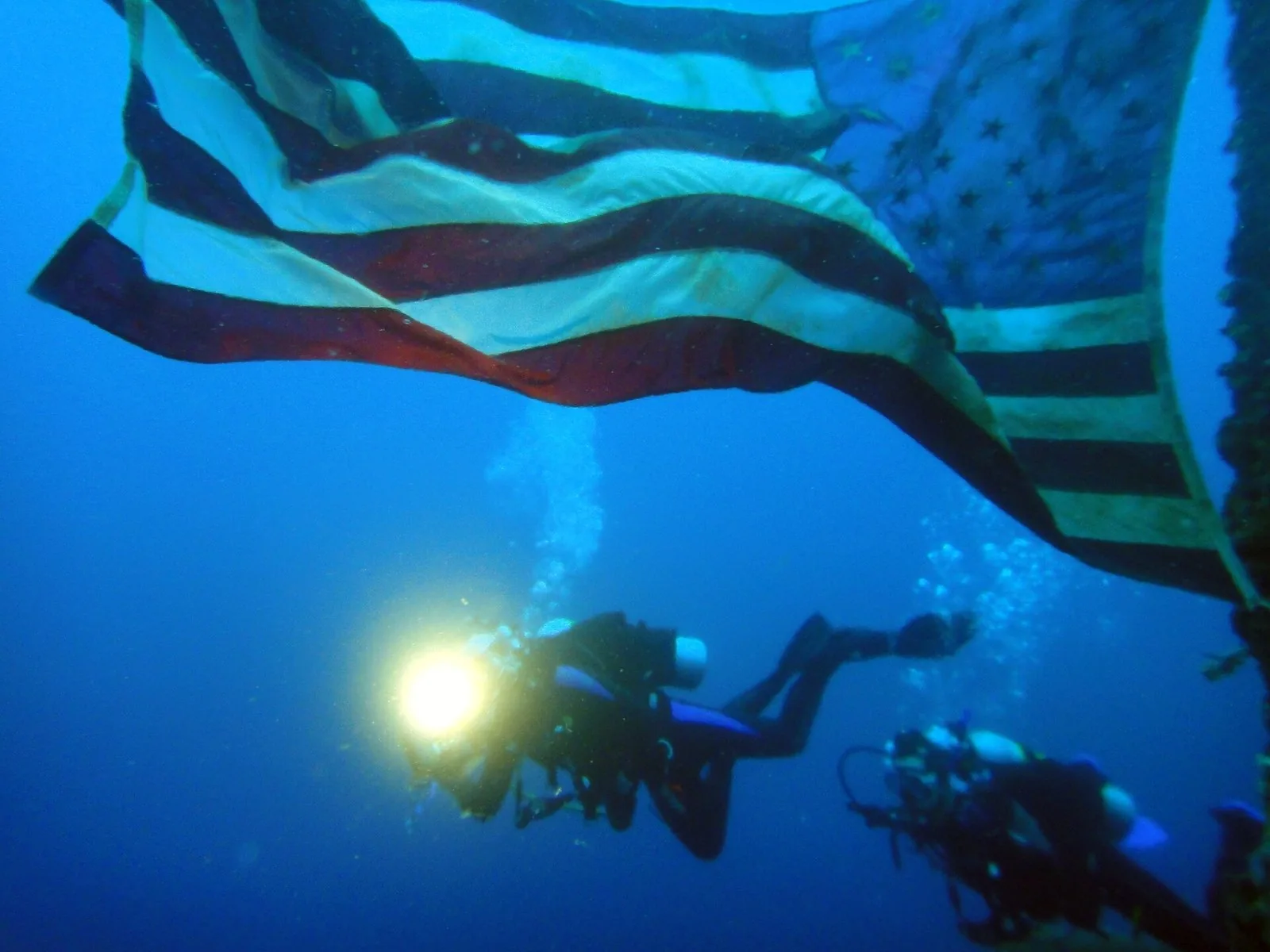
Six miles off Key Largo, a 510-foot Navy landing ship sits upright on the sand in about 130 feet of water, where Hurricane Dennis rolled it in 2005 after three years on its side. A few miles away, a 9-foot bronze statue of Christ stands in less than 25 feet of water, arms raised toward the dive boats. That spread, from easy shallow reef to wrecks that call for an Advanced card, is what Florida Keys diving does better than anywhere else in the continental US. It’s also the easiest reef trip an American can take: no passport, no long-haul flight, and a two-tank boat trip for about $100.
Short answer: Base in Key Largo for the most reefs and the big wrecks (Spiegel Grove, Duane), Islamorada or Marathon for quieter boats, the Lower Keys for Looe Key, and Key West for the Vandenberg. Two-tank boat trips cost $85-$115 (checked September 2026), and May through September brings the warmest water.
Prices, rules and seasons on this page were checked on September 23-24, 2026 against the agencies’ and operators’ own websites, including NOAA’s sanctuary pages, the National Park Service, Florida statutes and each dive shop’s price page. We name shops so you can compare like with like; none of them paid to appear here.
On this page: At a glance · Is it worth it? · Reef health · Key by Key · Best reefs and wrecks · Marine life · Best time to go · Sanctuary rules and lobster · Getting there · Where to stay · Dive shops and prices · Budget · Courses · Safety · Non-divers · Sample itinerary · FAQ
Florida Keys diving at a glance
| Question | Answer (checked September 2026) |
|---|---|
| Skill level | Beginner-friendly reefs in 15-35 ft; the Spiegel Grove, Duane, Eagle, Thunderbolt and Vandenberg are Advanced dives |
| Best months | May-September for the warmest water and, on average, the best visibility; December-February brings cooler water and cold fronts. Hurricane season runs June 1-November 30. |
| Water temperature | 72.5°F (22.5°C) in January to 88.7°F (31.5°C) in August at Key West (NOAA monthly averages) |
| Visibility | Best on average in summer; variable after winter cold fronts |
| Depth range | 5-15 ft on Pennekamp’s inner snorkel reefs; 15-60 ft on most reef trips; 130-150 ft to the sand at the Spiegel Grove and Vandenberg |
| Signature marine life | Goliath groupers on the wrecks, spiny lobster, green morays, sea turtles, nurse sharks, spotted eagle rays, schools of grunts and snapper |
| Two-tank boat trip | $85-$115; full rental gear about $35-$40 a day |
| Getting there | Fly to Miami: about 1.5 hours’ drive to Key Largo and 4 hours to Key West. Key West’s airport has flights on six airlines. |
| Entry rules | Domestic trip: no passport. A dive flag is required on every dive, and lobster and sanctuary zone rules apply. |
| Nearest chamber | Mariners Hospital, Tavernier (Upper Keys), the only hospital-based hyperbaric chamber in the Keys |
Is Florida Keys diving worth it? Who it suits, and who should go elsewhere
For most American divers, yes. The Keys sit inside the Florida Keys National Marine Sanctuary, which protects 4,539 square miles from south of Miami to the Dry Tortugas and the only coral barrier reef in the continental United States. More than 700,000 divers and snorkelers get in the water there every year. You get a long string of shallow reefs, the best artificial-reef wrecks in the country, and a chain of towns connected by one road, so you can dive Key Largo on Monday and Key West on Friday without packing more than a car. For the rest of the state, from Blue Heron Bridge to the Panhandle wrecks, see our guide to scuba diving Florida.
It suits new divers (the reefs are shallow and the boats run like clockwork), wreck divers (few places anywhere have this many big ships within a morning’s reach), families (non-divers have plenty to do) and anyone who wants a dive trip without a passport or a connection. It suits a long weekend, too: from Miami airport you can be on a Key Largo boat the morning after you land.
It’s the wrong trip in a few cases:
- You want Caribbean coral. Heat, disease and a brutal 2023 marine heat wave have left the reef with far less living hard coral than the Caribbean’s healthier reefs. Sponges, sea fans and fish carry the show.
- You want 100-foot visibility every day. Visibility is good but changeable, especially after winter cold fronts.
- You want walls. The Keys are a shelf reef. For drop-offs, Cozumel, Grand Cayman or Bonaire do it better.
- You want warm water in January. At about 72°F (22°C), winter water calls for a 5 mm suit, and fronts can blow out several days in a row.
Our take: Come for the wrecks and the convenience, not for pristine coral. With an Advanced card and nitrox, the Spiegel Grove, Duane and Vandenberg make the Keys one of the best wreck-diving trips you can take without a passport.
How healthy is the Florida Keys reef?
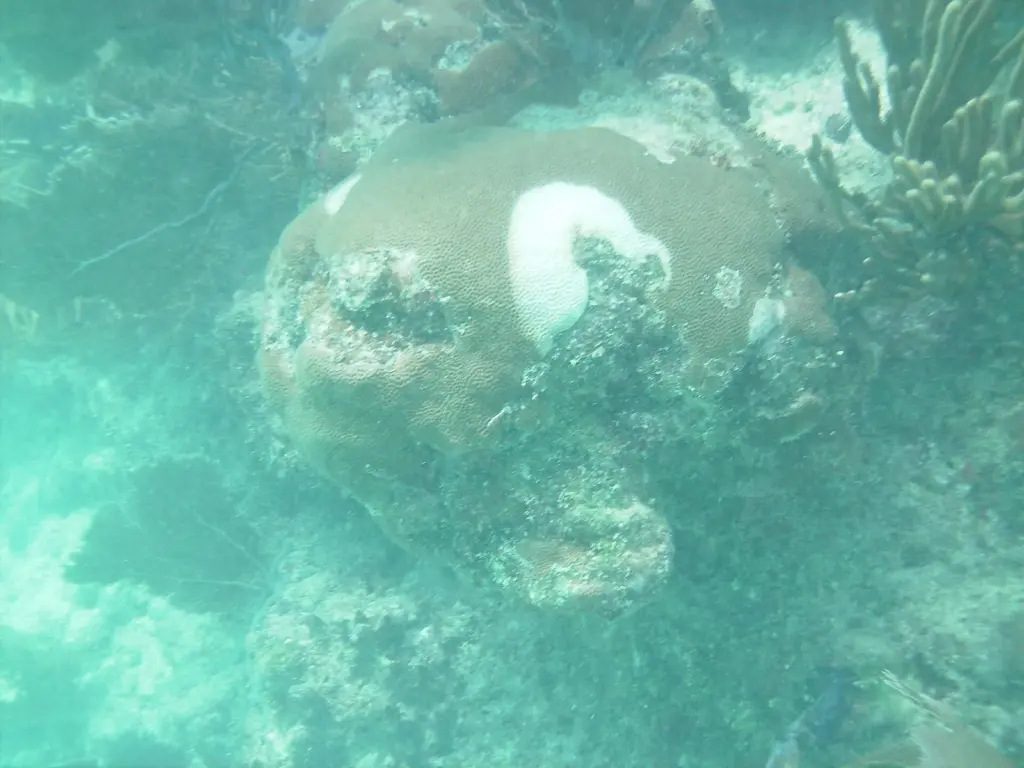
Honestly, it’s been a hard decade. Stony coral tissue loss disease was first reported in Florida in 2014 and hits more than 30 coral species, especially brain, pillar and star corals. Then came 2023. NOAA recorded higher-than-average water temperatures from February that year, the longest-lasting marine heat wave in the region since 1991, and in July the water ran about 2 to 4.5°F above the typical 82.4-86°F for the season. Corals bleached across the reef tract. At the coral nurseries run by NOAA’s restoration partners at Looe Key and Sombrero Reef, some partners reported 100% mortality, with tissue damage showing the corals died almost immediately from the heat.
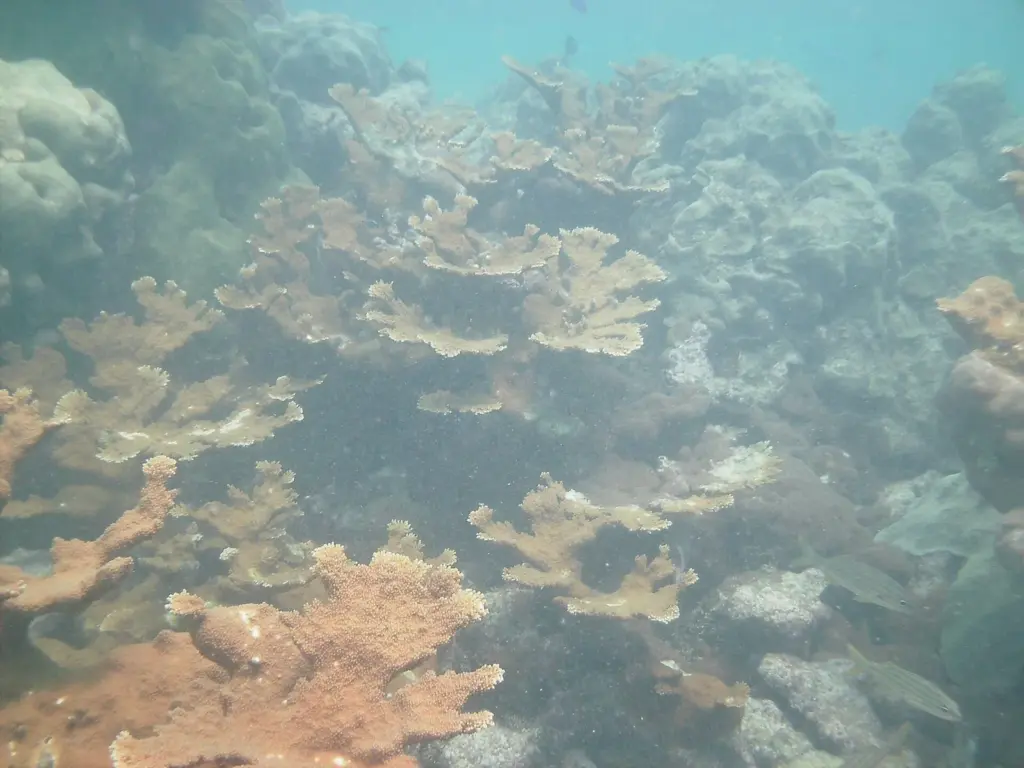
The fight back is serious. In December 2019 NOAA launched a mission to restore seven reefs (Carysfort, Horseshoe, Cheeca Rocks, Newfound Harbor, Eastern Dry Rocks, Sombrero and Looe Key), aiming for 25% average coral cover by the end of its second phase. Divers can volunteer through NOAA’s reef guardian program, and some shops run restoration and clean-up dives.
What does that mean underwater? Expect a reef where soft corals, sea fans, sponges and fish do most of the work, with living hard coral in patches and restored coral outplants at the seven restoration reefs. The fish life is still busy: grunts, snapper, parrotfish, angelfish, morays and the occasional goliath grouper. And the wrecks, which don’t bleach, are in excellent shape.
Upper Keys, Middle Keys, Lower Keys: which Key is best for diving?
The Keys run about 113 miles along the Overseas Highway, and the diving changes as you go. Mile markers count down from 127, just south of Florida City, to 0 in Key West, and every address in the Keys uses them. Here’s how the bases compare, with drive times from Miami International Airport in free-flowing traffic.
| Base | From Miami airport | Signature dives | Two-tank from | Best for |
|---|---|---|---|---|
| Key Largo (Upper Keys) | 61 mi, about 1.5 h | Molasses, French and Carysfort reefs; Christ of the Abyss; Spiegel Grove, Duane, Bibb, Benwood | $99 | First trips, the most shops, big wrecks |
| Islamorada (Upper Keys) | 77 mi, about 2 h | Alligator Reef, Cheeca Rocks, the Eagle wreck | $98 on a package | Guided dives, smaller boats |
| Marathon (Middle Keys) | 110 mi, about 2.75 h | Sombrero Reef, the Thunderbolt wreck | $99 | Quiet boats, a central base |
| Lower Keys (Big Pine, Ramrod) | 132 mi, about 3.3 h | Looe Key reef, the Adolphus Busch wreck | $99.99 | The best reef in the Lower Keys, few crowds |
| Key West | 158 mi, about 4 h (or fly in) | The Vandenberg, the Cayman Salvager, shallow reefs | $85 | Nightlife, and the biggest wreck in the Keys |
| Dry Tortugas | 70 mi west of Key West by boat or seaplane | The Windjammer wreck, Fort Jefferson | Charter only for scuba | Remote snorkeling; divers need a charter |
Key Largo
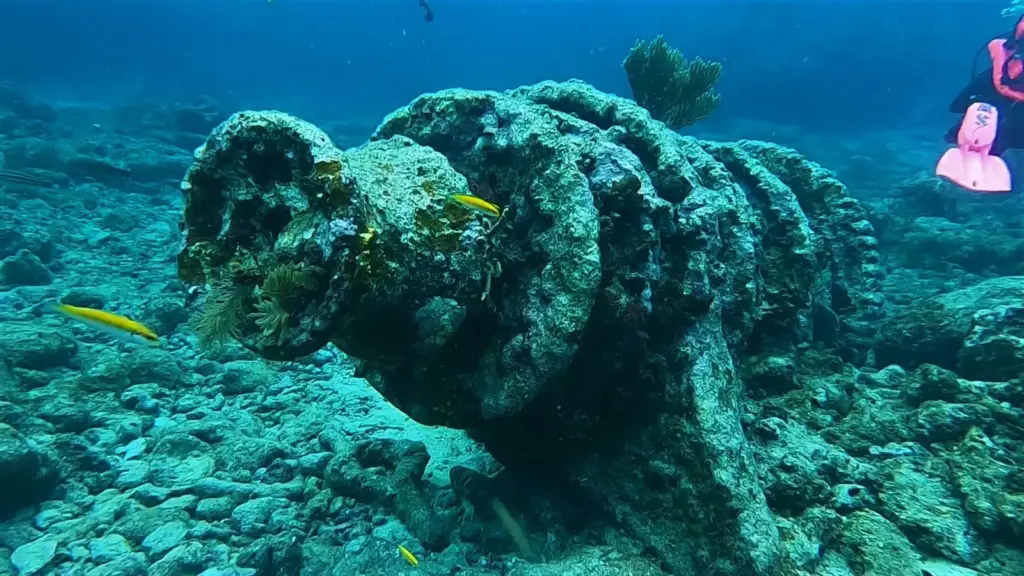
Key Largo scuba diving is the default for good reason: it has the most shops, the most sites and the shortest runs to the famous wrecks. John Pennekamp Coral Reef State Park, the first undersea park in the United States (1959), covers about 70 square nautical miles, with reefs 3 to 8 miles offshore; the park’s entrance fee is $8 per vehicle plus a $0.50 per person county surcharge. Molasses Reef, about 6.5 miles out, is on nearly every Key Largo shop’s schedule, and Key Largo Dry Rocks holds the Christ of the Abyss statue. Choosing among the Key Largo dive shops mostly comes down to boat size, whether a guide is included and which days they run the wrecks.
Islamorada
Half an hour down the road, Islamorada scuba diving is calmer and more guided. Key Dives runs its trips with a guide for every six divers, with deep-reef dives in 35-60 ft in the morning, shallow reefs in 15-35 ft in the afternoon and the Eagle on Fridays; Islamorada Dive Center puts a PADI instructor in the water on every charter. Alligator Reef and Cheeca Rocks, one of NOAA’s seven restoration reefs, are the local reefs, and the Eagle, a 287-foot freighter in 110 ft, is the wreck.
Marathon
Scuba diving in Marathon is the Keys’ quiet middle. Sombrero Reef, marked by its old lighthouse, is another restoration reef, and the Thunderbolt, a 189-foot former Army minelayer, sits in 120 ft four miles south of town. Captain Hook’s runs two-reef-dive trips for $99 with a complimentary divemaster, a good deal next to shops that charge extra for a guide. Marathon is also the most central base: under an hour to Islamorada and about 35 minutes to the Looe Key boats.
The Lower Keys and Looe Key
West of the Seven Mile Bridge, Looe Key Reef is the reason divers stop in the Lower Keys. It became a national marine sanctuary in its own right in 1981, protecting 5.32 square nautical miles of spur-and-groove reef off Big Pine Key, and it’s named for the British frigate HMS Looe, which ran aground there in 1744. Looe Key Reef Resort, at Mile Marker 27.5, has been diving it since 1978; its dives are unguided unless you pay for a guide, and it says it’s the only boat running the Adolphus Busch, a 210-foot wreck nearby.
Key West
Key West scuba diving is built around one ship: the USNS General Hoyt S. Vandenberg, a roughly 520-foot former military ship sunk in 2009 about 7 miles south of the airport. Around it are shallow reefs, smaller wrecks such as the Cayman Salvager, and a town with better nightlife than the rest of the Keys combined. Key Largo vs Key West diving comes down to this: Key Largo has more reef and more wrecks within easy reach; Key West has the Vandenberg and everything to do after you dry off.
The Dry Tortugas
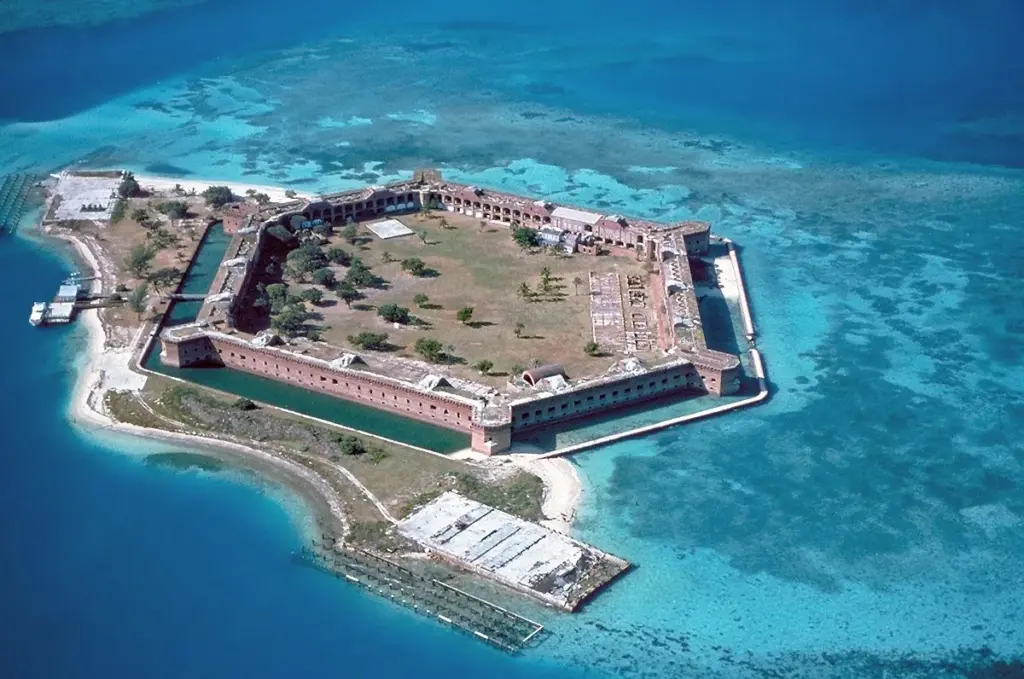
Dry Tortugas National Park lies about 70 miles west of Key West: 100 square miles, mostly open water, with seven small islands and Fort Jefferson. The entrance fee is $15 a person, valid for seven days (15 and under free). Scuba takes planning, because, as the National Park Service explains, the park ferry and seaplane can’t carry tanks, so divers need their own boat or a charter. Ferry and seaplane visitors can snorkel off Garden Key. The park’s best-known dive, the Windjammer (the iron-hulled Avanti, wrecked on Loggerhead Reef in 1901), lies in 0-20 ft; in September 2026 the National Park Service was warning that its mooring ball was damaged and off-station, so call the rangers on VHF 16 before you go.
Best diving in the Florida Keys: the reefs and wrecks worth your air
The reefs
| Reef | Key | Why go | Good for |
|---|---|---|---|
| Molasses Reef | Key Largo | Classic spur-and-groove, the old winch, the Duane and Bibb close by | All levels |
| Key Largo Dry Rocks | Key Largo | The Christ of the Abyss statue in under 25 ft | All levels and snorkelers |
| Carysfort Reef | Key Largo | Lighthouse reef and NOAA restoration site | All levels |
| Alligator Reef and Cheeca Rocks | Islamorada | Lighthouse reef; Cheeca Rocks is a restoration reef | All levels |
| Sombrero Reef | Marathon | Lighthouse reef and restoration site | All levels |
| Looe Key | Lower Keys | The Lower Keys’ best spur-and-groove reef | All levels |
The Christ of the Abyss deserves a word. The 9-foot bronze statue was placed at Key Largo Dry Rocks in 1965; it weighs 4,000 pounds, stands on a 20-ton concrete base and is a replica of Guido Galletti’s 1954 original near Portofino, Italy. It sits in less than 25 feet of water about five miles off Key Largo, so snorkelers see it as well as divers do.
The wrecks
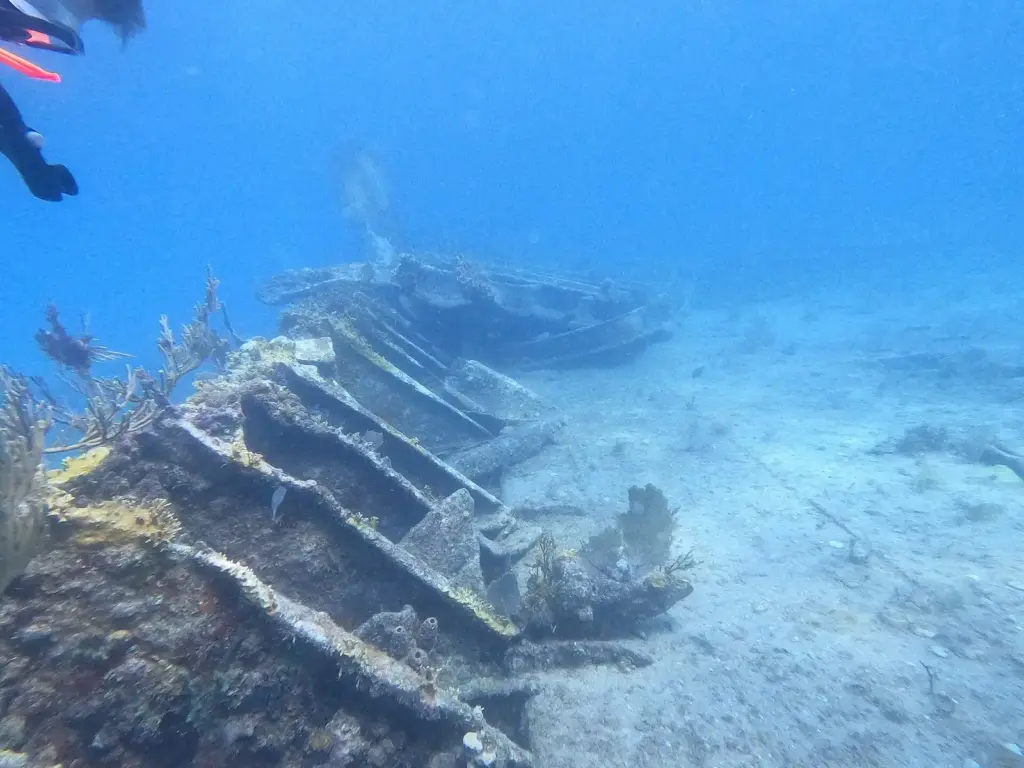
Florida Keys wreck diving is where the trip earns its reputation. NOAA’s Shipwreck Trail links nine historic wrecks (the Adelaide Baker, Amesbury, Benwood, City of Washington, Duane, Eagle, North America, San Pedro and Thunderbolt), from easy shallow dives to 100-plus feet where swift currents may occur, and the modern artificial reefs add the biggest ships of all.
| Wreck | Key | Depth | Sunk | Level |
|---|---|---|---|---|
| City of Washington (300-ft steamship) | Key Largo | 25 ft | 1917 | Open Water |
| Benwood (360-ft freighter) | Key Largo | 25-45 ft | 1942 | Open Water |
| Duane (327-ft Coast Guard cutter) | Key Largo | 120 ft to the sand; mast at about 60 ft | 1987 | Advanced |
| Spiegel Grove (510-ft landing ship) | Key Largo | About 70-130 ft; best parts 70-90 ft | 2002 | Advanced |
| Eagle (287-ft freighter) | Islamorada | 110 ft | 1985 | Advanced |
| Thunderbolt (189-ft minelayer) | Marathon | 120 ft; superstructure at about 75 ft | 1986 | Advanced |
| Vandenberg (about 520-ft former military ship) | Key West | About 145-150 ft to the sand; deck 95-100 ft; top 40-45 ft | 2009 | Advanced plus a recent deep dive |
| Windjammer (Avanti, iron three-master) | Dry Tortugas | 0-20 ft | 1901 | All levels |
A few notes on the big ones. The Spiegel Grove sank early and upside down on May 17, 2002, was rolled onto its side a few weeks later, and was turned upright by Hurricane Dennis in July 2005; it’s big enough to need several dives. The Duane and its sister cutter, the Bibb, were both sunk near Molasses Reef in 1987; the Duane sits upright in 120 ft. The Eagle was broken in half by Hurricane Georges in 1998, which only made it more interesting. The Benwood, which sank after a collision in 1942, and the City of Washington, which was in Havana Harbor when the USS Maine exploded in 1898, are the easy wrecks for Open Water divers.
The Vandenberg is the showpiece. It was sunk as an artificial reef on May 27, 2009, after $8.6 million in funding, and it’s described as the second-largest vessel ever sunk on purpose as a reef. Captain Hook’s lists the sand at 145 ft and the deck at 95-100 ft, and requires Advanced certification plus a recent deep dive.
Marine life: what you’ll see
The Keys’ big-animal highlight is the Atlantic goliath grouper, which can reach 800 pounds and 8 feet and has been protected from harvest in federal waters since 1990; the wrecks are the best places to meet one. Green morays hide in almost every wreck and ledge, nurse sharks rest under overhangs, and spotted eagle rays cruise the sand channels. Sea turtles are common on the reefs, and spiny lobsters wave their antennae from every crevice, at least until lobster season opens. Big schools of grunts, snapper and goatfish fill the shallows, which makes even a so-so coral day colorful.
Summer brings calmer seas and, according to Captain Hook’s seasonal guide, the best average visibility, while winter cold fronts can stir things up. There’s no single “season” for big animals the way there is at whale-shark or manta sites; what changes through the year is mostly the water temperature and the weather.
Best time to dive the Florida Keys, month by month
You can dive the Keys all year. The trade-off is warm water and hurricane risk in summer and fall against cooler water and wind in winter. The Atlantic hurricane season runs June 1 to November 30 and, according to the National Hurricane Center, peaks on September 10, with most activity between mid-August and mid-October. If you book then, buy travel insurance and keep your plans flexible.
| Month | Water at Key West (NOAA average) | Conditions | Notes |
|---|---|---|---|
| January | 72.5°F (22.5°C) | Cold fronts; visibility variable | 5 mm suit; high season for snowbirds |
| February | 73.8°F (23.2°C) | Cold fronts | Busy around Presidents’ Day |
| March | 75.9°F (24.4°C) | Warming; windy days | Spring break crowds; lobster season ends March 31 |
| April | 78.9°F (26.1°C) | Settling down | Good shoulder month |
| May | 83.1°F (28.4°C) | Warm and often calm | One of the best months |
| June | 86.3°F (30.2°C) | Summer calm; hurricane season opens | Best average visibility |
| July | 87.6°F (30.9°C) | Hot and calm | Lobster mini-season (July 29-30 in 2026) packs the water |
| August | 88.7°F (31.5°C) | Warmest water; storm risk rising | Regular lobster season opens (August 6 in 2026) |
| September | 87.2°F (30.7°C) | Peak hurricane risk | Quiet boats if the weather cooperates |
| October | 83.7°F (28.7°C) | Storm risk easing | Warm water, fewer crowds |
| November | 78.3°F (25.7°C) | Fronts begin; hurricane season ends November 30 | 3-5 mm suit |
| December | 75.3°F (24.1°C) | Fronts | Holiday weeks are busy |
For suits, Captain Hook’s suggests a 3-5 mm full suit when the water is 74-77°F and a rash guard or 1-2 mm top at 82-86°F. The best time to dive the Florida Keys for most people is May, June or October: warm water, calmer seas and fewer crowds than the winter high season.
Florida Keys National Marine Sanctuary rules, dive flags and lobster season
The Florida Keys National Marine Sanctuary was designated on November 16, 1990, and a final rule published on January 17, 2025, expanded it about 20%, from 3,800 to 4,539 square miles, added 37 marine zones and removed five older ones, including the Looe Key Conservation Area and the Rock Key and French Reef Sanctuary Preservation Areas. The sanctuary regulations that matter to divers are simple:
- Fly a dive flag. Diving or snorkeling without one is prohibited sanctuary-wide. Under Florida law, a flag on a boat must be at least 20 x 24 inches and one on a buoy at least 12 x 12 inches; divers must try to stay within 300 ft of it in open water (100 ft in rivers, inlets and channels), and boats must stay 300 ft away or slow to idle speed.
- Hands off. Removing, injuring or possessing coral is prohibited everywhere, and so is feeding or attracting fish, sharks included.
- Know the zones. In Sanctuary Preservation Areas, marked by yellow buoys, you can’t fish or take anything, and you can’t touch or stand on coral, living or dead. New anchoring bans in some zones don’t take effect until 2027, and boats use mooring buoys where they exist.
- Sunscreen is your call. Key West’s ban on oxybenzone and octinoxate sunscreens never took effect: a 2020 state law pre-empted it. Mineral sunscreen is still the reef-friendly choice.
Lobster season rules for divers
Lobster mini-season, the two-day sport season, always falls on the last consecutive Wednesday and Thursday of July (July 29-30 in 2026), and the regular season runs August 6, 2026, to March 31, 2027. In Monroe County the limit is six lobsters per person per day, half the limit north of the county line, and the carapace must be longer than three inches; you need a saltwater fishing license and a lobster permit. During the sport season, night diving is prohibited, and in both seasons you can’t dive or snorkel within 300 ft of residential or commercial shoreline, including canals and marinas, under local rules whose dates vary by town. Sanctuary Preservation Areas, Ecological Reserves and Dry Tortugas National Park are closed to harvest all year, and John Pennekamp is off-limits during mini-season. If you’re not hunting, avoid mini-season: the water is crowded and the boats are booked solid.
Getting to the Florida Keys
Most divers fly into Miami (MIA) or Fort Lauderdale (FLL) and drive. Key West International Airport (EYW) is served by Allegiant, American, Breeze, Delta, JetBlue and United, which makes a fly-in, fly-out Key West trip easy. Marathon’s airport has no commercial service, only charters and private planes. Driving times, from routing in free-flowing traffic:
| Drive | Distance | Time |
|---|---|---|
| Miami airport to Key Largo (MM 100) | 61 mi | About 1.5 h |
| Miami airport to Islamorada (MM 82) | 77 mi | About 2 h |
| Miami airport to Marathon (MM 50) | 110 mi | About 2.75 h |
| Miami airport to Ramrod Key (MM 27.5) | 132 mi | About 3.3 h |
| Miami airport to Key West | 158 mi | About 4 h |
| Fort Lauderdale airport to Key Largo | 87 mi | About 2 h |
| Key Largo to Key West | 97 mi | About 2.5 h |
| Orlando to Key Largo | 295 mi | Five hours or more with a stop |
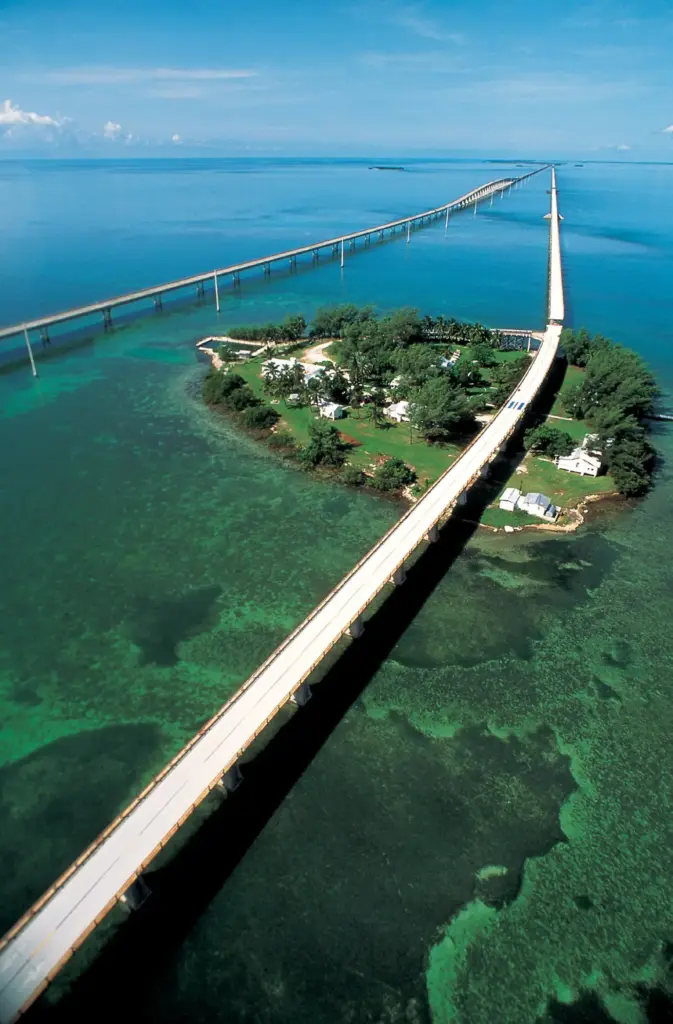
The Overseas Highway is 113 miles long with 42 bridges, including the Seven Mile Bridge between Marathon and the Lower Keys. It’s mostly two lanes, so weekend and holiday traffic adds time. There’s no passport or visa involved: it’s a domestic trip, and a passport works as your ID at TSA if you don’t have a REAL ID license. One perk of driving: the highway stays near sea level, so the drive back to Miami after your last dive is fine. The flight home is the part that needs a surface interval.
Where to stay: Florida Keys dive resorts and hotels
We don’t quote nightly rates, which swing hard between winter high season and late summer, but the tiers are clear.
- Key Largo: older motels and small inns along the highway, many near the shops on the bay or ocean side, plus a few resort hotels. Some dive shops sell dive-and-stay packages with partner hotels.
- Islamorada: the Keys’ upscale strip, with resorts and fishing lodges.
- Marathon: family resorts, condos and rental homes, often with docks; good value for longer stays.
- Lower Keys: quiet lodges and rental homes; Looe Key Reef Resort at Mile Marker 27.5 pairs rooms with its own dive shop.
- Key West: guesthouses, boutique hotels and big resorts, the most expensive stays in the Keys.
If you’re searching for all-inclusive dive resorts in the Florida Keys, know that the Caribbean model (room, meals and boat dives in one price) is rare here. The usual Keys package is a hotel plus a set number of boat trips, and you eat out. That’s no hardship: the restaurants are part of the trip.
Florida Keys dive shops: prices, guides and tipping
The biggest difference between Florida Keys dive shops isn’t price, which clusters around $100 for two tanks, but whether a guide comes in the water with you. Some shops include one, some make it optional and free, and some charge extra. Here’s what we found on the shops’ own price pages.
| Shop (checked September 2026) | Key | Two-tank trip | Guide | Notes |
|---|---|---|---|---|
| Rainbow Reef Dive Center | Key Largo | $99; 3 trips $270, 5 trips $425 | Free on request | Full rental $35; nitrox $12 a tank or $20 for two |
| Sea Dwellers Dive Center | Key Largo | $110 (less on packages) | Not stated | Tanks and weights included; 65 minutes at each site |
| Coral Reef Park Company (Pennekamp) | Key Largo | $105, gear extra | $120, plus $70 per extra diver | The state park’s concession |
| Key Largo Scuba Diving | Key Largo | From $100 (Molasses Reef) | Not stated | Tanks, weights and briefings; about 4 hours |
| Key Dives | Islamorada | $98-$103 on packages | Included, 1 guide per 6 divers | Eagle wreck on Fridays |
| Islamorada Dive Center | Islamorada | From $115 | Included (PADI instructor) | Full rental $40; wetsuit $20 |
| Captain Hook’s | Marathon | $99 | Included (divemaster) | Thunderbolt wreck trips too |
| Looe Key Reef Resort | Ramrod Key | $99.99 reef; $109.99 wreck or night | $65, plus $40 per extra diver | Dives are unguided by default |
| Lost Reef Adventures | Key West | From $85; Vandenberg $85 trip only, $135 with gear | From $75 | About 4 hours |
| Captain Hook’s | Key West | Vandenberg from $95; Cayman Salvager and reef from $109 | Varies by trip | Vandenberg needs Advanced and a recent deep dive |
Nearly every trip includes tanks and weights, and you rent the rest. On tipping, standard US practice applies: tip the crew at the end of the trip, and tip more when a divemaster guided you. Many divers leave 10-20% of the trip price.
What a week of Florida Keys diving costs
Here’s the dive portion of a seven-night trip for one diver who rents gear, with prices checked in September 2026. Add your flight, hotel and rental car, which vary more with the season than anything below.
| Item | Budget plan: Key Largo all week | Road-trip plan: Key Largo, Looe Key, Key West |
|---|---|---|
| Boat dives | 5 two-tank trips, Rainbow Reef package: $425 | 3 trips at Rainbow Reef ($270), Looe Key reef ($99.99), Vandenberg with Captain Hook’s (from $95): about $465 |
| Rental gear | $35 a day x 5 = $175 | About $175-$200 |
| Nitrox (optional) | $20 per two-tank trip = $100 | About $100 |
| Guides | Free at Rainbow Reef on request | Add $65 at Looe Key if you want one |
| Pennekamp park entry | $8 per vehicle plus $0.50 per person | Same |
| Crew tips (at about 15%) | About $65 | About $70 |
| Dive total | About $775 | About $820-$910 |
Bring your own gear and the budget plan drops to about $600. Divers with their own gear who skip nitrox can dive five days in Key Largo for under $500 including tips.
Our take: For value, base in Key Largo and buy a package. For variety, split the week: three days in Key Largo, a day at Looe Key and a Vandenberg day in Key West, driving the Overseas Highway between them.
Learning to dive in the Keys, and the experience you need
Scuba diving in the Florida Keys for beginners is about as easy as it gets: calm, shallow reefs, short boat rides and plenty of shops that teach. Discover Scuba programs, a pool session followed by two guided reef dives, cost $247.50 to $275 (Key Largo Scuba Diving from $247.50, Sea Dwellers and Coral Reef Park $250, Islamorada Dive Center $250 per person for two or more, Southpoint Divers in Key West $259).
Open Water courses run from $499 at Key Largo Scuba Diving to $540 at Coral Reef Park, $555 on set dates at Islamorada Dive Center, $595 at Key Dives and $700 at Sea Dwellers including eLearning ($575 if you’ve already bought it). Most take two to four days. If you’d rather keep vacation days for diving, finish the classroom and pool work at home and do your four open water dives here as referral dives; our guide to scuba certification explains how that works across PADI, SSI and NAUI.
For the big wrecks, get Advanced first. The Spiegel Grove, Duane, Eagle and Thunderbolt all bottom out past the 60 ft (18 m) Open Water limit, and Captain Hook’s requires Advanced plus a recent deep dive for the Vandenberg. Sea Dwellers teaches Advanced Open Water for $585. Nitrox certification is worth adding for the longer bottom times on wrecks in the 70-100 ft range.
Safety: currents, boats, storms and the nearest chamber
The reefs are gentle, but the deep wrecks aren’t. NOAA warns that swift currents may occur on the deeper Shipwreck Trail sites, and the Gulf Stream runs close to the outer reef, so expect some wreck dives to start with a hand-over-hand descent on a mooring line. Stay with the line, watch your gas and turn the dive early if the current picks up.
Boat traffic is the other hazard. Keys waters are busy with fishing boats and rental skiffs, which is why the dive-flag law is strict: stay within 300 ft of your flag in open water, and surface next to your boat or the mooring line rather than out in the channel. Carry a surface marker buoy.
For emergencies, Mariners Hospital in Tavernier has the only hospital-based hyperbaric chamber in the Keys (call ahead to confirm it is running), and HCA Florida Mercy Hospital in Miami, which has two multiplace chambers, says it serves as Divers Alert Network’s regional coordinator for Florida and the Caribbean. Carry dive accident insurance: a helicopter ride from Key West to Miami isn’t cheap. And plan the trip home around the standard flying-after-diving guideline of at least 18 hours after multiple days of diving; a last morning in Key West without a dive is a fine way to meet it.
For non-divers in your group
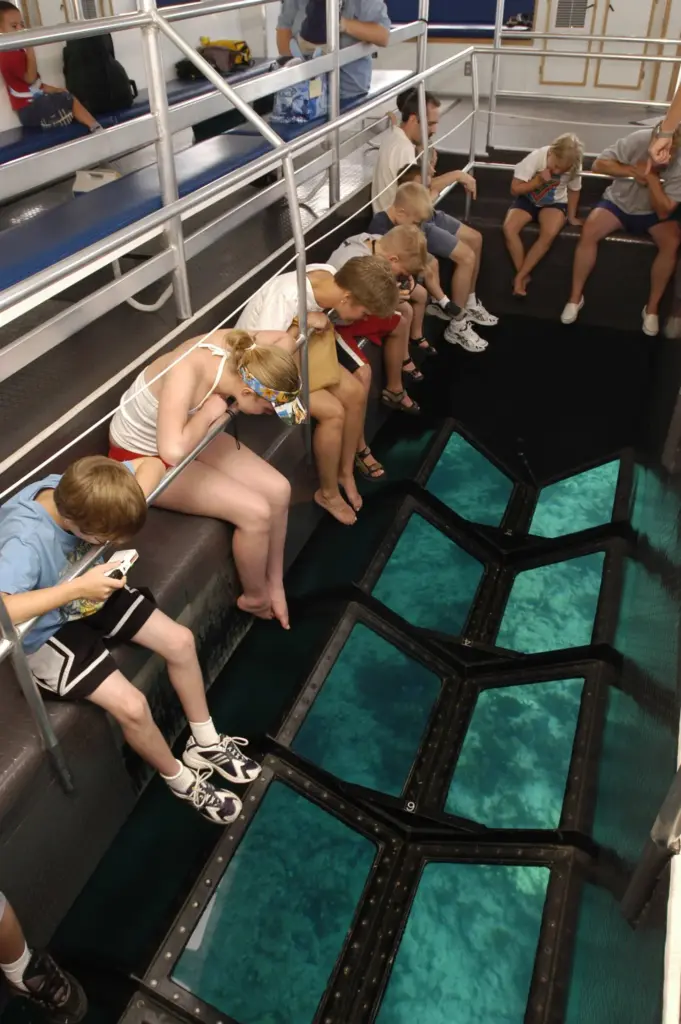
Non-divers won’t be bored. John Pennekamp’s glass-bottom boat runs to Molasses Reef about 6.5 miles out, over coral in 10-30 ft, and its snorkel tours visit inner reefs in 5-15 ft. The Christ of the Abyss is shallow enough for snorkelers on a calm day. Farther down, the Dry Tortugas ferry and seaplane make a long but spectacular day trip to Fort Jefferson, with snorkeling off Garden Key. And Key West has the sunset crowds at Mallory Square, the Hemingway House and more bars than any one group can manage.
A sample 7-night Florida Keys dive road trip
- Day 1: fly into Miami and drive to Key Largo (61 miles, about 1.5 hours). Pick up rental gear if you need it.
- Day 2: two-tank reef trip to Molasses or French Reef to settle your weighting.
- Day 3: wreck day: the Spiegel Grove or Duane with an Advanced card, or the Benwood and City of Washington without one.
- Day 4: morning dive at Key Largo Dry Rocks and the Christ of the Abyss, then drive about two hours to Big Pine or Ramrod Key.
- Day 5: two tanks at Looe Key.
- Day 6: drive to Key West (about 25 miles) for a Vandenberg trip or a reef-and-Cayman-Salvager morning.
- Day 7: no diving: Key West on foot, or the Dry Tortugas ferry.
- Day 8: fly home from Key West, or drive back to Miami (about 4 hours).
With less time, a long weekend in Key Largo covers the best reefs and wrecks. With more, add Islamorada or Marathon, or charter a boat to the Dry Tortugas.
Frequently asked questions
Where is the best place to scuba dive in the Florida Keys?
Key Largo has the most dive sites, the most shops and the biggest wrecks close to shore, including the Spiegel Grove and the Duane, so it’s the best single base. Looe Key is the best reef in the Lower Keys, and Key West has the Vandenberg. On a week-long trip, many divers split their time between Key Largo and the Lower Keys or Key West.
Is Key Largo or Key West better for diving?
Key Largo is better for diving: more reefs, more wrecks within a short boat ride, more shops and lower prices on packages. Key West wins for nightlife and has one huge wreck, the Vandenberg, which needs Advanced certification. If diving is the priority, stay in Key Largo and visit Key West for a day or two at the end.
What is the best time of year to dive the Florida Keys?
May to September brings the warmest water, 83-89°F at Key West on NOAA’s averages, and the best average visibility, but June through November is hurricane season, peaking in September. May, June and October are the sweet spots. Winter water drops to about 72-75°F, and cold fronts can cancel boats.
How much does a two-tank dive cost in the Florida Keys?
Two-tank boat trips cost $85-$115 in September 2026: $99 at Rainbow Reef in Key Largo and Captain Hook’s in Marathon, $99.99 at Looe Key Reef Resort, from $115 at Islamorada Dive Center and from $85 with Lost Reef Adventures in Key West. Packages cut the price, and full rental gear adds about $35-$40 a day.
What are the best wreck dives in the Florida Keys?
The Spiegel Grove and the Duane off Key Largo, the Eagle off Islamorada, the Thunderbolt off Marathon and the Vandenberg off Key West are the headline wrecks, and all are Advanced dives between about 100 and 150 ft. For Open Water divers, the Benwood (25-45 ft) and the City of Washington (25 ft) off Key Largo are easy, fishy and shallow.
Can you scuba dive in the Dry Tortugas?
Yes, but not from the ferry or seaplane, which can’t carry scuba tanks. Divers need a private boat or a charter to Dry Tortugas National Park, about 70 miles west of Key West, and pay the $15 entrance fee. Ferry passengers can snorkel off Garden Key. The Windjammer wreck lies in 0-20 ft; check with rangers about its mooring first.
Are there all-inclusive dive resorts in the Florida Keys?
Not in the Caribbean sense. Keys packages usually combine a hotel with a set number of boat trips, and you eat at local restaurants. Some shops partner with nearby hotels, and a few resorts have their own dive shop, such as Looe Key Reef Resort at Mile Marker 27.5 in the Lower Keys. Compare the per-trip price inside any package with the shop’s regular rates.
Sources and verification
Everything on this page was checked on September 23-24, 2026 against the organizations listed below. The page is compiled from their published information and doesn’t claim first-hand visits.
- NOAA Florida Keys National Marine Sanctuary: regulations, Shipwreck Trail, coral bleaching FAQ and sanctuary history
- Federal Register: final Restoration Blueprint rule (January 17, 2025)
- NOAA Fisheries: restoring seven Florida Keys reefs and Atlantic goliath grouper
- NOAA NCEI coastal water temperature guide and National Hurricane Center climatology
- National Park Service: Dry Tortugas fees and snorkeling and diving
- Florida Statutes 327.331 (divers-down flags) and Florida Senate Bill 172 (2020)
- John Pennekamp Coral Reef State Park and its scuba tours
- Baptist Health: Mariners Hospital hyperbaric chamber and HCA Florida Mercy Hospital hyperbaric medicine
- Dive shop price pages: Rainbow Reef, Sea Dwellers, Key Largo Scuba Diving, Key Dives, Islamorada Dive Center, Captain Hook’s, Looe Key Reef Resort, Lost Reef Adventures and Southpoint Divers
Also checked: the Florida Keys tourism council’s pages on getting here, lobster season, the Spiegel Grove, the Vandenberg and the Christ of the Deep; Captain Hook’s dive-conditions guide; AGRRA on stony coral tissue loss disease; TSA’s REAL ID page; and OpenStreetMap-based routing for drive times.
Scuba Tourism Guide is an independent publication. It is not affiliated with any agency, park or dive operator named here, and no one paid to be included.
Photo credits
- Divers at the mast and flag of the USCGC Duane, Key Largo (featured image): photo by Matt Kieffer from London, United Kingdom, Wikimedia Commons (CC BY-SA 2.0)
- Bleaching brain coral, Looe Key (2010): photo by Jstuby, Wikimedia Commons (CC0)
- Winch at Molasses Reef, Key Largo (2021): photo by Pete Kontakos, Wikimedia Commons (CC BY-SA 2.0)
- Elkhorn coral, Looe Key (2010): photo by Jstuby at English Wikipedia, Wikimedia Commons (public domain)
- Fort Jefferson from the air, Dry Tortugas National Park (2005): photo by U.S. National Park Service, Wikimedia Commons (public domain)
- Wreck of the Benwood, Key Largo (2023): photo by Jstuby, Wikimedia Commons (CC0)
- Seven Mile Bridge, Florida Keys (2008): photo by Tinsley Advertising, Wikimedia Commons (Attribution)
- Glass-bottom boat tour, John Pennekamp Coral Reef State Park: photo by Unknown authorUnknown author or not provided, Wikimedia Commons (public domain)


