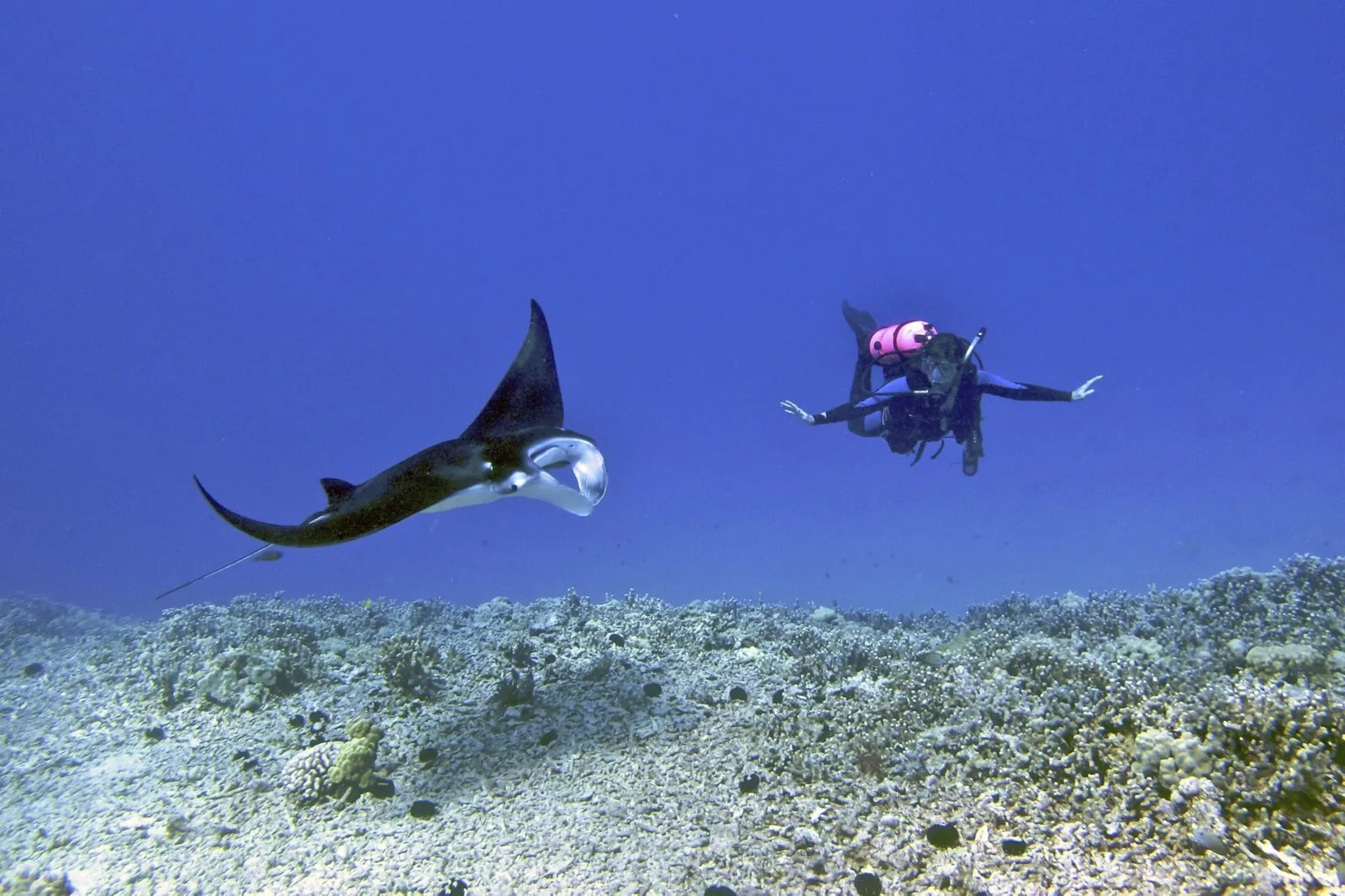
At dusk off the Kona coast, divers kneel on the sand in 30 to 35 feet of water, point their lights at the surface and wait. The lights pull in plankton, and the plankton pulls in reef manta rays, a species that can grow to 18 feet across, which loop through the beams a few feet above your head. It’s the dive most people have in mind when they look up scuba diving Hawaii, and it lives up to its reputation. It’s also one dive on one island. The rest of the state adds lava tubes and arches, a sunken volcanic crater, cavern “cathedrals” off Lanai, a string of wrecks off Waikiki and a privately owned island off Kauai that most visitors only ever see from a dive boat.
Short answer: Hawaii is worth diving for volcanic terrain, endemic reef fish, turtles and the Kona manta night dive, not for soft corals or bargains. Pick the Big Island for mantas and calm water, Maui for Molokini and the Lanai Cathedrals, Oahu for wrecks, and Kauai for lava tubes and Niihau. Two-tank boat dives cost $169-$239 (checked September 2026).
Prices, rules and seasons on this page were checked on September 23-24, 2026 against the agencies’ and operators’ own websites, NOAA and the State of Hawaii. We name shops so you can compare like with like; none of them paid to appear here.
On this page: At a glance · Is it good? · Which island · Best dives · Marine life · Best time to go · Rules · Getting there · Where to stay · Operators and prices · Budget · Getting certified · Safety · Non-divers · Sample itinerary · FAQ
Scuba diving Hawaii at a glance
| Question | Answer (checked September 2026) |
|---|---|
| Skill level | An Open Water card covers most boat and shore dives. The Molokini back wall, Niihau and the deeper Oahu wrecks are for experienced or Advanced divers. |
| Best months | Year-round. November-April for humpback whales; May-September for Niihau and calm north shores; the Kona mantas feed in every month. |
| Water temperature | About 75-78°F (24-26°C) in February and 80-83°F (27-28°C) in September at NOAA’s shore gauges |
| Visibility | Often quoted at 60-100 ft (18-30 m) on calm leeward days; less after heavy rain or big surf |
| Depth range | 15 ft (5 m) at shore sites such as Koloa Landing to 120 ft (37 m) at the Sea Tiger wreck; Molokini’s back wall drops past 200 ft (61 m) |
| Signature marine life | Reef manta rays, green sea turtles, endemic reef fish, whitetip reef sharks, spinner dolphins, Hawaiian monk seals, and humpback whales in winter |
| Two-tank boat dive | $169 (Waikiki) to $239 (Molokini); manta night dives $149-$250 |
| Getting there | West Coast nonstops take about 5-6 hours; New York or Boston nonstops to Honolulu about 10-11 hours |
| Entry rules | Domestic travel, so no passport. TSA has required a REAL ID or another accepted ID, such as a passport, since May 7, 2025. |
| Nearest chamber | Hyperbaric Treatment Center, Kuakini Medical Center, Honolulu: the state’s only multi-place chamber |
Is scuba diving in Hawaii good? Who it suits, and who should go elsewhere
Yes, with a caveat about what “good” means to you. The Hawaiian Islands are the tops of volcanoes rising out of deep Pacific water about 2,400 miles from California, and the diving follows from that geology. Instead of long barrier reefs you get black lava shaped into arches, tubes, ledges and pinnacles, hard corals growing over it, and deep blue water a short boat ride from shore. Kona divers talk about lava tubes the way Cozumel divers talk about drift dives.
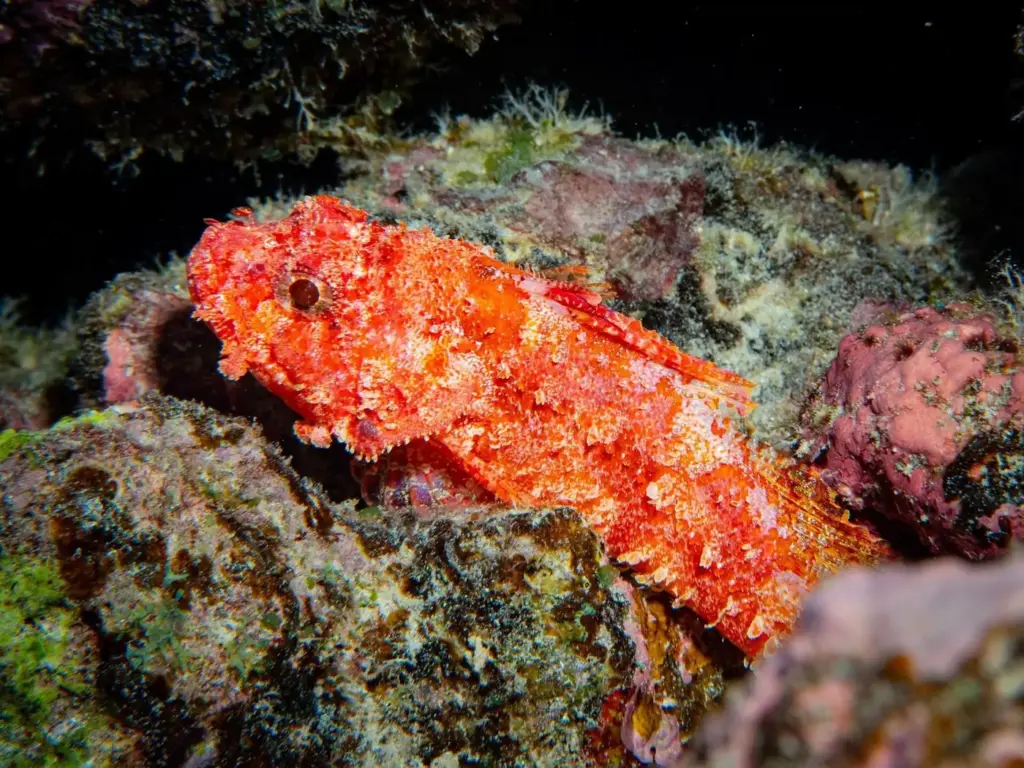
Isolation did the rest. Few fish larvae make the crossing to islands this remote, so a large share of Hawaii’s reef fish evolved here and live nowhere else. Look for saddle wrasse, Potter’s angelfish and milletseed butterflyfish, none of which you’ll log in the Caribbean. Green sea turtles turn up on a lot of dives, reef manta rays feed off Kona all year, and in winter the channels fill with humpback whales that you can often hear underwater even when you can’t see them.
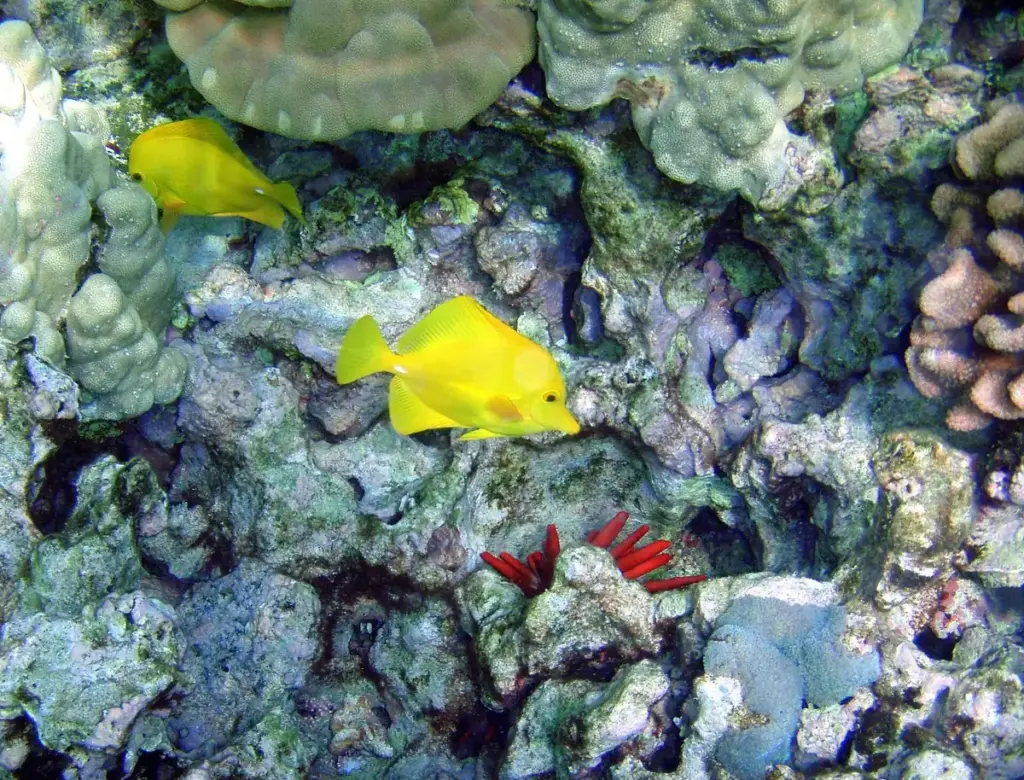
Hawaii also has practical advantages for Americans. It’s domestic travel, so there’s no passport, no currency exchange and no international roaming bill, and if something goes wrong you’re inside the US medical system. The water is warm by American standards: NOAA’s long-term shore readings run from the mid-70s °F (about 24-25°C) in February to the low 80s °F (about 27-28°C) in September.
Now the caveats. If your favorite dives are walls of soft corals and sea fans, Hawaii will look sparse, because the reefs here are mostly hard corals over lava. It’s also expensive. Two-tank boat dives run $169-$239 at the operators in this guide, before tax and tips, and lodging isn’t cheap on any island. Big sharks are mostly a snorkel encounter off Oahu rather than something you’ll meet on scuba every day. And the north shores of Oahu and Kauai take heavy surf in winter, so a December trip means diving the south- and west-facing coasts.
Our take: For a first Hawaii dive trip, go to the Big Island and base yourself around Kailua-Kona. You get the calmest water in the state, the manta night dive, blackwater diving and more than 30 lava sites within a short ride of the harbor. Add Maui for Molokini and Lanai if you have ten days or more.
Which Hawaiian island is best for diving?
Each island has its own personality underwater, and the right one depends on what you want to see and how much experience you have. Here’s the short version, with prices from the operators’ own sites.
| Island | Best for | Signature dives | Level | Two-tank price (Sept 2026) |
|---|---|---|---|---|
| Big Island (Kona) | Mantas, blackwater, calm mornings, lava formations | Manta night dive, blackwater, Kona coast lava tubes and arches | Beginner to advanced | $179-$200 |
| Maui | Molokini, Lanai day trips, turtles, winter whales | Molokini Crater and back wall; First and Second Cathedrals off Lanai | Beginner to advanced (back wall: 40+ dives) | $239 Molokini; $269-$289 Lanai |
| Oahu | Wrecks, shark snorkels, the easiest flights | YO-257 and San Pedro, Sea Tiger, Corsair, Mahi; North Shore sharks | Advanced for most wrecks | $169-$194 |
| Kauai | Lava tubes, turtles, Niihau | Sheraton Caverns, Koloa Landing, Niihau and Lehua | Beginner to advanced (Niihau: 30+ dives or Advanced) | $229-$239; Niihau $465-$475 |
Big Island (Kona): mantas, blackwater and calm mornings
The Big Island is the best single island for most divers. The Kona coast sits in the lee of Mauna Loa and Hualalai, so the water on this side is usually calm in the mornings, and Honokohau Harbor, where several charters leave from, is about 10 minutes from Kona’s airport. Kona Diving Company’s morning charter works the coast between Pawai Bay and Makako Bay, and Big Island Divers picks each day’s sites from more than 30 along the Kona coast. The scenery is lava: arches, tubes, finger reefs and boulder slopes, with turtles resting in the cracks and odd, well-camouflaged fish on every ledge. After dark, Kona pulls ahead of everywhere else in the state with the manta ray dive and blackwater diving several miles offshore.
The catch is altitude. Kona dive shops warn that driving north of Waikoloa or south of Captain Cook after diving takes you higher than is safe, so a dive trip here means staying on the Kona side, not in Hilo. Kona scuba diving can easily fill a week on its own, and it’s where most first-timers to Hawaii should start.
Maui: Molokini, Lanai day trips and winter whales
Maui is the island for Molokini, the crescent rim of a sunken volcanic crater off the south shore, and for boat trips across the channel to the Lanai Cathedrals. Days start early: Maui Diamond Sea Sports checks divers in at 6:15 a.m. and gets back around noon. From November through April, humpback whales winter in the channels between Maui, Lanai and Molokai, and you may hear them singing on your dives. Turtles are common on the south-shore reefs, which also make good second dives on the way back from Molokini.
West Maui is still rebuilding after the August 2023 Lahaina fire. The state reopened Lahaina Small Boat Harbor for limited commercial operations on December 15, 2025, dredging began on June 1, 2026, and the rebuild of the piers, wharves and harbor office is scheduled to run into 2028, subject to funding and permits (checked September 2026). Some Lanai trips leave from the Mala boat ramp in the meantime, so confirm your departure point when you book. For Maui scuba diving, the south shore is the base; Molokini and the Lanai crossing are the two trips to build around.
Oahu: wrecks, sharks and the easiest flights
Oahu is the easiest island to reach and the best one for wrecks. Boats from Kewalo Basin, between Waikiki and downtown Honolulu, run to a cluster of sunken ships and a plane that went down in 1946, most of them deeper than Open Water divers should go. On the North Shore, boats from Haleiwa run 3 or more miles offshore for shark snorkels with Galapagos and sandbar sharks, no scuba required. Winter surf shuts down most North Shore shore diving, and Hanauma Bay, the island’s best-known reef, is run as a reservation-only nature preserve that caters to snorkelers. Scuba diving on Oahu is the easiest to fit around a family vacation: the flights are the most frequent, and a two-tank wreck trip takes about four hours.
Kauai: lava tubes, turtles and Niihau
Kauai is quieter and more rugged, and most of its diving happens off the south shore around Poipu and Koloa. Koloa Landing is a 15-45 ft shore dive for all levels, and Sheraton Caverns is a 35-70 ft maze of lava tubes where turtles sleep under the ledges. Fathom Five’s list of boat sites along that coast adds Ice Box, Three Fingers, General Store, Fast Lanes, Beach House, Turtle Bluffs and Brennecke’s Ledge. The North Shore’s Tunnels reef is off the menu for commercial dives for now: Fathom Five says DLNR regulations have temporarily paused them there (checked September 2026). Kauai scuba diving’s big prize is Niihau, a long, seasonal boat trip for experienced divers, covered below.
Best scuba diving in Hawaii: the dives worth planning a trip around
These are the dives that justify the flight, with depths from the operators and state agencies that run or manage them. Treat them as typical ranges; your guide sets the actual profile on the day.
| Site | Island | Depth | Level | Why go |
|---|---|---|---|---|
| Manta night dive (Garden Eel Cove, Makako Bay) | Big Island | Divers settle at about 30-35 ft (9-11 m) | Open Water | Reef mantas feeding in the lights |
| Blackwater | Big Island | Tethered, usually no deeper than 50 ft (15 m), over deep ocean | Experienced (25 logged dives at Big Island Divers) | Larval fish and drifting animals from the deep |
| Molokini Crater, inside | Maui | Up to 90 ft (27 m) on the first dive | Open Water | Conservation district since 1977, clear water |
| Molokini back wall | Maui | Wall drops past 200 ft (61 m) | Experienced (40+ dives at Maui Diamond) | A drift along a sheer wall |
| First and Second Cathedrals | Lanai (from Maui) | About 55 ft (17 m); 50-70 ft | Open Water, dived in the last 18 months | Light beams through lava chambers |
| YO-257 and San Pedro | Oahu | Upright at 97 ft (30 m); dives usually to about 85 ft (26 m) | Advanced | Two wrecks side by side off Waikiki |
| Sea Tiger | Oahu | 80-100 ft (24-30 m); sand at 120 ft (37 m) | Advanced | Upright ship, sunk in 1996 |
| Corsair | Oahu | To 107 ft (33 m) | Advanced | Fighter plane that went down in 1946 |
| Sheraton Caverns | Kauai | 35-70 ft (11-21 m) | Open Water | Lava tubes with sleeping turtles |
| Koloa Landing | Kauai | 15-45 ft (5-14 m) | All levels, from shore | Easy entry, a big reef, turtles |
| Niihau and Lehua | Kauai (by boat) | Deep drift dives | 30+ logged dives or Advanced; nitrox recommended | Vertical Awareness, Neon Cave, Niihau Arches |
The Kona manta ray night dive
The format is simple. The boat moors at the site before dark, divers settle on the bottom around a cluster of lights, snorkelers float at the surface with lights of their own, and the light draws the plankton the mantas feed on. The rays loop and somersault through the beams, sometimes close enough that you pull your head down. Most Kona operators use Garden Eel Cove or neighboring Makako Bay, just north of Keahole Point near the airport; Big Island Divers moves elsewhere only when conditions or recent sightings call for it.
Kona Diving Company says more than 200 individual reef mantas have been identified off Kona and that it sees them the vast majority of the time in every season, though sightings are never guaranteed. Kona Ocean Adventures says about 85% of mantas show up within 15 minutes of sunset and recommends May through October for the best visibility and plankton. Prices run from $149 at Big Island Divers (one tank, plus tax and gear) to $230 at Jack’s Diving Locker and at Kona Diving Company, whose two-tank charter leaves about 2.5 hours before sunset so the first dive is at dusk, and $250 at Kona Ocean Adventures (checked September 2026).
If no mantas show, Big Island Divers gives you 50% off a guaranteed seat or a free standby seat on another manta trip. Jack’s mentions a “Manta Guarantee” but doesn’t spell out the terms on its page, so ask before you pay. You need an Open Water card, and Kona Diving Company also wants a dive within the last two years. The etiquette is easy: stay on the bottom, keep your hands in, and let the mantas come to the light. Hawaii has protected manta rays in state waters since 2009, and the Manta Pacific Research Foundation publishes voluntary viewing standards for operators and guests.
Blackwater diving off Kona
Kona’s other night dive is stranger. The boat heads a few miles offshore after dark, over deep open ocean, and you hang on a tether below it while animals that spend the day far below rise toward the surface: larval fish, jellies, siphonophores and plenty of things without common names. Big Island Divers runs it for $199, with each diver tethered to a 50-foot line 2-3 miles offshore for about 45 minutes. It asks for an Open Water card, 25 logged dives, a night dive with its crew in the past 12 months and the ability to climb a floating vertical ladder in full gear without help.
Jack’s Diving Locker calls its version Pelagic Magic. It costs $230, runs on Tuesdays and Thursdays from a 5:30 p.m. meeting time to a 9-10 p.m. return, takes a maximum of six divers and usually stays shallower than 50 feet (checked September 2026). The Kona blackwater dive is disorienting in the best way, and it’s the wrong choice for your first night dive after a long layoff. Do the manta dive first, then decide.
Molokini Crater and the back wall
Molokini is the exposed rim of a partly sunken volcanic crater off Maui’s south shore, and the state has managed it as a 77-acre Marine Life Conservation District since 1977. Inside the crescent, the bottom slopes from the rocks to about 100 feet before dropping away; outside, the back wall falls past 200 feet, according to the Hawaii Department of Land and Natural Resources.
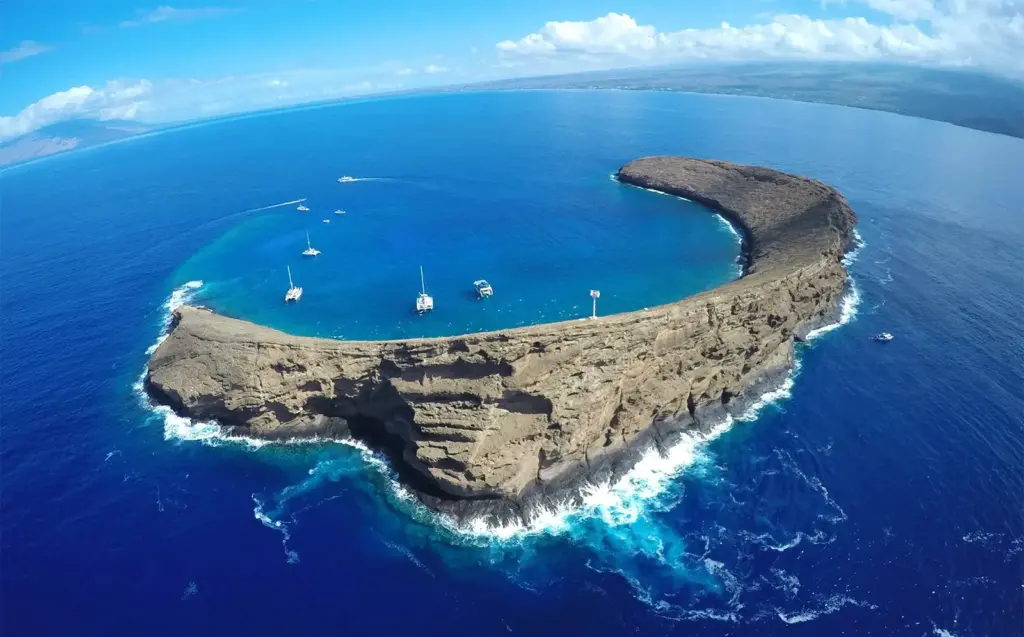
Maui Diamond Sea Sports’ two-tank trip costs $239. The first dive is at Molokini, to as deep as 90 feet; the second is a 30-50 ft dive at a shoreline site on the way home. Divers who haven’t been in the water for more than two years need a guided dive or refresher first. The Molokini Double Backwall, also run by Maui Diamond, starts at $239 and is for experienced divers with 40 or more lifetime dives (checked September 2026). Taking or injuring marine life is banned inside the district, and boats tie up to day-use moorings instead of anchoring. Molokini crater scuba diving works for newer divers inside the crescent; the back wall is where your logbook matters.
The Lanai Cathedrals
The Cathedrals, off Lanai’s south coast, are lava chambers where sunlight falls through openings in the roof, and in the right light you’ll see why they got the name. First and Second Cathedrals both sit at about 55 feet, typically 50-70 feet. Go Scuba Dive Maui runs the trip from $269: about six hours, including a 45-minute crossing from the Mala boat ramp, for certified divers 14 or older who have dived in the last 18 months. Maui Diamond’s Lanai trip starts at $289 and runs about eight hours (checked September 2026). The channel crossing can be bumpy, so take seasickness precautions if you usually need them.
Oahu’s wreck trail
Off Waikiki, the YO-257, a 175-foot vessel sunk in 1989, sits upright at 97 feet, and most dives on it top out around 85 feet. Atlantis Submarines sank the San Pedro beside it in 1996, so one dive covers both. Elsewhere around the island, the Sea Tiger sits upright on sand at 120 feet, with dives generally at 80-100 feet; a Corsair fighter plane that went down in 1946 lies at a maximum of 107 feet; and the Mahi, sunk in 1986, rests in 95 feet of water. Dive Oahu also lists a Navy tug, the USS Nashua, among its wreck sites.
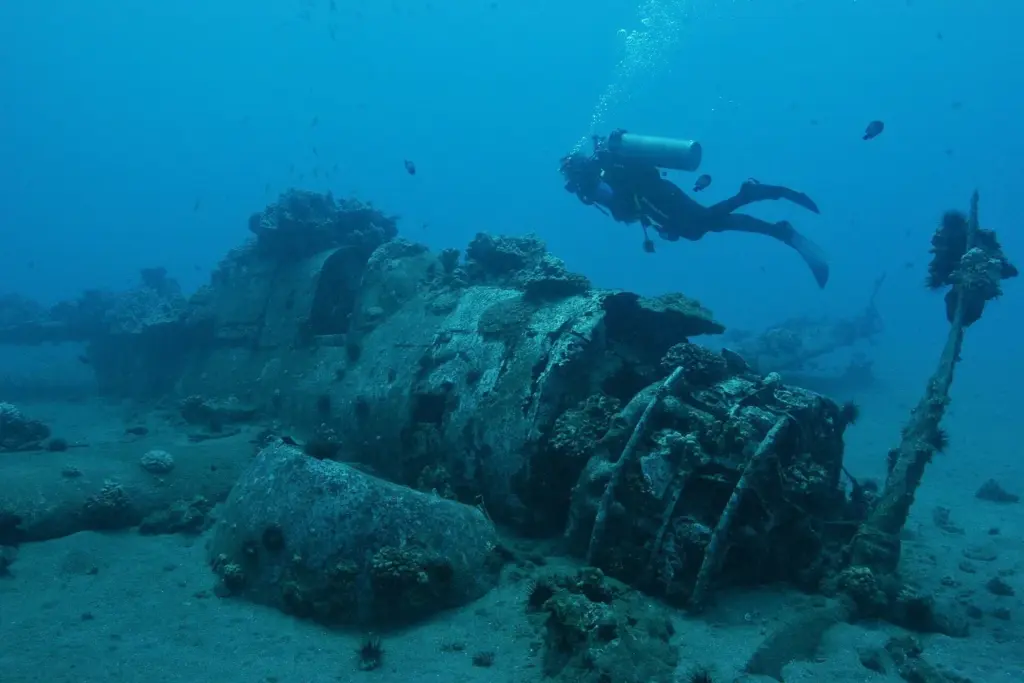
Two-tank wreck-and-reef trips cost $169 at Waikiki Dive Center (four hours, ages 15 and up, up to 20 people aboard), $174 plus $20 for rental gear at Island Divers Hawaii, and $99-$231 at Dive Oahu, depending on the package (checked September 2026). Every one of these wrecks is deeper than the 60-foot recommended limit for Open Water divers, so take the Advanced course first; our guide to the certification ladder explains what each level allows. Oahu wreck diving is the best reason to add a few days on Oahu to a Big Island or Maui trip.
Kauai’s south shore and the Niihau trip
Kauai’s everyday diving is on the south shore, described above. Niihau is the reason experienced divers plan a Kauai trip at all. The island has been privately owned by the Robinson family since 1864, has roughly 150 residents and sits 18 nautical miles off Kauai, about 2.5 hours each way by dive boat. Most of the best sites are in the channel between Niihau and the Lehua Crater islet: Vertical Awareness, Pyramid Point, Niihau Arches and Neon Cave. Keyhole and the inside of Lehua get dived only when the usual northeast trade winds allow, according to Seasport Divers. Fathom Five counts more than 11 sites and describes them as drift and deep dives, among the most advanced on Kauai.
Seasport Divers charges from $475 and runs the trip on Tuesdays and Fridays from late spring to early autumn; it asks for 30 logged dives or Advanced Open Water and strongly recommends nitrox. Fathom Five’s three-tank Niihau trip starts at $465 and runs May through September (checked September 2026). Niihau diving is a long, weather-dependent day, so book it early in your stay to leave room for a rescheduled trip.
Shore diving in Hawaii
Shore diving is the budget half of Hawaii diving, and on a calm day it can match the boats. Koloa Landing on Kauai is the classic easy entry, the Kona coast has lava-rock entries along much of its length, and Oahu’s North Shore becomes summer-only territory once the winter swells arrive. The hazards are about the ocean more than the reef: check the surf forecast, watch a few sets before you commit, enter and exit where local divers do, and skip any lava entry with surge washing over it. Fathom Five, for example, warns divers off Koloa Landing when the south surf is over 4 feet. Rent tanks from a local shop, which can also tell you which entries are working that week.
Hawaii marine life and when to see it
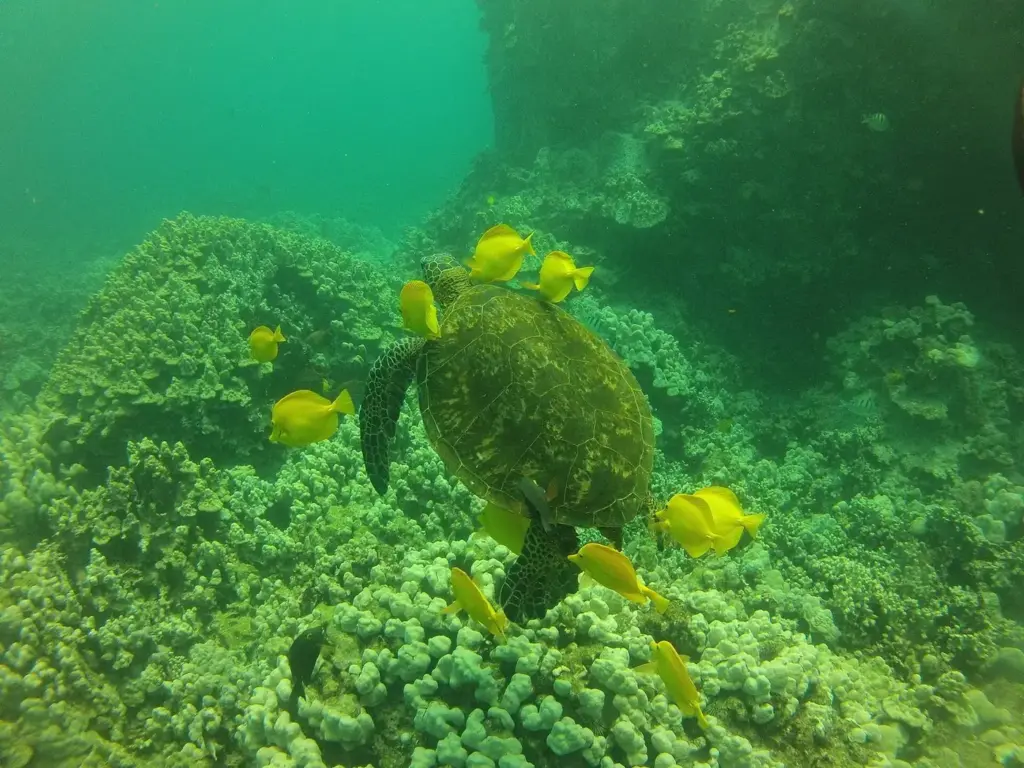
Hawaii’s marine life is less about sheer numbers than about species you won’t see elsewhere, plus a handful of big animals. Green sea turtles are the constant. You’ll find them resting under ledges, at cleaning stations where tangs and surgeonfish graze algae off their shells, and inside lava tubes like Kauai’s Sheraton Caverns. Whitetip reef sharks rest in caves and under overhangs, and Fathom Five lists them at several of Kauai’s south-shore sites. Hawaiian spinner dolphins spend their days resting in bays close to shore, which is why a federal rule now keeps swimmers away from them. Whale sharks pass through Hawaiian waters only now and then, so if one is your goal, our guide to where and when to swim with whale sharks covers the reliable aggregations in Mexico, Belize and beyond.
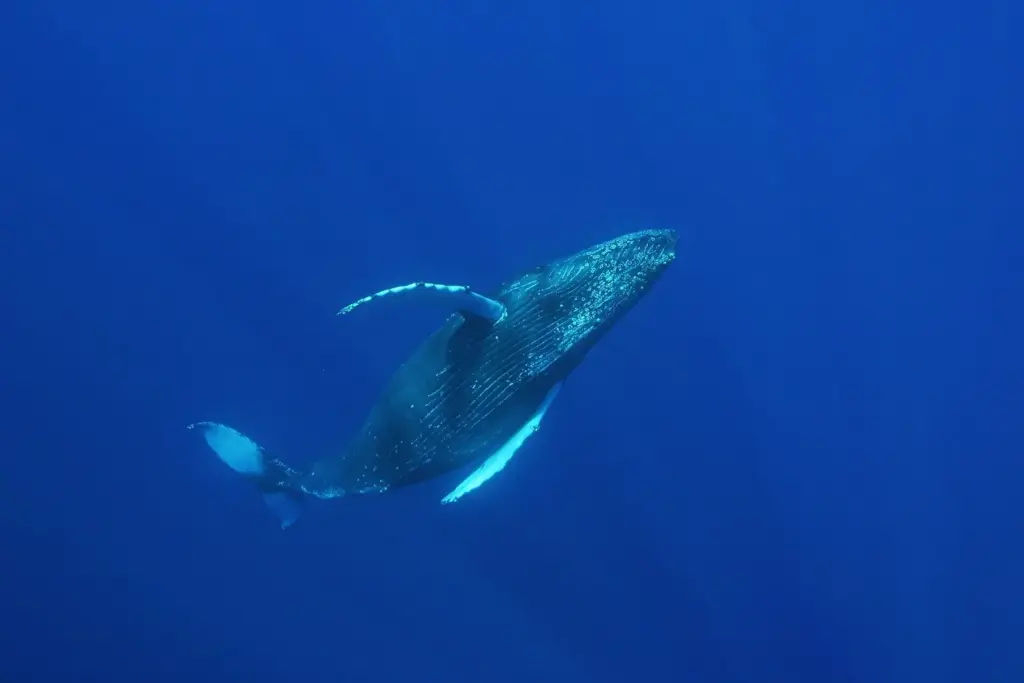
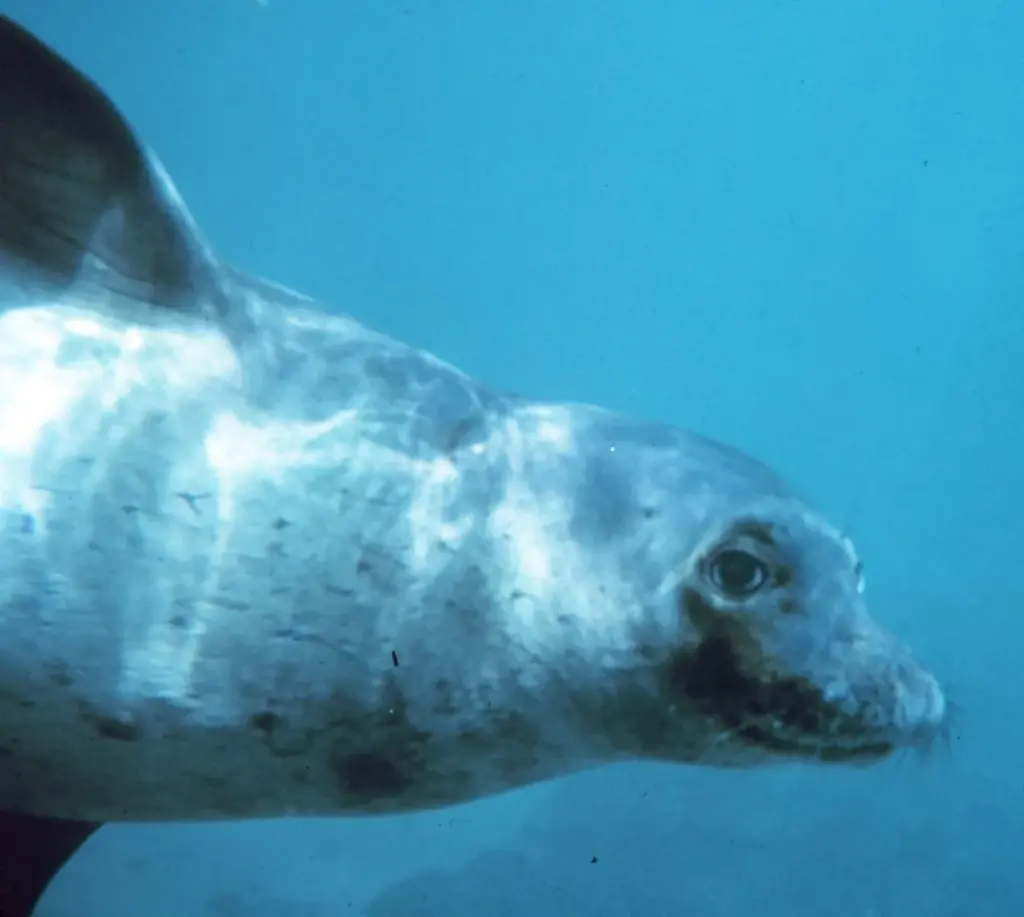
Hawaiian monk seals are the rarest large animal you might meet. NOAA Fisheries estimates about 1,600 in total, nearly 1,200 of them in the remote Papahanaumokuakea Marine National Monument and about 400 around the main islands. They haul out on beaches to rest and now and then cruise past divers. Manta rays are the Kona headline. And from November to April, more than half of the North Pacific’s humpback whales use Hawaiian waters, according to the Hawaiian Islands Humpback Whale National Marine Sanctuary.
| Animal | When | Where | What to know |
|---|---|---|---|
| Reef manta rays | Year-round; one operator recommends May-October for visibility | Kona coast | Protected in state waters since 2009 |
| Humpback whales | November-April | Around all the main islands | Stay 100 yards away, in the water too |
| Hawaiian spinner dolphins | Year-round | Nearshore bays by day | 50-yard rule; no swim-with tours |
| Hawaiian monk seals | Year-round | Beaches and reefs; about 400 around the main islands | Keep at least 50 feet from resting seals |
| Green sea turtles | Year-round | Cleaning stations, ledges, lava tubes | Protected under the Endangered Species Act |
| Whitetip reef sharks | Year-round | Caves and ledges, such as Kauai’s south-shore sites | Usually resting; give them room |
| Galapagos and sandbar sharks | Year-round | 3+ miles off Haleiwa, Oahu | Snorkel encounters; no scuba needed |
| Tiger sharks | June-November | Oahu’s North Shore | One Ocean Diving’s advanced program, $4,000 per charter |
Best time to dive in Hawaii, month by month
There’s no bad month for diving in Hawaii, only trade-offs. Water temperature moves only about 5°F through the year. NOAA’s long-term averages for Honolulu run from 76.7°F (24.8°C) in February to 81.7°F (27.6°C) in September, and Kawaihae, on the Big Island’s Kohala coast north of Kona, runs from 77.6°F (25.3°C) to 81.8°F (27.7°C). Kahului on Maui is the coolest of the main gauges in February, at 75.4°F (24.1°C); Nawiliwili on Kauai is the warmest in September, at 83.0°F (28.3°C). These are shore gauges, so the number on your dive computer at depth can differ.
Winter, roughly November to March, brings the humpbacks and big north swells, which close North Shore sites on Oahu and Kauai but usually leave the Kona coast and Maui’s south shore diveable. Summer brings the warmest water, calm north shores, the Niihau season, and south swells that can close south-facing entries for a few days at a time. Summer and early fall are also hurricane season in the central Pacific. Direct hits are rare, but a storm passing well offshore can churn up the water for days. Most divers wear a 3 mm full suit year-round; if you chill easily, a 5 mm suit or a hooded vest makes February dives more pleasant.
| Month | Honolulu water | Kona coast water (Kawaihae) | What’s happening |
|---|---|---|---|
| January | 77.1°F (25.1°C) | 77.9°F (25.5°C) | Humpback season; winter north swells; New Year’s week is busy |
| February | 76.7°F (24.8°C) | 77.6°F (25.3°C) | Coolest water; whales; Presidents’ Day week fills up |
| March | 76.9°F (24.9°C) | 77.8°F (25.4°C) | Whales; spring break crowds |
| April | 77.6°F (25.3°C) | 78.4°F (25.8°C) | Last month of whale season; Jack’s manta meeting time moves to 3:30 p.m. |
| May | 78.8°F (26.0°C) | 79.5°F (26.4°C) | Niihau trips begin; start of one manta operator’s recommended window |
| June | 79.9°F (26.6°C) | 80.6°F (27.0°C) | Tiger shark program opens on Oahu; central Pacific hurricane season begins |
| July | 80.5°F (26.9°C) | 81.3°F (27.4°C) | Peak family travel; Niihau season |
| August | 81.3°F (27.4°C) | 81.6°F (27.6°C) | Warm water, calm north shores; Niihau season |
| September | 81.7°F (27.6°C) | 81.8°F (27.7°C) | Warmest water; quieter after Labor Day; last Niihau trips |
| October | 81.4°F (27.4°C) | 81.5°F (27.5°C) | Still warm; Jack’s manta meeting time moves to 3:00 p.m. |
| November | 80.0°F (26.7°C) | 80.6°F (27.0°C) | Whales return; north swells start; Thanksgiving week is busy |
| December | 78.3°F (25.7°C) | 78.2°F (25.7°C) | Whales; Christmas to New Year’s is the most expensive stretch |
Source for the temperatures: NOAA NCEI Coastal Water Temperature Guide, long-term monthly means.
Our take: For most divers the sweet spots are April-May and September-October: the water is warm, school vacations are over, and both coasts are usually diveable. Come between December and March if hearing and seeing humpbacks matters more to you than a couple of degrees of water temperature.
The best time to dive in Hawaii also depends on the island: Kona is the most consistent all year, while Kauai and Oahu’s north-facing sites reward a summer trip.
Rules every diver in Hawaii should know
Hawaii takes its wildlife rules seriously, and several of them apply in the water, not just on boats. These were checked against NOAA, the Federal Register and the State of Hawaii in September 2026.
- Humpback whales: 100 yards. Within 200 nautical miles of the islands, it’s illegal to approach a humpback within 100 yards by any means, including swimming or diving toward one or putting yourself in its path, and aircraft must stay 1,000 feet away. Report an entangled whale to NOAA’s hotline at 888-256-9840.
- Spinner dolphins: 50 yards. Since October 28, 2021, a federal rule has barred swimming with or approaching Hawaiian spinner dolphins within 50 yards, including by getting in their way, within 2 nautical miles of the islands and in designated waters between Lanai, Maui and Kahoolawe. A tour that promises a swim with spinners is selling something the rule prohibits.
- Monk seals: 50 feet. NOAA’s guidance is to stay at least 50 feet from a resting seal, and farther from a mother with a pup during the roughly seven-week nursing period. The species is listed as endangered.
- Sea turtles. All six sea turtle species found in US waters, including the green turtles you’ll see on Hawaii dives, are protected under the Endangered Species Act. Don’t touch, feed or chase them.
- Sharks. Since January 1, 2022, it has been illegal to knowingly capture, entangle or kill a shark in Hawaii’s state waters, with fines of up to $10,000. Hawaii was the first US state to ban killing sharks statewide.
- Manta rays. Protected in state waters since 2009.
- Sunscreen. Selling sunscreens that contain oxybenzone or octinoxate has been illegal statewide since 2021. Mineral sunscreens with zinc oxide or titanium dioxide are the simple way to comply, and a long-sleeved rash guard beats any lotion.
- Molokini. No taking or injuring marine life, and no anchoring where day-use moorings are in place.
- Hanauma Bay (Oahu). Non-residents 13 and older pay $25 plus an online fee. Reservations open two days ahead at 7 a.m. Hawaii time, with about a quarter of access held for walk-ins; entry runs from 6:45 a.m. to 1:30 p.m. Wednesday to Sunday (closed Mondays and Tuesdays), parking is $3, and every visitor watches an education video first.
Getting to Hawaii from the mainland
For US citizens, Hawaii is a domestic trip: no passport and no customs on the way in. Since May 7, 2025, TSA has required a REAL ID-compliant license or another accepted ID, such as a passport, at airport security, so check your license for the star before you pack.
Nonstop flights from Los Angeles, San Francisco or Seattle take roughly 5 to 6 hours, and nonstops from the New York area or Boston to Honolulu take about 10 to 11 hours. Fly into the island you’ll dive from: Honolulu (HNL) for Oahu, Kona (KOA) for the Big Island’s dive coast, Kahului (OGG) for Maui and Lihue (LIH) for Kauai. Kona’s airport lists Alaska, American, Delta, Hawaiian, Southwest and United among its airlines, along with Air Canada, WestJet and Japan Airlines, so the Big Island doesn’t have to mean a connection through Honolulu.
Hawaii doesn’t observe daylight saving time. It’s two hours behind the West Coast in winter and three in summer, and five hours behind the East Coast in winter and six in summer. The upside for divers: early boat check-ins feel easy for the first few days.
Plan interisland hops around your dives. A commercial flight is an altitude exposure, so the usual flying-after-diving intervals apply: at least 12 hours after a single no-decompression dive and 18 hours after multiple dives or multiple days of diving, according to the CDC. Most two-island trips end up with a topside day between islands, which is no hardship here. You’ll want a rental car on every island except perhaps Oahu, if you stay in Waikiki and dive from Kewalo Basin.
Know where the boats leave from before you book a room. Several Kona charters use Honokohau Harbor; Oahu’s wreck boats leave from Kewalo Basin or Maunalua Bay, and the shark snorkels from Haleiwa; several West Maui and Lanai trips use the Mala boat ramp while Lahaina’s harbor is rebuilt; and Kauai’s shops are in Koloa and Poipu on the south shore.
Where to stay for a Hawaii dive trip
Stay close to the boats and below the altitude line, and let the rest follow your budget. Every island has roughly three tiers: condos and small hotels in the main towns, mid-range resort hotels, and full-service beach resorts.
- Big Island: Kailua-Kona and the Keauhou area just south of it keep you close to Honokohau Harbor and well inside the zone the dive shops consider safe after diving. Big Island Divers’ rule of thumb is that staying farther north than Waikoloa or farther south than Captain Cook means driving to unsafe elevation, so ask your shop about your exact route if you’re booked on the Kohala coast. Skip Hilo and Volcano as a base: getting back to Hilo after a manta dive isn’t possible the same night.
- Maui: South Maui (Kihei, Wailea, Makena) is closest to the Molokini boats. West Maui (Kaanapali, Napili, Kapalua) is closer to Mala for Lanai trips. Lahaina itself is still rebuilding, so book there only with current information.
- Oahu: Waikiki and central Honolulu are close to Kewalo Basin. The North Shore suits summer shore diving and the shark trips, but it’s a long drive from the south-shore wreck boats.
- Kauai: Poipu and Koloa, on the south shore, are where the dive shops and the year-round diving are.
Hawaii dive packages that bundle lodging and diving exist, but it’s easy to book the two separately here, because most dive boats leave from public harbors rather than resort docks. That also lets you mix a condo with a kitchen, which saves real money on a week of early mornings.
Choosing a dive operator: prices, inclusions and tipping
Published prices tell you less than the fine print. Compare these points before you book:
- What’s included. Tax, rental gear and snacks vary from shop to shop; the notes column below shows what each price covers.
- Group size. Waikiki Dive Center’s wreck trip takes up to 20 people; Jack’s blackwater dive takes six. Ask how many divers each guide leads.
- Dive length. Big Island Divers ends each dive at 700 psi or 60 minutes, whichever comes first. Ask the same question elsewhere, especially if you breathe lightly.
- Guarantees. Manta guarantees range from a published discount (Big Island Divers) to an undefined promise. Oahu shark operators advertise guaranteed sightings; Haleiwa Shark Tours adds “or your money back.” Read the terms.
| Trip | Operator | Price (checked Sept 2026) | Notes |
|---|---|---|---|
| Kona two-tank morning | Big Island Divers | $179 | Plus tax; rental gear $60 a day |
| Kona two-tank morning | Kona Diving Company | $200 | Tanks, weights, mask, snorkel, fins included |
| Kona two-tank day | Jack’s Diving Locker | $200 | Plus taxes and fees; lunch included |
| Manta night dive | Big Island Divers | From $149 | One tank; plus tax and gear |
| Manta two-tank, dusk and night | Kona Diving Company | $230 | Snorkelers $160 |
| Manta night dive and snorkel | Jack’s Diving Locker | $230 | Same price for snorkelers |
| Manta snorkel and scuba | Kona Ocean Adventures | $250 | Divers watch from 30-35 ft |
| Blackwater | Big Island Divers | $199 | 25 logged dives required |
| Pelagic Magic blackwater | Jack’s Diving Locker | $230 | Tuesdays and Thursdays; six divers maximum |
| Molokini two-tank | Maui Diamond Sea Sports | $239 | Check-in 6:15 a.m. |
| Molokini Double Backwall | Maui Diamond Sea Sports | From $239 | 40+ lifetime dives |
| Lanai Cathedrals | Go Scuba Dive Maui | From $269 | Ages 14+; from the Mala ramp |
| Lanai Cathedrals | Maui Diamond Sea Sports | From $289 | About eight hours |
| Oahu wreck and reef | Waikiki Dive Center | $169 | Ages 15+; about four hours |
| Oahu wreck and drift | Island Divers Hawaii | $174 | Plus $20 for gear |
| Oahu wreck and reef | Dive Oahu | $99-$231 | From Kewalo Basin |
| Kauai two-tank | Seasport Divers | From $229 | South shore |
| Kauai two-tank | Fathom Five Divers | From $239 | South shore |
| Niihau | Seasport Divers | From $475 | Tuesdays and Fridays, seasonal |
| Niihau three-tank | Fathom Five Divers | From $465 | May-September |
Tipping works much as it does on the mainland. A common guideline is $5-$10 per tank for a day-boat crew, and 10-20% of the course price for an instructor, handed to the captain or divemaster at the end of the trip. Tip more for a private guide or a day that went out of its way for you.
What a week of diving in Hawaii costs
Here’s what the diving alone costs on a seven-night Kona trip with four morning charters, one manta dive and one blackwater dive, at September 2026 prices.
| Item | Low | High | Notes |
|---|---|---|---|
| Four two-tank morning charters | $716 | $800 | $179 (Big Island Divers) to $200 (Jack’s, Kona Diving Company), plus tax |
| Manta night dive | $149 | $250 | One or two tanks, depending on the operator |
| Blackwater dive | $199 | $230 | Experienced divers only |
| Rental gear | $0 | $360 | $60 a day plus tax at Big Island Divers; $0 with your own kit |
| Crew tips | $50 | $110 | $5-$10 per tank across 10-11 tanks |
| DAN membership | $40 | $40 | Per year; dive accident insurance is extra |
| Diving total | $1,154 | $1,790 | Before Hawaii tax |
The rest of the bill depends on how you travel. A rental car is close to essential on the Big Island. Lodging splits into the tiers above; a Kailua-Kona condo with a kitchen keeps costs down, and the Kohala coast resorts sit at the top. Groceries and restaurant meals cost more than on the mainland because almost everything is shipped in, so the condo kitchen earns its keep.
Our take: Bring your own mask, fins and dive computer, and your own BCD and regulator if you can carry them. At $60 a day, rental gear adds $360 to a six-day dive week, so a kit you already own pays for its baggage fee several times over.
Getting scuba certified in Hawaii
You can learn to dive in Hawaii, and plenty of people do. A full course takes two days of pool and ocean training after the online theory, which is two days of a Hawaii vacation spent on skills. The smarter plan for most Americans is a referral: finish the eLearning and the pool sessions at a shop near home, then complete your four open water dives in Hawaii. Our scuba certification guide explains how referrals work and what each agency’s card lets you do.
| Course | Operator | Price (checked Sept 2026) | Notes |
|---|---|---|---|
| PADI Open Water, full course | Maui Dive Shop | $857.59 | Two days of about 5 hours; eLearning booked separately; ages 10+ |
| PADI Open Water, full course | Seasport Divers (Kauai) | $655 | Plus taxes; includes equipment and eLearning |
| Open Water, two days | Island Divers Hawaii (Oahu) | $649 | Listed on its homepage |
| Open Water referral | Maui Dive Shop | From $659 | PADI or SSI referrals |
| Open Water referral | Kona Diving Company | $600 each (2+), $800 private | Four dives over two morning charters |
| Discover Scuba | Kona Diving Company | $350 | Private instructor, two students maximum; 40 ft limit; ages 10+ |
| Discover Scuba | Island Divers Hawaii | $285 | Oahu |
| Two-tank intro dive | Fathom Five Divers (Kauai) | From $225 | At Koloa Landing |
| Intro and refresher dive | In2Scuba Diving Maui | $139 | Includes a reef dive |
If you get scuba certified in Hawaii, Kona’s calm mornings and Kauai’s Koloa Landing are gentle places for your first open water dives. And if you’re already certified but haven’t been underwater in a couple of years, book a refresher: several shops here require one anyway.
Diving safety in Hawaii: altitude, surf and the one chamber
Driving uphill after diving
This is the Hawaii-specific risk most visitors never think about. The CDC’s guidance is to wait at least 12 hours after a single no-decompression dive, and 18 hours after multiple dives or multiple days of diving, before going above 2,000 feet (610 m), and that includes driving. On the Big Island that line sits close to the coast. Big Island Divers warns that staying farther north than Waikoloa or farther south than Captain Cook involves driving to elevation that isn’t safe after diving, and that returning to Hilo the same night as a manta dive isn’t possible.
The Saddle Road between the two sides of the island crests at 6,632 feet, the Mauna Kea summit road goes far higher, and even the summit area of Hawaii Volcanoes National Park sits near 4,000 feet. On Maui, the road to Haleakala’s summit climbs to about 10,000 feet, so save the crater sunrise for a morning after a day without diving. Decompression sickness usually shows up within a few hours of surfacing, but it can appear 24-48 hours later, particularly with altitude exposure after diving.
Surf, surge and currents
Hawaii’s ocean is open Pacific, with no barrier reef to break the swell. Winter north swells can make North Shore entries dangerous, summer south swells do the same on south-facing coasts, and the Molokini back wall and the Niihau channel can run strong currents. Listen to the boat briefing, carry a surface marker buoy and a whistle, and don’t attempt a shore entry you haven’t watched for a while first.
If something goes wrong
Call 911 first, then DAN’s 24-hour emergency line at +1-919-684-9111. Hawaii has one multi-place recompression facility: the Hyperbaric Treatment Center at Kuakini Medical Center in Honolulu, which provides 24/7 emergency dive medicine. A diver hurt on the Big Island, Maui or Kauai would need to be flown to Oahu, which is a strong argument for dive accident insurance. DAN membership ($40 a year) includes up to $150,000 of emergency medical transportation for emergencies more than 50 miles from home, but membership alone doesn’t cover treatment. DAN’s dive accident insurance, sold separately, pays up to $500,000 on its top plan (checked September 2026).
Sharks
Shark bites in Hawaii are rare. The International Shark Attack File counted four unprovoked bites in Hawaii in 2025, out of 25 in the whole US. On scuba, the sharks you’re most likely to see are whitetip reef sharks resting in caves, and they want nothing to do with you.
Hawaii for non-divers in your group
Hawaii is one of the easier dive destinations to share with someone who doesn’t dive, because the best experiences have a snorkel version.
- Manta night snorkel. Snorkelers float above the divers with lights of their own, from $160 with Kona Diving Company (checked September 2026).
- Hanauma Bay. Oahu’s classic snorkel reef, with the reservation rules listed above.
- Shark snorkels off Haleiwa. Prices run from $90 with North Shore Shark Adventures, where guests hold the bars of a floating cage and don’t have to swim, to $150 with One Ocean Diving, which runs cage-free trips with a safety diver for every six guests. Hawaii Shark Encounters charges $125 for adults and $90 for children 12 and under, and takes guests from age 5.
- Molokini. Maui Diamond takes snorkelers for $189, but its page also lists a $299 private in-water guide fee for them, so ask exactly what the ticket covers.
- Whales and volcanoes. Humpbacks are visible from shore from November through April. Save Hawaii Volcanoes National Park and Haleakala for the day after your last dive.
A sample 10-night, two-island dive itinerary
This plan pairs the Big Island with Maui, keeps every flight and mountain drive outside the no-fly window, and leaves room for one weather cancellation.
| Day | Plan |
|---|---|
| 1 | Fly into Kona. Check in around Kailua-Kona; no diving on arrival day. |
| 2 | Two-tank morning charter along the Kona coast. |
| 3 | Two-tank morning charter, then the manta night dive (choose a one-tank manta trip if four dives in a day is too many). |
| 4 | Slow morning, then the blackwater dive if your logbook qualifies (Jack’s runs Tuesdays and Thursdays). |
| 5 | Final two-tank morning charter, back on land by early afternoon. Keep the evening dry. |
| 6 | Topside: Hawaii Volcanoes National Park, more than 18 hours after your last dive. |
| 7 | Fly to Kahului. Stay in Kihei or Wailea. |
| 8 | Molokini two-tank; afternoon on the beach. |
| 9 | Lanai Cathedrals day trip. |
| 10 | Morning shore dive or rest day; last dive finished by noon. |
| 11 | Haleakala or a beach morning, then an evening flight home, at least 18 hours after your last dive. |
Swap Maui for Oahu if you’re an Advanced diver who wants wrecks, or for Kauai between May and September if you want a crack at Niihau.
Frequently asked questions
How much does scuba diving in Hawaii cost?
Two-tank boat dives cost $169-$239 in September 2026: $169 at Waikiki Dive Center on Oahu, $179-$200 in Kona, $229-$239 on Kauai and $239 for Molokini. The Kona manta night dive runs $149-$250, the Lanai Cathedrals trip $269-$289 and Niihau $465-$475. Add tax, gear rental if you need it and $5-$10 per tank in tips.
Which Hawaiian island is best for diving?
The Big Island is the best all-round choice: calm Kona mornings, more than 30 lava sites, the manta night dive and blackwater. Maui is best for Molokini and day trips to the Lanai Cathedrals. Oahu has the wrecks and the most flights, and Kauai has lava tubes plus, from May to September, the advanced Niihau trip. For two islands, pair Kona with Maui.
Can you swim with humpback whales in Hawaii?
No. Federal rules bar approaching a humpback within 100 yards by any means, including swimming, diving or putting yourself in its path, anywhere within 200 nautical miles of the islands. Tours that put swimmers in the water with humpbacks operate elsewhere, not in Hawaii. You will often hear them, though: from November to April, whale song carries a long way through the water on winter dives.
Is shark diving in Hawaii safe?
Hawaii’s shark trips are snorkel trips, run 3 or more miles off Oahu’s North Shore, either from a cage or cage-free with a safety diver for every six guests. The sharks are mostly Galapagos and sandbar sharks. Unprovoked bites are rare: the International Shark Attack File counted four in Hawaii in 2025. Listen to the briefing, stay at the surface as instructed and follow the crew’s directions.
Can you swim with whale sharks in Hawaii?
Not reliably. Whale sharks pass through Hawaiian waters, but there’s no season and no operator that can plan a trip around them, so any sighting is luck. If a whale shark is the goal, pick a destination with a predictable season, such as Mexico’s Yucatan coast in summer or the Maldives, and treat Kona’s mantas as Hawaii’s big-animal highlight.
Do you need a passport to go scuba diving in Hawaii?
Not if you’re a US citizen flying from the mainland. Hawaii is domestic travel, but since May 7, 2025, TSA has required a REAL ID-compliant license or another accepted ID, such as a passport, at security. Bring your certification card or have your agency’s app ready, since every shop asks for proof of training, and bring a logbook for trips with experience minimums.
Is scuba diving in Hawaii worth it?
For most divers, yes, as long as you come for what Hawaii does best: lava topography, endemic fish, turtles, mantas and winter whales. It isn’t cheap, and it won’t match Indonesia for coral color or the Bahamas for sharks on scuba. If you can afford one warm-water trip a year and want the most dives for your money, a Caribbean shore-diving island will stretch further.
When is the best time to scuba dive in Hawaii?
Any month works. September and October have the warmest water, about 81-82°F (27-28°C) on NOAA’s Honolulu and Kona-coast gauges, with fewer families than summer. November to April adds humpback whales. May to September is the season for Niihau and calm north shores. February is the coolest month, at about 77°F (25°C) on the same gauges.
Sources and verification
Everything on this page was checked on September 23-24, 2026 against the organizations listed below, and the page is compiled from them; we don’t claim first-hand visits to the sites or shops named. Prices are the operators’ published rates and can change, so confirm before you book.
- NOAA NCEI: Coastal Water Temperature Guide (Honolulu, Kawaihae, Kahului, Nawiliwili and Hilo)
- Hawaiian Islands Humpback Whale National Marine Sanctuary, the NOAA humpback whale approach rule and the Hawaiian spinner dolphin rule
- NOAA Fisheries: Hawaiian monk seal
- Hawaii DLNR: Molokini Shoal Marine Life Conservation District and DLNR Division of Boating and Ocean Recreation: Lahaina recovery
- City and County of Honolulu: Hanauma Bay Nature Preserve
- University Health Partners of Hawaii: Hyperbaric Treatment Center
- CDC Yellow Book: Scuba diving and DAN membership
- TSA: REAL ID and Hawaii Airports: Kona airlines
- Manta Pacific Research Foundation and the International Shark Attack File
- Operators’ published prices and requirements: Kona Diving Company, Jack’s Diving Locker, Big Island Divers, Kona Ocean Adventures, Maui Diamond Sea Sports, Go Scuba Dive Maui, Maui Dive Shop, Hawaii Shark Encounters, Seasport Divers and Fathom Five Divers
Also checked: Island Divers Hawaii (oahuscubadiving.com), Waikiki Dive Center, Dive Oahu, One Ocean Diving, North Shore Shark Adventures, Haleiwa Shark Tours, In2Scuba Diving Maui, Dive Wailea, the Hawaii Journal of Health and Social Welfare, the MSD Manual, Girls That Scuba (tipping guidance), and the SSI and PADI Hawaii destination guides.
Scuba Tourism Guide is an independent publication. It is not affiliated with any agency, park or dive operator named here, and no one paid to be included.
Photo credits
- Diver and manta ray, Kona coast (featured image): photo by Steve Dunleavy from Lake Tahoe, NV, United States, Wikimedia Commons (CC BY 2.0)
- Yellow tangs on a Kona reef: photo by Brocken Inaglory, Wikimedia Commons (CC BY-SA 3.0)
- Decoy scorpionfish, Kailua-Kona: photo by Jonathan Lueker, Wikimedia Commons (CC BY 4.0)
- Molokini Crater, Maui: photo by Bossfrog, Wikimedia Commons (CC BY-SA 4.0)
- Curtiss Helldiver wreck, Hawaiian Islands Humpback Whale National Marine Sanctuary: photo by National Marine Sanctuaries, Wikimedia Commons (public domain)
- Turtle cleaning station, Hawaiian Islands Humpback Whale National Marine Sanctuary: photo by National Marine Sanctuaries, Wikimedia Commons (public domain)
- Humpback whale, Hawaiian Islands Humpback Whale National Marine Sanctuary: photo by National Marine Sanctuaries, Wikimedia Commons (public domain)
- Hawaiian monk seal (NOAA): photo by Dr. James P. McVey, NOAA Sea Grant Program, Wikimedia Commons (public domain)


