Mexico gives American divers two oceans and a peninsula of freshwater caves, all within a few hours’ flight. On the Caribbean side, you drift along coral walls off Cozumel, swim with whale sharks off Isla Mujeres in summer and kneel on the sand with bull sharks off Playa del Carmen in winter. On the Pacific side, sea lions play off La Paz, Cabo Pulmo’s protected reef teems with fish, and far offshore at Socorro giant mantas cruise past divers. Scuba diving in Mexico is really three trips: the Caribbean coast of Quintana Roo, Baja California Sur and the Sea of Cortez, and the remote Pacific. Here’s how they compare, when to go for each big animal, what it costs, the entry rules and which states the State Department says to avoid.
Short answer: The best diving in Mexico is Cozumel and the Riviera Maya on the Caribbean (warm, easy, year-round), Cabo Pulmo and La Paz in Baja, and Socorro for advanced divers. Two-tank dives cost about $120-$130 (checked September 2026). Quintana Roo and Baja California Sur are State Department Level 2; Guadalupe’s great white cage diving is closed.
Prices, seasons, entry rules and advisories below were checked on September 23-24, 2026 against the operators’ own websites, Mexico’s parks agency, the State Department and researchers. We name operators so you can compare like with like; none of them paid to appear here.
On this page: At a glance · Why dive Mexico · The three coasts · Caribbean and Riviera Maya · Baja and the Sea of Cortez · The Pacific · Best sites · Big-animal calendar · Shark diving · Wildlife rules · Getting there and entry · Where to stay · Prices · Budget · Getting certified · Safety · Non-divers · Sample trips · FAQ
Scuba diving in Mexico at a glance
| Question | Answer (checked September 2026) |
|---|---|
| Skill level | All levels in Cozumel and the Riviera Maya; bull shark dives want 25+ logged dives; Socorro is for advanced divers |
| Best months | Caribbean year-round; whale sharks June-September; bull sharks November-March; Cabo Pulmo August-November; Socorro November-July |
| Water temperature | Caribbean about 77°F (25°C) in winter to 85°F (29°C) in summer; La Paz about 60°F (16°C) in February to 85°F (29°C) in September |
| Visibility | Often 80-130 ft (24-40 m) in Cozumel; 35-100 ft (11-30 m) at Los Islotes in the Sea of Cortez |
| Depth range | 10-20 ft (3-6 m) at the MUSA underwater museum to 78-98 ft (24-30 m) on the Playa del Carmen bull shark dive, and deeper at Socorro |
| Signature marine life | Whale sharks, bull sharks, eagle rays, turtles, sea lions, giant mantas, hammerheads at Socorro |
| Two-tank boat dive | About $123 in Cozumel (package rate) and $130 in Cabo San Lucas; Riviera Maya single tanks about $63 in a 10-tank package |
| Getting there | Fly to Cancun or Cozumel for the Caribbean, Los Cabos or La Paz for Baja |
| Entry rules | US passport; visa-free up to 180 days; the FMM tourist permit fee (983 MXN, about $56) is included in airline tickets |
| Advisories | Mexico overall Level 2; Quintana Roo and Baja California Sur Level 2; Jalisco (Puerto Vallarta) Level 3; Guerrero and Colima Level 4 |
Why dive Mexico, and who should look elsewhere
For an American diver, Mexico is hard to beat on value and variety. The Caribbean coast sits on the Mesoamerican Reef, with warm water, easy drift diving and more dive shops than you could try in a lifetime. It’s a short, cheap flight from much of the US, and the resorts range from backpacker hostels to all-inclusives with their own dive centers. Add the big-animal seasons (whale sharks in summer, bull sharks in winter, mantas at Socorro) and the cenotes inland, and you could plan a dozen Mexican dive trips without repeating yourself.
Baja is a different world: colder, greener water, fewer corals and far more big life, from sea lions and schooling fish in the Sea of Cortez to whale sharks in La Paz’s bay in winter. Cabo Pulmo, a protected reef on the Sea of Cortez, is one of the great marine conservation success stories. And the Revillagigedo Islands, better known as Socorro, rank among the best big-animal dive trips in the world.
The caveats: Mexico’s popularity means crowds in Cancun, Playa del Carmen and Cozumel, especially on cruise-ship days. Security is a real consideration in some states; the State Department’s state-by-state advisories matter here more than in most dive destinations. Baja’s water is cold in winter, and Socorro is a long, expensive liveaboard for advanced divers only. And some of what Mexico used to be famous for is gone: Guadalupe Island’s great white cage diving has been closed since January 2023.
Our take: For a first Mexico dive trip, go to the Caribbean coast: base in Cozumel or Playa del Carmen, dive the reefs, add a cenote day, and time it for whale sharks (summer) or bull sharks (winter). Save Baja for your second trip, in late summer or fall when Cabo Pulmo’s water is warm and clear, and Socorro for when you have Advanced certification and experience.
Mexico’s three dive coasts compared
| Coast | Best for | Water | Season | State Department level |
|---|---|---|---|---|
| Caribbean (Quintana Roo: Cozumel, Cancun, Playa del Carmen, Tulum, Isla Mujeres, Costa Maya) | Reefs, drift dives, whale sharks, bull sharks, cenotes | About 77-85°F | Year-round; hurricanes June-November | Level 2 |
| Baja California Sur (Cabo San Lucas, Cabo Pulmo, La Paz) | Sea lions, schooling fish, Cabo Pulmo, whale sharks in La Paz | About 60°F in February to 85°F in September at La Paz | Best August-November for Cabo Pulmo; whale sharks November-April | Level 2 |
| Remote Pacific (Socorro / Revillagigedo) | Giant mantas, sharks, humpbacks, dolphins | Varies by season | November-July | Departures from Cabo San Lucas (Level 2) |
| Mainland Pacific (Puerto Vallarta, Zihuatanejo) | Local reefs and islands | Varies | Varies | Jalisco Level 3; Guerrero Level 4 |
The Caribbean coast: Quintana Roo and the Riviera Maya
Quintana Roo, the state that holds Cancun, Cozumel, Playa del Carmen and Tulum, is where most Americans dive in Mexico. The reef runs down the coast just offshore, the water is warm year-round, and a Cozumel drift, a cenote and a whale shark swim can all fit into one week. The State Department rates Quintana Roo Level 2, “exercise increased caution,” and advises extra care after dark in downtown Cancun, Tulum and Playa del Carmen.
Cozumel
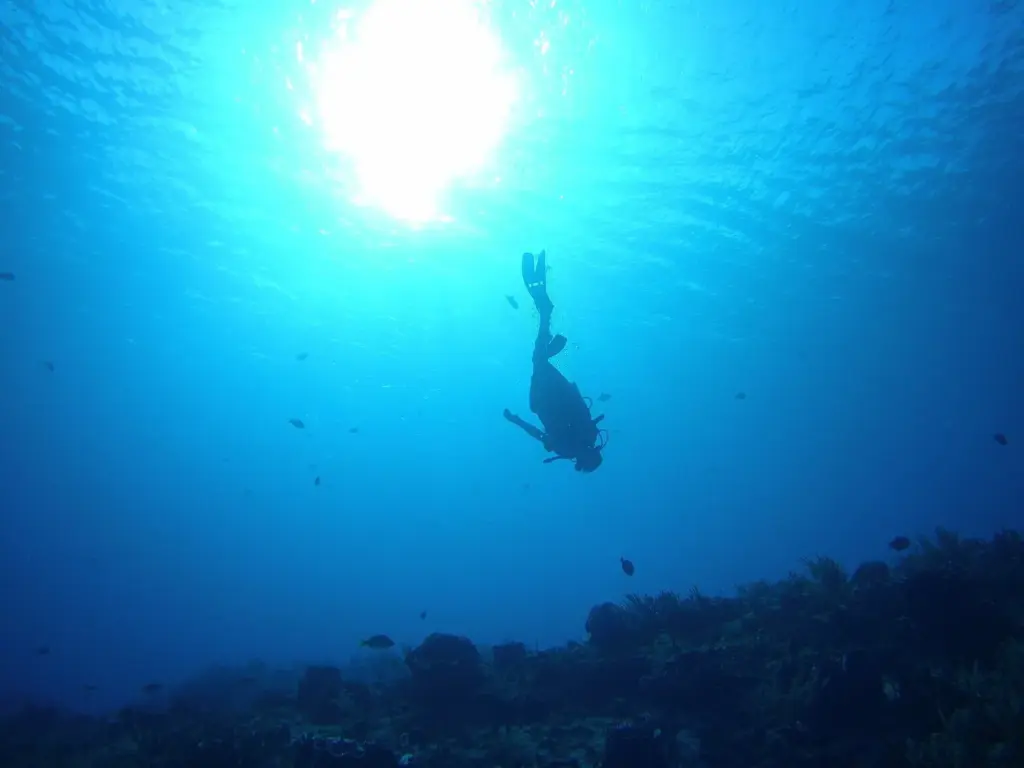
Cozumel, 30 miles long and about a 30-40 minute ferry ride from Playa del Carmen, is Mexico’s most famous dive island: gentle south-to-north drift dives along walls and coral pinnacles, often in 100-ft visibility. Its reefs sit inside a national marine park with a daily fee of 225 MXN (about $13) per person. Our full Cozumel diving guide covers the sites, closures, shops and costs.
Playa del Carmen and Puerto Aventuras
Scuba diving in Playa del Carmen means shallow reefs a few minutes offshore, easy access to Cozumel by ferry or dive boat, and winter bull sharks. Pro Dive International, which runs dive centers at resorts in Playacar and Puerto Aventuras, sells an eight-dive Playa del Carmen package (four local dives, two cenotes and two Cozumel dives) for $709, or $638.10 online, and a ten-tank Puerto Aventuras package for $632, or $568.80 online, with reefs 5-10 minutes by boat (checked September 2026). Local sites it names include Barracuda, Tortugas and Mama Vina. Puerto Aventuras, about 20 minutes south of Playa, is a quieter base with cenotes close by.
The headline act is the bull shark dive. From roughly November to March, pregnant female bull sharks of 8-9 ft gather off Playa del Carmen. Deep Mexico runs the season from November to February, in some years into April, at 78-98 ft with a maximum of 30 minutes on the bottom, and asks for Open Water plus at least 25 logged dives; its observation dive costs 3,000 MXN. Xico Dive Center runs November 1 to March 31, charges 3,000 MXN for an observation dive and 4,000 MXN for a feeding dive (about $171 and $227 at September 2026 rates), and asks divers with 25 or fewer logged dives to do a check dive first. Bull shark diving in Playa del Carmen is deep, short and exciting, and sightings aren’t guaranteed.
Cozumel vs the Riviera Maya mainland
Many first-time visitors ask whether to stay on Cozumel or on the mainland. Cozumel wins on the diving itself: famous drift dives, deep walls and visibility that’s often above 100 ft, with boats minutes from your hotel. The mainland wins on variety and logistics: Playa del Carmen and Puerto Aventuras put the cenotes, the bull shark dive and the Cancun airport within easy reach, and Cozumel is still a day trip away by ferry or dive boat. Pro Dive International’s Playa del Carmen package, for example, mixes four local dives with two cenote dives and two Cozumel dives. If reef diving is the whole point of your trip, stay on Cozumel; if you want reefs, cenotes and a big-animal dive in one week, stay on the mainland.
How resort-based diving works on the Riviera Maya
Much of the diving on the mainland is run by dive centers inside the big resorts. Boats often leave straight from the beach, which saves a transfer: at Playacar, Pro Dive International’s boats leave from the shore to sites 5-10 minutes away. Tank packages are usually shareable between guests, so a couple can split a ten-tank package, and dive centers can book cenote and Cozumel trips as upgrades. The trade-off is that resort boats run on the resort’s schedule and may keep to shallow local reefs; if you want the best sites every day, ask exactly where the boat goes before you commit to a package.
Cancun and the MUSA underwater museum
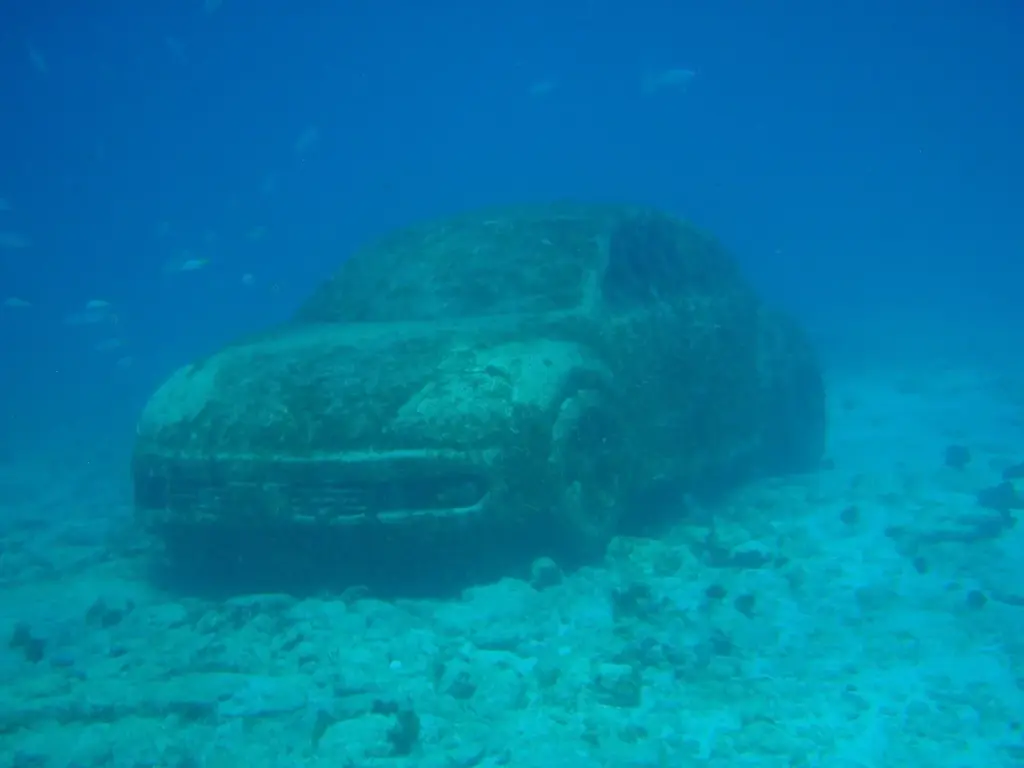
Scuba diving in Cancun is mostly shallow reef diving inside the national marine park, plus the MUSA underwater museum. MUSA began in 2009 and opened in November 2010, with about 500 sculptures in two galleries, Manchones (477 pieces) and Punta Nizuc (23), in just 10-20 ft of water, which makes it ideal for new divers and snorkelers. Jason deCaires Taylor’s “The Silent Evolution” alone has more than 400 figures. The Cancun underwater museum is less about marine life than about watching coral slowly colonize art.
Isla Mujeres and Holbox: whale sharks
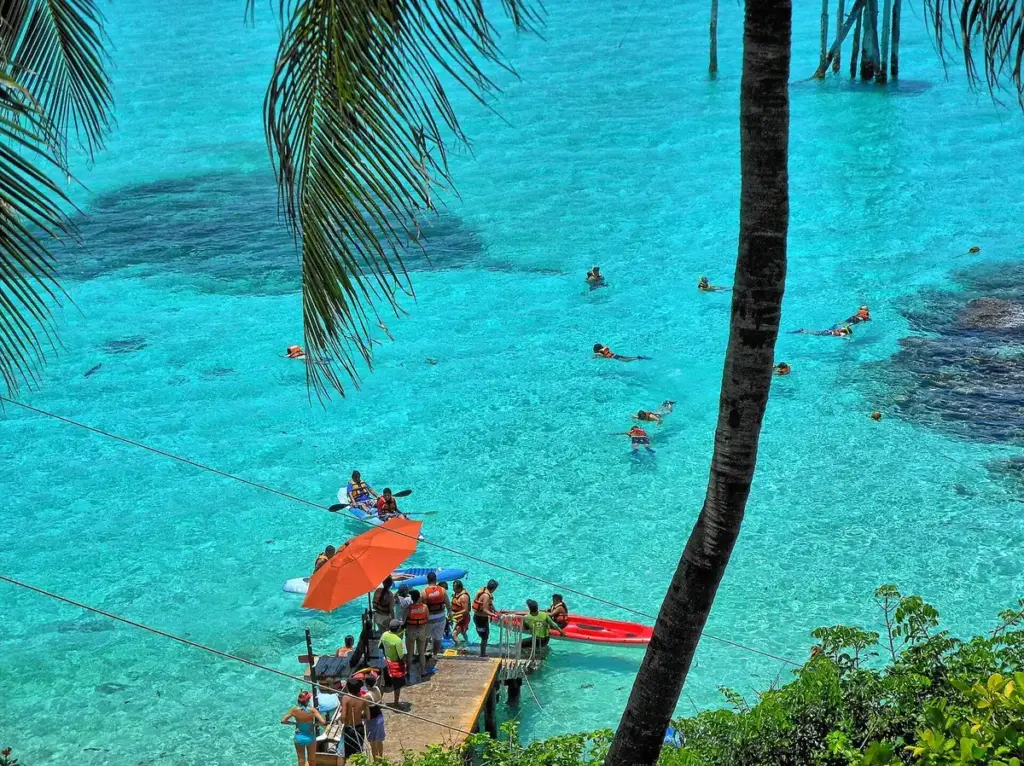
From roughly mid-May or June to mid-September, peaking in July and August, whale sharks gather to feed off Isla Mujeres and Holbox. Tours leave from Cancun, Playa del Carmen, Isla Mujeres, Cozumel, Tulum and Holbox; Mexico Whale Shark’s Cancun tour starts at $190 (checked September 2026). The encounter is snorkel-only, with one boat per shark, two swimmers plus a guide in the water, and life jackets mandatory. Our guide to where and when to swim with whale sharks covers the rules and the alternatives.
Tulum, Akumal and the cenotes
Inland from Playa del Carmen and Tulum lie the cenotes, water-filled sinkholes and caverns in the limestone. Cenote diving is its own experience, with light beams, haloclines and cavern ceilings, and it gets its own guide in this series. Prices from Ko’ox Diving, for example, are $239 for two cenote dives from Playa del Carmen or Puerto Aventuras and $249 from Tulum, including transport, gear, lights and a guide, with camera fees extra (checked September 2026). You’ll need at least Open Water certification.
Costa Maya and Banco Chinchorro
In the far south of Quintana Roo, near the Belize border, Banco Chinchorro is a large coral bank, about 25 miles long and 10 miles wide (40 km by 16 km), some 50 miles (80 km) east of Chetumal, with at least nine shipwrecks, including two Spanish galleons. It was designated a Ramsar wetland in 2004. Scuba diving in Costa Maya, the cruise port nearby, offers reefs close to shore; Chinchorro is a longer, weather-dependent trip for divers who want quiet reefs.
Baja California Sur and the Sea of Cortez
Baja California Sur is Mexico’s other great dive region, and it feels nothing like the Caribbean. Water is colder and often greener, corals are fewer, and life is bigger and busier: sea lions, schooling jacks, mobula rays, and whale sharks in La Paz’s bay in winter. The State Department rates Baja California Sur Level 2, with no specific travel restrictions for US government employees. The eastern Pacific hurricane season runs from May 15 to November 30.
Cabo San Lucas
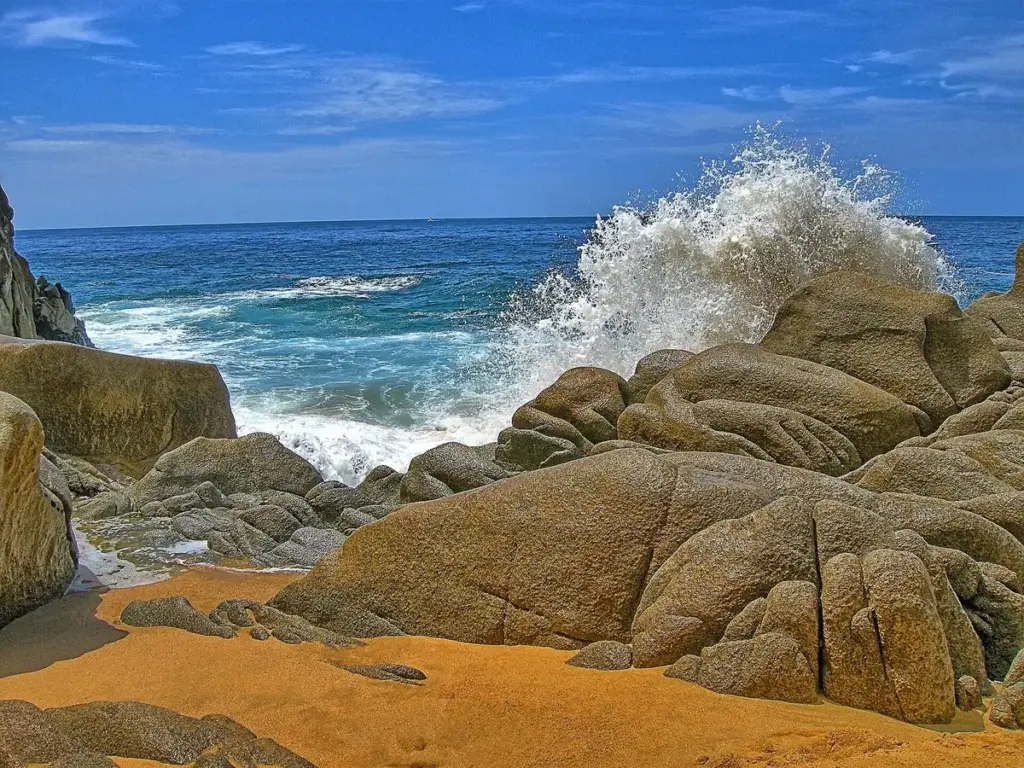
Scuba diving in Cabo San Lucas is quick and easy. Dive Cabo’s two-dive trip in the Cabo marine park costs $130, with a five-minute boat ride to sites such as Pelican Rock, Land’s End, Neptune’s Finger and the famous sand falls, where sand pours over the edge of a submarine canyon; tanks, weights and nitrox are included, full gear is $35, the minimum age is 10, and there’s a 10% cash discount (checked September 2026). Cabo is also the departure port for Socorro liveaboards.
Cabo Pulmo
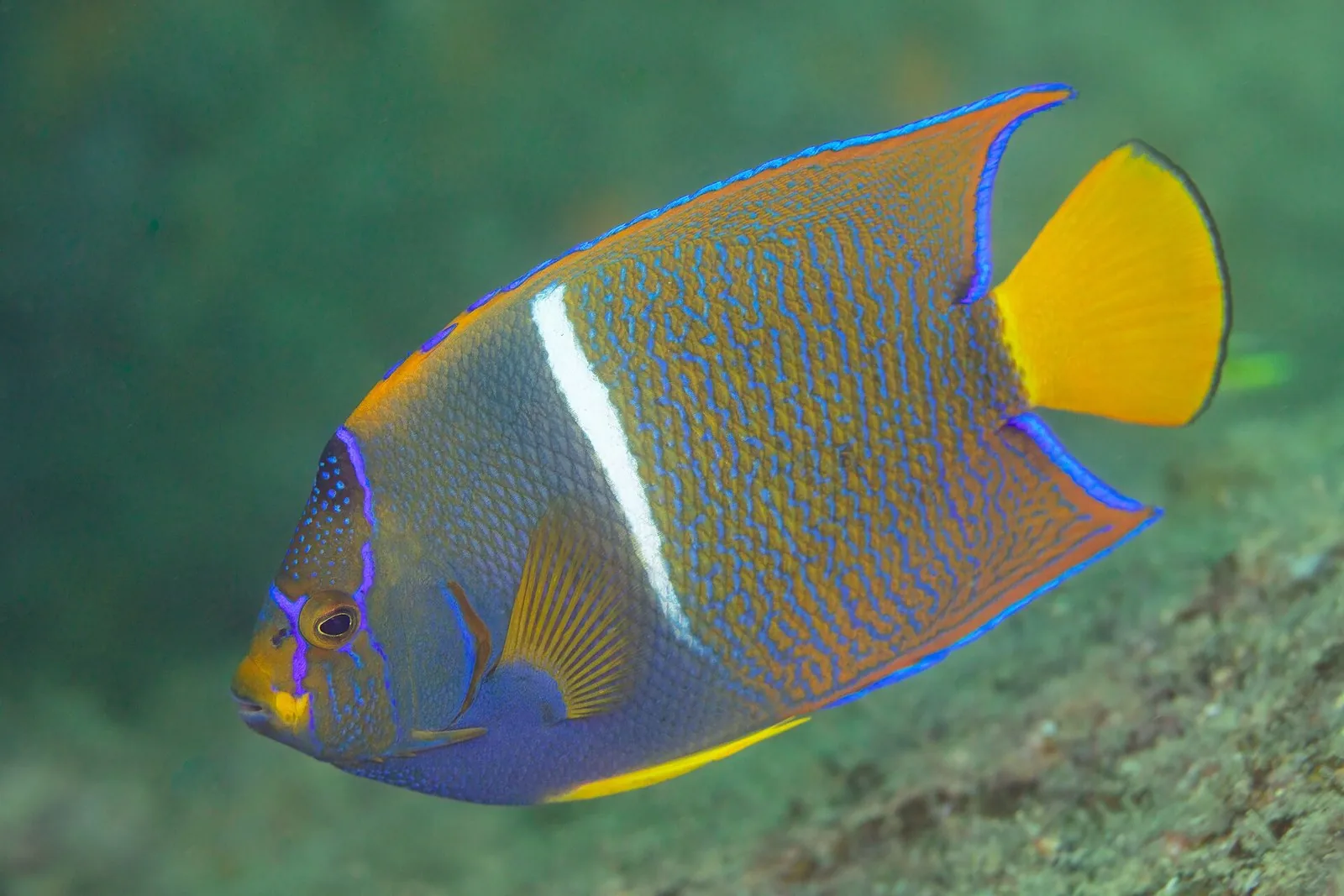
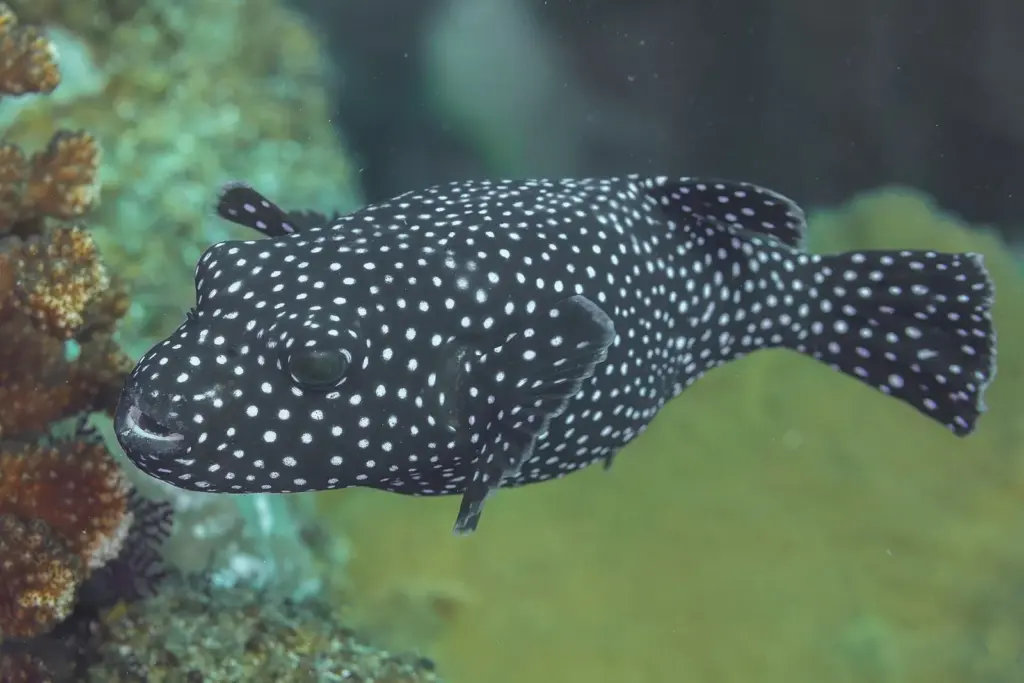
Cabo Pulmo National Park, on the Sea of Cortez about 80 miles (130 km) north of Cabo San Lucas and roughly two hours’ drive from the Los Cabos airport, is one of the best examples anywhere of what full protection can do. Established in 1995, the park saw fish biomass rise 463% between 1999 and 2009. Its reef is about 20,000 years old, and SSI counts more than 800 marine species and five of the seven sea turtle species. The best diving and visibility come from August to November, with water around 80°F, and humpback and gray whales pass from December to April. There are no ATMs in the village, so bring cash. Cabo Pulmo diving is the best reason to plan a Baja trip.
La Paz and the Sea of Cortez
Scuba diving in La Paz centers on sea lions and big fish. The Los Islotes colony, just over an hour by boat, is home to more than 200 sea lions year-round and is closed from June 1 to August 31 for pupping; visibility runs 35-100 ft. Water at Los Islotes is about 85°F in September and 77°F in June but drops to about 65°F in December and 60°F in February, so bring a thick wetsuit in winter. In winter, whale sharks feed in La Paz’s shallow bay: the 2025-2026 season counted 56 individual sharks, and La Paz operators such as The Hook Experiences charge 2,800 MXN (about $159) for a snorkel trip with a maximum of 10 guests. Caradonna’s September 2026 specials listed a week at Carey Dive Center in La Paz with five days of two-tank dives and free nitrox from $1,765 per person, land-only. A Sea of Cortez liveaboard covers more of these islands and seamounts in one trip.
Socorro (the Revillagigedo Islands)
Socorro diving is some of the best big-animal diving on the planet, and among the hardest to reach. Nautilus runs trips of 8 or 10 nights from Cabo San Lucas, about 240 miles and a 24-hour crossing each way, from November to July, at $3,195-$9,790 depending on boat and cabin, plus a $35 port fee and park fees. Expect about four dives a day. Giant mantas are there year-round, humpbacks from January to April, whale sharks in November-December and late April-June, and bait balls from April to June; PADI lists Roca Partida’s sharks from November to May. Socorro island diving is for advanced divers comfortable with current, depth and blue water.
The mainland Pacific: Puerto Vallarta and beyond
Scuba diving in Puerto Vallarta, in Jalisco, focuses on the islands and rock formations of Banderas Bay. We’d urge caution: the State Department rates Jalisco at Level 3, “reconsider travel,” and rates Guerrero (Zihuatanejo, Ixtapa, Acapulco) and Colima at Level 4, “do not travel” (checked September 2026). If you’re set on Pacific diving, Baja California Sur offers better diving at a lower advisory level.
Best diving in Mexico: the sites to plan around
| Site | Region | Depth | Level | Highlights |
|---|---|---|---|---|
| Palancar and Columbia reefs | Cozumel | 20-120 ft | All levels to experienced | Coral walls, swim-throughs, turtles |
| Punta Sur (Devil’s Throat) | Cozumel | 60-140 ft | Advanced | Deep passages and caverns |
| Bull shark dive | Playa del Carmen | 78-98 ft | Open Water plus 25 dives | Bull sharks, November-March |
| MUSA underwater museum | Cancun | 10-20 ft | All levels and snorkelers | About 500 sculptures |
| Whale shark grounds | Off Isla Mujeres and Holbox | Surface | Snorkel only | Whale sharks, June-September |
| Cenotes | Tulum and Playa del Carmen area | Cavern zone | Open Water minimum | Light beams, haloclines |
| Cabo Pulmo | Baja California Sur | Reef | All levels | Protected reef, schooling fish |
| Land’s End and the sand falls | Cabo San Lucas | Varies | All levels to experienced | Submarine canyon edge, 5 minutes from the marina |
| Los Islotes | La Paz | Varies | All levels | 200+ sea lions (closed June-August) |
| Roca Partida and San Benedicto | Socorro | Deep, blue water | Advanced | Giant mantas, sharks, humpbacks |
| Banco Chinchorro | Southern Quintana Roo | Reef and wrecks | All levels | Quiet atoll-like bank with shipwrecks |
Where to dive in Mexico, month by month
| Month | Best bets |
|---|---|
| January | Bull sharks in Playa del Carmen; eagle rays in Cozumel; whale sharks in La Paz; humpbacks at Socorro |
| February | Bull sharks; eagle rays; La Paz whale sharks (cold water); Socorro humpbacks |
| March | Last bull sharks; La Paz whale sharks; Socorro humpbacks |
| April | Socorro humpbacks and the start of bait-ball season; last La Paz whale sharks |
| May | Whale shark tours begin off Isla Mujeres from mid-May; Socorro whale sharks and bait balls |
| June | Whale sharks off Isla Mujeres and Holbox; Socorro season ends by July; Atlantic hurricane season begins |
| July | Peak whale shark month off Isla Mujeres and Holbox |
| August | Peak whale sharks; Cabo Pulmo’s best season begins |
| September | Last whale sharks; Cabo Pulmo in warm, clear water; peak hurricane risk |
| October | Cabo Pulmo; La Paz whale shark season can begin |
| November | Bull sharks return; Socorro opens; Cabo Pulmo; La Paz whale sharks |
| December | Bull sharks; eagle rays; Socorro whale sharks; La Paz whale sharks |
Water on the Caribbean side stays diveable in a 3 mm suit all year; in Baja, winter water around 60-65°F calls for 7 mm or a hooded suit.
Shark diving and cage diving in Mexico
Can you still cage dive with great whites in Mexico? No. Isla Guadalupe, once the world’s most reliable great white cage dive, was closed in May 2022 (Divernet reported the permanent ban), and Mexico’s protected-areas agency made the closure permanent on January 10, 2023. The ban covers all tourism inside the biosphere reserve, including liveaboards, and the Mexican Navy enforces it. Any operator still selling Guadalupe cage diving is out of date. Our shark diving guide lists where you can still dive with great whites.
Mexico still has excellent shark diving, just not in cages. The Playa del Carmen bull shark dive, from November to March, is the country’s most accessible big-shark encounter, and Socorro’s Roca Partida is famous for sharks from November to May. Cozumel sees bull sharks and eagle rays mainly from November to March.
Mexico’s wildlife rules for divers and snorkelers
Mexico regulates its big-animal encounters closely, and the rules differ by animal and place. The ones visitors run into most often (checked September 2026):
- Whales. Under the federal whale-watching standard, NOM-131-SEMARNAT-2010, only permitted boats may take you whale watching; they must stay at least 60 m from whales if under 10 m long and 80 m if larger, no more than four boats may stay around a whale or group, and speed is capped at 9 km/h. Unpermitted boats must keep about 800 ft away. Swimming, snorkeling, kayaking and scuba diving where whales are found are ruled out.
- Whale sharks. Off Isla Mujeres and Holbox, one boat per shark, two swimmers plus a guide in the water, no scuba or freediving, and life jackets for everyone. In La Paz, CONANP allows five snorkelers plus a guide per shark and requires a wetsuit or life jacket.
- Sea lions. The Los Islotes colony near La Paz is closed from June 1 to August 31 for pupping.
- Cozumel’s marine park. A daily fee of 225 MXN (about $13) applies to divers, snorkelers and non-divers on the boat, and the park rotates site closures to let reefs recover.
- Cenotes. Local rules cap groups at four divers per guide, or three in complex cenotes, according to Blue Life, which also requires divers to be 15 or older and asks for Advanced certification in the more demanding cenotes.
- Guadalupe Island. Closed to all tourism, including liveaboards, since the ban became permanent in January 2023.
The common thread is simple: book licensed operators, keep your distance, and don’t pay anyone who promises an encounter the rules forbid.
Getting to Mexico and entry rules
Flights. For the Caribbean coast, fly to Cancun, which has the widest range of US flights, or directly to Cozumel, which has year-round nonstops from Dallas/Fort Worth, Houston and Miami and seasonal flights from several other cities. For Baja, fly to Los Cabos for Cabo San Lucas and Cabo Pulmo, or La Paz for La Paz and the Sea of Cortez; La Paz is about 2.5 hours by road from Cabo.
Entry. US citizens need a passport to fly to Mexico and to fly home, and can stay without a visa for up to 180 days. Every visitor needs an FMM, Mexico’s tourist permit; for commercial air arrivals, the fee (983 MXN in 2026, about $56) is included in your ticket.
Advisories. The State Department rates Mexico overall at Level 2, “exercise increased caution,” with state-by-state levels (checked September 2026): Quintana Roo and Baja California Sur Level 2; Campeche and Yucatan Level 1; Jalisco and Baja California (including Ensenada) Level 3; and Colima and Guerrero Level 4. Read the current advisory for every state you’ll pass through, not just the one you’ll dive in.
Where to stay: Mexico dive resorts and all-inclusives
- Cozumel: the island itself, for daily boat dives; see our Cozumel guide.
- Playa del Carmen and Playacar: the best all-round Riviera Maya base, close to reefs, the Cozumel ferry, cenotes and bull sharks.
- Puerto Aventuras and Akumal: quieter bases between Playa and Tulum, closer to the cenotes.
- Cancun and Isla Mujeres: best for MUSA and summer whale sharks.
- Cabo San Lucas: for easy marine-park dives and Socorro departures.
- Cabo Pulmo: small, rustic lodging right beside the park; bring cash.
- La Paz: for sea lions, whale sharks in winter and Sea of Cortez day trips.
All-inclusive dive resorts in Mexico are common on the Caribbean coast. Pro Dive International, for example, runs dive centers at resorts including the Allegro Playacar, the Royal Hideaway Playacar and Catalonia properties in Puerto Aventuras, Tulum and Costa Mujeres, and Caradonna’s September 2026 specials listed Cozumel all-inclusive dive packages from $795 for five nights with three days of diving. In Baja, dive packages are usually built around a small hotel and a local dive shop.
Mexico dive prices and operators
| Trip | Operator | Price (checked Sept 2026) | Notes |
|---|---|---|---|
| Cozumel 5 x two-tank package | Pro Dive International | $615 ($553.50 online) | $123 per two-tank dive |
| Puerto Aventuras 10 single tanks | Pro Dive International | $632 ($568.80 online) | Reefs 5-10 minutes away; shareable |
| Playa del Carmen 8-dive package | Pro Dive International | $709 ($638.10 online) | 4 local, 2 cenote, 2 Cozumel dives |
| Bull shark dive | Xico Dive Center | 3,000-4,000 MXN (about $171-$227) | Observation or feeding dive |
| Two cenote dives | Ko’ox Diving | $239 (Playa, Puerto Aventuras); $249 (Tulum) | Transport, gear and guide included |
| Whale shark snorkel | Mexico Whale Shark (Cancun) | From $190 | About 7 hours |
| Two-dive marine park trip | Dive Cabo (Cabo San Lucas) | $130 | Tanks, weights and nitrox included |
| La Paz whale shark snorkel | The Hook Experiences | 2,800 MXN (about $159) | Maximum 10 guests |
| Socorro liveaboard | Nautilus | $3,195-$9,790 | 8-10 nights plus fees |
Tip the crew as you would elsewhere: a common guideline is $5-$10 per tank for day-boat crews and 10-20% of the course price for an instructor. Peso prices are converted at the European Central Bank’s rate of September 24, 2026 (17.58 MXN to the dollar).
What a week of diving in Mexico costs
This example covers the diving alone for a week in the Riviera Maya in winter, based in Puerto Aventuras or Playa del Carmen, with ten reef tanks, a bull shark dive and a cenote day (checked September 2026).
| Item | Low | High | Notes |
|---|---|---|---|
| Ten reef tanks | $569 | $632 | Pro Dive International Puerto Aventuras package, online or regular price |
| Bull shark dive | $171 | $227 | Observation or feeding dive |
| Two cenote dives | $239 | $249 | Transport, gear and guide included |
| Crew and guide tips | $70 | $140 | $5-$10 per dive, 14 dives |
| DAN membership | $40 | $40 | Per year; dive accident insurance is extra |
| Diving total | $1,089 | $1,288 | Before flights, lodging and meals |
Swap the bull sharks for a whale shark snorkel ($190 from Cancun) in summer. A Baja week costs more per dive because of longer boat rides to places such as Los Islotes and Cabo Pulmo, and a Socorro liveaboard is a different budget altogether.
Getting scuba certified in Mexico
Mexico’s Caribbean coast is one of the most popular places in the world to learn to dive, with warm, clear water and shallow reefs close to shore. In Cozumel, ScubaTony lists Discover Scuba at $170, Open Water at $560 with SSI eLearning or $650 with PADI eLearning, and an Open Water referral at $400 (checked September 2026). The Riviera Maya resorts’ dive centers run the same courses, often as add-ons to a stay. Do the eLearning at home, and consider a referral: pool sessions near home, open water dives in Mexico. If you plan on bull sharks or Socorro, add an Advanced course and log dives before you go.
Safety: advisories, weather, depth and chambers
Security. Follow the State Department’s state-by-state advice, stay aware after dark in downtown Cancun, Tulum and Playa del Carmen, use registered taxis, and avoid Level 3 and Level 4 states.
Hurricanes. The Atlantic hurricane season, which affects the Caribbean coast, runs June 1 to November 30 and peaks around September 10. The eastern Pacific season, which affects Baja and Socorro, runs May 15 to November 30. Buy travel insurance for trips in those months.
Depth and overhead environments. The bull shark dive is at 78-98 ft with strict bottom times, Cozumel’s Punta Sur goes to about 140 ft, and cenotes are overhead environments. Dive within your training, and take cavern and cave courses before going beyond the cavern zone.
Chambers. Cozumel has recompression treatment on the island: Grupo Medico Costamed‘s hyperbaric chamber treats decompression sickness and lists itself as a DAN Preferred Provider. Elsewhere, ask your dive operator where injured divers are taken. DAN’s 24-hour emergency line is +1-919-684-9111, and DAN membership ($40 a year) includes up to $150,000 of emergency medical transportation for emergencies more than 50 miles from home (checked September 2026).
Flying home. The CDC advises at least 12 hours after a single no-decompression dive and 18 hours after multiple dives or days of diving before flying.
Mexico for non-divers in your group
- Whale shark snorkeling. Snorkel-only trips from Cancun, Isla Mujeres and Holbox in summer and La Paz in winter.
- MUSA. The underwater museum’s sculptures at 10-20 ft are easy to see snorkeling.
- Cenotes. Many cenotes welcome swimmers and snorkelers.
- Sea lions. Snorkelers can join Los Islotes trips from La Paz outside the June-August closure.
- Whale watching from boats. Humpback and gray whales pass Cabo Pulmo from December to April. Watch from a permitted boat; swimming with whales isn’t allowed.
Sample Mexico dive trips
A winter week on the Riviera Maya. Day 1: fly to Cancun, transfer to Playa del Carmen or Puerto Aventuras. Days 2-3: local reef dives. Day 4: bull shark dive. Day 5: Cozumel by ferry or boat for two drift dives. Day 6: cenote day. Day 7: MUSA snorkel or a beach day. Day 8: fly home, at least 18 hours after your last dive. In summer, swap the bull sharks for a whale shark trip.
A fall week in Baja. Day 1: fly to Los Cabos. Day 2: Cabo marine park dives. Days 3-4: drive to Cabo Pulmo and dive the park. Days 5-6: drive to La Paz and dive Los Islotes with the sea lions. Day 7: a non-diving day in La Paz. Day 8: fly home from La Paz.
Frequently asked questions
Where is the best scuba diving in Mexico?
For most divers, Cozumel and the Riviera Maya on the Caribbean coast: warm water, easy drift dives, cenotes, whale sharks in summer and bull sharks in winter. Baja’s Cabo Pulmo and La Paz offer sea lions and big schools of fish, best from August to November, and Socorro, reached by liveaboard from Cabo, is the country’s top big-animal trip for advanced divers.
Can you swim with whale sharks in Mexico?
Yes. From roughly mid-May or June to mid-September, tours from Cancun, Isla Mujeres, Playa del Carmen and Holbox visit feeding whale sharks, with July and August the peak. In winter, whale sharks feed in La Paz’s bay. Both are snorkel-only, with strict limits on swimmers per shark, and prices start around $159-$190.
Can you swim with humpback whales in Mexico?
No. Mexico’s whale-watching standard, NOM-131-SEMARNAT-2010, rules out swimming, snorkeling, kayaking and scuba diving where whales are found, and legal whale watching is from permitted boats that keep 60-80 m away. Divers at Socorro sometimes encounter humpbacks between January and April during regular dives, but no one sells legal whale swims in Mexico.
Can you go shark cage diving in Mexico?
Not with great whites anymore. Isla Guadalupe was closed to cage diving in 2022 and permanently on January 10, 2023, and the ban covers all tourism in the reserve. Mexico’s shark diving now means the Playa del Carmen bull shark dive from November to March, sharks at Socorro, and bull sharks off Cozumel in winter.
What are cenotes, and can you dive them?
Cenotes are water-filled sinkholes and caverns in the Yucatan’s limestone, many connected to underground rivers. Certified divers can dive the cavern zones with a guide, typically for $239-$249 for two dives from Playa del Carmen or Tulum. Going beyond the daylight zone into the caves requires cave training. They have their own guide in this series.
Do you need a passport to dive in Mexico?
Yes, to fly there and to fly home. US citizens can stay visa-free for up to 180 days, and the FMM tourist permit fee (983 MXN in 2026, about $56) is built into your airline ticket. You’ll also need your certification card for any fun dive, and a logbook for bull shark dives or Socorro.
When is the best time to dive in Mexico?
It depends on the coast and the animal. The Caribbean is good year-round, with whale sharks June to September and bull sharks November to March. Cabo Pulmo is best August to November, La Paz whale sharks come in winter, and Socorro’s season runs November to July. Hurricane seasons run June to November on the Caribbean and May 15 to November 30 on the Pacific.
Sources and verification
Everything on this page was checked on September 23-24, 2026 against the organizations listed below, and the page is compiled from them; we don’t claim first-hand visits to the sites or operators named. Prices are the operators’ published rates and can change, so confirm before you book.
- US State Department: Mexico travel advisory
- Pro Dive International: Mexico dive packages
- Deep Mexico: bull shark season
- Mexico Whale Shark and The Hook Experiences (La Paz)
- Divernet: Guadalupe shark-dive ban made permanent
- Ecobac: Mexico’s whale watching regulations (NOM-131-SEMARNAT-2010)
- Grupo Medico Costamed: hyperbaric chamber, Cozumel
- NOAA National Hurricane Center, DAN membership and the CDC Yellow Book: Scuba diving
Also checked: Xico Dive Center, Ko’ox Diving, Dive Cabo, Nautilus Liveaboards, ScubaTony, Caradonna Adventures, SSI’s Cabo Pulmo guide, Cabo Pulmo National Park, MUSA, Whale Shark Mexico’s La Paz counts reported by HOY BCS, DeeperBlue, Mexico’s visa policy and FMM rules, and the European Central Bank’s reference rate of September 24, 2026.
Scuba Tourism Guide is an independent publication. It is not affiliated with any agency, park or dive operator named here, and no one paid to be included.
Photo credits
- King angelfish, Cabo Pulmo (featured image): photo by Diego Delso, Wikimedia Commons (CC BY-SA 4.0)
- Diver descending off Cozumel: photo by Matthewselig2019, Wikimedia Commons (CC0)
- MUSA underwater museum sculpture, Cancun (2015): photo by Andy Blackledge from Scottsdale, AZ, USA, Wikimedia Commons (CC BY 2.0)
- Garrafon Natural Reef Park, Isla Mujeres (2012): photo by Kirt Edblom from Albany, Oregon, United States, Wikimedia Commons (CC BY-SA 2.0)
- Lovers Beach, Los Cabos (2008): photo by Kirt Edblom from Kihei, Hi, United States, Wikimedia Commons (CC BY-SA 2.0)
- Guineafowl puffer, Cabo Pulmo: photo by Diego Delso, Wikimedia Commons (CC BY-SA 4.0)


